LIVING FOR WORK 1
THINK AND DISCUSS (page 1)
1. Possible answer: An artist needs specialized training in art, as well as creativity and organizational skills.
2. Answers will vary.
3. Possible answer: The title could be a reference to achieving a balance between personal life and work.
EXPLORE THE THEME (pages 2–3)
1. Possible answers: Millennials are people between 20 and 34 years old. They are usually progressive and interested in technology.
2. They work the most in India and the least in Australia and the U.K.
3. Answers will vary.
4. Possible answer: This office looks like it would be a comfortable place to work because it has a couch and a relaxed environment; however, it doesn’t look like the employees have any privacy.
Lesson A
VOCABULARY
A (page 4) 1. c; 2. a; 3. d; 4. e; 5. b
C (page 4) 1. creative; 2. explore; 3. adventure;
4. communicate; 5. favorite
D (page 5)

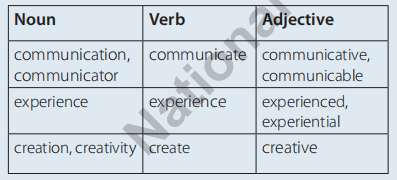
E (page 5) 1. adventure; 2. favorite; 3. experiences;4. ordinary; 5. skills
LISTENING
A (page 6) Answers will vary.
B (page 6) ¸Annie Griffiths travels around the world as a photographer.
C (page 7) Wording and abbreviations will vary. Notes should include only key words and phrases.
1. S. Africa, Galápagos Isl., Mex.
2. learn diff cultures, diff views, take pictures of wildlife/landscapes
3. long assgnmnts, wanted them see world, didn’t want be away from them
4. smiles, gestures, is silly
5. curiosity, creativity, see things in new ways
D (page 7) 1. T; 2. T; 3. T; 4. F
E (page 7) Answers will vary.
SPEAKING
A (page 8) 1. work; 2. am cooking; 3. am writing;4. show (or sell); 5. sell (or show); 6. am showing (or am selling); 7. help
B (page 9) Possible answers:
Police officers, teachers, and nurses help people.
Photographers and journalists explore different places.
Managers and lawyers need good communication skills.
Pilots and flight attendants travel a lot.
Computer programmers and web designers need special skills.
C (page 9) Possible answers: Travelers are waiting for their trains, looking at the train schedules, buying tickets, waiting for passengers to arrive, carrying their baggage, etc.
D (page 9) Possible answers:
1. Students are reading. The teacher is writing on the board. The computer is warming up.
2. My sister is probably making breakfast, feeding her baby, and getting ready for work.
3. A manager organizes projects, has meetings, and solves problems every day.
E (page 10)
1. She works at the hotel from Tuesday to Saturday. She doesn’t work on Sunday or Monday.
2. Her longest day is Thursday. Her shortest day is Saturday.
3. Erica cleans the guest bathrooms, makes the beds, removes the trash, gets clean sheets and towels, cleans the dining room, and puts out menus and information cards.
F–H (page 10) Answers will vary.
LESSON TASK
A–C (page 11) Answers will vary.
Video
A (page 12) 1. T; 2. T; 3. F; 4. T
B (page 12) 1. d; 2. a; 3. b; 4. c
C (page 13) 1. many; 2. few; 3. many countries; 4. difficult
D (page 13)
√ graduate from the school
√ iron newspapers
√ learn to walk correctly
√ practice saying things
E (page 13) Answers will vary.
Lesson B
VOCABULARY
B (page 15) 1. pollution; 2. search; 3. presentations;
4. physical; 5. effect
C (page 15) 1. manager; 2. organized; 3. in charge of;
4. Although; 5. initiative
E (page 15)
1. Possible answers: A nurse has a positive effect on his or her patients’ health by giving them physical care and medicine. A volunteer working
with the environment helps clean up the planet and decreases pollution. An industrial engineer creates new solutions and systems to help people
save time and money.
2. Possible answers: She says pollution is still a problem. Yes, she is right because our oceans still have trash, and many cities have air pollution.
3. Possible answers: Housekeepers, firefighters, and construction workers have physical jobs. They are good jobs, but they are tiring and can be dangerous.
4. Answers will vary.
LISTENING
A (page 16) 1. study; 2. nurse; 3. travel; 4. remember;
5. reporter; 6. creative; 7. receive; 8. skills
B (page 16)
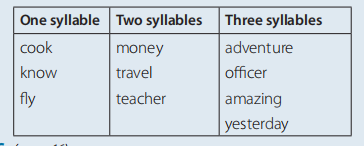
C (page 16)
1. billion (2), marine (2) biologist (4), ocean (2),
pollution (3), tuna (2)
2. billion, marine biologist, ocean, pollution, tuna
D (page 17)
√ one that Becca missed
E (page 17)
√ People are having a bad effect on the oceans, but
we can change that.
F (page 17)
√ Dr. Earle earns a high salary.
√ Dr. Earle doesn’t eat fish.
G–H (page 17) Answers will vary
SPEAKING
A (page 18) The following should be underlined:
I’m sorry?; Do you mean …?; I’m not sure what you mean.; What are those?
C (page 18) Answers will vary.
D (page 19)
1. 2 million people, or 1 in 10 residents
2. A shark attracting scuba divers is more valuable at $1.9 million. A shark as food is worth $108.
3. Possible answer: Because the global seafood industry relies on healthy fish habitats
4. Possible answer: To show how much money the ocean represents for communities and industries
5. Answers will vary.
E (page 19) Possible answers: Cooks, marine biologists, tour guides, hotel workers, and photographers
FINAL TASK
A (page 20) Answers will vary.
B (page 20)
1. Hi, everyone. My name is Alejandro, but please call me Alex. I’m from Bogotá.
2. I want to travel the world, and I want to help people, too, so I think this is a good job for me.
3. Answers will vary.