[1] Hartman S, Lacorn H, Steinhart H. Natural occurrence of steroid hormones in food. Food Chem 1998;62:7-20.
[2] Echternkamp SE, Aad PY, Eborn DR, Spicer LJ. Increased abundance of aromatase and follicle stimulating hormone receptor mRNA and decreased insulin-like growth factor-2 receptor mRNA in small ovarian follicles of cattle selected for twin births. J Anim Sci 2012;90:2193-2200.
[3] Guevara-Aguirre J, Balasubramanian P, Guevara-Aguirre M, Wei M, Madia F, Cheng CW, Hwang D, Martin-Montalvo A, Saavedra J, Ingles S, de Cabo R, Cohen P, Longo VD. Growth hormone receptor deficiency is associated with a major reduction in pro-aging signaling, cancer, and diabetes in humans. Sci Transl Med. 2011 Feb 16;3(70):70ra13.
[4] Leng SX, Cappola AR, Andersen RE, et al. Serum levels of insulin-like growth factor-I (IGF-I) and dehydroepiandrosterone sulfate (DHEA-S), and their relationships with serum interleukin-6, in the geriatric syndrome of frailty. Aging Clin Exp Res 2004; 16:153.
[5] Smith WJ, Underwood LE, Clemmons DR. Effects of caloric or protein restriction on insulin-like growth factor-I (IGF-I) and IGF-binding proteins in children and adults. J Clin Endocrinol Metab. 1995 Feb;80(2):443-9.
[6] Olsen SF, Halldorsson TI, Willett WC, et al. Milk consumption during pregnancy is associated with increased infant size at birth: prospective cohort study. Am J Clin Nutr 2007;86:1104-1110.
[7] de Beer H. Dairy products and physical stature: a systematic review and meta-analysis of controlled trials. Econ Hum Biol 2012;10:299-309.
[8] Rich-Edwards JW, Ganmaa D, Pollak MN, et al. Milk consumption and the prepubertal somatotropic axis. Nutr J 2007;6:28-28.
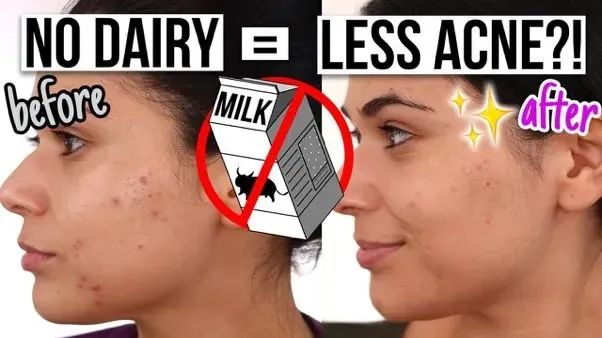
[9] Cappel M, Mauger D, Thiboutot D. Correlation between serum levels of insulin-like growth factor 1, dehydroepiandrosterone sulfate, and dihydrotestosterone and acne lesion counts in adult women. Arch Dermatol. 2005 Mar;141(3):333-8.
[10] Adebamowo CA, Spiegelman D, Berkey CS, et al. Milk consumption and acne in adolescent girls. Dermatol Online J 2006; 12:1.
[11] Adebamowo CA, Spiegelman D, Berkey CS, et al. Milk consumption and acne in teenaged boys. J Am Acad Dermatol 2008; 58:787.
[12] Ganmaa D, Li XM, Wang J, Qin LQ, Wang PY, Sato A. Incidence and mortality of testicular and prostatic cancers in relation to world dietary practices. Int J Cancer 2002;98:262-267.
[13] Ganmaa D, Cui X, Feskanich D, Hankinson SE, Willett WC. Milk, dairy intake and risk of endometrial cancer: a 26-year follow-up. Int J Cancer 2012;130:2664-2671.
[14] Ganmaa D, Sato A. The possible role of female sex hormones in milk from pregnant cows in the development of breast, ovarian and corpus uteri cancers. Med Hypotheses 2005;65:1028-1037.
[15] Bleach R, Sherlock M, O'Reilly MW, McIlroy M. Growth Hormone/Insulin Growth Factor Axis in Sex Steroid Associated Disorders and Related Cancers. Front Cell Dev Biol. 2021 Mar 18;9:630503.
[16] Mahabir S, Aagaard K, Anderson LM, et al. Challenges and opportunities in research on early-life events/exposures and cancer development later in life. Cancer Causes Control 2012;23:983-990.
[17] World Cancer Research Fund, American Institute for Cancer Research. Second expert report: food, nutrition, physical activity, and the prevention of cancer: a global perspective. Washington, DC: AICR, 2007.
[18] Bond JH. Polyp guideline: diagnosis, treatment, and surveillance for patients with colorectal polyps. Practice Parameters Committee of the American College of Gastroenterology. Am J Gastroenterol 2000; 95:3053.
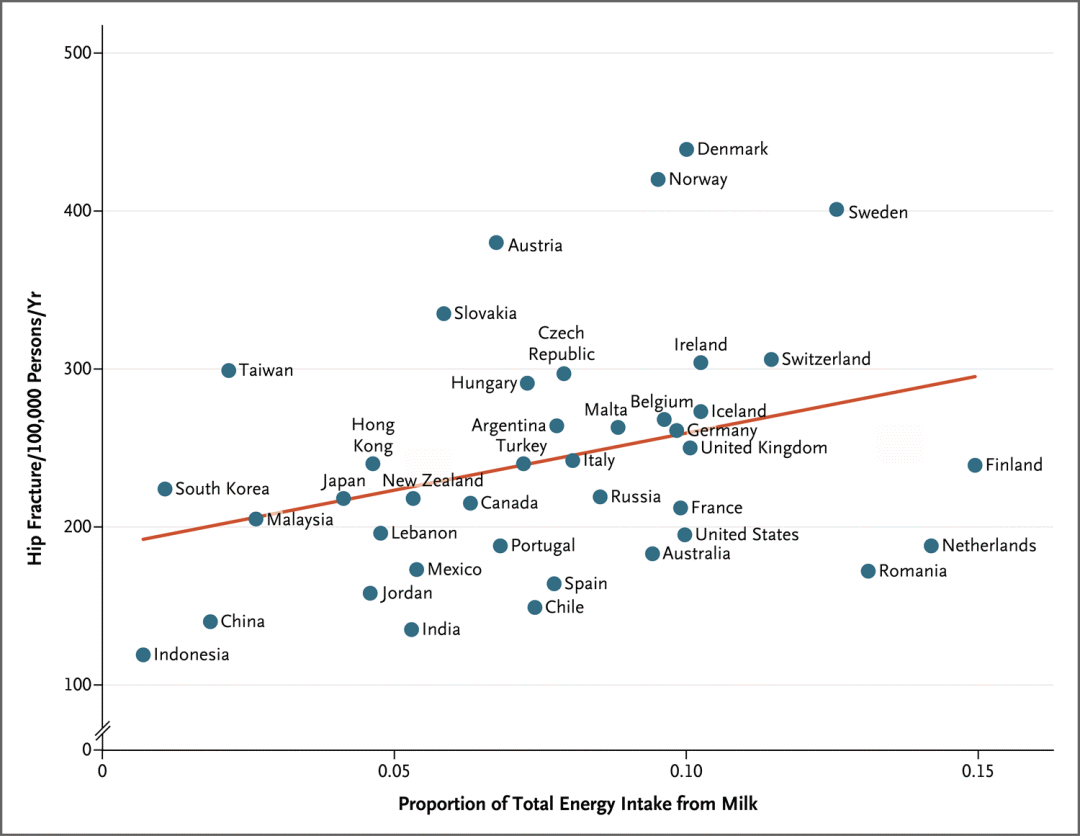
[19] Working Group on the Nutritional Status of the Population of the Committee on Medical Aspects of Food and Nutrition Policy. Nutrition and bone health with particular reference to calcium and vitamin D: report of the Subgroup on Bone Health. London: The Stationery Office, U.K. Department of Health, 1998.
[20] Hegsted DM. Fractures, calcium, and the modern diet. Am J Clin Nutr 2001;74:571-573.
[21] Hemenway D, Azrael DR, Rimm EB, Feskanich D, Willett WC. Risk factors for hip fracture in US men aged 40 through 75 years. Am J Public Health 1994;84:1843-1845.
[22] Lee WT, Leung SS, Leung DM, Cheng JC. A follow-up study on the effects of calcium-supplement withdrawal and puberty on bone acquisition of children. Am J Clin Nutr 1996;64:71-77.
[23] Dehghan M, Mente A, Rangarajan S, et al. Association of dairy intake with cardiovascular disease and mortality in 21 countries from five continents (PURE): a prospective cohort study. Lancet 2018;392:2288-2297.
[24] Wal JM. Bovine milk allergenicity. Ann Allergy Asthma Immunol 2004; 93:S2.
[25] Knip M, Simell O. Environmental triggers of type 1 diabetes. Cold Spring Harb Perspect Med 2012;2(7):a007690-a007690.
[26] Chen M, Sun Q, Giovannucci E, et al. Dairy consumption and risk of type 2 diabetes: 3 cohorts of US adults and an updated meta-analysis. BMC Med 2014;12:215-215.
[27] Panush RS, Stroud RM, Webster EM. Food-induced (allergic) arthritis. Inflammatory arthritis exacerbated by milk. Arthritis Rheum 1986; 29:220.
[28] Chen WL, Hwang MT, Liau CY, et al. Beta-lactoglobulin is a thermal marker in processed milk as studied by electrophoresis and circular dichroic spectra. J Dairy Sci 2005; 88:1618.