[1]https://lmreview.com/an-interview-with-joseph-knoll-m-d/
[2]https://www.baike.com/wikiid/6531177265360775776?view_id=3c6nrrbnvyo000
[3]Nieoullon, A., & Coquerel, A. (2003). Dopamine: a key regulator to adapt action, emotion, motivation and cognition. Current opinion in neurology, 16 Suppl 2, S3–S9.
[4]Knoll J. (1983). Deprenyl (selegiline): the history of its development and pharmacological action. Acta neurologica Scandinavica. Supplementum, 95, 57–80. https://doi.org/10.1111/j.1600-0404.1983.tb01517.x
[5]Knoll J, Vizi E S, Somogyi G. (1968). Phenylisopro-pylmethylpropinylamine (E-250), a monoamine oxidase inhibitor antagonizing effects of tyramine. Arzneim.-Forsch, 18:109-112
[6]Bodkin, J. A., & Amsterdam, J. D. (2002). Transdermal selegiline in major depression: a double-blind, placebo-controlled, parallel-group study in outpatients. The American journal of psychiatry, 159(11), 1869–1875. https://doi.org/10.1176/appi.ajp.159.11.1869
[7]LeWitt, P. A., & Fahn, S. (2016). Levodopa therapy for Parkinson disease: A look backward and forward. Neurology, 86(14 Suppl 1), S3–S12. https://doi.org/10.1212/WNL.0000000000002509
[8]Schachter, M., Marsden, C. D., Parkes, J. D., Jenner, P., & Testa, B. (1980). Deprenyl in the management of response fluctuations in patients with Parkinson's disease on levodopa. Journal of neurology, neurosurgery, and psychiatry, 43(11), 1016–1021. https://doi.org/10.1136/jnnp.43.11.1016
[9]Kitani, K., Minami, C., Yamamoto, T., Kanai, S., Ivy, G. O., & Carrillo, M. C. (2002). Pharmacological interventions in aging and age-associated disorders: potentials of propargylamines for human use. Annals of the New York Academy of Sciences, 959, 295–307. https://doi.org/10.1111/j.1749-6632.2002.tb02101.x
[10]Freedman, M., Rewilak, D., Xerri, T., Cohen, S., Gordon, A. S., Shandling, M., & Logan, A. G. (1998). L-deprenyl in Alzheimer's disease: cognitive and behavioral effects. Neurology, 50(3), 660–668. https://doi.org/10.1212/wnl.50.3.660
[11]Perenyi, A., Goswami, U., Frecska, E., Arató, M., & Bela, A. (1992). L-deprenyl in treating negative symptoms of schizophrenia. Psychiatry research, 42(2), 189–191. https://doi.org/10.1016/0165-1781(92)90082-e
[12]Ernst, M., Liebenauer, L. L., Tebeka, D., Jons, P. H., Eisenhofer, G., Murphy, D. L., & Zametkin, A. J. (1997). Selegiline in ADHD adults: plasma monoamines and monoamine metabolites. Neuropsychopharmacology : official publication of the American College of Neuropsychopharmacology, 16(4), 276–284. https://doi.org/10.1016/S0893-133X(96)00243-6
[13]Hughes, J. R., Stead, L. F., Hartmann-Boyce, J., Cahill, K., & Lancaster, T. (2014). Antidepressants for smoking cessation. The Cochrane database of systematic reviews, 2014(1), CD000031. https://doi.org/10.1002/14651858.CD000031.pub4
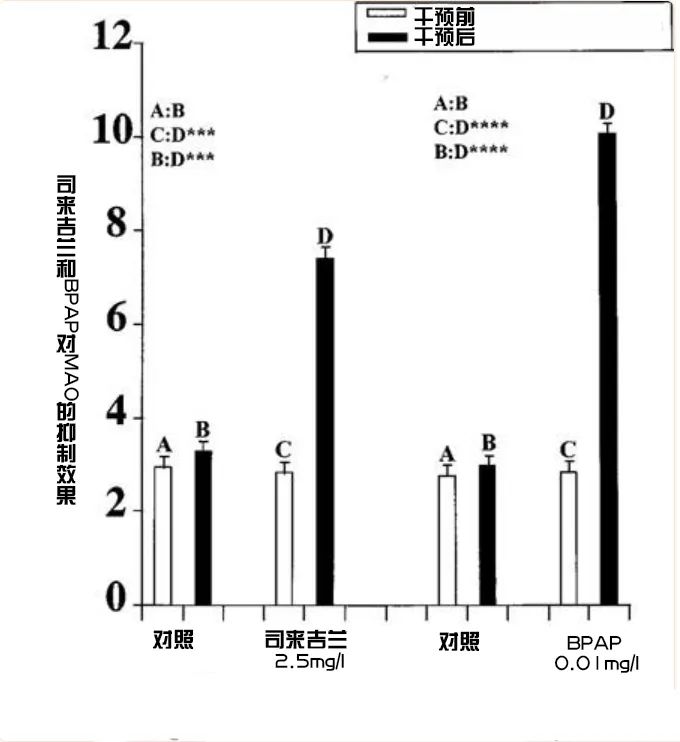
[14]Knoll, J., Baghy, K., Eckhardt, S., Ferdinandy, P., Garami, M., Harsing, L. G., Jr, Hauser, P., Mervai, Z., Pocza, T., Schaff, Z., Schuler, D., & Miklya, I. (2017). A longevity study with enhancer substances (selegiline, BPAP) detected an unknown tumor-manifestation-suppressing regulation in rat brain. Life sciences, 182, 57–64. https://doi.org/10.1016/j.lfs.2017.06.010
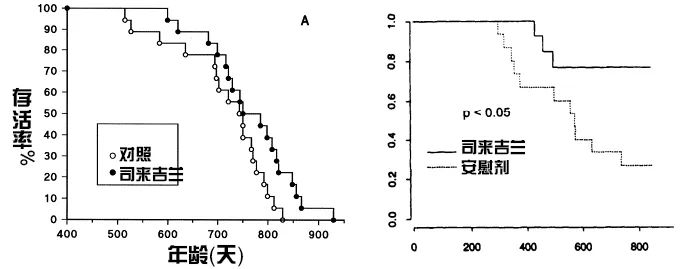
[15]Knoll J. (1988). The striatal dopamine dependency of life span in male rats. Longevity study with (-)deprenyl. Mechanisms of ageing and development, 46(1-3), 237–262. https://doi.org/10.1016/0047-6374(88)90128-5
[16]Knoll, J., Dallo, J., & Yen, T. T. (1989). Striatal dopamine, sexual activity and lifespan. Longevity of rats treated with (-)deprenyl. Life sciences, 45(6), 525–531. https://doi.org/10.1016/0024-3205(89)90103-3
[17]Stoll, S., Hafner, U., Kränzlin, B., & Müller, W. E. (1997). Chronic treatment of Syrian hamsters with low-dose selegiline increases life span in females but not males. Neurobiology of aging, 18(2), 205–211. https://doi.org/10.1016/s0197-4580(97)00009-2
[18]Knoll, J., Yen, T. T., & Miklya, I. (1994). Sexually low performing male rats die earlier than their high performing peers and (-)deprenyl treatment eliminates this difference. Life sciences, 54(15), 1047–1057. https://doi.org/10.1016/0024-3205(94)00415-3
[19]Bickford, P. C., Adams, C. E., Boyson, S. J., Curella, P., Gerhardt, G. A., Heron, C., Ivy, G. O., Lin, A. M., Murphy, M. P., Poth, K., Wallace, D. R., Young, D. A., Zahniser, N. R., & Rose, G. M. (1997). Long-term treatment of male F344 rats with deprenyl: assessment of effects on longevity, behavior, and brain function. Neurobiology of aging, 18(3), 309–318. https://doi.org/10.1016/s0197-4580(97)80313-2
[20]Freisleben, H. J., Lehr, F., & Fuchs, J. (1994). Lifespan of immunosuppressed NMRI-mice is increased by deprenyl. Journal of neural transmission. Supplementum, 41, 231–236. https://doi.org/10.1007/978-3-7091-9324-2_29
[21]Ruehl, W. W., Entriken, T. L., Muggenburg, B. A., Bruyette, D. S., Griffith, W. C., & Hahn, F. F. (1997). Treatment with L-deprenyl prolongs life in elderly dogs. Life sciences, 61(11), 1037–1044. https://doi.org/10.1016/s0024-3205(97)00611-5
[22]Jordens, R. G., Berry, M. D., Gillott, C., & Boulton, A. A. (1999). Prolongation of life in an experimental model of aging in Drosophila melanogaster. Neurochemical research, 24(2), 227–233. https://doi.org/10.1023/a:1022510004220
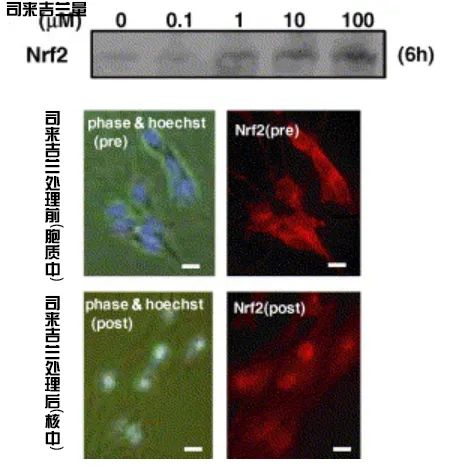
[23]Nakaso, K., Nakamura, C., Sato, H., Imamura, K., Takeshima, T., & Nakashima, K. (2006). Novel cytoprotective mechanism of anti-parkinsonian drug deprenyl: PI3K and Nrf2-derived induction of antioxidative proteins. Biochemical and biophysical research communications, 339(3), 915–922. https://doi.org/10.1016/j.bbrc.2005.11.095
[24]Silva-Palacios, A., Ostolga-Chavarría, M., Zazueta, C., & Königsberg, M. (2018). Nrf2: Molecular and epigenetic regulation during aging. Ageing research reviews, 47, 31–40. https://doi.org/10.1016/j.arr.2018.06.003
[25]Nagy, C. T., Koncsos, G., Varga, Z. V., Baranyai, T., Tuza, S., Kassai, F., Ernyey, A. J., Gyertyán, I., Király, K., Oláh, A., Radovits, T., Merkely, B., Bukosza, N., Szénási, G., Hamar, P., Mathé, D., Szigeti, K., Pelyhe, C., Jelemenský, M., Onódi, Z., … Ferdinandy, P. (2018). Selegiline reduces adiposity induced by high-fat, high-sucrose diet in male rats. British journal of pharmacology, 175(18), 3713–3726. https://doi.org/10.1111/bph.14437
[26]Ben-Shlomo, Y., Churchyard, A., Head, J., Hurwitz, B., Overstall, P., Ockelford, J., & Lees, A. J. (1998). Investigation by Parkinson's Disease Research Group of United Kingdom into excess mortality seen with combined levodopa and selegiline treatment in patients with early, mild Parkinson's disease: further results of randomised trial and confidential inquiry. BMJ (Clinical research ed.), 316(7139), 1191–1196. https://doi.org/10.1136/bmj.316.7139.1191
[27]Pae, C. U., Bodkin, J. A., Portland, K. B., Thase, M. E., & Patkar, A. A. (2012). Safety of selegiline transdermal system in clinical practice: analysis of adverse events from postmarketing exposures. The Journal of clinical psychiatry, 73(5), 661–668. https://doi.org/10.4088/JCP.12m07648
[28]Kalász, H., Magyar, K., Szőke, É., Adeghate, E., Adem, A., Hasan, M. Y., Nurulain, S. M., & Tekes, K. (2014). Metabolism of selegiline [(-)-deprenyl)]. Current medicinal chemistry, 21(13), 1522–1530. https://doi.org/10.2174/0929867321666131218094352
[29]Knoll, J., Yoneda, F., Knoll, B., Ohde, H., & Miklya, I. (1999). (-)1-(Benzofuran-2-yl)-2-propylaminopentane, [(-)BPAP], a selective enhancer of the impulse propagation mediated release of catecholamines and serotonin in the brain. British journal of pharmacology, 128(8), 1723–1732. https://doi.org/10.1038/sj.bjp.0702995
[30]Miklya I. (2009). Az agymüködés korfüggö hanyatlásának lassítása (-)-deprenil (Selegilin, Jumex) profilaktikus adagolásával. A 25 éves Knoll javaslat mai nemzetközi megítélése és tanulságai [Slowing the age-induced decline of brain function with prophylactic use of (-)-deprenyl (Selegiline, Jumex). Current international view and conclusions 25 years after the Knoll's proposal]. Neuropsychopharmacologia Hungarica : a Magyar Pszichofarmakologiai Egyesulet lapja = official journal of the Hungarian Association of Psychopharmacology, 11(4), 217–225.