TRADITIONAL ANDMODERN MEDICINE 8
THINK AND DISCUSS (page 141)
Possible answers:
1. Cold temperatures are used to treat sore muscles or swollen tissue. Very focused freezing of the skin can treat some skin conditions. Cryotherapy may also have value in the treatment of some serious
illnesses.
2. Other ancient therapies that are still in use include herbal or plant remedies, acupuncture and other forms of traditional Chinese medicine, and the application of certain creatures (e.g., leeches and maggots) to wounds to promote healing.
EXPLORE THE THEME (page 142)
1. Answers will vary.
2. Possible answers: Students may have eaten chicken soup with garlic when they had a cold, used lavender oil in a soothing bath, or drunk ginger tea when they had an upset stomach, for example.
3. Possible answers: Traditional medicine includes plant remedies and other kinds of natural support, such as getting extra sleep and drinking plenty of fluids. Traditional medicines are often less expensive and more easily available than modern medicines. Modern medicine involves more science and technology, such as modern pharmaceutical chemistry or high-tech surgical techniques.
VOCABULARY
B (page 145)
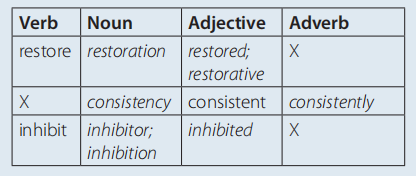
1. remedies 6. inhibit
2. consistent 7. restore
3. empirical 8. variables
4. crucial 9. synthetic
5. associate 10. symptoms
C (page 145)
1. Answers will vary.
2. Possible answer: Empirical studies are important because they can provide scientific data about how well a medicine works.
3. Possible answer: Habits for good health can include not smoking, getting enough sleep, getting daily exercise, not eating sweets, not eating too much, eating fresh fruits and vegetables, and drinking enough water. Answers to the second question will vary.
4. Possible answers: It would also be important to restore public utilities such as electricity and gas; telecommunication services; and roads, streets, and public transportation systems.
5. Answers will vary.
6. Answers will vary.
D (page 145)

LISTENING
A (page 146) Possible answers:
1. Steps 1 and 2 take place in a laboratory. Steps 2, 3, and 5 all focus on safety. Step 3 focuses on effectiveness. In addition, Step 4 could involve
looking at a new drug’s safety and effectiveness.
2. The process may take several years. Each step of the process could take several months or longer.
B (page 146)
√ a. Many useful older medications were based on plants.
√ c. Two new drugs are effective at fighting cancer in children.
√ d. Plant-based medicines are made directly from plants or synthetic versions of the chemicals found in plants.
C (page 147) Possible answers:
Many useful older meds based on plants
Aspirin: chem. found in willow tree bark
Digoxin: heart disease med. from foxglove / digitalis
Another plant: rosy periwinkle
Traditional: used for people with diabetes
New: anti-cancer drugs
Meds. not made directly from plants
Identify chemical in plant
Synthesize chemical in laboratory
New plant-based meds: Devel. is long, $$ process b/c
many variables
1. Study effect’ness of trad. remedy
2. Plant variables: e.g., picked wrong subspecies of plant, picked at wrong time of day, effect of other plants growing nearby
3. Scientists need to know which chemical is active and what amount to put in each tablet, injection, etc.
Overall, devel. of synthetic drugs is quicker
D (page 147) Answers will vary.
SPEAKING
A (page 148)
1. c; 2. e; 3. b; 4. a; 5. d
In 1, 3, and 5, the second clause explains why something happens.
In 2 and 4, the first clause explains why something happens.
B (page 148) Answers will vary.
C (page 149)
Feliciano dos Santos is making the world a healthier place by participating in a public health campaign in Mozambique.
D (page 149) Possible answers:
1. Dos Santos did not expect to live a full life because he caught polio as a child.
2. Since Massukos’s health message is in a popular song, people pay attention to it.
3. So that more people have clean water, dos Santos’s NGO also works to install pumps.
E (page 149) Answers will vary.
F (page 150) Possible answers:
1. The common cold is highly contagious and spreads easily. For this reason, it’s important to wash your hands often.
2. We associate regular exercise with good health. That is why I ride my bicycle to work every day.
3. Some natural remedies are quite effective. Because of this, they can be used instead of medicines from a pharmacy.
4. A good diet contributes to overall health. That’s the reason I eat a variety of foods every day.
G (page 150) Answers will vary.
H (page 150) Answers will vary.
LESSON TASK
A (page 151) Possible answers:
a. No evidence is given for the claims, and we can assume the speaker is trying to attract new patients as part of her job, so it’s difficult for us to
believe the claim without evidence.
b. The study is fairly recent and was published in a respected medical journal, and the speaker’s conclusion seems to be reasonable. Because
of his job, he is likely to want to protect college students from the potentially fatal disease.
c. The statistics are recent and from a trustworthy source, but it’s unclear how the speaker’s company would help the situation. The speaker
needs to provide more information to convince us that his company would actually prevent worker absence.
B (page 151) Possible answers:
1. statistics; expert opinions
2. personal stories; expert opinions
3. expert opinions; statistics
4. statistics; personal stories; expert opinions; other support could be photos
Video
A (page 152) Possible answers:
Eat certain foods to respond to an upset stomach or infection; eat clay to aid digestion and kill bacteria; eat the leaves of plants to increase milk production or induce delivery.
B (page 152)
1. preventative
2. fermentation
3. compounds
4. curative
5. nausea
6. lactation
7. avoidance
8. groundbreaking
C (page 153)
1. self-medication
2. early medicine; chimpanzees
3. animals; preventative; avoidance
D (page 153)
1. d; 2. a; 3. b; 4. c
E (page 153)
1. Answers will vary.
2. Possible answer: Yes, I think the claim is believable because she is an expert in her field and has written a book that has received positive support from other scientists.
Lesson B
VOCABULARY
B (page 154)
1. F (A radical idea is different from what many others think.)
2. F (An internal medical device is located inside the body.)
3. T
4. T
5. T
D (page 155)
1. nerves; 2. severe; 3. transmit; 4. muscles;
5. corresponding
E (page 155)
1. transmit; 2. internally; 3. modification;
4. nerves; 5. muscles
F (page 155) Answers will vary
LISTENING
A (page 156) Answers will vary.
B (pages 156–157) Possible answers:
1. by moving the muscles in the chest and back
2. the cochlear implant; it allows a deaf person to hear
3. Nerves are reassigned to make different muscles move.
4. Electrodes on Amanda Kitts’ skin communicate with electrodes at the top of the prosthetic arm. The electrodes pick up signals from muscles.
C (page 157)
1. in a car accident
2. more than 300,000
3. locate and attach nerves to muscles in the chest and shoulder
4. send signals to the skin’s surface (which can be used to operate a prosthetic device)
5. She thinks about moving her arm or hand; the thought causes movement in the prosthetic device.
D (page 157) Answers will vary.
E (page 157) Answers will vary.
SPEAKING
A (page 158)
1. /y/
2. /w/
3. /y/
4. /w/
5. /y/
6. /y/
C–D (page 159) Answers will vary.
FINAL TASK
A–D (pages 159–160) Answers will vary.