
商品详情
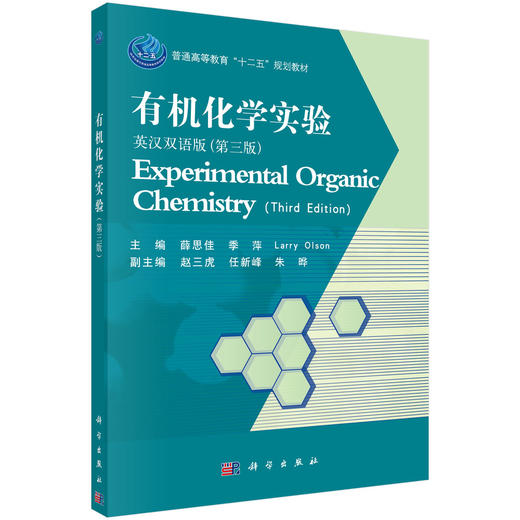
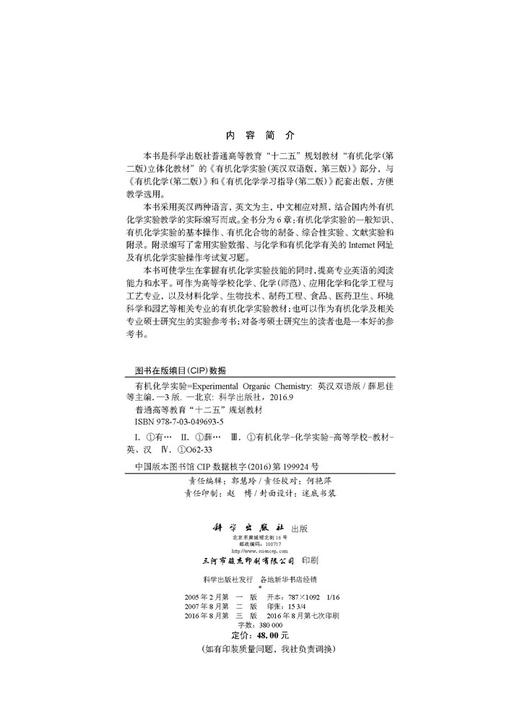
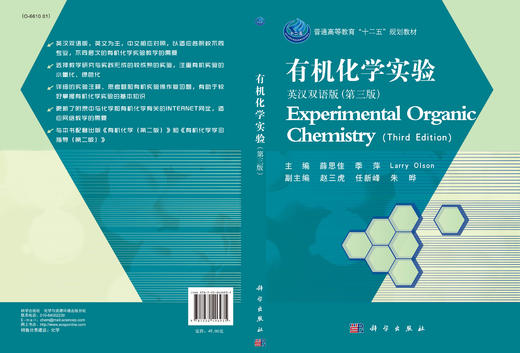
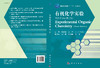
书名:有机化学实验(英汉双语版)
定价:48.0
ISBN:9787030496935
作者:无
版次:1
出版时间:2016-08
内容提要:
本书包括六部分:第*部分有机化学实验的一般知识;第二部分基本操作;第三部分有机化合物的制备;第四部分综合性实验;第五部分文献实验;第六部分附录。本书注重有机实验的小量化、绿色化。以英文为主,中文相对应。对基本操作和实验方法用英文作了较为详细而精练的描述,并在本书的中文部分有简单的中文注释。有机合成实验都附有红外光谱图。为拓宽教学内容、激发学习兴趣,本书还引入了具有微型化、特色化的文献实验。
目录:
Contents
第三版前言
第二版前言
第*版前言
Chapter 1 Introduction 1
1.1 General Rules for the Organic Chemistry Lab 1
1.2 General Lab Safety 2
1.3 Disposal of Lab Waste 3
1.4 Common Lab Equipment and Apparatus 4
1.5 Drying and Drying Agent 12
1.6 Heating and Cooling 14
1.7 Experimental Record and Laboratory Report 15
1.8 Chemical Literature 16
Chapter 2 Basic Experimental Techniques 18
2.1 Melting Point Determination 18
2.2 Recrystallization 22
2.3 Simple Distillation and Fractional Distillation 27
2.4 Steam Distillation 31
2.5 Vacuum Distillation 33
2.6 Solvent Extraction and Solution Washing 38
2.7 Sublimation 43
2.8 Refractive Index Determination of Liquid Organic Compound 45
2.9 Optical Rotation Determination 47
2.10 Chromatographic Techniques 49
2.11 Spectroscopic Identification of Organic Compound 63
Chapter 3 Experiments 73
3.1 Preparation of Cyclohexene 73
3.2 Preparation of 1-Bromobutane 75
3.3 Preparation of Triphenylmethanol 78
3.4 Preparation of Dibutyl Ether 82
3.5 Preparation of Benzoic Acid and Phenylmethanol 84
3.6 Preparation of Cyclohexanone 87
3.7 Preparation of Hexanedioic Acid 90
3.8 Preparation and Characterization of Cinnamic Acid 92
3.9 Preparation of Acetylsalicylic Acid 94
3.10 Preparation of n-Butyl Acetate 97
3.11 Preparation of n-Dibutyl Phthalate 99
3.12 Preparation of Acetanilide 101
3.13 Preparation of 4-Nitroaniline 104
3.14 Isolation of Caffeine From Tea Leaves 107
3.15 Preparation of 2-Furanmethanol and 2-Furancarboxylic Acid 110
3.16 Preparation of 8-Quinolinol 113
3.17 Preparation of Acetylferrocene 115
3.18 Biological Synthesis of Ethanol 117
Chapter 4 All-around Experiments 120
4.1 Synthesis and Characterization of Ethyl Acetate and Ethyl Acetoacetate 120
4.2 Synthesis of Sulfanilic Acid and Methyl Orange 124
4.3 Extraction and Separation Spinach Leaf Pigments 129
4.4 Extraction, Separation and Identification Capsanthin and β-Carotene 131
4.5 Coenzyme Preparation and Characterization of Benzoin 135
4.6 Preparation and Characterization of Benzilic Acid 137
4.7 Microwave-Assisted Preparation and Characterization of 2-Substitutedphenyl Benzoxazole 139
Chapter 5 Experiments from Literature 141
5.1 A Microscale Synthesis of the Diastereomers of 2, 3-Dibromosuccinic Acid 141
5.2 A Grignard-like Organic Reaction in Water 143
5.3 An Efficient Microscale Procedure for the Synthesis of Aspirin 143
5.4 A Solvent-Free Claisen Condensation Reaction 144
5.5 The Preparation of a Fluorescent Dye: A Microscale TLC Experiment 144
5.6 Microwave Microscale Experiment: 2-Naphthyl Acetate from 2-Naphthol 145
Chapter 6 Appendix 147
6.1 List of the Element with Their Symbols and Atomic Masses 147
6.2 Main Families of Organic Compounds 150
目录
第 1 章 有机化学实验的一般知识 152
1.1 有机化学实验的基本规则 152
1.2 有机化学实验的一般安全知识 152
1.3 有机化学实验废物的处置 153
1.4 常用的玻璃仪器和实验装置 154
1.5 干燥与干燥剂 156
1.6 加热与冷却 156
1.7 实验记录和实验报告 157
1.8 有机化学的文献资料 157
第 2 章 有机化学实验的基本操作 160
2.1 熔点的测定 160
2.2 重结晶 162
2.3 蒸馏与分馏 163
2.4 水蒸气蒸馏 165
2.5 减压蒸馏 167
2.6 萃取与洗涤 168
2.7 升华 171
2.8 液体有机化合物折光率的测定 172
2.9 旋光度的测定 173
2.10 色谱技术 174
2.11 有机化合物的光谱鉴定 180
第 3 章 有机化合物的制备 187
3.1 环己烯的制备 187
3.2 1-溴丁烷的制备 188
3.3 三苯甲醇的制备 190
3.4 正丁醚的制备 193
3.5 苯甲酸和苯甲醇的制备 194
3.6 环己酮的制备 196
3.7 己二酸的制备 198
3.8 肉桂酸的制备及结构表征 199
3.9 乙酰水杨酸(阿司匹林)的制备 200
3.10 乙酸正丁酯的制备 202
3.11 邻苯二甲酸二正丁酯的制备 203
3.12 乙酰苯胺的制备 204
3.13 4-硝基苯胺的制备 206
3.14 从茶叶中提取咖啡因 208
3.15 呋喃甲醇和呋喃甲酸的制备 210
3.16 8-羟基喹啉的制备 212
3.17 乙酰二茂铁的制备 213
3.18 生物法合成乙醇 214
第 4 章 综合性实验 217
4.1 乙酸乙酯和乙酰乙酸乙酯的制备和结构表征 217
4.2 对氨基苯磺酸和甲基橙的制备 219
4.3 从菠菜叶中提取和分离叶色素 223
4.4 从红辣椒中提取、分离和鉴定辣椒红素和 β-胡萝卜素 224
4.5 辅酶催化安息香的制备及结构表征 227
4.6 二苯基乙醇酸的制备及结构表征 229
4.7 2-取代苯基苯并 唑的微波法合成 230
第 5 章 文献实验 232
5.1 非对映体的 2, 3-二溴琥珀酸的微量合成 232
5.2 在水相中进行的类似 Grignard 反应 233
5.3 微量法合成阿司匹林 233
5.4 无溶剂的 Claisen 缩合反应 234
5.5 一种荧光染料的制备:微量 TLC 实验 234
5.6 微波法微量实验:2-萘酚制备乙酸-2-萘酯 235
第 6 章 附录 236
6.1 与化学有关的网址 236
6.2 有机化学实验操作考试复习题 237
在线试读:
Chapter 1 Introduction
Experimental organic chemistry is an integral and basic part of organic chemistry course. With the coming of new techniques, this course is being directed towards the development of small-scale experiment, high-efficient operation and the use of environment-friendly chemicals. The purpose of this course is to provide an opportunity to observe the reality of compounds and reactions, learn something of the operations and techniques that are used in experimental organic chemistry and in other areas, data-processing with computer, and further understand the basic principles of organic chemistry. Students should get into the habit of “preparation (pre-lab)—experiment and record (in-lab) —summary (post-lab)”.
1.1 General Rules for the Organic Chemistry Lab
In order to ensure all experiments go smoothly and laboratory safety is observed, all students must abide by the following rules when entering into an organic lab:
(1)Familiarize yourself with the safety rules for lab work and learn about how to correctly use water, power, gas, hood, fire extinguisher and so on. Get to know what to do in the event of experimental accidents. Everyone, before doing the experiment, should be well prepared, understand the hazardous nature and safe usage of chemicals and promote safety consciousness. The experimental instruments and equipment must be used with care, adhering to their operating procedures. Report all abnormal conditions to your instructor to minimize the operational hazards.
(2)Before doing an experiment, check all glass equipment. During experiment, use it carefully and skillfully; after experiment, clean it up and keep it in order.
(3)In the experiment, keep your experimental area and whole lab tidy, operate with care, and adhere to the experimental procedures as well as reagent specifications and dosage required in every experiment. If you want to make any change, ask your instructor to get authorization. Never leave an ongoing experiment unattended.
(4)Before using chemicals, read their labels carefully. Use them only as required in the experiment. Cover the stopper of the container immediately after use, and avoid the stoppers being confused as well as chemicals being contaminated. Don’t leave a mess for someone else to clean up. Don’t change the position at random of normal reagents and common instruments in the lab such as balance, desiccator, refractometer and so on.
(5)Your full attention must be given to what you are doing during the experimental period. Don’t be careless or clown around in lab. You can hurt yourself or other people. Don’t speak loudly and eat or drink in the lab.
(6)In-lab or post-lab, all kinds of solid or liquid waste should be placed in various authorized containers.
(7)Before leaving lab, check carefully whether water, power and the gas are switched off safely, and wash your hands thoroughly with soap and water.
1.2 General Lab Safety
Generally speaking, organic experiment utilize mainly glassware, chemicals and electrical appliances, all of which can do harm for the human body and environment if used improperly. Chemicals are hazardous because of their flammable, explosive, volatile, corrosive and toxic properties. Also, there is the possibility of experimental accidents to glass equipment and electrical appliances if operated incorrectly. Therefore, organic lab is potentially one of the most dangerous locations for students.
1.2.1 Fire-proof
The experimental operation must be normalized and the apparatus is assembled correctly. Flammable, explosive and volatile chemicals mustn’t be discarded randomly and must be recovered specifically after the experiment. They should be kept away from an open flame. In case of a fire, first of all, cut power and the gas off, move the flammable and explosive reagents away, and then put the fire out in a proper way using a fire extinguisher, asbestos cloth, covering with sand, or rushing water and so on.
1.2.2 Explosion-proof
The apparatus should be assembled correctly. The whole system should not be made tight in the process of normal distillation and reflux. Distillation to dryness is also a dangerous practice because of the possible presence of peroxides or other explosive materials in the dry residue in the flask. The glassware and apparatus should be checked first to determine whether it can withstand the system pressure before vacuum distillation. If you don’t add any boiling chips when starting distillation, stop heating immediately and re-add them after cooling. Keep the cooling water moving smooth during distillation.
A fierce explosion or combustion can be produced when some organic compounds come into contact with oxidizers. Beware of their handling and storage.
1.2.3 Poisoning-proof
There are different ratings of toxicity among most organic reagents. The experiment with an irritative or toxic gas discharged must be always carried out in a hood or in a well-ventilated circumstance, or using a gas trap.
The manipulation of toxic or corrosive chemicals should follow the designated proceduresstrictly. Don’t touch or come into contact directly with them. Keep them away from your mouth or cuts or abrasions of the skin, and never pour them into the sewer.
If you have some poisoning symptoms such as dizziness, headache, or other symptoms during the experiment you should leave the laboratory area and move to an area where you can breath fresh air and rest. In case of the poisoning is severe or symptoms persist, you should receive medical treatment.
1.2.4 Prevent Chemical Burns
Chemicals such as strong acid, strong base, bromine, etc, should be used with great care in order to avoid contact with your skin which could cause chemical burns. In case of such an accident, wash the affected area immediately with copious amounts of running water, and then further treatments as follows:
Acid-injury: use 1% Na HCO3 solution for the eye-wash and 5% Na HCO3 solution for skin-wash.
Base-injury: use 1% boric acid for the eye-wash and 1%~2% acetic acid for the skin-wash.
Bromine-injury: wash immediately with alcohol, and smear with glycerol or coat with a scald ointment.
If the situation is severe, go to hospital after first aid.
1.2.5 Cuts and Scalds
An accident involving cut or scald occurs in the use of glassware or manipulation of glassware if operated improperly. In case of such an accident, deal with it by the following methods.
Cuts: Cuts from broken glass are a constant potential hazard during experiments. The cut should be rinsed thoroughly with running water or hydrogen peroxide for a while to ensure that all tiny pieces of glass are removed. After this, wipe the cut with merbromin, bind up with gauze; if the cut is severe, first bind up with gauze, and then send the patient to the hospital.
Scalds: Smear some scald ointment on the affected area if the situation is just a bit superficial; coat scald ointment and go to the hospital for further treatment if the situation is severe.
1.3 Disposal of Lab Waste
Experimental operations always generate different kinds of solid or liquid waste. Waste disposal has been one of the major environmental problems of modern society. Special measures should be taken to observe national regulations and local organic lab rules of waste disposal. The handling of such wastes in the lab can be done in the following way:
(1)All waste generated in the lab can be classified into solid or liquid waste, and hazardous or nonhazardous waste, and disposed of properly. Some hard-to-handle hazardous waste should be delivered to environmental department for special treatment.
(2)Small amounts of acids, such as hydrochloric, sulfuric, and nitric, or base such as sodium or potassium hydroxide, should be neutralized first and diluted with large amounts of water before flushing down the drain.
(3)Organic solvents should be poured into properly labeled waste containers and stored in a well-ventilated place.
(4)Nonhazardous solid waste such as paper, broken glass, corks, alumina, silica gel, magnesium sulfate, calcium chloride, and so on, should not be blended with other hazardous waste, and can probably go into the ordinary dustbin. Hazardous solid waste should be disposed of in a labeled container. The exact name of the contents should be written on the label.
(5)Chemicals that can react violently with water should be decomposed in a suitable way in a hood before disposal.
(6)Some carcinogens and substances suspected of causing cancer must be handled with great care, avoiding contact with your body.
1.4 Common Lab Equipment and Apparatus
1.4.1 Lab Equipment
A typical set of lab equipment including glassware with standard-taper ground glass joints and non-glass equipment is shown in Fig. 1.1.
Fig. 1.1 Common Organic Apparatus
Fig. 1.1 (Continued)
Note 1
Round-bottom flask for distillation, reflux;
Three-neck flask for more complicated reaction set-ups (two-neck flasks are also available);
Erlenmeyer flasks for titration, crystallization, preparation;
Beakers for heating, mixing; Addition funnel for adding liquids;
Separatory funnel for extraction and reaction work-up;
Condenser for distillation;
Air condenser for distillation with high boiling liquids;
Drying tube for drying gases;
Still head for distillation;
Various adapters for distillation, vacuum distillation;
Suction flask (filter flask) for collecting the filtrate.
Note 2
(1)All should be used carefully, avoiding impact or breakage.
(2)Don’t heat directly except the beaker, flask and tube.
(3)Erlenmeyer flask and flat-bottom flask cannot withstand reduced pressure and should not be used in such systems.
(4)After cleaning up glassware containing a stopper, a small piece of paper must be put between the stopper and ground joint to avoid adhesion.
(5)The glass of a mercury bulb is thin and ease-to-break, thus should be used with care. Never use it as a stirring rod. After use, cool it down, and rinse it afterwards to keep away from cracking. The measurement of thermometer doesn’t go beyond its graduated range.
1.4.2 Common Apparatus
Common apparatus are shown in Fig.1.2 to Fig. 1.7.
Fig. 1.2 Reflux Apparatus
定价:48.0
ISBN:9787030496935
作者:无
版次:1
出版时间:2016-08
内容提要:
本书包括六部分:第*部分有机化学实验的一般知识;第二部分基本操作;第三部分有机化合物的制备;第四部分综合性实验;第五部分文献实验;第六部分附录。本书注重有机实验的小量化、绿色化。以英文为主,中文相对应。对基本操作和实验方法用英文作了较为详细而精练的描述,并在本书的中文部分有简单的中文注释。有机合成实验都附有红外光谱图。为拓宽教学内容、激发学习兴趣,本书还引入了具有微型化、特色化的文献实验。
目录:
Contents
第三版前言
第二版前言
第*版前言
Chapter 1 Introduction 1
1.1 General Rules for the Organic Chemistry Lab 1
1.2 General Lab Safety 2
1.3 Disposal of Lab Waste 3
1.4 Common Lab Equipment and Apparatus 4
1.5 Drying and Drying Agent 12
1.6 Heating and Cooling 14
1.7 Experimental Record and Laboratory Report 15
1.8 Chemical Literature 16
Chapter 2 Basic Experimental Techniques 18
2.1 Melting Point Determination 18
2.2 Recrystallization 22
2.3 Simple Distillation and Fractional Distillation 27
2.4 Steam Distillation 31
2.5 Vacuum Distillation 33
2.6 Solvent Extraction and Solution Washing 38
2.7 Sublimation 43
2.8 Refractive Index Determination of Liquid Organic Compound 45
2.9 Optical Rotation Determination 47
2.10 Chromatographic Techniques 49
2.11 Spectroscopic Identification of Organic Compound 63
Chapter 3 Experiments 73
3.1 Preparation of Cyclohexene 73
3.2 Preparation of 1-Bromobutane 75
3.3 Preparation of Triphenylmethanol 78
3.4 Preparation of Dibutyl Ether 82
3.5 Preparation of Benzoic Acid and Phenylmethanol 84
3.6 Preparation of Cyclohexanone 87
3.7 Preparation of Hexanedioic Acid 90
3.8 Preparation and Characterization of Cinnamic Acid 92
3.9 Preparation of Acetylsalicylic Acid 94
3.10 Preparation of n-Butyl Acetate 97
3.11 Preparation of n-Dibutyl Phthalate 99
3.12 Preparation of Acetanilide 101
3.13 Preparation of 4-Nitroaniline 104
3.14 Isolation of Caffeine From Tea Leaves 107
3.15 Preparation of 2-Furanmethanol and 2-Furancarboxylic Acid 110
3.16 Preparation of 8-Quinolinol 113
3.17 Preparation of Acetylferrocene 115
3.18 Biological Synthesis of Ethanol 117
Chapter 4 All-around Experiments 120
4.1 Synthesis and Characterization of Ethyl Acetate and Ethyl Acetoacetate 120
4.2 Synthesis of Sulfanilic Acid and Methyl Orange 124
4.3 Extraction and Separation Spinach Leaf Pigments 129
4.4 Extraction, Separation and Identification Capsanthin and β-Carotene 131
4.5 Coenzyme Preparation and Characterization of Benzoin 135
4.6 Preparation and Characterization of Benzilic Acid 137
4.7 Microwave-Assisted Preparation and Characterization of 2-Substitutedphenyl Benzoxazole 139
Chapter 5 Experiments from Literature 141
5.1 A Microscale Synthesis of the Diastereomers of 2, 3-Dibromosuccinic Acid 141
5.2 A Grignard-like Organic Reaction in Water 143
5.3 An Efficient Microscale Procedure for the Synthesis of Aspirin 143
5.4 A Solvent-Free Claisen Condensation Reaction 144
5.5 The Preparation of a Fluorescent Dye: A Microscale TLC Experiment 144
5.6 Microwave Microscale Experiment: 2-Naphthyl Acetate from 2-Naphthol 145
Chapter 6 Appendix 147
6.1 List of the Element with Their Symbols and Atomic Masses 147
6.2 Main Families of Organic Compounds 150
目录
第 1 章 有机化学实验的一般知识 152
1.1 有机化学实验的基本规则 152
1.2 有机化学实验的一般安全知识 152
1.3 有机化学实验废物的处置 153
1.4 常用的玻璃仪器和实验装置 154
1.5 干燥与干燥剂 156
1.6 加热与冷却 156
1.7 实验记录和实验报告 157
1.8 有机化学的文献资料 157
第 2 章 有机化学实验的基本操作 160
2.1 熔点的测定 160
2.2 重结晶 162
2.3 蒸馏与分馏 163
2.4 水蒸气蒸馏 165
2.5 减压蒸馏 167
2.6 萃取与洗涤 168
2.7 升华 171
2.8 液体有机化合物折光率的测定 172
2.9 旋光度的测定 173
2.10 色谱技术 174
2.11 有机化合物的光谱鉴定 180
第 3 章 有机化合物的制备 187
3.1 环己烯的制备 187
3.2 1-溴丁烷的制备 188
3.3 三苯甲醇的制备 190
3.4 正丁醚的制备 193
3.5 苯甲酸和苯甲醇的制备 194
3.6 环己酮的制备 196
3.7 己二酸的制备 198
3.8 肉桂酸的制备及结构表征 199
3.9 乙酰水杨酸(阿司匹林)的制备 200
3.10 乙酸正丁酯的制备 202
3.11 邻苯二甲酸二正丁酯的制备 203
3.12 乙酰苯胺的制备 204
3.13 4-硝基苯胺的制备 206
3.14 从茶叶中提取咖啡因 208
3.15 呋喃甲醇和呋喃甲酸的制备 210
3.16 8-羟基喹啉的制备 212
3.17 乙酰二茂铁的制备 213
3.18 生物法合成乙醇 214
第 4 章 综合性实验 217
4.1 乙酸乙酯和乙酰乙酸乙酯的制备和结构表征 217
4.2 对氨基苯磺酸和甲基橙的制备 219
4.3 从菠菜叶中提取和分离叶色素 223
4.4 从红辣椒中提取、分离和鉴定辣椒红素和 β-胡萝卜素 224
4.5 辅酶催化安息香的制备及结构表征 227
4.6 二苯基乙醇酸的制备及结构表征 229
4.7 2-取代苯基苯并 唑的微波法合成 230
第 5 章 文献实验 232
5.1 非对映体的 2, 3-二溴琥珀酸的微量合成 232
5.2 在水相中进行的类似 Grignard 反应 233
5.3 微量法合成阿司匹林 233
5.4 无溶剂的 Claisen 缩合反应 234
5.5 一种荧光染料的制备:微量 TLC 实验 234
5.6 微波法微量实验:2-萘酚制备乙酸-2-萘酯 235
第 6 章 附录 236
6.1 与化学有关的网址 236
6.2 有机化学实验操作考试复习题 237
在线试读:
Chapter 1 Introduction
Experimental organic chemistry is an integral and basic part of organic chemistry course. With the coming of new techniques, this course is being directed towards the development of small-scale experiment, high-efficient operation and the use of environment-friendly chemicals. The purpose of this course is to provide an opportunity to observe the reality of compounds and reactions, learn something of the operations and techniques that are used in experimental organic chemistry and in other areas, data-processing with computer, and further understand the basic principles of organic chemistry. Students should get into the habit of “preparation (pre-lab)—experiment and record (in-lab) —summary (post-lab)”.
1.1 General Rules for the Organic Chemistry Lab
In order to ensure all experiments go smoothly and laboratory safety is observed, all students must abide by the following rules when entering into an organic lab:
(1)Familiarize yourself with the safety rules for lab work and learn about how to correctly use water, power, gas, hood, fire extinguisher and so on. Get to know what to do in the event of experimental accidents. Everyone, before doing the experiment, should be well prepared, understand the hazardous nature and safe usage of chemicals and promote safety consciousness. The experimental instruments and equipment must be used with care, adhering to their operating procedures. Report all abnormal conditions to your instructor to minimize the operational hazards.
(2)Before doing an experiment, check all glass equipment. During experiment, use it carefully and skillfully; after experiment, clean it up and keep it in order.
(3)In the experiment, keep your experimental area and whole lab tidy, operate with care, and adhere to the experimental procedures as well as reagent specifications and dosage required in every experiment. If you want to make any change, ask your instructor to get authorization. Never leave an ongoing experiment unattended.
(4)Before using chemicals, read their labels carefully. Use them only as required in the experiment. Cover the stopper of the container immediately after use, and avoid the stoppers being confused as well as chemicals being contaminated. Don’t leave a mess for someone else to clean up. Don’t change the position at random of normal reagents and common instruments in the lab such as balance, desiccator, refractometer and so on.
(5)Your full attention must be given to what you are doing during the experimental period. Don’t be careless or clown around in lab. You can hurt yourself or other people. Don’t speak loudly and eat or drink in the lab.
(6)In-lab or post-lab, all kinds of solid or liquid waste should be placed in various authorized containers.
(7)Before leaving lab, check carefully whether water, power and the gas are switched off safely, and wash your hands thoroughly with soap and water.
1.2 General Lab Safety
Generally speaking, organic experiment utilize mainly glassware, chemicals and electrical appliances, all of which can do harm for the human body and environment if used improperly. Chemicals are hazardous because of their flammable, explosive, volatile, corrosive and toxic properties. Also, there is the possibility of experimental accidents to glass equipment and electrical appliances if operated incorrectly. Therefore, organic lab is potentially one of the most dangerous locations for students.
1.2.1 Fire-proof
The experimental operation must be normalized and the apparatus is assembled correctly. Flammable, explosive and volatile chemicals mustn’t be discarded randomly and must be recovered specifically after the experiment. They should be kept away from an open flame. In case of a fire, first of all, cut power and the gas off, move the flammable and explosive reagents away, and then put the fire out in a proper way using a fire extinguisher, asbestos cloth, covering with sand, or rushing water and so on.
1.2.2 Explosion-proof
The apparatus should be assembled correctly. The whole system should not be made tight in the process of normal distillation and reflux. Distillation to dryness is also a dangerous practice because of the possible presence of peroxides or other explosive materials in the dry residue in the flask. The glassware and apparatus should be checked first to determine whether it can withstand the system pressure before vacuum distillation. If you don’t add any boiling chips when starting distillation, stop heating immediately and re-add them after cooling. Keep the cooling water moving smooth during distillation.
A fierce explosion or combustion can be produced when some organic compounds come into contact with oxidizers. Beware of their handling and storage.
1.2.3 Poisoning-proof
There are different ratings of toxicity among most organic reagents. The experiment with an irritative or toxic gas discharged must be always carried out in a hood or in a well-ventilated circumstance, or using a gas trap.
The manipulation of toxic or corrosive chemicals should follow the designated proceduresstrictly. Don’t touch or come into contact directly with them. Keep them away from your mouth or cuts or abrasions of the skin, and never pour them into the sewer.
If you have some poisoning symptoms such as dizziness, headache, or other symptoms during the experiment you should leave the laboratory area and move to an area where you can breath fresh air and rest. In case of the poisoning is severe or symptoms persist, you should receive medical treatment.
1.2.4 Prevent Chemical Burns
Chemicals such as strong acid, strong base, bromine, etc, should be used with great care in order to avoid contact with your skin which could cause chemical burns. In case of such an accident, wash the affected area immediately with copious amounts of running water, and then further treatments as follows:
Acid-injury: use 1% Na HCO3 solution for the eye-wash and 5% Na HCO3 solution for skin-wash.
Base-injury: use 1% boric acid for the eye-wash and 1%~2% acetic acid for the skin-wash.
Bromine-injury: wash immediately with alcohol, and smear with glycerol or coat with a scald ointment.
If the situation is severe, go to hospital after first aid.
1.2.5 Cuts and Scalds
An accident involving cut or scald occurs in the use of glassware or manipulation of glassware if operated improperly. In case of such an accident, deal with it by the following methods.
Cuts: Cuts from broken glass are a constant potential hazard during experiments. The cut should be rinsed thoroughly with running water or hydrogen peroxide for a while to ensure that all tiny pieces of glass are removed. After this, wipe the cut with merbromin, bind up with gauze; if the cut is severe, first bind up with gauze, and then send the patient to the hospital.
Scalds: Smear some scald ointment on the affected area if the situation is just a bit superficial; coat scald ointment and go to the hospital for further treatment if the situation is severe.
1.3 Disposal of Lab Waste
Experimental operations always generate different kinds of solid or liquid waste. Waste disposal has been one of the major environmental problems of modern society. Special measures should be taken to observe national regulations and local organic lab rules of waste disposal. The handling of such wastes in the lab can be done in the following way:
(1)All waste generated in the lab can be classified into solid or liquid waste, and hazardous or nonhazardous waste, and disposed of properly. Some hard-to-handle hazardous waste should be delivered to environmental department for special treatment.
(2)Small amounts of acids, such as hydrochloric, sulfuric, and nitric, or base such as sodium or potassium hydroxide, should be neutralized first and diluted with large amounts of water before flushing down the drain.
(3)Organic solvents should be poured into properly labeled waste containers and stored in a well-ventilated place.
(4)Nonhazardous solid waste such as paper, broken glass, corks, alumina, silica gel, magnesium sulfate, calcium chloride, and so on, should not be blended with other hazardous waste, and can probably go into the ordinary dustbin. Hazardous solid waste should be disposed of in a labeled container. The exact name of the contents should be written on the label.
(5)Chemicals that can react violently with water should be decomposed in a suitable way in a hood before disposal.
(6)Some carcinogens and substances suspected of causing cancer must be handled with great care, avoiding contact with your body.
1.4 Common Lab Equipment and Apparatus
1.4.1 Lab Equipment
A typical set of lab equipment including glassware with standard-taper ground glass joints and non-glass equipment is shown in Fig. 1.1.
Fig. 1.1 Common Organic Apparatus
Fig. 1.1 (Continued)
Note 1
Round-bottom flask for distillation, reflux;
Three-neck flask for more complicated reaction set-ups (two-neck flasks are also available);
Erlenmeyer flasks for titration, crystallization, preparation;
Beakers for heating, mixing; Addition funnel for adding liquids;
Separatory funnel for extraction and reaction work-up;
Condenser for distillation;
Air condenser for distillation with high boiling liquids;
Drying tube for drying gases;
Still head for distillation;
Various adapters for distillation, vacuum distillation;
Suction flask (filter flask) for collecting the filtrate.
Note 2
(1)All should be used carefully, avoiding impact or breakage.
(2)Don’t heat directly except the beaker, flask and tube.
(3)Erlenmeyer flask and flat-bottom flask cannot withstand reduced pressure and should not be used in such systems.
(4)After cleaning up glassware containing a stopper, a small piece of paper must be put between the stopper and ground joint to avoid adhesion.
(5)The glass of a mercury bulb is thin and ease-to-break, thus should be used with care. Never use it as a stirring rod. After use, cool it down, and rinse it afterwards to keep away from cracking. The measurement of thermometer doesn’t go beyond its graduated range.
1.4.2 Common Apparatus
Common apparatus are shown in Fig.1.2 to Fig. 1.7.
Fig. 1.2 Reflux Apparatus