

商品详情
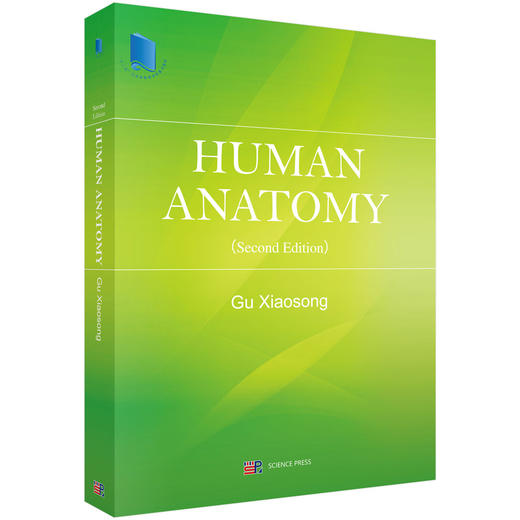
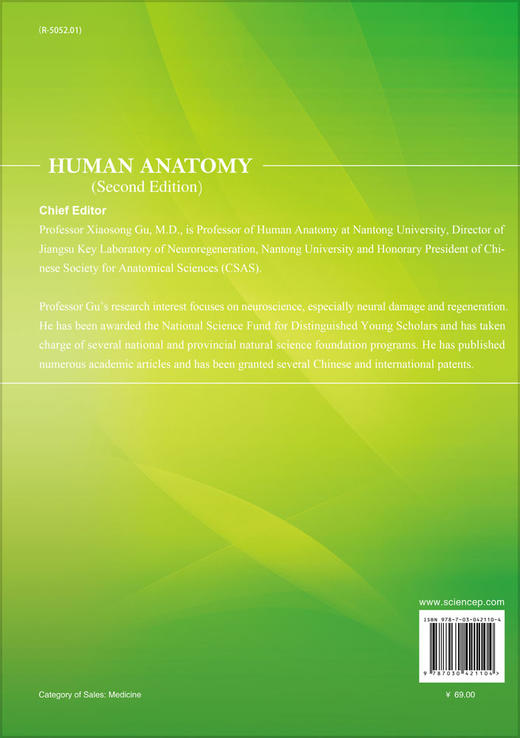
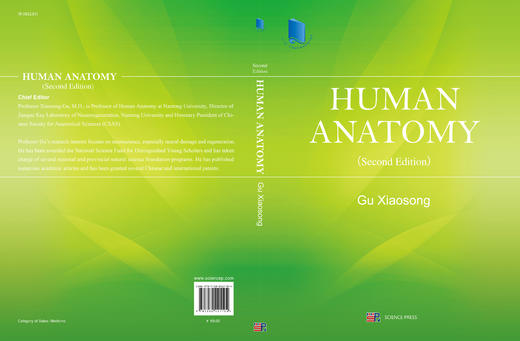
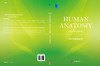
书名:人体解剖学(第二版)(英文版)
定价:69.0
ISBN:9787030421104
作者:顾晓松 著
版次:1
出版时间:2014-12
内容提要:
作者简介:
媒体评论:
目录:
在线试读:
定价:69.0
ISBN:9787030421104
作者:顾晓松 著
版次:1
出版时间:2014-12
内容提要:
本教材以顾晓松教授主编的科学版《人体解剖学》教材为蓝本,结合国内医学教育和留学生医学教育的基本要求,使用英文分别阐述运动系统、消化系统、呼吸系统、泌尿系统、生殖系统、脉管系统、感觉器、神经系统和内分泌系统各器官的形态、结构和功能。
作者简介:
作者介绍
暂无相关内容
媒体评论:
编辑推荐
暂无相关内容
目录:
PREFACE
INTRODUCTION TO HUMAN ANATOMY001
PART ONELOCOMOTOR SYSTEM005
Chapter 1Osteology007
Chapter 2Arthrology033
Chapter 3Myology050
PART TWOSPLANCHNOLOGY083
Chapter 4General Description085
Chapter 5Digestive System087
Chapter 6Respiratory System107
Chapter 7Urinary System120
Chapter 8Reproductive System126
Chapter 9Peritoneum142
PART THREEANGIOLOGY149
Chapter 10Cardiovascular System151
Chapter 11Lymphatic System180
PART FOURSENSORY ORGANS191
Chapter 12General Description193
Chapter 13Visual Organ195
Chapter 14Vestibulocochlear Organ204
Chapter 15Other Sensory Organs213
PART FIVENERVOUS SYSTEM AND ENDOCRINE SYSTEM215
Chapter 16General Description217
Chapter 17Central Nervous System223
Chapter 18Peripheral Nervous System281
Chapter 19Endocrine System318
INTRODUCTION TO HUMAN ANATOMY001
PART ONELOCOMOTOR SYSTEM005
Chapter 1Osteology007
Chapter 2Arthrology033
Chapter 3Myology050
PART TWOSPLANCHNOLOGY083
Chapter 4General Description085
Chapter 5Digestive System087
Chapter 6Respiratory System107
Chapter 7Urinary System120
Chapter 8Reproductive System126
Chapter 9Peritoneum142
PART THREEANGIOLOGY149
Chapter 10Cardiovascular System151
Chapter 11Lymphatic System180
PART FOURSENSORY ORGANS191
Chapter 12General Description193
Chapter 13Visual Organ195
Chapter 14Vestibulocochlear Organ204
Chapter 15Other Sensory Organs213
PART FIVENERVOUS SYSTEM AND ENDOCRINE SYSTEM215
Chapter 16General Description217
Chapter 17Central Nervous System223
Chapter 18Peripheral Nervous System281
Chapter 19Endocrine System318
在线试读:
INTRODUCTION TO HUMAN ANATOMYINTRODUCTION
Section 1 Definition of Human Anatomy
Section 2 Selected Subdisciplines of Human Anatomy
Section 3 Organization of Human BodySection 4Anatomical Terminology
Section 5 Objectives to Study Human Anatomy
Section 1Definition of Human Anatomy
Human anatomy, a morphological branch of biology is a science concerned with the normal patterns and structures of the human bodyThe term anatomy is derived from two Greek words, meaning “to cut up” Anatomy is one of the subdivision of the life sciences, the study of living organismsThe anatomy of every structure of the body is adapted to performing a function or perhaps several functionsNatural selection eliminates organisms with inappropriate structures and functions and determines which favorable structures will be passed from one generation to the next.
The dissection of human cadaver has been the basis for understanding the structure and function of the human body for a long timeEach beginning student can directly discover and learn materials studied as the structures of the body are systematically exploredThe anatomical terms, which students learn while becoming acquainted with body structures, represent the work of a great number of dedicated past anatomists who dissected, diagramed, described, and named the multitude of body parts.
Human anatomy will always be a relevant scienceIt is important to have a good personal understanding of body functionsIt is more than so to the medical profession which is concerned, among others, with bodys dysfunctionsHuman anatomy is no longer confined to isolated observations and descriptions of body structures, but also includes the complexities the body functionsThe science of anatomy is dynamic and has always been a vital one because anatomists have dared to explore the intricate territories of the human bodyThe importance of human anatomy today is in functional human anatomy to show that it is an indispensable science for today and will be so in the futureHuman anatomy is a practical, applied science, forming the foundation of an understanding of physical performance and body healthThe objective of this course is to help students to become wellinformed and conversant in anatomy, while providing for them a solid foundation for medical research
Section 2Selected Subdisciplines of Anatomy
Human Anatomy is a large discipline of scienceSome of its main subdisciplines are the Gross Anatomy, Histology, Cytology, and Embryology.
(1) Gross anatomy is the study of the structures with the unaided eyeThe course of gross anatomy provides the necessary foundation for medical and paramedical studentsThe main subdisciplines of gross anatomy on its turn are: systemic anatomy, regional anatomy, sectional anatomy, and clinical anatomyThe clinical anatomy may embrace anatomy in many aspects with the subdisciplines such as surgical anatomy, microsurgical anatomy, developmental anatomy, anatomy of aging, radiological anatomy which uses mainly Xrays to obtain pictures, and imaging anatomy which uses ultrasound, Magnetic Resonance Imaging(MRI), Positron Transmission Tomography(PET), Computerized Tomography(CT), and other technigues to obtain pictures.
(2) Microscopic anatomy studies structures smaller than 0.1mm which can be seen with the aid of a light microscopeCytology (study of cells), histology (study of tissues), and embryology (study of embryos) are also subspecialities of anatomy and provide additional information about structures and functions of the human bodyMinute details of the cells and tissues are obtained with the aid of electron microscopesRecently, new techniques in staining, histochemistry, and immunohistochemistry are furher enhanced in the use of light and/or electron microscopes for the examination of microstructures and submicrostructures.
(3) Applied anatomy is a subspeciality of anatomy and uses the knowledge and principles of anatomy in specific fields of human activity such as arts, sports and athletic training, emotional expression, etc.
Section 3Organization of Human Body
(1) Body organizationA human body is organized at many levels from the molecular structures to the whole bodyHowever, the organizational levels that are tackled here are the cellular, tissue, organ and system level organizations
1) Cells: The cells are the basic structural and functional components of lifeHumans are multicellular organisms composed of about 60 to 100 trillion cellsIt is at the cellular level that the vital functions of life, such as metabolism, growth, irritability and adaptability, repair, and reproduction are carried outAll cells composing the human body contain many types of cells with distinct structures, specialized to perform some specific functionsAmong these many types of cells are the bone cells, muscle cells, fat cells, blood dells, and nerve cells
2) Tissues: Tissues are layers or
……
Section 1 Definition of Human Anatomy
Section 2 Selected Subdisciplines of Human Anatomy
Section 3 Organization of Human BodySection 4Anatomical Terminology
Section 5 Objectives to Study Human Anatomy
Section 1Definition of Human Anatomy
Human anatomy, a morphological branch of biology is a science concerned with the normal patterns and structures of the human bodyThe term anatomy is derived from two Greek words, meaning “to cut up” Anatomy is one of the subdivision of the life sciences, the study of living organismsThe anatomy of every structure of the body is adapted to performing a function or perhaps several functionsNatural selection eliminates organisms with inappropriate structures and functions and determines which favorable structures will be passed from one generation to the next.
The dissection of human cadaver has been the basis for understanding the structure and function of the human body for a long timeEach beginning student can directly discover and learn materials studied as the structures of the body are systematically exploredThe anatomical terms, which students learn while becoming acquainted with body structures, represent the work of a great number of dedicated past anatomists who dissected, diagramed, described, and named the multitude of body parts.
Human anatomy will always be a relevant scienceIt is important to have a good personal understanding of body functionsIt is more than so to the medical profession which is concerned, among others, with bodys dysfunctionsHuman anatomy is no longer confined to isolated observations and descriptions of body structures, but also includes the complexities the body functionsThe science of anatomy is dynamic and has always been a vital one because anatomists have dared to explore the intricate territories of the human bodyThe importance of human anatomy today is in functional human anatomy to show that it is an indispensable science for today and will be so in the futureHuman anatomy is a practical, applied science, forming the foundation of an understanding of physical performance and body healthThe objective of this course is to help students to become wellinformed and conversant in anatomy, while providing for them a solid foundation for medical research
Section 2Selected Subdisciplines of Anatomy
Human Anatomy is a large discipline of scienceSome of its main subdisciplines are the Gross Anatomy, Histology, Cytology, and Embryology.
(1) Gross anatomy is the study of the structures with the unaided eyeThe course of gross anatomy provides the necessary foundation for medical and paramedical studentsThe main subdisciplines of gross anatomy on its turn are: systemic anatomy, regional anatomy, sectional anatomy, and clinical anatomyThe clinical anatomy may embrace anatomy in many aspects with the subdisciplines such as surgical anatomy, microsurgical anatomy, developmental anatomy, anatomy of aging, radiological anatomy which uses mainly Xrays to obtain pictures, and imaging anatomy which uses ultrasound, Magnetic Resonance Imaging(MRI), Positron Transmission Tomography(PET), Computerized Tomography(CT), and other technigues to obtain pictures.
(2) Microscopic anatomy studies structures smaller than 0.1mm which can be seen with the aid of a light microscopeCytology (study of cells), histology (study of tissues), and embryology (study of embryos) are also subspecialities of anatomy and provide additional information about structures and functions of the human bodyMinute details of the cells and tissues are obtained with the aid of electron microscopesRecently, new techniques in staining, histochemistry, and immunohistochemistry are furher enhanced in the use of light and/or electron microscopes for the examination of microstructures and submicrostructures.
(3) Applied anatomy is a subspeciality of anatomy and uses the knowledge and principles of anatomy in specific fields of human activity such as arts, sports and athletic training, emotional expression, etc.
Section 3Organization of Human Body
(1) Body organizationA human body is organized at many levels from the molecular structures to the whole bodyHowever, the organizational levels that are tackled here are the cellular, tissue, organ and system level organizations
1) Cells: The cells are the basic structural and functional components of lifeHumans are multicellular organisms composed of about 60 to 100 trillion cellsIt is at the cellular level that the vital functions of life, such as metabolism, growth, irritability and adaptability, repair, and reproduction are carried outAll cells composing the human body contain many types of cells with distinct structures, specialized to perform some specific functionsAmong these many types of cells are the bone cells, muscle cells, fat cells, blood dells, and nerve cells
2) Tissues: Tissues are layers or
……
- 科学出版社旗舰店 (微信公众号认证)
- 科学出版社秉承多年来形成的“高层次、高水平、高质量”和“严肃、严密、严格”的优良传统与作风,始终坚持为科技创新服务、为传播与普及科学知识服务、为科学家和广大读者服务的宗旨。
- 扫描二维码,访问我们的微信店铺
- 随时随地的购物、客服咨询、查询订单和物流...