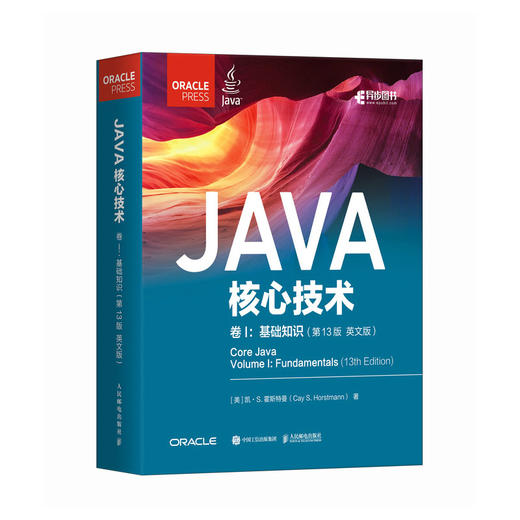
Java核心技术卷I基础知识第13版英文版 Java21教程书籍 Java教材 程序员入门进阶* 高校计算机教材
¥118.30
| 运费: | ¥ 0.00-20.00 |





商品详情
书名:Java核心技术.卷I:基础知识:第13版:英文版
定价:169.0
ISBN:9787115684004
作者:凯·S.霍斯特曼(Cay S. Horstmann)
版次:第1版
出版时间:2026-01
内容提要:
本书是*的《Java 核心技术 卷Ⅰ:基础知识》的新版。这一版对全书进行了*修订,以涵盖Java21的新特性。 新版延续之前版本的优良传统,囊括了Java的全部基础知识,用数百个实际的工程案例,*系统地讲解了Java语言的核心概念、语法、重要特性、开发方法。着力让读者在充分理解Java语言和Java类库的基础上,灵活应用Java提供的*特性,具体包括Java语言基础、面向对象编程、反射和代理、接口和内部类、异常处理、泛型编程、集合类框架、并发编程、注解和 Java 平台模块系统等内容。 本书适合想将Java应用于实际项目的软件开发人员、高等院校教师和学生参考阅读。
作者简介:
凯·S. 霍斯特曼(Cay S. Horstmann) 现任圣何塞州立大学计算机科学荣誉教授,“Java 大师”(Java Champion)。他是《Java核心技术速学版(第 3 版)》《写给大忙人的现代 JavaScript》《快学 Scala(第 2 版)》以及《写给大忙人看的 Java SE 8》的作者。他还编写了很多针对专业程序员和计算机科学专业学生的其他图书。
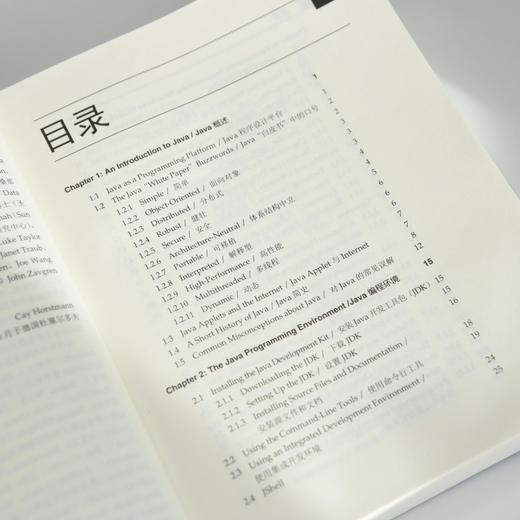
目录:
Chapter 1: An Introduction to Java / Java 概述 1
1.1 Java as a Programming Platform / Java 程序设计平台 1
1.2 The Java“White Paper”Buzzwords / Java“白皮书”中的口号 2
1.2.1 Simple / 简单 2
1.2.2 Object-Oriented / 面向对象 3
1.2.3 Distributed / 分布式 3
1.2.4 Robust / 健壮 3
1.2.5 Secure / * 4
1.2.6 Architecture-Neutral / 体系结构中立 4
1.2.7 Portable / 可移植 5
1.2.8 Interpreted / 解释型 6
1.2.9 High-Performance / 高性能 6
1.2.10 Multithreaded / 多线程 6
1.2.11 Dynamic / 动态 7
1.3 Java Applets and the Internet / Java Applet 与 Internet 7
1.4 A Short History of Java / Java 简史 8
1.5 Common Misconceptions about Java / 对 Java 的常见误解 12
Chapter 2: The Java Programming Environment /Java 编程环境 15
2.1 Installing the Java Development Kit / 安装 Java 开发工具包(JDK) 15
2.1.1 Downloading the JDK / 下载 JDK 15
2.1.2 Setting Up the JDK / 设置 JDK 16
2.1.3 Installing Source Files and Documentation /
安装源文件和文档 18
2.2 Using the Command-Line Tools / 使用命令行工具 19
2.3 Using an Integrated Development Environment /
使用集成开发环境 24
2.4 JShell 25
目录
i
目录 ii
Chapter 3: Fundamental Programming Structures in Java /
Java 的基本编程结构 31
3.1 A Simple Java Program / 一个简单的 Java 程序 31
3.2 Comments / 注释 35
3.3 Data Types / 数据类型 36
3.3.1 Integer Types / 整型 36
3.3.2 Floating-Point Types / 浮点类型 38
3.3.3 The char Type / char 类型 39
3.3.4 Unicode and the char Type / Unicode 与 char 类型 41
3.3.5 The boolean Type / boolean 类型 43
3.4 Variables and Constants / 变量与常量 43
3.4.1 Declaring Variables / 声明变量 43
3.4.2 Initializing Variables/ 初始化变量 45
3.4.3 Constants / 常量 46
3.4.4 Enumerated Types / 枚举类型 47
3.5 Operators / 运算符 48
3.5.1 Arithmetic Operators / 算术运算符 48
3.5.2 Mathematical Functions and Constants /
数学函数与常量 49
3.5.3 Conversions between Numeric Types /
数值类型之间的转换 51
3.5.4 Casts / 强制类型转换 52
3.5.5 Assignment / 赋值 53
3.5.6 Increment and Decrement Operators /
自增与自减运算符 54
3.5.7 Relational and boolean Operators /
关系与 boolean 运算符 54
3.5.8 The Conditional Operator /条件运算符 55
3.5.9 Switch Expressions / switch 表达式 55
3.5.10 Bitwise Operators / 位运算符 57
3.5.11 Parentheses and Operator Hierarchy /
括号与运算符优先级 58
目录 iii
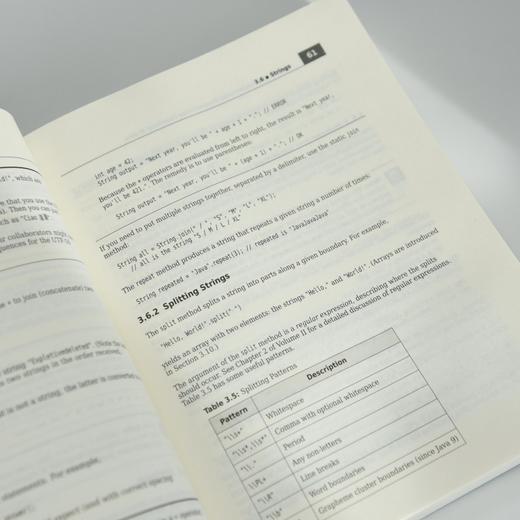
3.6 Strings / 字符串 59
3.6.1 Concatenation / 拼接 60
3.6.2 Splitting Strings / 分割字符串 61
3.6.3 Indexes and Substrings / 索引与子串 62
3.6.4 Strings Are Immutable / String 是不可变的 63
3.6.5 Testing Strings for Equality / 测试字符串是否相等 65
3.6.6 Empty and Null Strings / 空串与 null 串 66
3.6.7 The String API / String API 66
3.6.8 Reading the Online API Documentation /
阅读在线 API 文档 68
3.6.9 Building Strings / 构建字符串 70
3.6.10 Text Blocks / 文本块 73
3.7 Input and Output / 输入与输出 76
3.7.1 Reading Input / 读取输入 76
3.7.2 Formatting Output / 格式化输出 79
3.7.3 File Input and Output / 文件输入与输出 83
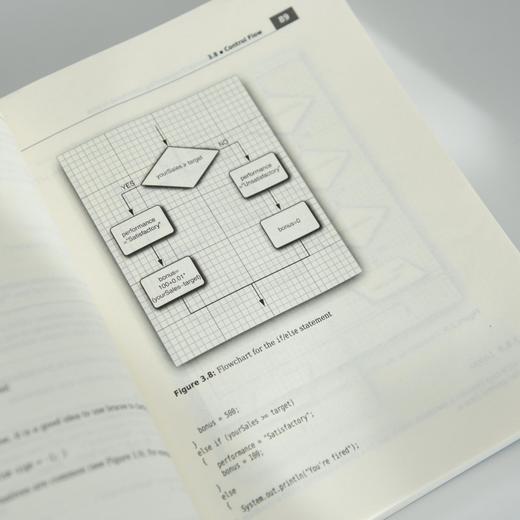
3.8 Control Flow / 控制流 85
3.8.1 Block Scope / 块作用域 86
3.8.2 Conditional Statements / 条件语句 86
3.8.3 Loops / 循环 90
3.8.4 Determinate Loops / 确定性循环 95
3.8.5 Multiple Selections with switch /
使用 switch 实现多重选择 99
3.8.6 Statements That Break Control Flow /
用于跳出控制流的语句 104
3.9 Big Numbers / 大数 107
3.10 Arrays / 数组 110
3.10.1 Declaring Arrays / 声明数组 111
3.10.2 Accessing Array Elements / 访问数组元素 112
3.10.3 The“for each”Loop /“for each”循环 113
3.10.4 Array Copying / 数组复制 114
3.10.5 Command-Line Arguments / 命令行参数 116
3.10.6 Array Sorting / 数组排序 117
目录 ii
Chapter 3: Fundamental Programming Structures in Java /
Java 的基本编程结构 31
3.1 A Simple Java Program / 一个简单的 Java 程序 31
3.2 Comments / 注释 35
3.3 Data Types / 数据类型 36
3.3.1 Integer Types / 整型 36
3.3.2 Floating-Point Types / 浮点类型 38
3.3.3 The char Type / char 类型 39
3.3.4 Unicode and the char Type / Unicode 与 char 类型 41
3.3.5 The boolean Type / boolean 类型 43
3.4 Variables and Constants / 变量与常量 43
3.4.1 Declaring Variables / 声明变量 43
3.4.2 Initializing Variables/ 初始化变量 45
3.4.3 Constants / 常量 46
3.4.4 Enumerated Types / 枚举类型 47
3.5 Operators / 运算符 48
3.5.1 Arithmetic Operators / 算术运算符 48
3.5.2 Mathematical Functions and Constants /
数学函数与常量 49
3.5.3 Conversions between Numeric Types /
数值类型之间的转换 51
3.5.4 Casts / 强制类型转换 52
3.5.5 Assignment / 赋值 53
3.5.6 Increment and Decrement Operators /
自增与自减运算符 54
3.5.7 Relational and boolean Operators /
关系与 boolean 运算符 54
3.5.8 The Conditional Operator /条件运算符 55
3.5.9 Switch Expressions / switch 表达式 55
3.5.10 Bitwise Operators / 位运算符 57
3.5.11 Parentheses and Operator Hierarchy /
括号与运算符优先级 58
目录 iii
3.6 Strings / 字符串 59
3.6.1 Concatenation / 拼接 60
3.6.2 Splitting Strings / 分割字符串 61
3.6.3 Indexes and Substrings / 索引与子串 62
3.6.4 Strings Are Immutable / String 是不可变的 63
3.6.5 Testing Strings for Equality / 测试字符串是否相等 65
3.6.6 Empty and Null Strings / 空串与 null 串 66
3.6.7 The String API / String API 66
3.6.8 Reading the Online API Documentation /
阅读在线 API 文档 68
3.6.9 Building Strings / 构建字符串 70
3.6.10 Text Blocks / 文本块 73
3.7 Input and Output / 输入与输出 76
3.7.1 Reading Input / 读取输入 76
3.7.2 Formatting Output / 格式化输出 79
3.7.3 File Input and Output / 文件输入与输出 83
3.8 Control Flow / 控制流 85
3.8.1 Block Scope / 块作用域 86
3.8.2 Conditional Statements / 条件语句 86
3.8.3 Loops / 循环 90
3.8.4 Determinate Loops / 确定性循环 95
3.8.5 Multiple Selections with switch /
使用 switch 实现多重选择 99
3.8.6 Statements That Break Control Flow /
用于跳出控制流的语句 104
3.9 Big Numbers / 大数 107
3.10 Arrays / 数组 110
3.10.1 Declaring Arrays / 声明数组 111
3.10.2 Accessing Array Elements / 访问数组元素 112
3.10.3 The“for each”Loop /“for each”循环 113
3.10.4 Array Copying / 数组复制 114
3.10.5 Command-Line Arguments / 命令行参数 116
3.10.6 Array Sorting / 数组排序 117
目录 iv
3.10.7 Multidimensional Arrays / 多维数组 119
3.10.8 Ragged Arrays / 不规则数组 122
Chapter 4: Objects and Classes / 对象与类 127
4.1 Introduction to Object-Oriented Programming /
面向对象编程概述 127
4.1.1 Classes / 类 128
4.1.2 Objects / 对象 129
4.1.3 Identifying Classes / 识别类 130
4.1.4 Relationships between Classes / 类之间的关系 130
4.2 Using Predefined Classes / 使用预定义的类 132
4.2.1 Objects and Object Variables / 对象与对象变量 132
4.2.2 The LocalDate Class of the Java Library /
Java 类库中的 LocalDate 类 136
4.2.3 Mutator and Accessor Methods /
更改器方法与访问器方法 138
4.3 Defining Your Own Classes / 定义自己的类 142
4.3.1 An Employee Class / Employee 类 142
4.3.2 Use of Multiple Source Files / 使用多个源文件 145
4.3.3 Dissecting the Employee Class / 剖析 Employee 类 146
4.3.4 First Steps with Constructors / 从构造器开始 147
4.3.5 Declaring Local Variables with var/
使用 var 声明局部变量 148
4.3.6 Working with null References / 使用 null 引用 149
4.3.7 Implicit and Explicit Parameters /
隐式参数与显式参数 151
4.3.8 Benefits of Encapsulation / 封装的好处 152
4.3.9 Class-Based Access Privileges / 基于类的访问权限 154
4.3.10 Private Methods / 私有方法 155
4.3.11 Final Instance Fields / final 实例字段 156
4.4 Static Fields and Methods / 静态字段与静态方法 157
4.4.1 Static Fields / 静态字段 157
4.4.2 Static Constants / 静态常量 158
目录 v
4.4.3 Static Methods / 静态方法 159
4.4.4 Factory Methods / 工厂方法 160
4.4.5 The main Method / main 方法 161
4.5 Method Parameters / 方法参数 164
4.6 Object Construction / 对象构建 171
4.6.1 Overloading / 重载 171
4.6.2 Default Field Initialization / 默认字段初始化 172
4.6.3 The Constructor with No Arguments / 无参构造器 173
4.6.4 Explicit Field Initialization / 显式字段初始化 174
4.6.5 Parameter Names / 参数名 175
4.6.6 Calling Another Constructor / 调用另一个构造器 176
4.6.7 Initialization Blocks / 初始化块 176
4.6.8 Object Destruction and the finalize Method /
对象析构与 finalize 方法 182
4.7 Records / 记录类型 182
4.7.1 The Record Concept / 记录类型的概念 183
4.7.2 Constructors: Canonical, Compact, and Custom /
规范构造器、紧凑构造器和自定义构造器 185
4.8 Packages / 包 188
4.8.1 Package Names / 包名 188
4.8.2 Class Importation / 导入类 189
4.8.3 Static Imports / 静态导入 191
4.8.4 Addition of a Class into a Package /
将类添加到某个包中 192
4.8.5 Package Access / 包访问权限 195
4.8.6 The Class Path / 类路径 197
4.8.7 Setting the Class Path / 设置类路径 199
4.9 JAR Files / JAR 文件 200
4.9.1 Creating JAR files / 创建 JAR 文件 200
4.9.2 The Manifest / 清单文件 201
4.9.3 Executable JAR Files / 可执行 JAR 文件 202
4.9.4 Multi-Release JAR Files /
支持多个 Java 版本的 JAR 文件 203
目录 iv
3.10.7 Multidimensional Arrays / 多维数组 119
3.10.8 Ragged Arrays / 不规则数组 122
Chapter 4: Objects and Classes / 对象与类 127
4.1 Introduction to Object-Oriented Programming /
面向对象编程概述 127
4.1.1 Classes / 类 128
4.1.2 Objects / 对象 129
4.1.3 Identifying Classes / 识别类 130
4.1.4 Relationships between Classes / 类之间的关系 130
4.2 Using Predefined Classes / 使用预定义的类 132
4.2.1 Objects and Object Variables / 对象与对象变量 132
4.2.2 The LocalDate Class of the Java Library /
Java 类库中的 LocalDate 类 136
4.2.3 Mutator and Accessor Methods /
更改器方法与访问器方法 138
4.3 Defining Your Own Classes / 定义自己的类 142
4.3.1 An Employee Class / Employee 类 142
4.3.2 Use of Multiple Source Files / 使用多个源文件 145
4.3.3 Dissecting the Employee Class / 剖析 Employee 类 146
4.3.4 First Steps with Constructors / 从构造器开始 147
4.3.5 Declaring Local Variables with var/
使用 var 声明局部变量 148
4.3.6 Working with null References / 使用 null 引用 149
4.3.7 Implicit and Explicit Parameters /
隐式参数与显式参数 151
4.3.8 Benefits of Encapsulation / 封装的好处 152
4.3.9 Class-Based Access Privileges / 基于类的访问权限 154
4.3.10 Private Methods / 私有方法 155
4.3.11 Final Instance Fields / final 实例字段 156
4.4 Static Fields and Methods / 静态字段与静态方法 157
4.4.1 Static Fields / 静态字段 157
4.4.2 Static Constants / 静态常量 158
目录 v
4.4.3 Static Methods / 静态方法 159
4.4.4 Factory Methods / 工厂方法 160
4.4.5 The main Method / main 方法 161
4.5 Method Parameters / 方法参数 164
4.6 Object Construction / 对象构建 171
4.6.1 Overloading / 重载 171
4.6.2 Default Field Initialization / 默认字段初始化 172
4.6.3 The Constructor with No Arguments / 无参构造器 173
4.6.4 Explicit Field Initialization / 显式字段初始化 174
4.6.5 Parameter Names / 参数名 175
4.6.6 Calling Another Constructor / 调用另一个构造器 176
4.6.7 Initialization Blocks / 初始化块 176
4.6.8 Object Destruction and the finalize Method /
对象析构与 finalize 方法 182
4.7 Records / 记录类型 182
4.7.1 The Record Concept / 记录类型的概念 183
4.7.2 Constructors: Canonical, Compact, and Custom /
规范构造器、紧凑构造器和自定义构造器 185
4.8 Packages / 包 188
4.8.1 Package Names / 包名 188
4.8.2 Class Importation / 导入类 189
4.8.3 Static Imports / 静态导入 191
4.8.4 Addition of a Class into a Package /
将类添加到某个包中 192
4.8.5 Package Access / 包访问权限 195
4.8.6 The Class Path / 类路径 197
4.8.7 Setting the Class Path / 设置类路径 199
4.9 JAR Files / JAR 文件 200
4.9.1 Creating JAR files / 创建 JAR 文件 200
4.9.2 The Manifest / 清单文件 201
4.9.3 Executable JAR Files / 可执行 JAR 文件 202
4.9.4 Multi-Release JAR Files /
支持多个 Java 版本的 JAR 文件 203
目录 vi
4.9.5 A Note about Command-Line Options /
关于命令行选项的说明 205
4.10 Documentation Comments / 文档注释 206
4.10.1 Comment Insertion / 插入注释 207
4.10.2 Class Comments / 类注释 207
4.10.3 Method Comments / 方法注释 208
4.10.4 Field Comments / 字段注释 209
4.10.5 Package Comments / 包注释 209
4.10.6 HTML Markup / HTML 标记 210
4.10.7 Links / 链接 210
4.10.8 General Comments / 通用注释 212
4.10.9 Code Snippets / 代码片段 212
4.10.10 Comment Extraction / 提取注释 213
4.11 Class Design Hints / 类设计建议 214
Chapter 5: Inheritance / 继承 217
5.1 Classes, Superclasses, and Subclasses / 类、*类与子类 217
5.1.1 Defining Subclasses / 定义子类 218
5.1.2 Overriding Methods / 覆盖方法 219
5.1.3 Subclass Constructors / 子类构造器 221
5.1.4 Inheritance Hierarchies / 继承层次 225
5.1.5 Polymorphism / 多态 226
5.1.6 Understanding Method Calls / 理解方法调用 228
5.1.7 Preventing Inheritance: Final Classes and Methods /
阻止继承:final 修饰的类和方法 231
5.1.8 Casting / 强制类型转换 234
5.1.9 Pattern Matching for instanceof /
instanceof 的模式匹配 236
5.1.10 Protected Access / 受保护访问 239
5.2 Object: The Cosmic Superclass / Object:所有类的*类 240
5.2.1 Variables of Type Object / Object 类型的变量 240
5.2.2 The equals Method / equals 方法 241
5.2.3 Equality Testing and Inheritance / 相等性测试与继承 242
目录 vii
5.2.4 The hashCode Method / hashCode 方法 246
5.2.5 The toString Method / toString 方法 250
5.3 Generic Array Lists / 泛型数组列表 257
5.3.1 Declaring Array Lists / 声明数组列表 258
5.3.2 Accessing Array List Elements / 访问数组列表元素 260
5.3.3 Compatibility between Typed and Raw Array Lists /
类型化数组列表和原始数组列表的兼容性 264
5.4 Object Wrappers and Autoboxing / 对象包装器与自动装箱 265
5.5 Methods with a Variable Number of Arguments /
参数数量可变的方法 270
5.6 Abstract Classes / 抽象类 271
5.7 Enumeration Classes / 枚举类 277
5.8 Sealed Classes / 密封类 282
5.9 Pattern Matching / 模式匹配 288
5.9.1 Null Handling / null 的处理 289
5.9.2 Guards / 守卫 290
5.9.3 Exhaustiveness / 可穷尽性 290
5.9.4 Dominance / 支配性 292
5.9.5 Patterns and Constants / 模式与常量 293
5.9.6 Variable Scope and Fallthrough /
变量作用域与贯穿执行 293
5.10 Reflection / 反射 296
5.10.1 The Class Class / Class 类 297
5.10.2 A Primer on Declaring Exceptions / 异常声明初探 300
5.10.3 Resources / 资源 301
5.10.4 Using Reflection to Analyze the Capabilities of Classes /
使用反射分析类的功能 304
5.10.5 Using Reflection to Analyze Objects at Runtime /
使用反射在运行时分析对象 311
5.10.6 Using Reflection to Write Generic Array Code /
使用反射编写泛型数组代码 316
5.10.7 Invoking Arbitrary Methods and Constructors /
调用任意方法和构造器 320
目录 vi
4.9.5 A Note about Command-Line Options /
关于命令行选项的说明 205
4.10 Documentation Comments / 文档注释 206
4.10.1 Comment Insertion / 插入注释 207
4.10.2 Class Comments / 类注释 207
4.10.3 Method Comments / 方法注释 208
4.10.4 Field Comments / 字段注释 209
4.10.5 Package Comments / 包注释 209
4.10.6 HTML Markup / HTML 标记 210
4.10.7 Links / 链接 210
4.10.8 General Comments / 通用注释 212
4.10.9 Code Snippets / 代码片段 212
4.10.10 Comment Extraction / 提取注释 213
4.11 Class Design Hints / 类设计建议 214
Chapter 5: Inheritance / 继承 217
5.1 Classes, Superclasses, and Subclasses / 类、*类与子类 217
5.1.1 Defining Subclasses / 定义子类 218
5.1.2 Overriding Methods / 覆盖方法 219
5.1.3 Subclass Constructors / 子类构造器 221
5.1.4 Inheritance Hierarchies / 继承层次 225
5.1.5 Polymorphism / 多态 226
5.1.6 Understanding Method Calls / 理解方法调用 228
5.1.7 Preventing Inheritance: Final Classes and Methods /
阻止继承:final 修饰的类和方法 231
5.1.8 Casting / 强制类型转换 234
5.1.9 Pattern Matching for instanceof /
instanceof 的模式匹配 236
5.1.10 Protected Access / 受保护访问 239
5.2 Object: The Cosmic Superclass / Object:所有类的*类 240
5.2.1 Variables of Type Object / Object 类型的变量 240
5.2.2 The equals Method / equals 方法 241
5.2.3 Equality Testing and Inheritance / 相等性测试与继承 242
目录 vii
5.2.4 The hashCode Method / hashCode 方法 246
5.2.5 The toString Method / toString 方法 250
5.3 Generic Array Lists / 泛型数组列表 257
5.3.1 Declaring Array Lists / 声明数组列表 258
5.3.2 Accessing Array List Elements / 访问数组列表元素 260
5.3.3 Compatibility between Typed and Raw Array Lists /
类型化数组列表和原始数组列表的兼容性 264
5.4 Object Wrappers and Autoboxing / 对象包装器与自动装箱 265
5.5 Methods with a Variable Number of Arguments /
参数数量可变的方法 270
5.6 Abstract Classes / 抽象类 271
5.7 Enumeration Classes / 枚举类 277
5.8 Sealed Classes / 密封类 282
5.9 Pattern Matching / 模式匹配 288
5.9.1 Null Handling / null 的处理 289
5.9.2 Guards / 守卫 290
5.9.3 Exhaustiveness / 可穷尽性 290
5.9.4 Dominance / 支配性 292
5.9.5 Patterns and Constants / 模式与常量 293
5.9.6 Variable Scope and Fallthrough /
变量作用域与贯穿执行 293
5.10 Reflection / 反射 296
5.10.1 The Class Class / Class 类 297
5.10.2 A Primer on Declaring Exceptions / 异常声明初探 300
5.10.3 Resources / 资源 301
5.10.4 Using Reflection to Analyze the Capabilities of Classes /
使用反射分析类的功能 304
5.10.5 Using Reflection to Analyze Objects at Runtime /
使用反射在运行时分析对象 311
5.10.6 Using Reflection to Write Generic Array Code /
使用反射编写泛型数组代码 316
5.10.7 Invoking Arbitrary Methods and Constructors /
调用任意方法和构造器 320
目录 viii
5.11 Design Hints for Inheritance / 继承的设计建议 324
Chapter 6: Interfaces, Lambda Expressions, and Inner Classes /
接口、Lambda 表达式和内部类 327
6.1 Interfaces / 接口 327
6.1.1 The Interface Concept / 接口的概念 327
6.1.2 Properties of Interfaces / 接口的特性 335
6.1.3 Interfaces and Abstract Classes / 接口与抽象类 337
6.1.4 Static and Private Methods / 静态方法与私有方法 338
6.1.5 Default Methods / 默认方法 339
6.1.6 Resolving Default Method Conflicts /
解决默认方法冲突 340
6.1.7 Interfaces and Callbacks / 接口与回调 342
6.1.8 The Comparator Interface / Comparator 接口 345
6.1.9 Object Cloning / 对象克隆 347
6.2 Lambda Expressions / Lambda 表达式 354
6.2.1 Why Lambdas / 为什么要引入 Lambda 表达式 354
6.2.2 The Syntax of Lambda Expressions /
Lambda 表达式的语法 355
6.2.3 Functional Interfaces / 函数式接口 358
6.2.4 Function Types / 函数类型 359
6.2.5 Method References / 方法引用 361
6.2.6 Constructor References / 构造器引用 365
6.2.7 Variable Scope / 变量作用域 366
6.2.8 Processing Lambda Expressions /
处理 Lambda 表达式 369
6.2.9 Creating Comparators / 创建比较器 373
6.3 Inner Classes / 内部类 375
6.3.1 Use of an Inner Class to Access Object State /
使用内部类访问对象状态 376
6.3.2 Special Syntax Rules for Inner Classes /
内部类的特殊语法规则 380
目录 ix
6.3.3 Are Inner Classes Useful Actually Necessary Secure /
内部类是否有用、*要和* 381
6.3.4 Local Inner Classes / 局部内部类 382
6.3.5 Accessing Variables from Outer Methods /
从外部方法访问变量 383
6.3.6 Anonymous Inner Classes / 匿名内部类 385
6.3.7 Static Classes / 静态内部类 389
6.4 Service Loaders / 服务加载器 393
6.5 Proxies / 代理 395
6.5.1 When to Use Proxies / 何时使用代理 396
6.5.2 Creating Proxy Objects / 创建代理对象 396
6.5.3 Properties of Proxy Classes / 代理类的特性 400
Chapter 7: Exceptions, Assertions, and Logging / 异常、断言和日志 403
7.1 Dealing with Errors / 处理错误 403
7.1.1 The Classification of Exceptions / 异常分类 405
7.1.2 Declaring Checked Exceptions / 声明检查型异常 407
7.1.3 How to Throw an Exception / 如何抛出异常 409
7.1.4 Creating Exception Classes / 创建异常类 411
7.2 Catching Exceptions / 捕获异常 412
7.2.1 Catching an Exception / 捕获一个异常 412
7.2.2 Catching Multiple Exceptions / 捕获多个异常 414
7.2.3 Rethrowing and Chaining Exceptions /
再次抛出异常与异常链 417
7.2.4 The finally Clause/ finally 子句 418
7.2.5 The try-with-Resources Statement /
try-with-Resources 语句 421
7.2.6 Analyzing Stack Trace Elements / 分析栈轨迹元素 423
7.3 Tips for Using Exceptions / 使用异常的技巧 427
7.4 Using Assertions / 使用断言 431
7.4.1 The Assertion Concept / 断言的概念 431
7.4.2 Assertion Enabling and Disabling / 启用和禁用断言 432
目录 viii
5.11 Design Hints for Inheritance / 继承的设计建议 324
Chapter 6: Interfaces, Lambda Expressions, and Inner Classes /
接口、Lambda 表达式和内部类 327
6.1 Interfaces / 接口 327
6.1.1 The Interface Concept / 接口的概念 327
6.1.2 Properties of Interfaces / 接口的特性 335
6.1.3 Interfaces and Abstract Classes / 接口与抽象类 337
6.1.4 Static and Private Methods / 静态方法与私有方法 338
6.1.5 Default Methods / 默认方法 339
6.1.6 Resolving Default Method Conflicts /
解决默认方法冲突 340
6.1.7 Interfaces and Callbacks / 接口与回调 342
6.1.8 The Comparator Interface / Comparator 接口 345
6.1.9 Object Cloning / 对象克隆 347
6.2 Lambda Expressions / Lambda 表达式 354
6.2.1 Why Lambdas / 为什么要引入 Lambda 表达式 354
6.2.2 The Syntax of Lambda Expressions /
Lambda 表达式的语法 355
6.2.3 Functional Interfaces / 函数式接口 358
6.2.4 Function Types / 函数类型 359
6.2.5 Method References / 方法引用 361
6.2.6 Constructor References / 构造器引用 365
6.2.7 Variable Scope / 变量作用域 366
6.2.8 Processing Lambda Expressions /
处理 Lambda 表达式 369
6.2.9 Creating Comparators / 创建比较器 373
6.3 Inner Classes / 内部类 375
6.3.1 Use of an Inner Class to Access Object State /
使用内部类访问对象状态 376
6.3.2 Special Syntax Rules for Inner Classes /
内部类的特殊语法规则 380
目录 ix
6.3.3 Are Inner Classes Useful Actually Necessary Secure /
内部类是否有用、*要和* 381
6.3.4 Local Inner Classes / 局部内部类 382
6.3.5 Accessing Variables from Outer Methods /
从外部方法访问变量 383
6.3.6 Anonymous Inner Classes / 匿名内部类 385
6.3.7 Static Classes / 静态内部类 389
6.4 Service Loaders / 服务加载器 393
6.5 Proxies / 代理 395
6.5.1 When to Use Proxies / 何时使用代理 396
6.5.2 Creating Proxy Objects / 创建代理对象 396
6.5.3 Properties of Proxy Classes / 代理类的特性 400
Chapter 7: Exceptions, Assertions, and Logging / 异常、断言和日志 403
7.1 Dealing with Errors / 处理错误 403
7.1.1 The Classification of Exceptions / 异常分类 405
7.1.2 Declaring Checked Exceptions / 声明检查型异常 407
7.1.3 How to Throw an Exception / 如何抛出异常 409
7.1.4 Creating Exception Classes / 创建异常类 411
7.2 Catching Exceptions / 捕获异常 412
7.2.1 Catching an Exception / 捕获一个异常 412
7.2.2 Catching Multiple Exceptions / 捕获多个异常 414
7.2.3 Rethrowing and Chaining Exceptions /
再次抛出异常与异常链 417
7.2.4 The finally Clause/ finally 子句 418
7.2.5 The try-with-Resources Statement /
try-with-Resources 语句 421
7.2.6 Analyzing Stack Trace Elements / 分析栈轨迹元素 423
7.3 Tips for Using Exceptions / 使用异常的技巧 427
7.4 Using Assertions / 使用断言 431
7.4.1 The Assertion Concept / 断言的概念 431
7.4.2 Assertion Enabling and Disabling / 启用和禁用断言 432
目录 x
7.4.3 Using Assertions for Parameter Checking /
使用断言检查参数 434
7.4.4 Using Assertions for Documenting Assumptions /
使用断言保证文档中假定成立的条件 435
7.5 Logging / 日志 436
7.5.1 Should You Use the Java Logging Framewor
定价:169.0
ISBN:9787115684004
作者:凯·S.霍斯特曼(Cay S. Horstmann)
版次:第1版
出版时间:2026-01
内容提要:
本书是*的《Java 核心技术 卷Ⅰ:基础知识》的新版。这一版对全书进行了*修订,以涵盖Java21的新特性。 新版延续之前版本的优良传统,囊括了Java的全部基础知识,用数百个实际的工程案例,*系统地讲解了Java语言的核心概念、语法、重要特性、开发方法。着力让读者在充分理解Java语言和Java类库的基础上,灵活应用Java提供的*特性,具体包括Java语言基础、面向对象编程、反射和代理、接口和内部类、异常处理、泛型编程、集合类框架、并发编程、注解和 Java 平台模块系统等内容。 本书适合想将Java应用于实际项目的软件开发人员、高等院校教师和学生参考阅读。
作者简介:
凯·S. 霍斯特曼(Cay S. Horstmann) 现任圣何塞州立大学计算机科学荣誉教授,“Java 大师”(Java Champion)。他是《Java核心技术速学版(第 3 版)》《写给大忙人的现代 JavaScript》《快学 Scala(第 2 版)》以及《写给大忙人看的 Java SE 8》的作者。他还编写了很多针对专业程序员和计算机科学专业学生的其他图书。
目录:
Chapter 1: An Introduction to Java / Java 概述 1
1.1 Java as a Programming Platform / Java 程序设计平台 1
1.2 The Java“White Paper”Buzzwords / Java“白皮书”中的口号 2
1.2.1 Simple / 简单 2
1.2.2 Object-Oriented / 面向对象 3
1.2.3 Distributed / 分布式 3
1.2.4 Robust / 健壮 3
1.2.5 Secure / * 4
1.2.6 Architecture-Neutral / 体系结构中立 4
1.2.7 Portable / 可移植 5
1.2.8 Interpreted / 解释型 6
1.2.9 High-Performance / 高性能 6
1.2.10 Multithreaded / 多线程 6
1.2.11 Dynamic / 动态 7
1.3 Java Applets and the Internet / Java Applet 与 Internet 7
1.4 A Short History of Java / Java 简史 8
1.5 Common Misconceptions about Java / 对 Java 的常见误解 12
Chapter 2: The Java Programming Environment /Java 编程环境 15
2.1 Installing the Java Development Kit / 安装 Java 开发工具包(JDK) 15
2.1.1 Downloading the JDK / 下载 JDK 15
2.1.2 Setting Up the JDK / 设置 JDK 16
2.1.3 Installing Source Files and Documentation /
安装源文件和文档 18
2.2 Using the Command-Line Tools / 使用命令行工具 19
2.3 Using an Integrated Development Environment /
使用集成开发环境 24
2.4 JShell 25
目录
i
目录 ii
Chapter 3: Fundamental Programming Structures in Java /
Java 的基本编程结构 31
3.1 A Simple Java Program / 一个简单的 Java 程序 31
3.2 Comments / 注释 35
3.3 Data Types / 数据类型 36
3.3.1 Integer Types / 整型 36
3.3.2 Floating-Point Types / 浮点类型 38
3.3.3 The char Type / char 类型 39
3.3.4 Unicode and the char Type / Unicode 与 char 类型 41
3.3.5 The boolean Type / boolean 类型 43
3.4 Variables and Constants / 变量与常量 43
3.4.1 Declaring Variables / 声明变量 43
3.4.2 Initializing Variables/ 初始化变量 45
3.4.3 Constants / 常量 46
3.4.4 Enumerated Types / 枚举类型 47
3.5 Operators / 运算符 48
3.5.1 Arithmetic Operators / 算术运算符 48
3.5.2 Mathematical Functions and Constants /
数学函数与常量 49
3.5.3 Conversions between Numeric Types /
数值类型之间的转换 51
3.5.4 Casts / 强制类型转换 52
3.5.5 Assignment / 赋值 53
3.5.6 Increment and Decrement Operators /
自增与自减运算符 54
3.5.7 Relational and boolean Operators /
关系与 boolean 运算符 54
3.5.8 The Conditional Operator /条件运算符 55
3.5.9 Switch Expressions / switch 表达式 55
3.5.10 Bitwise Operators / 位运算符 57
3.5.11 Parentheses and Operator Hierarchy /
括号与运算符优先级 58
目录 iii
3.6 Strings / 字符串 59
3.6.1 Concatenation / 拼接 60
3.6.2 Splitting Strings / 分割字符串 61
3.6.3 Indexes and Substrings / 索引与子串 62
3.6.4 Strings Are Immutable / String 是不可变的 63
3.6.5 Testing Strings for Equality / 测试字符串是否相等 65
3.6.6 Empty and Null Strings / 空串与 null 串 66
3.6.7 The String API / String API 66
3.6.8 Reading the Online API Documentation /
阅读在线 API 文档 68
3.6.9 Building Strings / 构建字符串 70
3.6.10 Text Blocks / 文本块 73
3.7 Input and Output / 输入与输出 76
3.7.1 Reading Input / 读取输入 76
3.7.2 Formatting Output / 格式化输出 79
3.7.3 File Input and Output / 文件输入与输出 83
3.8 Control Flow / 控制流 85
3.8.1 Block Scope / 块作用域 86
3.8.2 Conditional Statements / 条件语句 86
3.8.3 Loops / 循环 90
3.8.4 Determinate Loops / 确定性循环 95
3.8.5 Multiple Selections with switch /
使用 switch 实现多重选择 99
3.8.6 Statements That Break Control Flow /
用于跳出控制流的语句 104
3.9 Big Numbers / 大数 107
3.10 Arrays / 数组 110
3.10.1 Declaring Arrays / 声明数组 111
3.10.2 Accessing Array Elements / 访问数组元素 112
3.10.3 The“for each”Loop /“for each”循环 113
3.10.4 Array Copying / 数组复制 114
3.10.5 Command-Line Arguments / 命令行参数 116
3.10.6 Array Sorting / 数组排序 117
目录 ii
Chapter 3: Fundamental Programming Structures in Java /
Java 的基本编程结构 31
3.1 A Simple Java Program / 一个简单的 Java 程序 31
3.2 Comments / 注释 35
3.3 Data Types / 数据类型 36
3.3.1 Integer Types / 整型 36
3.3.2 Floating-Point Types / 浮点类型 38
3.3.3 The char Type / char 类型 39
3.3.4 Unicode and the char Type / Unicode 与 char 类型 41
3.3.5 The boolean Type / boolean 类型 43
3.4 Variables and Constants / 变量与常量 43
3.4.1 Declaring Variables / 声明变量 43
3.4.2 Initializing Variables/ 初始化变量 45
3.4.3 Constants / 常量 46
3.4.4 Enumerated Types / 枚举类型 47
3.5 Operators / 运算符 48
3.5.1 Arithmetic Operators / 算术运算符 48
3.5.2 Mathematical Functions and Constants /
数学函数与常量 49
3.5.3 Conversions between Numeric Types /
数值类型之间的转换 51
3.5.4 Casts / 强制类型转换 52
3.5.5 Assignment / 赋值 53
3.5.6 Increment and Decrement Operators /
自增与自减运算符 54
3.5.7 Relational and boolean Operators /
关系与 boolean 运算符 54
3.5.8 The Conditional Operator /条件运算符 55
3.5.9 Switch Expressions / switch 表达式 55
3.5.10 Bitwise Operators / 位运算符 57
3.5.11 Parentheses and Operator Hierarchy /
括号与运算符优先级 58
目录 iii
3.6 Strings / 字符串 59
3.6.1 Concatenation / 拼接 60
3.6.2 Splitting Strings / 分割字符串 61
3.6.3 Indexes and Substrings / 索引与子串 62
3.6.4 Strings Are Immutable / String 是不可变的 63
3.6.5 Testing Strings for Equality / 测试字符串是否相等 65
3.6.6 Empty and Null Strings / 空串与 null 串 66
3.6.7 The String API / String API 66
3.6.8 Reading the Online API Documentation /
阅读在线 API 文档 68
3.6.9 Building Strings / 构建字符串 70
3.6.10 Text Blocks / 文本块 73
3.7 Input and Output / 输入与输出 76
3.7.1 Reading Input / 读取输入 76
3.7.2 Formatting Output / 格式化输出 79
3.7.3 File Input and Output / 文件输入与输出 83
3.8 Control Flow / 控制流 85
3.8.1 Block Scope / 块作用域 86
3.8.2 Conditional Statements / 条件语句 86
3.8.3 Loops / 循环 90
3.8.4 Determinate Loops / 确定性循环 95
3.8.5 Multiple Selections with switch /
使用 switch 实现多重选择 99
3.8.6 Statements That Break Control Flow /
用于跳出控制流的语句 104
3.9 Big Numbers / 大数 107
3.10 Arrays / 数组 110
3.10.1 Declaring Arrays / 声明数组 111
3.10.2 Accessing Array Elements / 访问数组元素 112
3.10.3 The“for each”Loop /“for each”循环 113
3.10.4 Array Copying / 数组复制 114
3.10.5 Command-Line Arguments / 命令行参数 116
3.10.6 Array Sorting / 数组排序 117
目录 iv
3.10.7 Multidimensional Arrays / 多维数组 119
3.10.8 Ragged Arrays / 不规则数组 122
Chapter 4: Objects and Classes / 对象与类 127
4.1 Introduction to Object-Oriented Programming /
面向对象编程概述 127
4.1.1 Classes / 类 128
4.1.2 Objects / 对象 129
4.1.3 Identifying Classes / 识别类 130
4.1.4 Relationships between Classes / 类之间的关系 130
4.2 Using Predefined Classes / 使用预定义的类 132
4.2.1 Objects and Object Variables / 对象与对象变量 132
4.2.2 The LocalDate Class of the Java Library /
Java 类库中的 LocalDate 类 136
4.2.3 Mutator and Accessor Methods /
更改器方法与访问器方法 138
4.3 Defining Your Own Classes / 定义自己的类 142
4.3.1 An Employee Class / Employee 类 142
4.3.2 Use of Multiple Source Files / 使用多个源文件 145
4.3.3 Dissecting the Employee Class / 剖析 Employee 类 146
4.3.4 First Steps with Constructors / 从构造器开始 147
4.3.5 Declaring Local Variables with var/
使用 var 声明局部变量 148
4.3.6 Working with null References / 使用 null 引用 149
4.3.7 Implicit and Explicit Parameters /
隐式参数与显式参数 151
4.3.8 Benefits of Encapsulation / 封装的好处 152
4.3.9 Class-Based Access Privileges / 基于类的访问权限 154
4.3.10 Private Methods / 私有方法 155
4.3.11 Final Instance Fields / final 实例字段 156
4.4 Static Fields and Methods / 静态字段与静态方法 157
4.4.1 Static Fields / 静态字段 157
4.4.2 Static Constants / 静态常量 158
目录 v
4.4.3 Static Methods / 静态方法 159
4.4.4 Factory Methods / 工厂方法 160
4.4.5 The main Method / main 方法 161
4.5 Method Parameters / 方法参数 164
4.6 Object Construction / 对象构建 171
4.6.1 Overloading / 重载 171
4.6.2 Default Field Initialization / 默认字段初始化 172
4.6.3 The Constructor with No Arguments / 无参构造器 173
4.6.4 Explicit Field Initialization / 显式字段初始化 174
4.6.5 Parameter Names / 参数名 175
4.6.6 Calling Another Constructor / 调用另一个构造器 176
4.6.7 Initialization Blocks / 初始化块 176
4.6.8 Object Destruction and the finalize Method /
对象析构与 finalize 方法 182
4.7 Records / 记录类型 182
4.7.1 The Record Concept / 记录类型的概念 183
4.7.2 Constructors: Canonical, Compact, and Custom /
规范构造器、紧凑构造器和自定义构造器 185
4.8 Packages / 包 188
4.8.1 Package Names / 包名 188
4.8.2 Class Importation / 导入类 189
4.8.3 Static Imports / 静态导入 191
4.8.4 Addition of a Class into a Package /
将类添加到某个包中 192
4.8.5 Package Access / 包访问权限 195
4.8.6 The Class Path / 类路径 197
4.8.7 Setting the Class Path / 设置类路径 199
4.9 JAR Files / JAR 文件 200
4.9.1 Creating JAR files / 创建 JAR 文件 200
4.9.2 The Manifest / 清单文件 201
4.9.3 Executable JAR Files / 可执行 JAR 文件 202
4.9.4 Multi-Release JAR Files /
支持多个 Java 版本的 JAR 文件 203
目录 iv
3.10.7 Multidimensional Arrays / 多维数组 119
3.10.8 Ragged Arrays / 不规则数组 122
Chapter 4: Objects and Classes / 对象与类 127
4.1 Introduction to Object-Oriented Programming /
面向对象编程概述 127
4.1.1 Classes / 类 128
4.1.2 Objects / 对象 129
4.1.3 Identifying Classes / 识别类 130
4.1.4 Relationships between Classes / 类之间的关系 130
4.2 Using Predefined Classes / 使用预定义的类 132
4.2.1 Objects and Object Variables / 对象与对象变量 132
4.2.2 The LocalDate Class of the Java Library /
Java 类库中的 LocalDate 类 136
4.2.3 Mutator and Accessor Methods /
更改器方法与访问器方法 138
4.3 Defining Your Own Classes / 定义自己的类 142
4.3.1 An Employee Class / Employee 类 142
4.3.2 Use of Multiple Source Files / 使用多个源文件 145
4.3.3 Dissecting the Employee Class / 剖析 Employee 类 146
4.3.4 First Steps with Constructors / 从构造器开始 147
4.3.5 Declaring Local Variables with var/
使用 var 声明局部变量 148
4.3.6 Working with null References / 使用 null 引用 149
4.3.7 Implicit and Explicit Parameters /
隐式参数与显式参数 151
4.3.8 Benefits of Encapsulation / 封装的好处 152
4.3.9 Class-Based Access Privileges / 基于类的访问权限 154
4.3.10 Private Methods / 私有方法 155
4.3.11 Final Instance Fields / final 实例字段 156
4.4 Static Fields and Methods / 静态字段与静态方法 157
4.4.1 Static Fields / 静态字段 157
4.4.2 Static Constants / 静态常量 158
目录 v
4.4.3 Static Methods / 静态方法 159
4.4.4 Factory Methods / 工厂方法 160
4.4.5 The main Method / main 方法 161
4.5 Method Parameters / 方法参数 164
4.6 Object Construction / 对象构建 171
4.6.1 Overloading / 重载 171
4.6.2 Default Field Initialization / 默认字段初始化 172
4.6.3 The Constructor with No Arguments / 无参构造器 173
4.6.4 Explicit Field Initialization / 显式字段初始化 174
4.6.5 Parameter Names / 参数名 175
4.6.6 Calling Another Constructor / 调用另一个构造器 176
4.6.7 Initialization Blocks / 初始化块 176
4.6.8 Object Destruction and the finalize Method /
对象析构与 finalize 方法 182
4.7 Records / 记录类型 182
4.7.1 The Record Concept / 记录类型的概念 183
4.7.2 Constructors: Canonical, Compact, and Custom /
规范构造器、紧凑构造器和自定义构造器 185
4.8 Packages / 包 188
4.8.1 Package Names / 包名 188
4.8.2 Class Importation / 导入类 189
4.8.3 Static Imports / 静态导入 191
4.8.4 Addition of a Class into a Package /
将类添加到某个包中 192
4.8.5 Package Access / 包访问权限 195
4.8.6 The Class Path / 类路径 197
4.8.7 Setting the Class Path / 设置类路径 199
4.9 JAR Files / JAR 文件 200
4.9.1 Creating JAR files / 创建 JAR 文件 200
4.9.2 The Manifest / 清单文件 201
4.9.3 Executable JAR Files / 可执行 JAR 文件 202
4.9.4 Multi-Release JAR Files /
支持多个 Java 版本的 JAR 文件 203
目录 vi
4.9.5 A Note about Command-Line Options /
关于命令行选项的说明 205
4.10 Documentation Comments / 文档注释 206
4.10.1 Comment Insertion / 插入注释 207
4.10.2 Class Comments / 类注释 207
4.10.3 Method Comments / 方法注释 208
4.10.4 Field Comments / 字段注释 209
4.10.5 Package Comments / 包注释 209
4.10.6 HTML Markup / HTML 标记 210
4.10.7 Links / 链接 210
4.10.8 General Comments / 通用注释 212
4.10.9 Code Snippets / 代码片段 212
4.10.10 Comment Extraction / 提取注释 213
4.11 Class Design Hints / 类设计建议 214
Chapter 5: Inheritance / 继承 217
5.1 Classes, Superclasses, and Subclasses / 类、*类与子类 217
5.1.1 Defining Subclasses / 定义子类 218
5.1.2 Overriding Methods / 覆盖方法 219
5.1.3 Subclass Constructors / 子类构造器 221
5.1.4 Inheritance Hierarchies / 继承层次 225
5.1.5 Polymorphism / 多态 226
5.1.6 Understanding Method Calls / 理解方法调用 228
5.1.7 Preventing Inheritance: Final Classes and Methods /
阻止继承:final 修饰的类和方法 231
5.1.8 Casting / 强制类型转换 234
5.1.9 Pattern Matching for instanceof /
instanceof 的模式匹配 236
5.1.10 Protected Access / 受保护访问 239
5.2 Object: The Cosmic Superclass / Object:所有类的*类 240
5.2.1 Variables of Type Object / Object 类型的变量 240
5.2.2 The equals Method / equals 方法 241
5.2.3 Equality Testing and Inheritance / 相等性测试与继承 242
目录 vii
5.2.4 The hashCode Method / hashCode 方法 246
5.2.5 The toString Method / toString 方法 250
5.3 Generic Array Lists / 泛型数组列表 257
5.3.1 Declaring Array Lists / 声明数组列表 258
5.3.2 Accessing Array List Elements / 访问数组列表元素 260
5.3.3 Compatibility between Typed and Raw Array Lists /
类型化数组列表和原始数组列表的兼容性 264
5.4 Object Wrappers and Autoboxing / 对象包装器与自动装箱 265
5.5 Methods with a Variable Number of Arguments /
参数数量可变的方法 270
5.6 Abstract Classes / 抽象类 271
5.7 Enumeration Classes / 枚举类 277
5.8 Sealed Classes / 密封类 282
5.9 Pattern Matching / 模式匹配 288
5.9.1 Null Handling / null 的处理 289
5.9.2 Guards / 守卫 290
5.9.3 Exhaustiveness / 可穷尽性 290
5.9.4 Dominance / 支配性 292
5.9.5 Patterns and Constants / 模式与常量 293
5.9.6 Variable Scope and Fallthrough /
变量作用域与贯穿执行 293
5.10 Reflection / 反射 296
5.10.1 The Class Class / Class 类 297
5.10.2 A Primer on Declaring Exceptions / 异常声明初探 300
5.10.3 Resources / 资源 301
5.10.4 Using Reflection to Analyze the Capabilities of Classes /
使用反射分析类的功能 304
5.10.5 Using Reflection to Analyze Objects at Runtime /
使用反射在运行时分析对象 311
5.10.6 Using Reflection to Write Generic Array Code /
使用反射编写泛型数组代码 316
5.10.7 Invoking Arbitrary Methods and Constructors /
调用任意方法和构造器 320
目录 vi
4.9.5 A Note about Command-Line Options /
关于命令行选项的说明 205
4.10 Documentation Comments / 文档注释 206
4.10.1 Comment Insertion / 插入注释 207
4.10.2 Class Comments / 类注释 207
4.10.3 Method Comments / 方法注释 208
4.10.4 Field Comments / 字段注释 209
4.10.5 Package Comments / 包注释 209
4.10.6 HTML Markup / HTML 标记 210
4.10.7 Links / 链接 210
4.10.8 General Comments / 通用注释 212
4.10.9 Code Snippets / 代码片段 212
4.10.10 Comment Extraction / 提取注释 213
4.11 Class Design Hints / 类设计建议 214
Chapter 5: Inheritance / 继承 217
5.1 Classes, Superclasses, and Subclasses / 类、*类与子类 217
5.1.1 Defining Subclasses / 定义子类 218
5.1.2 Overriding Methods / 覆盖方法 219
5.1.3 Subclass Constructors / 子类构造器 221
5.1.4 Inheritance Hierarchies / 继承层次 225
5.1.5 Polymorphism / 多态 226
5.1.6 Understanding Method Calls / 理解方法调用 228
5.1.7 Preventing Inheritance: Final Classes and Methods /
阻止继承:final 修饰的类和方法 231
5.1.8 Casting / 强制类型转换 234
5.1.9 Pattern Matching for instanceof /
instanceof 的模式匹配 236
5.1.10 Protected Access / 受保护访问 239
5.2 Object: The Cosmic Superclass / Object:所有类的*类 240
5.2.1 Variables of Type Object / Object 类型的变量 240
5.2.2 The equals Method / equals 方法 241
5.2.3 Equality Testing and Inheritance / 相等性测试与继承 242
目录 vii
5.2.4 The hashCode Method / hashCode 方法 246
5.2.5 The toString Method / toString 方法 250
5.3 Generic Array Lists / 泛型数组列表 257
5.3.1 Declaring Array Lists / 声明数组列表 258
5.3.2 Accessing Array List Elements / 访问数组列表元素 260
5.3.3 Compatibility between Typed and Raw Array Lists /
类型化数组列表和原始数组列表的兼容性 264
5.4 Object Wrappers and Autoboxing / 对象包装器与自动装箱 265
5.5 Methods with a Variable Number of Arguments /
参数数量可变的方法 270
5.6 Abstract Classes / 抽象类 271
5.7 Enumeration Classes / 枚举类 277
5.8 Sealed Classes / 密封类 282
5.9 Pattern Matching / 模式匹配 288
5.9.1 Null Handling / null 的处理 289
5.9.2 Guards / 守卫 290
5.9.3 Exhaustiveness / 可穷尽性 290
5.9.4 Dominance / 支配性 292
5.9.5 Patterns and Constants / 模式与常量 293
5.9.6 Variable Scope and Fallthrough /
变量作用域与贯穿执行 293
5.10 Reflection / 反射 296
5.10.1 The Class Class / Class 类 297
5.10.2 A Primer on Declaring Exceptions / 异常声明初探 300
5.10.3 Resources / 资源 301
5.10.4 Using Reflection to Analyze the Capabilities of Classes /
使用反射分析类的功能 304
5.10.5 Using Reflection to Analyze Objects at Runtime /
使用反射在运行时分析对象 311
5.10.6 Using Reflection to Write Generic Array Code /
使用反射编写泛型数组代码 316
5.10.7 Invoking Arbitrary Methods and Constructors /
调用任意方法和构造器 320
目录 viii
5.11 Design Hints for Inheritance / 继承的设计建议 324
Chapter 6: Interfaces, Lambda Expressions, and Inner Classes /
接口、Lambda 表达式和内部类 327
6.1 Interfaces / 接口 327
6.1.1 The Interface Concept / 接口的概念 327
6.1.2 Properties of Interfaces / 接口的特性 335
6.1.3 Interfaces and Abstract Classes / 接口与抽象类 337
6.1.4 Static and Private Methods / 静态方法与私有方法 338
6.1.5 Default Methods / 默认方法 339
6.1.6 Resolving Default Method Conflicts /
解决默认方法冲突 340
6.1.7 Interfaces and Callbacks / 接口与回调 342
6.1.8 The Comparator Interface / Comparator 接口 345
6.1.9 Object Cloning / 对象克隆 347
6.2 Lambda Expressions / Lambda 表达式 354
6.2.1 Why Lambdas / 为什么要引入 Lambda 表达式 354
6.2.2 The Syntax of Lambda Expressions /
Lambda 表达式的语法 355
6.2.3 Functional Interfaces / 函数式接口 358
6.2.4 Function Types / 函数类型 359
6.2.5 Method References / 方法引用 361
6.2.6 Constructor References / 构造器引用 365
6.2.7 Variable Scope / 变量作用域 366
6.2.8 Processing Lambda Expressions /
处理 Lambda 表达式 369
6.2.9 Creating Comparators / 创建比较器 373
6.3 Inner Classes / 内部类 375
6.3.1 Use of an Inner Class to Access Object State /
使用内部类访问对象状态 376
6.3.2 Special Syntax Rules for Inner Classes /
内部类的特殊语法规则 380
目录 ix
6.3.3 Are Inner Classes Useful Actually Necessary Secure /
内部类是否有用、*要和* 381
6.3.4 Local Inner Classes / 局部内部类 382
6.3.5 Accessing Variables from Outer Methods /
从外部方法访问变量 383
6.3.6 Anonymous Inner Classes / 匿名内部类 385
6.3.7 Static Classes / 静态内部类 389
6.4 Service Loaders / 服务加载器 393
6.5 Proxies / 代理 395
6.5.1 When to Use Proxies / 何时使用代理 396
6.5.2 Creating Proxy Objects / 创建代理对象 396
6.5.3 Properties of Proxy Classes / 代理类的特性 400
Chapter 7: Exceptions, Assertions, and Logging / 异常、断言和日志 403
7.1 Dealing with Errors / 处理错误 403
7.1.1 The Classification of Exceptions / 异常分类 405
7.1.2 Declaring Checked Exceptions / 声明检查型异常 407
7.1.3 How to Throw an Exception / 如何抛出异常 409
7.1.4 Creating Exception Classes / 创建异常类 411
7.2 Catching Exceptions / 捕获异常 412
7.2.1 Catching an Exception / 捕获一个异常 412
7.2.2 Catching Multiple Exceptions / 捕获多个异常 414
7.2.3 Rethrowing and Chaining Exceptions /
再次抛出异常与异常链 417
7.2.4 The finally Clause/ finally 子句 418
7.2.5 The try-with-Resources Statement /
try-with-Resources 语句 421
7.2.6 Analyzing Stack Trace Elements / 分析栈轨迹元素 423
7.3 Tips for Using Exceptions / 使用异常的技巧 427
7.4 Using Assertions / 使用断言 431
7.4.1 The Assertion Concept / 断言的概念 431
7.4.2 Assertion Enabling and Disabling / 启用和禁用断言 432
目录 viii
5.11 Design Hints for Inheritance / 继承的设计建议 324
Chapter 6: Interfaces, Lambda Expressions, and Inner Classes /
接口、Lambda 表达式和内部类 327
6.1 Interfaces / 接口 327
6.1.1 The Interface Concept / 接口的概念 327
6.1.2 Properties of Interfaces / 接口的特性 335
6.1.3 Interfaces and Abstract Classes / 接口与抽象类 337
6.1.4 Static and Private Methods / 静态方法与私有方法 338
6.1.5 Default Methods / 默认方法 339
6.1.6 Resolving Default Method Conflicts /
解决默认方法冲突 340
6.1.7 Interfaces and Callbacks / 接口与回调 342
6.1.8 The Comparator Interface / Comparator 接口 345
6.1.9 Object Cloning / 对象克隆 347
6.2 Lambda Expressions / Lambda 表达式 354
6.2.1 Why Lambdas / 为什么要引入 Lambda 表达式 354
6.2.2 The Syntax of Lambda Expressions /
Lambda 表达式的语法 355
6.2.3 Functional Interfaces / 函数式接口 358
6.2.4 Function Types / 函数类型 359
6.2.5 Method References / 方法引用 361
6.2.6 Constructor References / 构造器引用 365
6.2.7 Variable Scope / 变量作用域 366
6.2.8 Processing Lambda Expressions /
处理 Lambda 表达式 369
6.2.9 Creating Comparators / 创建比较器 373
6.3 Inner Classes / 内部类 375
6.3.1 Use of an Inner Class to Access Object State /
使用内部类访问对象状态 376
6.3.2 Special Syntax Rules for Inner Classes /
内部类的特殊语法规则 380
目录 ix
6.3.3 Are Inner Classes Useful Actually Necessary Secure /
内部类是否有用、*要和* 381
6.3.4 Local Inner Classes / 局部内部类 382
6.3.5 Accessing Variables from Outer Methods /
从外部方法访问变量 383
6.3.6 Anonymous Inner Classes / 匿名内部类 385
6.3.7 Static Classes / 静态内部类 389
6.4 Service Loaders / 服务加载器 393
6.5 Proxies / 代理 395
6.5.1 When to Use Proxies / 何时使用代理 396
6.5.2 Creating Proxy Objects / 创建代理对象 396
6.5.3 Properties of Proxy Classes / 代理类的特性 400
Chapter 7: Exceptions, Assertions, and Logging / 异常、断言和日志 403
7.1 Dealing with Errors / 处理错误 403
7.1.1 The Classification of Exceptions / 异常分类 405
7.1.2 Declaring Checked Exceptions / 声明检查型异常 407
7.1.3 How to Throw an Exception / 如何抛出异常 409
7.1.4 Creating Exception Classes / 创建异常类 411
7.2 Catching Exceptions / 捕获异常 412
7.2.1 Catching an Exception / 捕获一个异常 412
7.2.2 Catching Multiple Exceptions / 捕获多个异常 414
7.2.3 Rethrowing and Chaining Exceptions /
再次抛出异常与异常链 417
7.2.4 The finally Clause/ finally 子句 418
7.2.5 The try-with-Resources Statement /
try-with-Resources 语句 421
7.2.6 Analyzing Stack Trace Elements / 分析栈轨迹元素 423
7.3 Tips for Using Exceptions / 使用异常的技巧 427
7.4 Using Assertions / 使用断言 431
7.4.1 The Assertion Concept / 断言的概念 431
7.4.2 Assertion Enabling and Disabling / 启用和禁用断言 432
目录 x
7.4.3 Using Assertions for Parameter Checking /
使用断言检查参数 434
7.4.4 Using Assertions for Documenting Assumptions /
使用断言保证文档中假定成立的条件 435
7.5 Logging / 日志 436
7.5.1 Should You Use the Java Logging Framewor
- 人民邮电出版社有限公司 (微信公众号认证)
- 人民邮电出版社微店,为您提供最全面,最专业的一站式购书服务
- 扫描二维码,访问我们的微信店铺
- 随时随地的购物、客服咨询、查询订单和物流...