商品详情
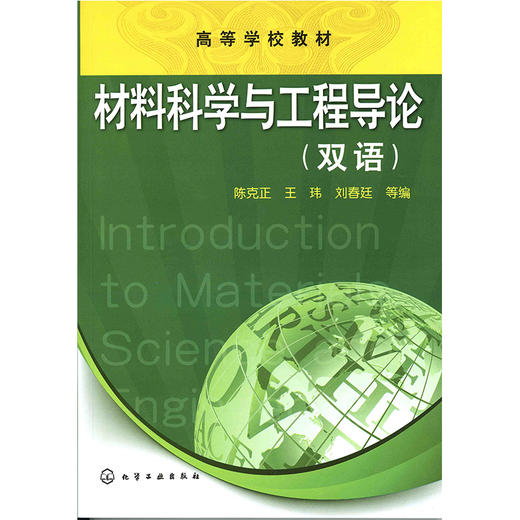
【内容简介】
本教材是材料科学与工程导论的双语教材,以现行“材料科学与工程导论”课程标准为依据,结合中文教材,以国外原版教材做参考并根据国内的教学情况及材料科学研究的最新进展对教材内容进行适度的整合。全书共分9章,具体内容包括:绪论,固体材料的结构,常用工程材料(高分子材料、金属材料、陶瓷材料和复合材料)的结构、力学性能、成分、加工工艺以及应用前景,常用工程材料的化学性能(耐腐蚀性能)和物理性能(电、磁、热和光学性能)以及新型材料(生物材料、纳米材料和智能材料)的介绍等内容。
本教材可供大专院校材料科学与工程及相关专业师生使用,也可供从事材料科学与工程研究、开发及管理的人员参考。
【前言】
进入21世纪,新材料、信息和生物技术已成为科学研究和新兴战略产业发展的最重要领域。为了适应材料科学与技术的发展,培养学生跟踪国际材料科学与技术发展前沿的能力,使学生成为材料科学领域的创新型人才,国内很多高校都面向大学本科学生开设了“材料科学与工程导论”双语课程作为材料学科的基础课。
“材料科学与工程导论”双语课程是我校为材料类宽专业本科学生开设的专业课程,也是我校最早开设的双语课程,自2002年起,每年有五百余人修读本课程。2008年该课程成为山东省双语教学示范课程,2009年获得国家双语教学示范课程建设项目的资助。在“材料科学与工程导论”双语课程的建设中,教材建设是该课程建设的重中之重,也是双语教学必需解决的难题之一。“材料科学与工程导论”双语教材的编写是适应高等教育国际化进程、培养具有国际竞争力的材料领域高素质人才的重要一环。
目前,国外现有的原版英文教材不能全面满足我国材料类各专业大学本科阶段学生“材料科学与工程导论”专业基础课程双语教学的需要,也不能适应宽口径材料专业人才培养模式的需要。现阶段本科生不具备使用多本英文原版教材进行课程学习的基础和条件。因此,我们结合我校材料类专业设置特点(设高分子材料科学与工程、材料物理、材料化学、无机非金属材料、金属材料五个专业)、课程定位(专业基础必修课程)和学生学业和职业发展的需要,以现行“材料科学与工程导论”课程标准为依据,结合中文教材,以国外原版教材做参考并根据国内的实际教学情况及材料科学研究的最新进展对教材内容进行适度的整合,力图编写出适合我国大学本科生的“材料科学与工程导论”双语教材。
全书共分9章,具体内容包括:绪论,固体材料的结构,常用工程材料(高分子材料、金属材料、陶瓷材料和复合材料)的结构、力学性能、成分、加工工艺以及应用前景,常用工程材料的化学性能(耐腐蚀性能)和物理性能(电、磁、热和光学性能)以及新型材料(生物材料、纳米材料和智能材料)的介绍等内容。
本书的编写者为青岛科技大学陈克正教授(第9章),青岛科技大学王玮副教授(第2、3、6章),青岛科技大学刘春廷老师(第4、5、7章),青岛科技大学徐磊老师(第1、8章)。全书由陈克正教授任主编。
本书的编写得到了国家双语教学示范课程建设项目、青岛科技大学双语教学示范课程建设项目的资助。青岛科技大学各级领导对本书的编写和出版十分关心和支持,编者再次一并表示衷心的感谢。
由于编者水平有限,经验不足,书中难免有不足之处,恳请专家和广大读者批评指正。
编者
2011年6月
【目录】
Chapter 1Introduction1
Learning Objectives1
1 1Historical Perspective1
1 2What is Materials Science and Engineering?2
1 3Why Study Materials Science and Engineering?5
1 4Classification of Materials5
1 5Advanced Materials9
1 6Modern Materials’ Needs10
References11
Chapter 2The Structure of Crystalline Solids13
Learning Objectives13
2 1Atomic Structure and Interatomic Bonding13
2 1 1Fundamental Concepts14
2 1 2Bonding Forces and Energies14
2 1 3Atomic Bonding in Solids16
2 2Crystal Structures22
2 2 1Fundamental Concepts22
2 2 2Metallic Crystal Structures and Crystal Systems23
2 2 3Crystallographic Points,Directions,and Planes30
2 2 4Crystalline and Noncrystalline Materials37
2 3Imperfections in Solids40
2 3 1Point Defects in Metals40
2 3 2Dislocations—Linear Defects43
2 3 3Interfacial Defects44
2 3 4Bulk or Volume Defects46
References48
Chapter 3Polymer Materials49
Learning Objectives49
3 1Polymer Structures49
3 1 1Introduction49
3 1 2Fundamental Concepts49
3 1 3Polymer Molecules50
3 1 4Designation of Polymers50
3 1 5Commonly Used Polymers51
3 1 6The Chemistry of Polymer Molecules58
3 2Crystallization,Melting and Glass Transition Phenomena in Polymers65
3 3Mechanical Properties of Polymers66
3 3 1StressStrain Behavior67
3 3 2Macroscopic Deformation68
3 3 3Viscoelastic Deformation70
3 4Polymer Types71
3 4 1Plastics71
3 4 2Elastomers72
3 4 3Fibers73
3 4 4Miscellaneous Applications Coatings73
3 5Processing of Polymers74
3 5 1Polymerization75
3 5 2Polymer Additives76
3 5 3Forming Techniques for Plastics78
3 5 4Fabrication of Elastomers80
3 5 5Fabrication of Fibers and Films81
References84
Chapter 4Metallic Materials85
Learning Objectives85
4 1Mechanical Properties of Metals85
4 1 1Introduction85
4 1 2Tensile Test86
4 1 3Hardness Testing90
4 2Dislocations and Strengthening91
4 2 1The Role of Dislocations91
4 2 2Work Hardening93
4 2 3Grain Size Strengthening93
4 2 4Alloy Hardening94
4 3Failure96
4 3 1Introduction96
4 3 2Fundamentals of Fracture97
4 3 3Ductile Fracture97
4 3 4Brittle Fracture98
4 3 5Fracture Mechanics in Design99
4 3 6Fracture Toughness100
4 3 7Fatigue101
4 3 8Creep101
4 4Phase Diagrams and Phase Transformations in Metals102
4 4 1Introduction102
4 4 2Phase Diagrams103
4 4 3Phase Transformations107
4 5Applications and Processing of Metal Alloys108
4 5 1Introduction108
4 5 2Types of Metal Alloys109
4 5 3Fabrication of Metals113
4 5 4Thermal Processing of Metals115
References120
Chapter 5Ceramic Materials123
Learning Objectives123
5 1Structures and Properties of Ceramics123
5 1 1Introduction123
5 1 2Ceramic Structures123
5 1 3Mechanical Properties of Ceramics127
5 2Application and Processing of Ceramics129
5 2 1Types and Applications of Ceramics129
5 2 2Fabrication and Processing of Ceramics131
References136
Chapter 6Composite Materials137
Learning Objectives137
6 1Introduction137
6 2ParticleReinforced Composites138
6 2 1LargeParticle Composites139
6 2 2DispersionStrengthened Composites140
6 3FiberReinforced Composites140
6 3 1The Fiber Phase140
6 3 2The Matrix Phase141
6 4PolymerMatrix Composites142
6 4 1Glass FiberReinforced Polymer(GFRP)Composites142
6 4 2Carbon FiberReinforced Polymer(CFRP)Composites143
6 4 3Aramid FiberReinforced Polymer Composites143
6 5MetalMatrix Composites145
6 6CeramicMatrix Composites146
References149
Chapter 7Corrosion and Degradation of Materials150
Learning Objectives150
7 1Introduction150
7 2Corrosion of Metals150
7 2 1Electrochemical Considerations151
7 2 2Corrosion Rates153
7 2 3Passivity153
7 2 4Environmental Effects153
7 2 5Forms of Corrosion154
7 2 6Corrosion Environments158
7 2 7Corrosion Prevention159
7 3Corrosion of Ceramic Materials159
7 4Degradation of Polymers160
7 4 1Swelling and Dissolution160
7 4 2Bond Rupture160
7 4 3Weathering161
References163
Chapter 8Electrical/Thermal/Magnetic/Optical Properties of Materials164
Learning Objectives164
8 1Introduction165
8 2Electrical Properties of Materials165
8 2 1Metals and Alloys166
8 2 2Semiconductors167
8 2 3Ionic Ceramics and Polymers170
8 3Thermal Properties of Materials170
8 3 1Heat Capacity170
8 3 2Thermal Expansion171
8 3 3Thermal Conductivity172
8 3 4Thermal Stresses172
8 4Magnetic Properties of Materials174
8 4 1Diamagnetism,Paramagnetism and Ferromagnetism174
8 4 2Antiferromagnetism and Ferrimagnetism177
8 4 3The Influence of Temperature on Magnetic Behavior179
8 4 4Domains,Hysteresis and Magnetic Anisotropy179
8 4 5Superconductivity181
8 5Optical Properties of Materials186
8 5 1Interaction of Light with Matter186
8 5 2Atomic and Electronic Interactions187
8 5 3Refraction,Reflection,Absorption and Transmission190
8 5 4Opacity and Translucency in Insulators192
8 5 5Applications of Optical Phenomena192
References197
Chapter 9Biomaterials/Nanomaterials/Smart Materials198
Learning Objectives198
9 1Biomaterials198
9 1 1Definition of Biomaterials199
9 1 2Performance of Biomaterials202
9 1 3Brief Historical Background203
9 2Nanotechnology and Nanomaterials205
9 2 1Introduction205
9 2 2Examples of Current Achievements and Paradigm Shifts209
9 3Smart Materials214
9 3 1Introduction214
9 3 2Shape Memory Alloys215
9 3 3Applications of Smart Materials219
Reference220
- 化学工业出版社官方旗舰店 (微信公众号认证)
- 扫描二维码,访问我们的微信店铺
- 随时随地的购物、客服咨询、查询订单和物流...