商品详情
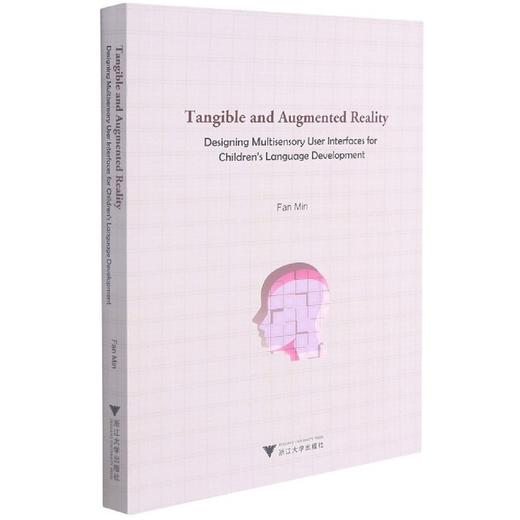
书名:Tangible and Augmented Reality: Designing Multisensory User Interfaces for Children’s Language Development
ISBN:9787308216180
作者:范敏
内容提要:
实体用户界面(TUIs)和增强现实(AR)用户界面被认为具备辅助儿童学习的潜力。虽然市面上已有一些面向儿童开发的实体和增强现实学习系统,但目前为止,还没有出现专为语音意识(即在语言中运用声音的能力)和字母规则(即阐释书写单位是如何与音位联系的一套规则)阶段而设计的英语语言习得系统。语音意识和字母规则对存在读写障碍(即一种特有的语言习得困难)风险的儿童以及把英语作为外语来学习(EFL)的儿童来说十分重要。基于此,本书提出了针对存在读写障碍风险的儿童和把英语作为外语学习的儿童的实体阅读系统设计指南, 为探索辅助儿童语言开发的TUI和AR用户界面研究和设计人员提供参考和借鉴。
作者简介:
中国传媒大学数字媒体艺术专业教师。研究领域为实体教育产品的设计理论探索、交互产品的设计研发、基于实践的设计规范研究等。
目录:
Chapter 1 Introduction
1.1 Reading challenges of children
1.2 The promising Human—Computer Interactioworked
1.2.1 Study summary
1.2.2 Contributions
1.3 Organisatioof the book
Chapter 2 Understanding Theories
2.1 Theories of reading acquisition
2.1.1 Theories ofdyslea
2.1.2 Phonological deficit hypothesis
2.1.3 Auditory temporal processing deficits and visual deficits
2.1.4 Attenfional problems
2.1.5 “Opaque”orthography ofEnglish
2.1.6 Mirror generalisation
2.1.7 Biological,genetic and environmental hctom
2.2 Theories of learning English as a foreiglanguage
2.2.1 Language acquisitiobetweeEFL and ELl children
2.2.2 TransfereffectsbetweenLl andL
2.2.3 Inappropriate or limited phonic instructions
2.2.4 Lacking background knowledge
2.3 Chapter summary
Chapter 3 Multisensory Reading Interventions
3.1 TraditionaI multisensory interventions
3.1.1 Explicit phonics instruction
3.1.2 Intensive and prolonged instruction
3.1.3 Multiple senses
3.1.4 Multiple representations
3.1.5 Limitations oftraditional multisensory intervenfions
3.2 Computational interventions with graphic user interfaces
3.2.1 Graphic user interfaces for childreat.risk for dyslea
3.2.2 Graphic user interfaces for EFL children
3.3 Chapter summary
Chapter 4 Tangible User Interfaces for Learning
4.1 Characteristics of tangible user interfaces
4.2 Desigspace of tangible user interfaces for learning
4.2.1 Designing physical-digital relations
4.2.2 Designing physical representations
4.2.3 Designing for learners with special needs
4.3 Opportunities of tangible user interfaces isupporting reading acquisition
4.3.1 Opportunity 1:spatiality
4.3.2 Opportunity 2:multiple interactiomodalities
4.3.3 Opportunity 3:multiple letter representations
4.3.4 Opportunity 4:collaborative,fleble,and structured learning procedures
4.4 Tangible user interfaces designed for children
4.4.1 Tangible user interfaces for typical children
4.4.2 Tangible user interfaces for childrewith dyslea
4.4.3 Tangible user interfaces for English as a Foreigh Languge children
4.5 Chapter summary
Chapter 5 Designing Tangible Reading User Interfaces
5.1 Learning goal
5.2 Desigrequirements
5.3 System deion
5.4 Desigprocess:a hybrid concept.and situation.driveapproach
5.4.1 Focus groups
5.4.2 Expe~reviews
5.5 Implementation
5.5.1 Implementatioofdynamic colour cues
5.5.2 Implementatioof 3D letter shape cues
5.6 Chapter summary
Chapter 6 Evaluating Tangible Reading User Interfaces
6.1 Research questions
6.2 Research design
6.3 Participants
6.4 Learning tasks
6.5 Instructioprocedure with PhonoBIocks
6.6 GeneraI procedure
6.7 Data collectioand analysis
6.7.1 Reading and spelling accuracy
6.7.2 Reading and spelling trajectories
6.7.3 Children's preferences iand thoughts oPhonoBlocks
6.7.4 Influences of individual characteristics
6.7.5 Desigelements
6.8 Chapter summary
Chapter 7 Workeding with ChildreAt-risk for Dyslea
7.1 Reading and spelling accuracy
7.1.1 Baseline assessments
7.1.2 Reading accuracy otrained and untrained words
7.1.3 Spelling accuracy otrained and untrained words
7.1.4 Reading accuracy maintenance otrained and untrained words
7.1.5 Spelling accuracy maintenance otrained and untrained words
7.1.6 Reading accuracy and maintenance otrained and untrained words ieach learning activity
7.1.7 Spelling accuracy and maintenance otrained and untrained words ieach learning activity
7.2 Reading and spelling trajectories
7.2.1 Pre.knowledge of letter names/sounds
7.2.2 Reading trajectory
7.2.3 Spelling trajectory
7.3
- 浙江大学出版社微店 (微信公众号认证)
- 浙江大学出版社直营店
- 扫描二维码,访问我们的微信店铺
- 随时随地的购物、客服咨询、查询订单和物流...