目录
●Chapter 1 Introduction of AP Macroeconomics Exam
AP宏观经济学考试简介
Chapter 2 Ten Principles of Economics
经济学十大原理
Chapter 3 Thinking like an Economist
像经济学家一样思考
Chapter 4 Measuring a Nation's Income
国民收入核算
Chapter 5 Measuring the Cost of Living
生活成本核算
Chapter 6 Unemployment and its Natural Rate
失业和自然失业率
Chapter 7 Money Growth and Inflation
货币量增加和通货膨胀
Chapter 8 The Short-Run Tradeoff between Inflation and Unemployment
通货膨胀和失业之间的短期权衡取舍
Chapter 9 Aggregate Demand and Aggregate Supply
总需求和总供给
Chapter 10 The Monetary System and the Monetary Policy
货币体系和货币政策
Chapter 11 The Fiscal and Monetary Policy
财政货币政策
Chapter 12 Saving, Investment, and the Financial System
储蓄,投资和金融系统
Chapter 13 The Basic Tools of Finance
金融基本工具
Chapter 14 Open- Economy Macroeconomics:Basic Concepts
开放条件下的宏观经济学:基本概念
Chapter 15 A Macroeconomic Theory of the Open Economy
开放经济的宏观经济理论
Chapter 16 Production and Growth
生产和增长
主要参考文献
内容介绍
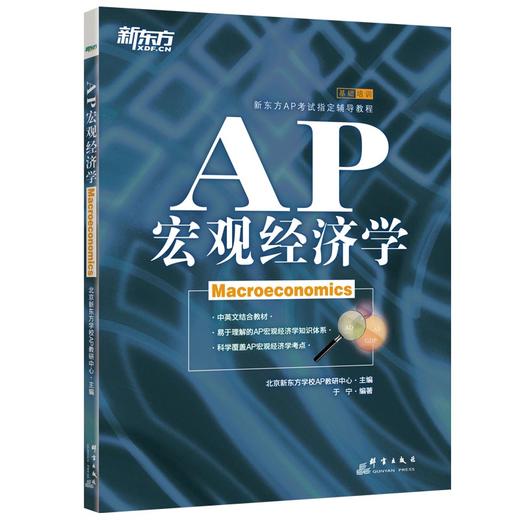
AP,全称Advanced Placement,中文名称为大学预修课程。AP课程及考试始于1955年,由美国大学理事会(College Board)主办,是在高中阶段开设的具有大学水平的课程,共有22个门类、37个学科。该项考试的目的在于使高中学生提前接触大学课程,完成一些美国大学的学分课程及考试。
本书是中英文结合的AP宏观经济学教材。在研究了宏观经济学的知识体系及教学体系的基础上,本书搭建了较易于中国学生理解与接受的AP宏观经济学知识体系,科学覆盖了AP宏观经济学的考点。本书提供大量的例题和习题,为帮助考生取得AP宏观经济学高分奠定了扎实的基础。