

商品详情
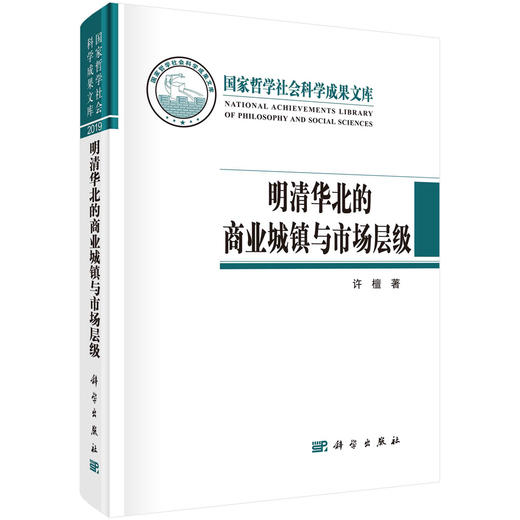
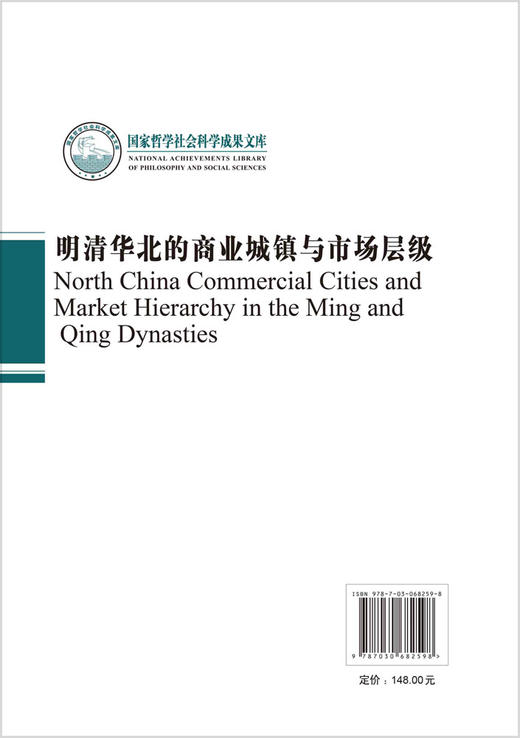
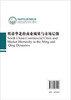
书名:明清华北的商业城镇与市场层级
定价:148.0
ISBN:9787030682598
作者:许檀
版次:1
出版时间:2021-04
内容提要:
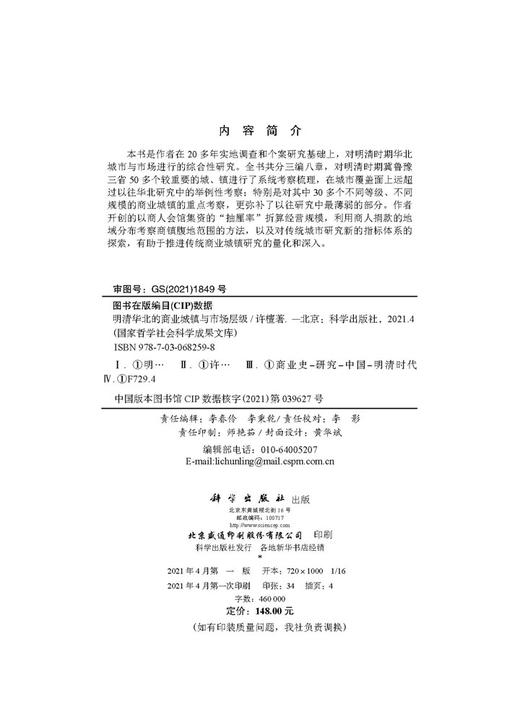
本书是作者在20多年实地调查和个案研究基础上,对明清时期华北城市与市场进行的综合性研究。全书共分三编八章,对明清时期冀鲁豫三省50多个较重要的城、镇进行了系统考察梳理,在城市覆盖面上远超过以往华北研究中的举例性考察;特别是对其中30多个不同等级、不同规模的商业城镇的重点考察,更弥补了以往研究中*薄弱的部分。作者开创的以商人会馆集资的“抽厘率”折算经营规模,利用商人捐款的地域分布考察商镇腹地范围的方法,以及对传统城市研究新的指标体系的探索,有助于推进传统商业城镇研究的量化和深入。
目录:
目录
绪论 (1)
一、明清时期商业城镇研究概况 (1)
二、本书的相关理论概念、资料特点与总体思路 (11)
三、本书的框架结构 (14)
**编 明清时期华北的行政中心城市
**章 明清两代的国都及其商业发展 (19)
**节 明清两代京城空间布局的变化 (19)
一、京城的城市形态及其内部空间划分 (20)
二、京城人口及其空间分布 (25)
第二节 京城的商业街市及其空间分布 (30)
第三节 崇文门等税关及其税收 (44)
一、崇文门税关及其商品来源 (44)
二、左翼、右翼二关及其税收 (52)
第四节 京城的消费结构与特点 (54)
一、宫廷消费与官方采办 (54)
二、**性消费**市场 (55)
三、文化消费为全国*高水平 (56)
第二章 省会城市及其商业 (59)
**节 河南省会开封及其商业变化 (59)
一、明清两代开封空间结构、人口结构的变化 (60)
二、明代开封的城市商业 (66)
三、清代开封商业的变化 (72)
第二节 山东省会济南及其商业特色 (80)
一、明清两代济南的空间分布、人口结构与商业发展 (80)
二、从《重修山陕会馆碑记》看济南的商业特色 (86)
第三节 明清两代的保定及其商业发展 (93)
一、明清两代保定行政地位的变化与人口增长 (93)
二、明清两代保定商业的发展变化 (98)
第三章 府级行政中心及其商业概况 (101)
**节 明清两代对府城的修建 (101)
第二节 诸王就藩、八旗驻防对城市空间格局的影响 (105)
第三节 府城街巷与商业概况 (112)
第四节 各具特色的几个府级城市 (122)
一、直隶宣府镇(清代为宣化府) (122)
二、山东登州府 (127)
三、河南南阳府 (132)
第二编 明清时期华北商业城镇的发展
第四章 各级行政中心的转化:设有税关的城市 (141)
**节 运河沿线的税关城市 (142)
一、临清 (142)
二、通州(坐粮厅) (153)
第二节 沿海税关城市 (163)
一、天津 (163)
二、山海关 (186)
第三节 内陆税关城市 (197)
一、张家口 (198)
二、多伦诺尔 (214)
第五章 各级行政中心的转化:未设税关的城市 (221)
**节 运河沿线商业城市 (221)
一、济宁 (222)
二、东昌府治聊城 (229)
三、德州 (238)
第二节 沿海商业城市 (240)
一、胶州 (241)
二、莱阳 (246)
三、黄县 (247)
第三节 内陆商业城市 (248)
一、洛阳 (249)
二、青州府治益都 (257)
三、潍县 (259)
四、泰安 (262)
五、博山(颜神镇) (267)
第四节 华北的药都 (269)
一、祁州 (269)
二、怀庆府治河内 (283)
三、禹州 (292)
第六章 新兴商镇的崛起 (311)
**节 河南的新兴商镇 (312)
一、朱仙镇 (312)
二、周口 (323)
三、赊旗 (334)
四、北舞渡 (348)
五、清化镇 (357)
六、荆紫关 (365)
第二节 直隶、山东的新兴商镇 (372)
一、张家湾 (372)
二、河西务 (379)
三、张秋镇 (380)
四、烟台 (384)
五、周村 (387)
第三编 明清时期华北商业城镇的空间分布与市场层级
第七章 商业城镇的功能与特点 (399)
**节 城墙内外:城市形态与空间变化 (399)
一、城墙的修筑 (400)
二、商业发展对城市空间的影响 (402)
第二节 人口规模及其职业构成 (407)
一、冀鲁豫三省城市人口的估算 (407)
二、城市人口的职业构成 (410)
第三节 商业城镇的功能与特点 (415)
第八章 商业城镇的空间分布与市场层级 (429)
**节 明清两代华北商业城镇的发展脉络及其空间分布 (431)
一、直隶的商业城镇 (433)
二、山东的商业城镇 (436)
三、河南的商业城镇 (439)
第二节 市场层级与行政等级 (441)
一、对商业规模的初步估算 (441)
二、地区性商业中心的腹地范围 (443)
三、市场层级与行政等级——兼与施坚雅的1843年华北中心地的等级—规模分布图进行比较 (447)
第三节 明清时期华北商业城镇发展的历史意义 (451)
一、华北商业城镇发展的宏观背景与空间分布变化 (451)
二、华北商业城镇发展的历史意义 (453)
主要参考文献 (459)
一、史籍 (459)
二、近人论著 (465)
索引 (478)
后记 (501)
Contents
Introduction (1)
I.Summaries of the Researches on Commercial Cities of Ming and Qing Dynasties (1)
II.Theories, Features of Sources and the Central Idea of This Book (11)
III.Framework of This Book (14)
Part 1: Administrative Cities in North China of Ming and Qing Dynasties
Chapter 1: The Imperial City of Ming and Qing Dynasties and Their Commercial Development (19)
Section I: Changes of the Geographic Layouts of the Imperial City of Ming and Qing Dynasties (19)
1.The Imperial City’s Urban Pattern and Its Interior Space Division (20)
2.The Imperial City’s Population and Its Spatial Structure (25)
Section II: Commercial Streets & Markets and Its Spatial Structure (30)
Section III: Chongwenmen and other Customs and Their Taxes (44)
1.Chongwenmen Custom and Its Merchandise Sources (44)
2.Zuoyi and Youyi Customs and Their Taxes (52)
Section IV: The Imperial City’s Consumption Structure and Features (54)
1.The Imperial Palace’s Consumption and Purchasing Commodities Officially (54)
2.Luxurious Consumption Was the Market Lead (55)
3.The Nation’s Highest Level on the Consumption of Culture (56)
Chapter 2: Provincial Cities and Their Commerce (59)
Section I: Kaifeng City (Capital of Henan Province) and Its Commercial Dynamics (59)
1.Dynamics of Kaifeng City’s Spatial and Population Structures During Ming and Qing Dynasties (60)
2.Urban Commerce of Kaifeng City During Ming Dynasty (66)
3.Dynamics of the Commerce of Kaifeng City During Qing Dynasty (72)
Section II: Jinan City (Capital of Shandong Province) and Its Commercial Features (80)
1.Jinan City’s Spatial and Population Structures and Its Commercial Development During Ming and Qing Dynasties (80)
2.Commercial Features Discovered Based on the Studies of the “Inscription of Re-building Shanxi and Shaanxi Commercial Guild.” (86)
Section III: Baoding City and Its Commercial Development of Ming and Qing Dynasties (93)
1.Changes of Baoding City’s Administrative Status and Its Population Growth During Ming and Qing Dynasties (93)
2.Dynamics of Baoding City’s Commercial Development during Ming and Qing Dynasties (98)
Chapter 3: Urban Prefectures and Their Commerce Overview (101)
Section I: Building Prefectures in Ming and Qing Dynasties (101)
Section II: Influences Towards Urban Spatial Structure Caused by Ming Dynasty’s Feudal Princes Governing Local and Qing Dynasty’s Eight Banners Guarding System (105)
Section III: Streets Layouts of Prefectures and Their Commercial Overview (112)
Section IV: Several Prefectures with Their Own Features (122)
1.Xuanfu Town (Later became Prefecture Xuanhua in Qing Dynasty) of Zhili Province (122)
2.Prefecture Dengzhou of Shandong Province (127)
3.Prefecture Nanyang of Henan Province (132)
Part 2: Development of Commercial Cities of North China during Ming and Qing Dynasties
Chapter 4: Conversion from Administrative to Commercial—Cites with Customs (141)
Section I: Cities with Customs along the Grand Canal (142)
1.Linqing (142)
2.Tongzhou (Zuoliangting) (153)
Section II: Cities with Customs along the Coast (163)
1.Tianjin (163)
2.Shanhai Pass (186)
Section III: Cities with Customs of the Inland Area (197)
1.Zhangjiakou (198)
2.Dolon Nor (214)
Chapter 5: Conversion from Administrative to Commercial—Cities without Custom Houses (221)
Section I: Commercial Cities along the Grand Canal (221)
1.Jining (222)
2.Liaocheng, Capital of Prefecture Dongchang (229)
3.Dezhou (238)
Section II: Commercial Cities along the Coast (240)
1.Jiaozhou (241)
2.Laiyang (246)
3.Huangxian (247)
Section III: Commercial Cities of the Inland Area (248)
1.Luoyang (249)
2.Yidu, Capital of Prefecture Qingzhou (257)
3.Huaixian (259)
4.Taian (262)
5.Boshan (Yanshen Township) (267)
Section IV: Traditional Chinese Medicine Cities in North China (269)
1.Qizhou (269)
2.Henei, Capital of Prefecture Huaiqing (283)
3.Yuzhou (292)
Chapter 6: The Rise of the New Commercial Towns (311)
Section I: The New Commercial Towns of Henan Province (312)
1.Zhuxianzhen (312)
2.Zhoukou (323)
3.Sheqi (334)
4.Beiwudu (348)
5.Qinghuazhen (357)
6.Jingziguan (365)
Section II: New Commercial Towns of Zhili and Shandong Provinces (372)
1.Zhangjiawan (372)
2.Hexiwu (379)
3.Zhangqiuzhen (380)
4.Yantai (384)
5.Zhoucun (387)
Part 3: Geographic Structure and Market Hierarchy of Commercial Cities of the Ming and Qing Dynasties
Chapter 7: Functions and Features of Commercial Cities (399)
Section I: Inside and Outside of the City Wall: City Structure and Spatial Dynamics (399)
1.Building City Walls (400)
2.Impacts on Urban Space by Commercial Development (402)
Section II: The Scale of Population and Its Occupation Composition (407)
1.An Estimation of Population of Zhili, Shandong and Henan Provinces (407)
2.Occupation Composition of Urban Population (410)
Section 3: Functions and Features of Commercial Cities (415)
Chapter 8: Geographic Structure and Market Hierarchy of Commercial Cities (429)
Section I: The Developmental Paths and Spatial Dynamics of Commercial Cities of North China during Ming and Qing Dynasties (431)
1.Commercial Cities of Zhili Province (433)
2.Commercial Cities of Shandong Province (436)
3.Commercial Cities of Henan Province (439)
Section II: Market Hierarchy and Administrative Levels (441)
1.Preliminary Estimation of the Commercial Scope (441)
2.Geographic Coverage of Regional Commercial Centers (443)
3.Market Hierarchy and Administrative Levels—A comparison with Dr.George William Skinner’s Chart regarding the Hierarchy and Scope of North China’s Central Area in 1843 (447)
Section III: Historical Significance of the Development of the Commercial Cities in North China during Ming and Qing Dynasties (451)
1.The Macroscopic Background and the Spatial Changes of the Development of Commercial Cities of North China (451)
2.Historical Significance of the Development of Commercial Cities in North China (453)
Major References (459)
I.Historical Records (459)
II.Recent Publications of Studies (465)
Index (478)
Afterword (501)
表目录
表1-1 明代京师五城三十六坊名称一览表 (22)
表1-2 清代部分王府位置及其所属旗分对照表 (27)
表1-3 明代京城军卫人口数量及其所占比例统计 (28)
表1-4 清代京城八旗人口数量及其所占比例的变化 (29)
表1-5 咸丰元年内城八旗住户、铺户统计 (30)
表1-6 万历年间京师五城铺户及税银统计(一) (34)
表1-7 万历年间京师五城铺户及税银统计(二) (35)
表1-8 清代京城部分工商业会馆、公所一览表 (39)
表1-9 明代后期八大钞关税收一览表 (45)
表1-10 乾隆至道光年间崇文门税关实征税额的十年平均统计 (48)
表1-11 嘉道年间左翼、右翼二关实征税额的十年平均统计 (52)
表2-1 咸丰年间开封城市人口统计 (64)
表2-2 明代开封商业行业、店铺示例 (68)
表2-3 明代开封城隍庙会贸易商品一览表 (70)
表2-4 明清两代开封各类商业店铺的分布地点及其变化 (73)
表2-5 道光年间开封山陕会馆重修牌坊捐款商号分类统计 (77)
表2-6 同治初年开封山陕会馆重修后道院捐款商号分类统计 (78)
表2-7 乾隆中叶济南城乡人口统计 (83)
表2-8 济南重修山陕会馆的官、商捐款统计 (88)
表2-9 济南山陕会馆捐款商人的行业统计 (89)
表2-10 济南山陕会馆11家首饰业店铺的捐款统计 (89)
表2-11 济南山陕会馆24家金融字号的捐款统计 (90)
表2-12 济南山陕会馆21家药业字号及其捐款统计 (92)
表2-13 同治年间保定城乡人口统计 (97)
表3-1 明代冀鲁豫三省府城沿革、修建和规模简表 (103)
表3-2 清代新增各府城沿革、修建和规模简表 (104)
表3-3 洪武年间冀鲁豫三省的藩王封地及其就藩时间简表 (105)
表3-4 永乐以降河南、山东二省藩王封地及其就藩时间简表 (106)
表3-5 万历年间兖州府属各州县征收商税“课程”一览表 (119)
表3-6 万历、乾隆年间莱州府属各州县商税一览表 (120)
表3-7 乾隆年间河南府属各县征收商税一览表(不含房地税) (121)
表3-8 乾隆年间怀庆府属各县征收商税一览表 (121)
表3-9 嘉靖年间宣府镇商业行业、税银一览表 (125)
表3-10 明代南阳府城主要衙署修建简表 (133)
表4-1 明代临清城内主要店铺及其分布状况 (146)
表4-2 乾隆至道光年间临清户、工二关实征关税统计 (149)
表4-3 乾隆年间临清户关征收粮食税银及其所占比重统计 (151)
表4-4 嘉道年间坐粮厅税关实征税银示例 (156)
表4-5 清代通州所建会馆情况一览表 (158)
表4-6 乾隆四年通州创建晋翼会馆捐款统计 (160)
表4-7 道光十七年新建布业公所集资统计 (161)
表4-8 明代天津设置武职、文职衙署时间表 (166)
表4-9 道光年间天津城厢人口的分区统计 (168)
表4-10 道光年间天津城市居民的职业构成统计 (171)
表4-11 雍正九年53只抵津海船运载商品示例 (172)
表4-12 清代各地客商在天津建立的会馆公所一览表 (174)
表4-13 道光年间天津山西会馆修建春秋楼的捐款统计 (180)
表4-14 乾隆至道光年间天津关实征税额的十年平均统计 (183)
表4-15 嘉道年间天津关税、海税收入及其占比统计 (185)
表4-16 嘉道年间天津关税中沿海贸易税收及其占比统计 (186)
表4-17 乾隆后期山海关实征税银示例 (191)
表4-18 嘉道年间山海关实征税银的十年平均统计 (192)
表4-19 嘉庆二、三两年山海关海、旱各口征收税银统计 (194)
表4-20 嘉庆二、三两年山海关主要税口征收税银统计 (195)
表4-21 嘉庆初年张家口重修市台关帝庙的捐款统计 (204)
表4-22 嘉庆初年张家口21家商号在恰克图开设的店铺及其贸易规模示例 (205)
表4-23 道光三年张家口重修山神庙乐楼的直接捐款统计 (207)
表4-24 清代中叶晋商在张家口开设的账局示例 (209)
表4-25 乾隆中叶和嘉庆初年张家口税关实征税银示例 (211)
表4-26 嘉庆十一至二十年分张家口税关实征税银示例 (212)
表4-27 嘉道年间张家口税关实征关税的十年平均统计 (213)
表4-28 光绪年间张家口关税缺额示例 (214)
表4-29 多伦诺尔户、工二关关税定额 (218)
表5-1 明清两代济宁城、厢各区街巷对照表 (227)
表5-2 清代中叶济宁城、厢各区户数统计 (228)
表5-3 聊城山陕会馆创建、重修工程及其集资状况简表 (233)
表5-4 乾隆至道光年间聊城山陕商号的抽厘金额及其经营额折算 (235)
表5-5 嘉道年间聊城年经营额万两以上的商号名称一览表 (236)
表5-6 乾隆年间胶州与南方各省沿海贸易示例 (243)
表5-7 乾隆前期江海关实征豆税银统计 (245)
表5-8 乾隆年间洛阳创建潞泽会馆捐款商人的行业统计 (253)
表5-9 捐银1000两以上的8家绸布商及其经营额折算 (253)
表5-10 嘉道年间洛阳重修山陕会馆捐款商号的分类统计 (254)
表5-11 万历、乾隆年间莱州府属各州县商税税额一览表 (260)
表5-12 万历年间泰安商税的分类统计 (264)
表5-13 泰安山西会馆创建、重修工程及其集资状况简表 (265)
表5-14 同光年间祁州重修药王庙的商人捐款统计 (274)
表5-15 同光年间祁州重修药王庙客帮商人捐款的逐年统计 (275)
表5-16 同光年间祁州重修药王庙各地药材商帮的捐款统计 (276)
表5-17 京通卫帮中的参局参店及其捐款一览表 (277)
表5-18 武安帮成立之时39家首事的捐款统计 (279)
表5-19 “邻封州县字号、人名捐施银钱”涉及地域范围一览表 (281)
表5-20 同光年间重修药王庙祁州本地各行业的捐款统计 (282)
表5-21 清代前期怀庆府属各县商税变化一览表 (286)
表5-22 晋城怀庆会馆10家油业字号抽捐钱款及其销售油斤折算 (288)
表5-23 道光十九年《创建三皇阁碑记》所镌捐款统计 (290)
表5-24 怀庆府药业行店所收众字号“公捐银”统计 (291)
表5-25 同光之际怀帮药商在祁州药王庙集资中捐款*多的10家商号示例 (292)
表5-26 嘉庆初年禹州山西会馆集资中首事、社首的捐款统计 (295)
表5-27 道光初年禹州重修山西会馆的10家首事及其捐款统计 (297)
表5-28 道光初年禹州重修山西会馆集资的分类统计 (297)
表5-29 同治年间余庆堂号在河南的部分购布地点及其运至禹州的脚价 (302)
表5-30 乾隆二十九年《重兴清明盛会碑记》所镌洪山庙药商来源分布统计 (306)
表5-31 光绪年间禹州修建十三帮会馆的部分捐款统计 (309)
表6-1 乾隆年间朱仙镇重修山陕会馆捐款商号的行业分布统计 (317)
表6-2 乾隆年间板烟商号移建戏楼的抽厘金额及其经营额折算 (319)
表6-3 乾隆年间朱仙镇重修山陕会馆捐款商号的地域分布统计 (320)
表6-4 周口山陕会馆建筑年表 (327)
表6-5 嘉道年间周口三次重修山陕会馆的集资金额及其经营规模折算 (329)
表6-6 道光年间周口山陕会馆各行抽厘金额及其经营额折算 (330)
表6-7 道光年间周口山陕会馆行商抽厘及其经营规模的分类统计 (331)
表6-8 道光年间周口山陕会馆经营额超过万两的大商号示例 (332)
表6-9 道光年间周口山陕会馆坐贾捐款的分类统计 (332)
表6-10 道光年间山西“天义正记”“茂盛德记”商号从南方输入的商品及其购销地点 (339)
表6-11 道光年间“茂盛德记”商号从赊旗向南方输出的商品及其购销地点 (340)
表6-12 同光年间赊旗重修山陕会馆抽厘商号的分类统计 (345)
表6-13 抽厘金额超过500两的31家商号及其经营额折算 (345)
表6-14 道光初年北舞渡陆陈行倡建牌坊的募捐统计 (350)
表6-15 同治初年北舞渡重修山陕会馆周边城镇捐款商号的分布统计 (356)
表6-16 咸丰初年北舞渡修建老君庙周边城镇捐款商号的分布统计 (356)
表6-17 隆庆五年《创建金龙大王神祠记》所镌捐款商人的地域分布简表 (360)
表6-18 嘉庆初年清化镇重修火神庙集资的分类统计 (362)
表6-19 嘉庆初年清化镇重修火神庙集资中抽捐超过100两的花炮商人及其纸张贸易额折算 (362)
表6-20 咸同之际清化重修镇城的经费来源统计 (364)
表6-21 咸同之际清化修筑镇城捐款100千以上的35家商号示例 (365)
表6-22 清末陕西商州经由荆紫关转运的主要商品 (366)
表6-23 张家湾牙行、牙税一览表 (374)
表6-24 通州牙行、牙税一览表 (375)
表6-25 乾隆四十年张家湾重修山西会馆的捐款统计 (378)
表6-26 咸丰九年山东沿海14州县海口征收税银一览表 (386)
表6-27 道光四年周村重修关帝庙捐款100?千文以上的商行商号一览表 (389)
表6-28 道光四年周村重修关帝庙参与集资的主要行业的捐款统计 (390)
表7-1 兖州府城滋阳居民职业构成统计 (413)
表7-2 临清居民职业构成举要 (414)
表7-3 滋阳县御桥西大街商铺、住户状况简表 (416)
表7-4 滋阳县府门西大街商铺、住户状况简表 (417)
表7-5 道光初年北舞渡8家行店的募款统计 (423)
表7-6 同治三年《重筑清化镇城记》所镌粮坊及其客商捐款统计 (424)
表8-1 嘉道年间直隶、山东各关关税定额及实征税额简表 (442)
Table Directory
Table 1-1 Name Lists of the Thirty-six Lanes within the Five Boroughs of the Capital City in Ming Dynasty (22)
Table 1-2 Locations of Some Princes’ Mansions and Their Status within the Eight Banners System in the Qing Dynasty (27)
Table 1-3 Statistics of Military Population and Its Scale inside the Capital City of Ming Dynasty (28)
Table1-4 Population and Changes of Its Scale of Eight Banners inside the Capital City of Qing Dynasty (29)
Table 1-5 Statistics of Residents and Merchants of Eight Banners within the Inner City by the 1st Year of Xianfeng (30)
Table 1-6 Statistics of Merchants, Businesses and Their Taxes within the Five Boroughs of the Capital City during the Years of Wanli (by geo-spatial and class) (34)
Table 1-7 Statistics of Every Merchants, Businesses and Their Taxes within the Five Boroughs of the Capital City during the Years of Wanli (by Fang) (35)
Table 1-8 A List of Some Commercial Guilds and Guild Halls in the Capital City of Qing Dynasty (39)
Table 1-9 A List of Taxes for the Eight Major Customs in the Late Ming Dynasty (45)
Table 1-10 The Average Statistics for a Decade’s Actual Customed Taxes from Chongwenmen Custom from the Years of Qianlong to the years of Daoguang (48)
Table 1-11 The Average Statistics for a Decade’s Actual Customed Taxes from the Left-Wing and Right-Wing Customs during the Years of Jiaqing and Daoguang (52)
Table 2-1 Kaifeng City’s Population Statistics during Xianfeng Period (64)
Table 2-2 Examples of Commercial Industries and Shops of Kaifeng in Ming Dynasty (68)
Table 2-3 List of Trade Commodities of Kaifeng’s City God Temple Fair in Ming Dynasty (70)
Table 2-4 Distribution Range and Its Changes of Various Commercial Businesses of Kaifeng in Ming and Qing Dynasties (73)
Table 2-5 Classification and Statistics of Businesses as Donors for Rebuilding Memorial Archway of Shanshaan Guild Hall in Kaifeng during Daoguang Period (77)
Table 2-6 Classification and Statistics of Businesses as Donors for the Reconstruction of Shanshaan Guild Gall’s back Daoyuan of Kaifeng in the Early Years of Tongzhi (78)
Table 2-7 Population Statistics of Jinan’s City and Township in the Middle Period of Qianlong (83)
Table 2-8 Statistics of Donations from Officials and Businessmen in Rebuilding Shanshaan Guild Hall in Jinan (88)
Table 2-9 Industry Statistics of Businessmen that Donated for Jinan Shanshaan Guild Hall (89)
Table 2-10 Donation Statistics of 11 Jewelry Stores in Jinan Shanshaan Guild Hall (89)
Table 2-11 Donation Statistics of 24 Financial Businesses in Jinan Shanshaan Guild Hall (90)
Table 2-12 Donation Statistics of 21 Pharmacies in Jinan Shanshaan Guild Hall (92)
Table 2-13 Urban and Rural Population Statistics of Baoding City during the Tongzhi Period (97)
Table 3-1 The Brief Table of Evolution, Construction and the Scale of the Prefecture Cities in Hebei, Shandong and Henan Provinces During Ming Dynasty (103)
Table 3-2 The Brief Table of Evolution, Construction and Scale of Newly Added Prefecture Cities in Qing Dynasty (104)
Table 3-3 The Brief Table of the Princes’ Fiefdoms and Their EnterTime in Hebei, Shandong and Henan Provinces during the Hongwu Period (105)
Table 3-4 The Brief Table of the Princes’ Fiefdoms and The Start Time for Them Moving Into These Fiefdoms in Henan and Shandong Provinces since Yongle Period (106)
Table 3-5 The List of “the Plan for Taxes” for Taxing Busineses within the Various Cities and Counties under Yanzhou Prefecture during Wanli Period (119)
Table 3-6 List of Business Taxes of the Various Cities and Towns under Laizhou Prefecture During Wanli and Qianlong Period (120)
Table 3-7 The List of Business Taxes Collected by Counties under Henan Province during Qianlong Period (excluding Housing Tax) (121)
Table 3-8 The List of Business Taxes Collected by the Various Counties Huaiqing Prefectures in Qianlong Period (121)
Table 3-9 List of Commercial Industries, Tax Silver in Xuanfu Town during Jiajing Period (125)
Table 3-10 The Brief List of the Construction of the Major Government Offices of Nanyang Prefecture During Ming Dynasty (133)
Table 4-1 The Major Shops and Their Distribution within Linqing City in Ming Dynasty (146)
Table 4-2 Statistics of Customs Duties Levied by Linqing Hu Guan and Gong Guan from Qianlong to Daoguang (149)
Table 4-3 Example of Grain tax’s Silver and Its Proportion Collected by Linqing Hu Guan in Qianlong Period (151)
Table 4-4 Example of Tax Collection in Zuoliangting during Jiaqing to Daoguang Period (156)
Table 4-5 List of Guild Hall of Tongzhou in Qing Dynasty (158)
Table 4-6 Donation Statistics of Jinyi Guild Hall Established in Tongzhou in the 4th Year of Qianlong (160)
Table 4-7 Statistics on Fund-raising of Newly-built Cloth Industry Office in the 17th Year of Daoguang (161)
Table 4-8 Timetable of Setting up Military Office and Civil Office of Tianjin in Ming Dynasty (166)
Table 4-9 Division Statistics of Tianjin’s Chengxiang Population during Daoguang Years (168)
Table 4-10 Occupational Statistics of Tianjin Urban Residents during Daoguang Period (171)
Table 4-11 Example of Fifty-three Ships Arriving in Tianjin to Carry Goods in the 9th Year of Yongzheng (172)
Table 4-12 List of Guild Halls Established in Tianjin by Merchants in the Qing Dynasty (174)
Table 4-13 Donation Statistics of Chunqiu Building Built by Shanxi Guild Hall in Tianjin during Daoguang Period (180)
Table 4-14 Ten-year Average Statistics of Tianjin Customs Duties during Qianlong to Daoguang Period (183)
Table 4-15 Statistics of Tianjin Customs and Marine Tax Revenue and Their Proportion during Jiaqing to Daoguang Period (185)
Table 4-16 Statistics of Coastal Trade Tax and Its Proportion in Tianjin Customs during Jiaqing to Daoguang Period (186)
Table 4-17 The Example of Collecting Tax Silver of Shanhaiguan in the Late Qianlong Period (191)
Table 4-18 The Average Statistics for a Decade’s Actual Customed Taxes from Shanhaiguan Custom from the Years of Jiaqing to Daoguang (192)
Table 4-19 Statistics of Tax Silver Collected in Shanhaiguan’s Marine and Land Ports in the 2th and 3th Year of Jiaqing (194)
Table 4-20 Statistics on the Collection of Tax Silver at the Main Tax Ports of Shanhaiguan in the 2th and 3th Year of Jiaqing (195)
Table 4-21 Donation Statistics of Rebuilding Guandi Temple of Zhangjiakou in the Early Years of Jiaqing (204)
Table 4-22 Example of Shops and Their Trade Scale in Qiaketu Owned by Zhangjiakou’s 21 Businesses in the Early Years of Qing Dynasty (205)
Table 4-23 Direct Donation Statistics of Zhangjiakou’s Reconstruction of the Mountain God Temple’s Music Temple in the 3th Year of Daoguang (207)
Table 4-24 Example of the Accounting Bureau Owned by Shanxi Merchants of Zhangjiakou in the Middle of Qing Dynasty (209)
Table 4-25 Example of Tax Collection in Zhangjiakou in the Middle of Qianlong and Early Jiaqing (211)
Table 4-26 Example of the Actual Tax Collection in Zhangjiakou during the 11th to 12th Years of Jiaqing (212)
Table 4-27 The Average Statistics for a Decade’s Actual Customed Taxes from Zhangjiakou Custom from the Years of Jiaqing to Daoguang (213)
Table 4-28 Example of Zhangjiakou’s Tariff Vacancy during the Guangxu Period (214)
Table 4-29 The Tariff Quota of Duolunnuoer’s Hu Guan and Gong Guan (218)
Table 5-1 The Comparison Table of Streets and Alleys of Jining City during Ming and Qing Dynasties (227)
Table 5-2 The Statistics of Households in Jining City Area in the Middle Qing Dynasty (228)
Table 5-3 The Brief Table of Liaocheng Shanshaan Guild Hall, Reconstruction Project and Its Fund – raising (233)
Table 5-4 The Chou-li Amount of Shanshaan Business Establishments in Liaocheng and Their Estimated Revenue of Business from Qianlong to Daoguang Period (235)
Table 5-5 List of Business Establishments with more than Ten Thousand Liang Volume of Liaocheng in Jiaqing and Daoguang Period (236)
Table 5-6 Cases of the Coastal Trade between Jiaozhou and the Southern Provinces during the Qianlong Period (243)
Table 5-7 Statistics of Actual Levied Bean Tax Silver of Jiang Customs in Early Qianlong Period (245)
Table 5-8 Industry Statistics of Merchants Donating for Founding Luoyang Luze Guild Hall during Qianlong Period (253)
Table 5-9 Silk Cloth Merchants Who Donated more than 1,000 Taels and Their Estimated Business Volume (253)
Table 5-10 Classification Statistics of Business Establishments Donating for Rebuilding Shanshaan Guild Hall in Luoyang during the Jiaqing and Daoguang Period (254)
Table 5-11 List of Commercial Taxes in Laizhou Prefecture and Counties in Wanli and Qianlong Period (260)
Table 5-12 Classified Statistics of Business Tax in Tai’an during the Wanli Years (264)
Table 5-13 The Brief List of the Fundraising Status of the Creation, Rebuilding of Tai’an Shanxi Guild Hall (265)
Table 5-14 Businessmen’s Donations Statistics for the Rebuilding of Yaowang Temple in Qizhou during Tongzhi to Guangxu Period (274)
Table 5-15 Yearly Statistics on Donations Made by Travelling Merchants for Rebuilding Qizhou Yaowang Temple during Tongzhi to Guangxu Period (275)
Table 5-16 Donation Statistics for the Rebuilding of Yaowang Temple from Medicine Business Group during Tongzhi to Guangxu Period (276)
Table 5-17 The List of Beijing-Tongzhou-Tianjin Merchants’Groups Ginsen Bureaus &Shops and Their Donations (277)
Table 5-18 Statistics of Donations by the 39 Heads of the Wu-an Merchant Group when It was Founded (279)
Table 5-19 List of Geographical Areas of “Donations made by Merchants, Businesses and Individuals from the Surrounding Counties and Cities” (281)
Table 5-20 Donation Statistics of Various Industries in Qizhou for Rebuilding Yaowang Temple during Tongzhi to Guangxu Period (282)
Table 5-21 List of Commercial Taxes Changes in the Counties under the Huaiqing Prefecture in the Early Qing Dynasty (286)
Table 5-22 Donations and Estimated Oil Sale of Ten Oil Industries In Jincheng’s Huai Qing Guild Hall (288)
Table 5-23 Statistics of Donations Engraved on the Inscription of
定价:148.0
ISBN:9787030682598
作者:许檀
版次:1
出版时间:2021-04
内容提要:
本书是作者在20多年实地调查和个案研究基础上,对明清时期华北城市与市场进行的综合性研究。全书共分三编八章,对明清时期冀鲁豫三省50多个较重要的城、镇进行了系统考察梳理,在城市覆盖面上远超过以往华北研究中的举例性考察;特别是对其中30多个不同等级、不同规模的商业城镇的重点考察,更弥补了以往研究中*薄弱的部分。作者开创的以商人会馆集资的“抽厘率”折算经营规模,利用商人捐款的地域分布考察商镇腹地范围的方法,以及对传统城市研究新的指标体系的探索,有助于推进传统商业城镇研究的量化和深入。
目录:
目录
绪论 (1)
一、明清时期商业城镇研究概况 (1)
二、本书的相关理论概念、资料特点与总体思路 (11)
三、本书的框架结构 (14)
**编 明清时期华北的行政中心城市
**章 明清两代的国都及其商业发展 (19)
**节 明清两代京城空间布局的变化 (19)
一、京城的城市形态及其内部空间划分 (20)
二、京城人口及其空间分布 (25)
第二节 京城的商业街市及其空间分布 (30)
第三节 崇文门等税关及其税收 (44)
一、崇文门税关及其商品来源 (44)
二、左翼、右翼二关及其税收 (52)
第四节 京城的消费结构与特点 (54)
一、宫廷消费与官方采办 (54)
二、**性消费**市场 (55)
三、文化消费为全国*高水平 (56)
第二章 省会城市及其商业 (59)
**节 河南省会开封及其商业变化 (59)
一、明清两代开封空间结构、人口结构的变化 (60)
二、明代开封的城市商业 (66)
三、清代开封商业的变化 (72)
第二节 山东省会济南及其商业特色 (80)
一、明清两代济南的空间分布、人口结构与商业发展 (80)
二、从《重修山陕会馆碑记》看济南的商业特色 (86)
第三节 明清两代的保定及其商业发展 (93)
一、明清两代保定行政地位的变化与人口增长 (93)
二、明清两代保定商业的发展变化 (98)
第三章 府级行政中心及其商业概况 (101)
**节 明清两代对府城的修建 (101)
第二节 诸王就藩、八旗驻防对城市空间格局的影响 (105)
第三节 府城街巷与商业概况 (112)
第四节 各具特色的几个府级城市 (122)
一、直隶宣府镇(清代为宣化府) (122)
二、山东登州府 (127)
三、河南南阳府 (132)
第二编 明清时期华北商业城镇的发展
第四章 各级行政中心的转化:设有税关的城市 (141)
**节 运河沿线的税关城市 (142)
一、临清 (142)
二、通州(坐粮厅) (153)
第二节 沿海税关城市 (163)
一、天津 (163)
二、山海关 (186)
第三节 内陆税关城市 (197)
一、张家口 (198)
二、多伦诺尔 (214)
第五章 各级行政中心的转化:未设税关的城市 (221)
**节 运河沿线商业城市 (221)
一、济宁 (222)
二、东昌府治聊城 (229)
三、德州 (238)
第二节 沿海商业城市 (240)
一、胶州 (241)
二、莱阳 (246)
三、黄县 (247)
第三节 内陆商业城市 (248)
一、洛阳 (249)
二、青州府治益都 (257)
三、潍县 (259)
四、泰安 (262)
五、博山(颜神镇) (267)
第四节 华北的药都 (269)
一、祁州 (269)
二、怀庆府治河内 (283)
三、禹州 (292)
第六章 新兴商镇的崛起 (311)
**节 河南的新兴商镇 (312)
一、朱仙镇 (312)
二、周口 (323)
三、赊旗 (334)
四、北舞渡 (348)
五、清化镇 (357)
六、荆紫关 (365)
第二节 直隶、山东的新兴商镇 (372)
一、张家湾 (372)
二、河西务 (379)
三、张秋镇 (380)
四、烟台 (384)
五、周村 (387)
第三编 明清时期华北商业城镇的空间分布与市场层级
第七章 商业城镇的功能与特点 (399)
**节 城墙内外:城市形态与空间变化 (399)
一、城墙的修筑 (400)
二、商业发展对城市空间的影响 (402)
第二节 人口规模及其职业构成 (407)
一、冀鲁豫三省城市人口的估算 (407)
二、城市人口的职业构成 (410)
第三节 商业城镇的功能与特点 (415)
第八章 商业城镇的空间分布与市场层级 (429)
**节 明清两代华北商业城镇的发展脉络及其空间分布 (431)
一、直隶的商业城镇 (433)
二、山东的商业城镇 (436)
三、河南的商业城镇 (439)
第二节 市场层级与行政等级 (441)
一、对商业规模的初步估算 (441)
二、地区性商业中心的腹地范围 (443)
三、市场层级与行政等级——兼与施坚雅的1843年华北中心地的等级—规模分布图进行比较 (447)
第三节 明清时期华北商业城镇发展的历史意义 (451)
一、华北商业城镇发展的宏观背景与空间分布变化 (451)
二、华北商业城镇发展的历史意义 (453)
主要参考文献 (459)
一、史籍 (459)
二、近人论著 (465)
索引 (478)
后记 (501)
Contents
Introduction (1)
I.Summaries of the Researches on Commercial Cities of Ming and Qing Dynasties (1)
II.Theories, Features of Sources and the Central Idea of This Book (11)
III.Framework of This Book (14)
Part 1: Administrative Cities in North China of Ming and Qing Dynasties
Chapter 1: The Imperial City of Ming and Qing Dynasties and Their Commercial Development (19)
Section I: Changes of the Geographic Layouts of the Imperial City of Ming and Qing Dynasties (19)
1.The Imperial City’s Urban Pattern and Its Interior Space Division (20)
2.The Imperial City’s Population and Its Spatial Structure (25)
Section II: Commercial Streets & Markets and Its Spatial Structure (30)
Section III: Chongwenmen and other Customs and Their Taxes (44)
1.Chongwenmen Custom and Its Merchandise Sources (44)
2.Zuoyi and Youyi Customs and Their Taxes (52)
Section IV: The Imperial City’s Consumption Structure and Features (54)
1.The Imperial Palace’s Consumption and Purchasing Commodities Officially (54)
2.Luxurious Consumption Was the Market Lead (55)
3.The Nation’s Highest Level on the Consumption of Culture (56)
Chapter 2: Provincial Cities and Their Commerce (59)
Section I: Kaifeng City (Capital of Henan Province) and Its Commercial Dynamics (59)
1.Dynamics of Kaifeng City’s Spatial and Population Structures During Ming and Qing Dynasties (60)
2.Urban Commerce of Kaifeng City During Ming Dynasty (66)
3.Dynamics of the Commerce of Kaifeng City During Qing Dynasty (72)
Section II: Jinan City (Capital of Shandong Province) and Its Commercial Features (80)
1.Jinan City’s Spatial and Population Structures and Its Commercial Development During Ming and Qing Dynasties (80)
2.Commercial Features Discovered Based on the Studies of the “Inscription of Re-building Shanxi and Shaanxi Commercial Guild.” (86)
Section III: Baoding City and Its Commercial Development of Ming and Qing Dynasties (93)
1.Changes of Baoding City’s Administrative Status and Its Population Growth During Ming and Qing Dynasties (93)
2.Dynamics of Baoding City’s Commercial Development during Ming and Qing Dynasties (98)
Chapter 3: Urban Prefectures and Their Commerce Overview (101)
Section I: Building Prefectures in Ming and Qing Dynasties (101)
Section II: Influences Towards Urban Spatial Structure Caused by Ming Dynasty’s Feudal Princes Governing Local and Qing Dynasty’s Eight Banners Guarding System (105)
Section III: Streets Layouts of Prefectures and Their Commercial Overview (112)
Section IV: Several Prefectures with Their Own Features (122)
1.Xuanfu Town (Later became Prefecture Xuanhua in Qing Dynasty) of Zhili Province (122)
2.Prefecture Dengzhou of Shandong Province (127)
3.Prefecture Nanyang of Henan Province (132)
Part 2: Development of Commercial Cities of North China during Ming and Qing Dynasties
Chapter 4: Conversion from Administrative to Commercial—Cites with Customs (141)
Section I: Cities with Customs along the Grand Canal (142)
1.Linqing (142)
2.Tongzhou (Zuoliangting) (153)
Section II: Cities with Customs along the Coast (163)
1.Tianjin (163)
2.Shanhai Pass (186)
Section III: Cities with Customs of the Inland Area (197)
1.Zhangjiakou (198)
2.Dolon Nor (214)
Chapter 5: Conversion from Administrative to Commercial—Cities without Custom Houses (221)
Section I: Commercial Cities along the Grand Canal (221)
1.Jining (222)
2.Liaocheng, Capital of Prefecture Dongchang (229)
3.Dezhou (238)
Section II: Commercial Cities along the Coast (240)
1.Jiaozhou (241)
2.Laiyang (246)
3.Huangxian (247)
Section III: Commercial Cities of the Inland Area (248)
1.Luoyang (249)
2.Yidu, Capital of Prefecture Qingzhou (257)
3.Huaixian (259)
4.Taian (262)
5.Boshan (Yanshen Township) (267)
Section IV: Traditional Chinese Medicine Cities in North China (269)
1.Qizhou (269)
2.Henei, Capital of Prefecture Huaiqing (283)
3.Yuzhou (292)
Chapter 6: The Rise of the New Commercial Towns (311)
Section I: The New Commercial Towns of Henan Province (312)
1.Zhuxianzhen (312)
2.Zhoukou (323)
3.Sheqi (334)
4.Beiwudu (348)
5.Qinghuazhen (357)
6.Jingziguan (365)
Section II: New Commercial Towns of Zhili and Shandong Provinces (372)
1.Zhangjiawan (372)
2.Hexiwu (379)
3.Zhangqiuzhen (380)
4.Yantai (384)
5.Zhoucun (387)
Part 3: Geographic Structure and Market Hierarchy of Commercial Cities of the Ming and Qing Dynasties
Chapter 7: Functions and Features of Commercial Cities (399)
Section I: Inside and Outside of the City Wall: City Structure and Spatial Dynamics (399)
1.Building City Walls (400)
2.Impacts on Urban Space by Commercial Development (402)
Section II: The Scale of Population and Its Occupation Composition (407)
1.An Estimation of Population of Zhili, Shandong and Henan Provinces (407)
2.Occupation Composition of Urban Population (410)
Section 3: Functions and Features of Commercial Cities (415)
Chapter 8: Geographic Structure and Market Hierarchy of Commercial Cities (429)
Section I: The Developmental Paths and Spatial Dynamics of Commercial Cities of North China during Ming and Qing Dynasties (431)
1.Commercial Cities of Zhili Province (433)
2.Commercial Cities of Shandong Province (436)
3.Commercial Cities of Henan Province (439)
Section II: Market Hierarchy and Administrative Levels (441)
1.Preliminary Estimation of the Commercial Scope (441)
2.Geographic Coverage of Regional Commercial Centers (443)
3.Market Hierarchy and Administrative Levels—A comparison with Dr.George William Skinner’s Chart regarding the Hierarchy and Scope of North China’s Central Area in 1843 (447)
Section III: Historical Significance of the Development of the Commercial Cities in North China during Ming and Qing Dynasties (451)
1.The Macroscopic Background and the Spatial Changes of the Development of Commercial Cities of North China (451)
2.Historical Significance of the Development of Commercial Cities in North China (453)
Major References (459)
I.Historical Records (459)
II.Recent Publications of Studies (465)
Index (478)
Afterword (501)
表目录
表1-1 明代京师五城三十六坊名称一览表 (22)
表1-2 清代部分王府位置及其所属旗分对照表 (27)
表1-3 明代京城军卫人口数量及其所占比例统计 (28)
表1-4 清代京城八旗人口数量及其所占比例的变化 (29)
表1-5 咸丰元年内城八旗住户、铺户统计 (30)
表1-6 万历年间京师五城铺户及税银统计(一) (34)
表1-7 万历年间京师五城铺户及税银统计(二) (35)
表1-8 清代京城部分工商业会馆、公所一览表 (39)
表1-9 明代后期八大钞关税收一览表 (45)
表1-10 乾隆至道光年间崇文门税关实征税额的十年平均统计 (48)
表1-11 嘉道年间左翼、右翼二关实征税额的十年平均统计 (52)
表2-1 咸丰年间开封城市人口统计 (64)
表2-2 明代开封商业行业、店铺示例 (68)
表2-3 明代开封城隍庙会贸易商品一览表 (70)
表2-4 明清两代开封各类商业店铺的分布地点及其变化 (73)
表2-5 道光年间开封山陕会馆重修牌坊捐款商号分类统计 (77)
表2-6 同治初年开封山陕会馆重修后道院捐款商号分类统计 (78)
表2-7 乾隆中叶济南城乡人口统计 (83)
表2-8 济南重修山陕会馆的官、商捐款统计 (88)
表2-9 济南山陕会馆捐款商人的行业统计 (89)
表2-10 济南山陕会馆11家首饰业店铺的捐款统计 (89)
表2-11 济南山陕会馆24家金融字号的捐款统计 (90)
表2-12 济南山陕会馆21家药业字号及其捐款统计 (92)
表2-13 同治年间保定城乡人口统计 (97)
表3-1 明代冀鲁豫三省府城沿革、修建和规模简表 (103)
表3-2 清代新增各府城沿革、修建和规模简表 (104)
表3-3 洪武年间冀鲁豫三省的藩王封地及其就藩时间简表 (105)
表3-4 永乐以降河南、山东二省藩王封地及其就藩时间简表 (106)
表3-5 万历年间兖州府属各州县征收商税“课程”一览表 (119)
表3-6 万历、乾隆年间莱州府属各州县商税一览表 (120)
表3-7 乾隆年间河南府属各县征收商税一览表(不含房地税) (121)
表3-8 乾隆年间怀庆府属各县征收商税一览表 (121)
表3-9 嘉靖年间宣府镇商业行业、税银一览表 (125)
表3-10 明代南阳府城主要衙署修建简表 (133)
表4-1 明代临清城内主要店铺及其分布状况 (146)
表4-2 乾隆至道光年间临清户、工二关实征关税统计 (149)
表4-3 乾隆年间临清户关征收粮食税银及其所占比重统计 (151)
表4-4 嘉道年间坐粮厅税关实征税银示例 (156)
表4-5 清代通州所建会馆情况一览表 (158)
表4-6 乾隆四年通州创建晋翼会馆捐款统计 (160)
表4-7 道光十七年新建布业公所集资统计 (161)
表4-8 明代天津设置武职、文职衙署时间表 (166)
表4-9 道光年间天津城厢人口的分区统计 (168)
表4-10 道光年间天津城市居民的职业构成统计 (171)
表4-11 雍正九年53只抵津海船运载商品示例 (172)
表4-12 清代各地客商在天津建立的会馆公所一览表 (174)
表4-13 道光年间天津山西会馆修建春秋楼的捐款统计 (180)
表4-14 乾隆至道光年间天津关实征税额的十年平均统计 (183)
表4-15 嘉道年间天津关税、海税收入及其占比统计 (185)
表4-16 嘉道年间天津关税中沿海贸易税收及其占比统计 (186)
表4-17 乾隆后期山海关实征税银示例 (191)
表4-18 嘉道年间山海关实征税银的十年平均统计 (192)
表4-19 嘉庆二、三两年山海关海、旱各口征收税银统计 (194)
表4-20 嘉庆二、三两年山海关主要税口征收税银统计 (195)
表4-21 嘉庆初年张家口重修市台关帝庙的捐款统计 (204)
表4-22 嘉庆初年张家口21家商号在恰克图开设的店铺及其贸易规模示例 (205)
表4-23 道光三年张家口重修山神庙乐楼的直接捐款统计 (207)
表4-24 清代中叶晋商在张家口开设的账局示例 (209)
表4-25 乾隆中叶和嘉庆初年张家口税关实征税银示例 (211)
表4-26 嘉庆十一至二十年分张家口税关实征税银示例 (212)
表4-27 嘉道年间张家口税关实征关税的十年平均统计 (213)
表4-28 光绪年间张家口关税缺额示例 (214)
表4-29 多伦诺尔户、工二关关税定额 (218)
表5-1 明清两代济宁城、厢各区街巷对照表 (227)
表5-2 清代中叶济宁城、厢各区户数统计 (228)
表5-3 聊城山陕会馆创建、重修工程及其集资状况简表 (233)
表5-4 乾隆至道光年间聊城山陕商号的抽厘金额及其经营额折算 (235)
表5-5 嘉道年间聊城年经营额万两以上的商号名称一览表 (236)
表5-6 乾隆年间胶州与南方各省沿海贸易示例 (243)
表5-7 乾隆前期江海关实征豆税银统计 (245)
表5-8 乾隆年间洛阳创建潞泽会馆捐款商人的行业统计 (253)
表5-9 捐银1000两以上的8家绸布商及其经营额折算 (253)
表5-10 嘉道年间洛阳重修山陕会馆捐款商号的分类统计 (254)
表5-11 万历、乾隆年间莱州府属各州县商税税额一览表 (260)
表5-12 万历年间泰安商税的分类统计 (264)
表5-13 泰安山西会馆创建、重修工程及其集资状况简表 (265)
表5-14 同光年间祁州重修药王庙的商人捐款统计 (274)
表5-15 同光年间祁州重修药王庙客帮商人捐款的逐年统计 (275)
表5-16 同光年间祁州重修药王庙各地药材商帮的捐款统计 (276)
表5-17 京通卫帮中的参局参店及其捐款一览表 (277)
表5-18 武安帮成立之时39家首事的捐款统计 (279)
表5-19 “邻封州县字号、人名捐施银钱”涉及地域范围一览表 (281)
表5-20 同光年间重修药王庙祁州本地各行业的捐款统计 (282)
表5-21 清代前期怀庆府属各县商税变化一览表 (286)
表5-22 晋城怀庆会馆10家油业字号抽捐钱款及其销售油斤折算 (288)
表5-23 道光十九年《创建三皇阁碑记》所镌捐款统计 (290)
表5-24 怀庆府药业行店所收众字号“公捐银”统计 (291)
表5-25 同光之际怀帮药商在祁州药王庙集资中捐款*多的10家商号示例 (292)
表5-26 嘉庆初年禹州山西会馆集资中首事、社首的捐款统计 (295)
表5-27 道光初年禹州重修山西会馆的10家首事及其捐款统计 (297)
表5-28 道光初年禹州重修山西会馆集资的分类统计 (297)
表5-29 同治年间余庆堂号在河南的部分购布地点及其运至禹州的脚价 (302)
表5-30 乾隆二十九年《重兴清明盛会碑记》所镌洪山庙药商来源分布统计 (306)
表5-31 光绪年间禹州修建十三帮会馆的部分捐款统计 (309)
表6-1 乾隆年间朱仙镇重修山陕会馆捐款商号的行业分布统计 (317)
表6-2 乾隆年间板烟商号移建戏楼的抽厘金额及其经营额折算 (319)
表6-3 乾隆年间朱仙镇重修山陕会馆捐款商号的地域分布统计 (320)
表6-4 周口山陕会馆建筑年表 (327)
表6-5 嘉道年间周口三次重修山陕会馆的集资金额及其经营规模折算 (329)
表6-6 道光年间周口山陕会馆各行抽厘金额及其经营额折算 (330)
表6-7 道光年间周口山陕会馆行商抽厘及其经营规模的分类统计 (331)
表6-8 道光年间周口山陕会馆经营额超过万两的大商号示例 (332)
表6-9 道光年间周口山陕会馆坐贾捐款的分类统计 (332)
表6-10 道光年间山西“天义正记”“茂盛德记”商号从南方输入的商品及其购销地点 (339)
表6-11 道光年间“茂盛德记”商号从赊旗向南方输出的商品及其购销地点 (340)
表6-12 同光年间赊旗重修山陕会馆抽厘商号的分类统计 (345)
表6-13 抽厘金额超过500两的31家商号及其经营额折算 (345)
表6-14 道光初年北舞渡陆陈行倡建牌坊的募捐统计 (350)
表6-15 同治初年北舞渡重修山陕会馆周边城镇捐款商号的分布统计 (356)
表6-16 咸丰初年北舞渡修建老君庙周边城镇捐款商号的分布统计 (356)
表6-17 隆庆五年《创建金龙大王神祠记》所镌捐款商人的地域分布简表 (360)
表6-18 嘉庆初年清化镇重修火神庙集资的分类统计 (362)
表6-19 嘉庆初年清化镇重修火神庙集资中抽捐超过100两的花炮商人及其纸张贸易额折算 (362)
表6-20 咸同之际清化重修镇城的经费来源统计 (364)
表6-21 咸同之际清化修筑镇城捐款100千以上的35家商号示例 (365)
表6-22 清末陕西商州经由荆紫关转运的主要商品 (366)
表6-23 张家湾牙行、牙税一览表 (374)
表6-24 通州牙行、牙税一览表 (375)
表6-25 乾隆四十年张家湾重修山西会馆的捐款统计 (378)
表6-26 咸丰九年山东沿海14州县海口征收税银一览表 (386)
表6-27 道光四年周村重修关帝庙捐款100?千文以上的商行商号一览表 (389)
表6-28 道光四年周村重修关帝庙参与集资的主要行业的捐款统计 (390)
表7-1 兖州府城滋阳居民职业构成统计 (413)
表7-2 临清居民职业构成举要 (414)
表7-3 滋阳县御桥西大街商铺、住户状况简表 (416)
表7-4 滋阳县府门西大街商铺、住户状况简表 (417)
表7-5 道光初年北舞渡8家行店的募款统计 (423)
表7-6 同治三年《重筑清化镇城记》所镌粮坊及其客商捐款统计 (424)
表8-1 嘉道年间直隶、山东各关关税定额及实征税额简表 (442)
Table Directory
Table 1-1 Name Lists of the Thirty-six Lanes within the Five Boroughs of the Capital City in Ming Dynasty (22)
Table 1-2 Locations of Some Princes’ Mansions and Their Status within the Eight Banners System in the Qing Dynasty (27)
Table 1-3 Statistics of Military Population and Its Scale inside the Capital City of Ming Dynasty (28)
Table1-4 Population and Changes of Its Scale of Eight Banners inside the Capital City of Qing Dynasty (29)
Table 1-5 Statistics of Residents and Merchants of Eight Banners within the Inner City by the 1st Year of Xianfeng (30)
Table 1-6 Statistics of Merchants, Businesses and Their Taxes within the Five Boroughs of the Capital City during the Years of Wanli (by geo-spatial and class) (34)
Table 1-7 Statistics of Every Merchants, Businesses and Their Taxes within the Five Boroughs of the Capital City during the Years of Wanli (by Fang) (35)
Table 1-8 A List of Some Commercial Guilds and Guild Halls in the Capital City of Qing Dynasty (39)
Table 1-9 A List of Taxes for the Eight Major Customs in the Late Ming Dynasty (45)
Table 1-10 The Average Statistics for a Decade’s Actual Customed Taxes from Chongwenmen Custom from the Years of Qianlong to the years of Daoguang (48)
Table 1-11 The Average Statistics for a Decade’s Actual Customed Taxes from the Left-Wing and Right-Wing Customs during the Years of Jiaqing and Daoguang (52)
Table 2-1 Kaifeng City’s Population Statistics during Xianfeng Period (64)
Table 2-2 Examples of Commercial Industries and Shops of Kaifeng in Ming Dynasty (68)
Table 2-3 List of Trade Commodities of Kaifeng’s City God Temple Fair in Ming Dynasty (70)
Table 2-4 Distribution Range and Its Changes of Various Commercial Businesses of Kaifeng in Ming and Qing Dynasties (73)
Table 2-5 Classification and Statistics of Businesses as Donors for Rebuilding Memorial Archway of Shanshaan Guild Hall in Kaifeng during Daoguang Period (77)
Table 2-6 Classification and Statistics of Businesses as Donors for the Reconstruction of Shanshaan Guild Gall’s back Daoyuan of Kaifeng in the Early Years of Tongzhi (78)
Table 2-7 Population Statistics of Jinan’s City and Township in the Middle Period of Qianlong (83)
Table 2-8 Statistics of Donations from Officials and Businessmen in Rebuilding Shanshaan Guild Hall in Jinan (88)
Table 2-9 Industry Statistics of Businessmen that Donated for Jinan Shanshaan Guild Hall (89)
Table 2-10 Donation Statistics of 11 Jewelry Stores in Jinan Shanshaan Guild Hall (89)
Table 2-11 Donation Statistics of 24 Financial Businesses in Jinan Shanshaan Guild Hall (90)
Table 2-12 Donation Statistics of 21 Pharmacies in Jinan Shanshaan Guild Hall (92)
Table 2-13 Urban and Rural Population Statistics of Baoding City during the Tongzhi Period (97)
Table 3-1 The Brief Table of Evolution, Construction and the Scale of the Prefecture Cities in Hebei, Shandong and Henan Provinces During Ming Dynasty (103)
Table 3-2 The Brief Table of Evolution, Construction and Scale of Newly Added Prefecture Cities in Qing Dynasty (104)
Table 3-3 The Brief Table of the Princes’ Fiefdoms and Their EnterTime in Hebei, Shandong and Henan Provinces during the Hongwu Period (105)
Table 3-4 The Brief Table of the Princes’ Fiefdoms and The Start Time for Them Moving Into These Fiefdoms in Henan and Shandong Provinces since Yongle Period (106)
Table 3-5 The List of “the Plan for Taxes” for Taxing Busineses within the Various Cities and Counties under Yanzhou Prefecture during Wanli Period (119)
Table 3-6 List of Business Taxes of the Various Cities and Towns under Laizhou Prefecture During Wanli and Qianlong Period (120)
Table 3-7 The List of Business Taxes Collected by Counties under Henan Province during Qianlong Period (excluding Housing Tax) (121)
Table 3-8 The List of Business Taxes Collected by the Various Counties Huaiqing Prefectures in Qianlong Period (121)
Table 3-9 List of Commercial Industries, Tax Silver in Xuanfu Town during Jiajing Period (125)
Table 3-10 The Brief List of the Construction of the Major Government Offices of Nanyang Prefecture During Ming Dynasty (133)
Table 4-1 The Major Shops and Their Distribution within Linqing City in Ming Dynasty (146)
Table 4-2 Statistics of Customs Duties Levied by Linqing Hu Guan and Gong Guan from Qianlong to Daoguang (149)
Table 4-3 Example of Grain tax’s Silver and Its Proportion Collected by Linqing Hu Guan in Qianlong Period (151)
Table 4-4 Example of Tax Collection in Zuoliangting during Jiaqing to Daoguang Period (156)
Table 4-5 List of Guild Hall of Tongzhou in Qing Dynasty (158)
Table 4-6 Donation Statistics of Jinyi Guild Hall Established in Tongzhou in the 4th Year of Qianlong (160)
Table 4-7 Statistics on Fund-raising of Newly-built Cloth Industry Office in the 17th Year of Daoguang (161)
Table 4-8 Timetable of Setting up Military Office and Civil Office of Tianjin in Ming Dynasty (166)
Table 4-9 Division Statistics of Tianjin’s Chengxiang Population during Daoguang Years (168)
Table 4-10 Occupational Statistics of Tianjin Urban Residents during Daoguang Period (171)
Table 4-11 Example of Fifty-three Ships Arriving in Tianjin to Carry Goods in the 9th Year of Yongzheng (172)
Table 4-12 List of Guild Halls Established in Tianjin by Merchants in the Qing Dynasty (174)
Table 4-13 Donation Statistics of Chunqiu Building Built by Shanxi Guild Hall in Tianjin during Daoguang Period (180)
Table 4-14 Ten-year Average Statistics of Tianjin Customs Duties during Qianlong to Daoguang Period (183)
Table 4-15 Statistics of Tianjin Customs and Marine Tax Revenue and Their Proportion during Jiaqing to Daoguang Period (185)
Table 4-16 Statistics of Coastal Trade Tax and Its Proportion in Tianjin Customs during Jiaqing to Daoguang Period (186)
Table 4-17 The Example of Collecting Tax Silver of Shanhaiguan in the Late Qianlong Period (191)
Table 4-18 The Average Statistics for a Decade’s Actual Customed Taxes from Shanhaiguan Custom from the Years of Jiaqing to Daoguang (192)
Table 4-19 Statistics of Tax Silver Collected in Shanhaiguan’s Marine and Land Ports in the 2th and 3th Year of Jiaqing (194)
Table 4-20 Statistics on the Collection of Tax Silver at the Main Tax Ports of Shanhaiguan in the 2th and 3th Year of Jiaqing (195)
Table 4-21 Donation Statistics of Rebuilding Guandi Temple of Zhangjiakou in the Early Years of Jiaqing (204)
Table 4-22 Example of Shops and Their Trade Scale in Qiaketu Owned by Zhangjiakou’s 21 Businesses in the Early Years of Qing Dynasty (205)
Table 4-23 Direct Donation Statistics of Zhangjiakou’s Reconstruction of the Mountain God Temple’s Music Temple in the 3th Year of Daoguang (207)
Table 4-24 Example of the Accounting Bureau Owned by Shanxi Merchants of Zhangjiakou in the Middle of Qing Dynasty (209)
Table 4-25 Example of Tax Collection in Zhangjiakou in the Middle of Qianlong and Early Jiaqing (211)
Table 4-26 Example of the Actual Tax Collection in Zhangjiakou during the 11th to 12th Years of Jiaqing (212)
Table 4-27 The Average Statistics for a Decade’s Actual Customed Taxes from Zhangjiakou Custom from the Years of Jiaqing to Daoguang (213)
Table 4-28 Example of Zhangjiakou’s Tariff Vacancy during the Guangxu Period (214)
Table 4-29 The Tariff Quota of Duolunnuoer’s Hu Guan and Gong Guan (218)
Table 5-1 The Comparison Table of Streets and Alleys of Jining City during Ming and Qing Dynasties (227)
Table 5-2 The Statistics of Households in Jining City Area in the Middle Qing Dynasty (228)
Table 5-3 The Brief Table of Liaocheng Shanshaan Guild Hall, Reconstruction Project and Its Fund – raising (233)
Table 5-4 The Chou-li Amount of Shanshaan Business Establishments in Liaocheng and Their Estimated Revenue of Business from Qianlong to Daoguang Period (235)
Table 5-5 List of Business Establishments with more than Ten Thousand Liang Volume of Liaocheng in Jiaqing and Daoguang Period (236)
Table 5-6 Cases of the Coastal Trade between Jiaozhou and the Southern Provinces during the Qianlong Period (243)
Table 5-7 Statistics of Actual Levied Bean Tax Silver of Jiang Customs in Early Qianlong Period (245)
Table 5-8 Industry Statistics of Merchants Donating for Founding Luoyang Luze Guild Hall during Qianlong Period (253)
Table 5-9 Silk Cloth Merchants Who Donated more than 1,000 Taels and Their Estimated Business Volume (253)
Table 5-10 Classification Statistics of Business Establishments Donating for Rebuilding Shanshaan Guild Hall in Luoyang during the Jiaqing and Daoguang Period (254)
Table 5-11 List of Commercial Taxes in Laizhou Prefecture and Counties in Wanli and Qianlong Period (260)
Table 5-12 Classified Statistics of Business Tax in Tai’an during the Wanli Years (264)
Table 5-13 The Brief List of the Fundraising Status of the Creation, Rebuilding of Tai’an Shanxi Guild Hall (265)
Table 5-14 Businessmen’s Donations Statistics for the Rebuilding of Yaowang Temple in Qizhou during Tongzhi to Guangxu Period (274)
Table 5-15 Yearly Statistics on Donations Made by Travelling Merchants for Rebuilding Qizhou Yaowang Temple during Tongzhi to Guangxu Period (275)
Table 5-16 Donation Statistics for the Rebuilding of Yaowang Temple from Medicine Business Group during Tongzhi to Guangxu Period (276)
Table 5-17 The List of Beijing-Tongzhou-Tianjin Merchants’Groups Ginsen Bureaus &Shops and Their Donations (277)
Table 5-18 Statistics of Donations by the 39 Heads of the Wu-an Merchant Group when It was Founded (279)
Table 5-19 List of Geographical Areas of “Donations made by Merchants, Businesses and Individuals from the Surrounding Counties and Cities” (281)
Table 5-20 Donation Statistics of Various Industries in Qizhou for Rebuilding Yaowang Temple during Tongzhi to Guangxu Period (282)
Table 5-21 List of Commercial Taxes Changes in the Counties under the Huaiqing Prefecture in the Early Qing Dynasty (286)
Table 5-22 Donations and Estimated Oil Sale of Ten Oil Industries In Jincheng’s Huai Qing Guild Hall (288)
Table 5-23 Statistics of Donations Engraved on the Inscription of
- 科学出版社旗舰店 (微信公众号认证)
- 科学出版社秉承多年来形成的“高层次、高水平、高质量”和“严肃、严密、严格”的优良传统与作风,始终坚持为科技创新服务、为传播与普及科学知识服务、为科学家和广大读者服务的宗旨。
- 扫描二维码,访问我们的微信店铺
- 随时随地的购物、客服咨询、查询订单和物流...