

商品详情
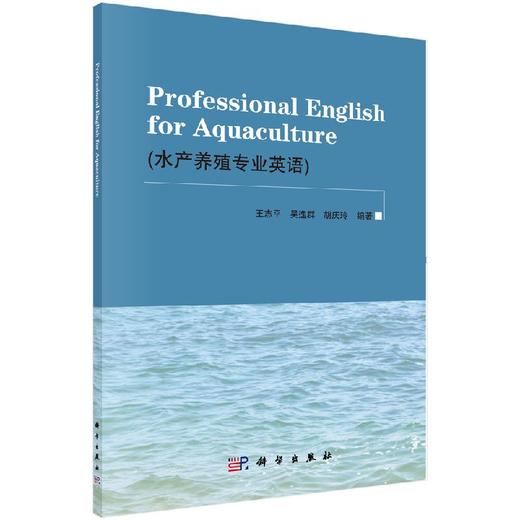
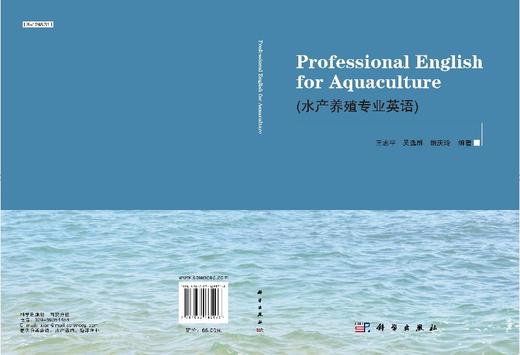
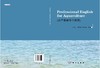
书名:水产养殖专业英语
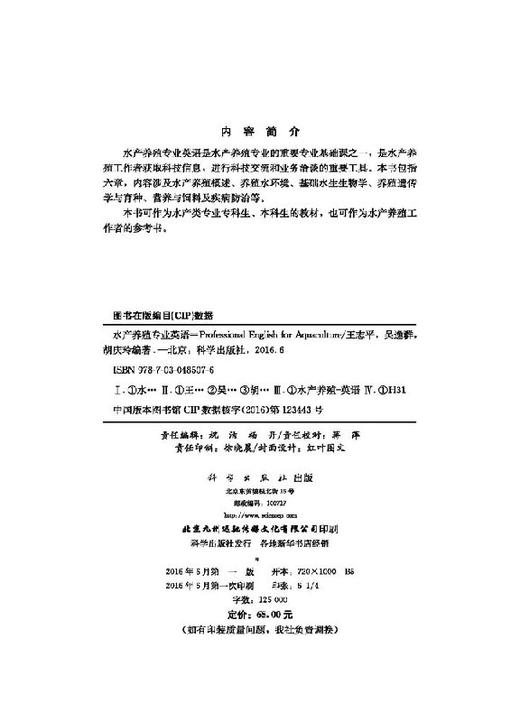
定价:65.0
ISBN:9787030485076
作者:王志平
版次:1
出版时间:2016-06
内容提要:
水产养殖专业英语是水产养殖专业的重要专业基础课之一,是水产养殖工作者获取科技信息,进行科技交流和业务洽谈的重要工具。本书包括六章,内容涉及水产养殖概述、养殖水环境、基础水生生物学、养殖遗传学与育种、营养与饲料及疾病防治等。
目录:
Contents
前言
Unit 1About Aquaculture1
Unit 2Water Environment for Aquaculture4
Section 1Introduction4
Section 2Temperature6
Section 3Salinity7
Section 4pH9
Section 5Dissolved Oxygen10
Unit 3Basic Biology of Aquatic Species12
Section 1Characteristics of Fish Flesh12
Section 2Basic Biology of Fish15
Section 3Growth23
Section 4Reproduction26
Unit 4Aquaculture Genetics and Breeding32
Section 1Introduction32
Section 2Current Status of Aquaculture Genetics34
Section 3New Biotechnologies in Breeding40
Unit 5Nutrition and Feeding47
Section 1Introduction47
Section 2Nutrient Requirements for Aquatic Animals48
Section 3Broodstock and Larval Nutrition54
Unit 6Diseases and Health Management in Aquaculture60
Section 1Introduction60
Section 2Diseases in Aquaculture62
Section 3Health: a Constraint to Aquaculture65
Section 4How to Minimize Disease Risks67
References75
Appendix79
在线试读:
Unit 1About Aquaculture
Aquaculture is the cultivation of fish, shellfish or aquatic plants (such as seaweed) in natural or controlled marine or freshwater environments. Even though aquaculture began eons ago with the ancient Greeks, it wasn’t until the 1980s that the practice finally began to expand rapidly, in part in response to overfishing and the deterioration of the world's fisheries and concerns about the effects of pollution on seafood. Aquaculture “farms” take on a variety of forms including huge tanks, freshwater ponds, and shallow-or deep-water marine environments. Carp, trout, catfish, tilapia, scallops, mussels, lobsters, and oysters are well-known species raised through aquaculture. Though most aquaculture supplies the commercial food market, many governmental agencies engage in it to stock lakes and rivers for sport fishing. It also supplies goldfish and other decorative fish for home aquariums and bait fish for sport and commercial fishing.
Among the raising and harvesting of fresh-and salt-water plants and animals, the most economically important form of aquaculture is fish farming, an industry that accounts for an ever increasing share of world fisheries production. Aquaculture provided 20 percent of global fisheries production in 1996. In 2003, the total world production of fisheries product was 1322 million tonnes of which aquaculture contributed 419 million tonnes or about 31% of the total world production. In 2005, the total production of aquatic animals amounted to 481 million tonnes with a farm-gate value of about US$70 billion. Today, aquaculture provides nearly half of the world’s food fish. Considering the projected population growth over the next decades, estimates show that an additional 37 million tonnes of aquatic food will be needed by 2030 just to maintain current consumption levels (Harris, 2015). Aquaculture is perceived as having the greatest potential to meet the growing demand for aquatic food.
Aquaculture is currently the world's fastest growing food producing sector. It provides a safe and healthful food product for consumers, reduces the deficit in seafood trade, and creates jobs for farmers.
Successful aquaculture takes into consideration the biology of the aquatic species (feeding, water flow and temperature needs, disease prevention) and engineering design (water source and water quality study, pond and tank containment systems, water filtration and aeration) as well as issues pertinent to any business.
Words and Expressions:
aquaculture (n.): rearing aquatic animals or cultivating aquatic plants for food 水产养殖
seaweed (n.): plant growing in the sea, especially marine algae 海草,海藻
eon(n.): an extremely long period of time 极漫长的时期,千万年
deterioration(n.): process of changing to an inferior state 恶化,变坏,退化
carp(n.): a kind of fish that lives in lakes and rivers 鲤鱼
trout (n.): a fairly large fish that lives in rivers and streams 虹鳟
catfish (n.): a type of fish that have long thin spines around their mouths 鲶鱼
tilapia (n.): a freshwater fish of the cichlid family 罗非鱼,吴郭鱼
scallop (n.): a kind of large shellfish with two flat fan-shaped shells 扇贝
mussel (n.): a kind of shellfish that you can eat from their shells 贻贝,蚌
lobster (n.): a sea creature that has a hard shell, two large claws, and eight legs 龙虾
oyster (n.): a large flat shellfish. Some oysters can be eaten and others produce valuable objects called pearls 牡蛎,蚝
decorative (adj.): to look pretty or attractive 装饰性的,用作装饰的
aquarium (n.): a glass tank filled with water, in which people keep fish 养鱼缸,水族箱
perceive (v.): to understand or think of sb/sth in a particular way将……理解为, 将……视为,认为
deficit [ defisit](n.):the amount by which something is less than what is required or expected, especially the amount by which the total money received is less than the total money spent 赤字,逆差
containment (n.): the act or process of keeping it under control 控制
filtration (n.): the process of filtering a substance 过滤
filter (v.): pass it through a device which is designed to remove certain particles contained in it 过滤, 透过
aeration (n.): cause air or gas to pass through sth 充气, 通气, 曝气
pertinent (adj.): relevant to a particular subject 有关的, 相干的
Translation:
第*章 水产养殖概述
水产养殖是指在自然或人为调控下的海洋或淡水环境中养殖鱼类、贝类或水生植物(如海藻)。尽管水产养殖始于古希腊,但直到20世纪80年代才开始迅速扩大,部分原因是世界渔业的过度捕捞和恶化及人们对海产品污染的担忧。水产养殖场有大型水箱、淡水池塘、浅水或深水海洋环境等各种形式。常见的水产养殖种类包括鲤鱼、鲑鱼、鲶鱼、罗非鱼、扇贝、蚌、龙虾和牡蛎等。虽然水产养殖主要为商业性食品市场提供产品,但许多政府机构也会保留一些湖泊和河流供人们休闲垂钓。另外,水产养殖也为家庭水族箱提供金鱼及其他观赏鱼类,为休闲垂钓和商业捕鱼提供饵料鱼类。
从淡水和海水动植物的养殖与和收获情况看,*重要的水产养殖形式是养鱼,而且它在世界渔业生产中所占比例仍在不断升高。1996年,水产养殖的产量占全球渔业产量的20%。2003年,世界渔业总产量为1.322亿吨,其中水产养殖产量为0.419亿吨,占世界总产量的31%。到2005年,水产动物产量达到0.481亿吨,总产值约700亿美元。如今,水产养殖产量约占世界食用鱼的一半。根据未来几十年的人口增长率,预计2030年水产品需求量将达到37亿吨,这样才能维持目前的消费水平。面对人们日益增长的水产品需求,水产养殖被认为是*具发展前景的一个领域。
目前,水产养殖是世界上增长*快的食品生产行业。它不仅为消费者提供安全、健康的食品,还有助于减少海产品贸易逆差,同时也为农民创造就业机会。
成功的水产养殖要充分考虑水生生物学(如投饵、水流量和温度、疾病预防)、工程设计(水源和水质研究、池塘和水箱的控制系统、水的过滤和曝气)以及任何与业务相关的问题。
Unit 2Water Environment for Aquaculture
Section 1Introduction
Water quality and quantity vary from place to place, and are affected by ecological factors such as soil and air quality. On a whole, groundwater is considered more desirable for aquaculture because it has more consistent water quality than surface water, and is less likely to be contaminated by pathogens or fish.
As it may be impractical to regulate large volumes of water in open ponds or single pass flow-through culture systems, species selection is largely dependent on the kind of water available. Tropical fish, for instance, are generally sensitive to poor water quality and therefore require fish farmers to have a higher level of water quality management skills. Ornamental fish are kept in tanks more than food fish. In tank conditions where a large number of fish is kept in a small confined space, the buildup of nitrogenous waste requires additional care and measures to maintain a healthy stock.
Regardless of the kind of water available or the species chosen, all fish depend entirely on water to live, eat, grow and perform other bodily functions. Therefore, it is no surprise that the success of a fish farming establishment lies greatly on its water quality management programme. The most important parameters in aquaculture includes temperature, salinity, pH and dissolved oxygen (Wang and Sun, 2008).
Words and Expressions:
ecological (adj.): involved with or concerning ecology 生态的,生态学的
ecology ](n.): the study of the relationships between plants, animals, people, and their environment, and the balances between these relationships 生态,生态学
desirable (adj.): worth having or doing because it is useful, necessary, or popular 值得拥有的, 满意的,可取的
consistent (adj.): always behaves in the same way 一致的,始终如一的
contaminate (v.): make it dirty or harmful 弄脏,污染,损害
impractical [imprktikl](adj.): not sensible or realistic, and does not work well in practice 不切实际的,无用的,不现实的
tropical [trpikl](adj.): belonging to or typical of the tropics 热带的,有热带特征的
ornamental (adj.): being attractive and decorative 装饰性的
confined (adj.): small and enclosed by walls (空间或面积)有限的,狭小的
establishment (n.): a shop, business or organization occupying a particular building or place 企业,团体,机构
parameter (n.): factors or limits which affect the way that something can be done or made 参数,界限,范围
dissolve [dizlv](adj.): mix with the liquid and disappears 溶解的
Translation:
第二章 养殖水环境
第*节引言
不同地区的水体质量和数量存在差异,而且它还受土壤和空气质量等生态因子的影响。人们认为地下水是更为理想的水产养殖用水,因为其水质比地表水更稳定,而且不易受到病原体和鱼类的污染。
对露天池塘或单向流培养系统的大量水体进行调控是不切实际的,因此养殖物种的选择在很大程度上取决于水质状况。例如,热带鱼通常对水质比较敏感,因此要求养殖者具有更高的水质管理水平;与食品鱼相比,观赏鱼通常养在水箱里,在水箱养殖条件下,许多鱼共同生活在一个有限的环境中,需要特别注意含氮废物的积累,并采取措施保障鱼群健康。
无论水质如何或者选择什么种类,所有鱼类都完全依赖于水生活、摄食、生长并完成其他身体机能。因此,毫不奇怪,水产养殖企业的成功在很大程度上取决于水质管理方案。水产养殖中*重要的水质参数包括水温、盐度、酸碱度和溶解氧。
Section 2Temperature
Aquatic animals take on the temperature of their environment and are intolerant of rapid temperature fluctuations. This makes water an ideal living habitat for them, because water is a bad conductor of heat, allowing large amount of heat energy to be absorbed without a corresponding temperature change.
The temperature of the water influences profoundly the lives of all aquatic animals. Many animals reproduce or feed only within certain temperature limits, which may be narrow or broad according to the species (Santiago, 1981). Temperature tolerances of fish are broadly categorized into cold water, cool water, warm water and tropical water. For each species, there is a minimum and maximum tolerance limit, as well as an optimal temperature range for growth. This optimal temperature range, also known as the standard environmental temperature (SET), may vary with each species, even those within the same temperature tolerance category, and with each development stage of the fish.
Water temperature affects the feeding pattern and growth of fish. Fish generally experience stress and disease breakout when temperature is chronically near their maximum tolerance or fluctuates suddenly. It is therefore important to acclimatize fish gradually when moving them from one location to another.
Warm water holds less dissolved oxygen than cool water. This is a point worth noting, since every 10℃ increase in temperature doubles the rate of metabolism, chemical reaction and oxygen consumption in general.
Words and Expressions:
fluctuation (n.): changes a lot in an irregular way 变动,波动,上下浮动
profoundly (adv.): to a great depth psychologically深刻地
categorize (v.): divide them into sets 对……进行分类, 把……归类
breakout (n.): suddenly starts or becomes active, usually after developing quietly for some time 爆发,突发
chronically (adv.): in a slowly developing and long lasting manner 缓慢地,长期地
acclimatize (v.): become used to a new situation, place or climate(使)适应或习惯于(新情况、新地方或新气候), 驯化
定价:65.0
ISBN:9787030485076
作者:王志平
版次:1
出版时间:2016-06
内容提要:
水产养殖专业英语是水产养殖专业的重要专业基础课之一,是水产养殖工作者获取科技信息,进行科技交流和业务洽谈的重要工具。本书包括六章,内容涉及水产养殖概述、养殖水环境、基础水生生物学、养殖遗传学与育种、营养与饲料及疾病防治等。
目录:
Contents
前言
Unit 1About Aquaculture1
Unit 2Water Environment for Aquaculture4
Section 1Introduction4
Section 2Temperature6
Section 3Salinity7
Section 4pH9
Section 5Dissolved Oxygen10
Unit 3Basic Biology of Aquatic Species12
Section 1Characteristics of Fish Flesh12
Section 2Basic Biology of Fish15
Section 3Growth23
Section 4Reproduction26
Unit 4Aquaculture Genetics and Breeding32
Section 1Introduction32
Section 2Current Status of Aquaculture Genetics34
Section 3New Biotechnologies in Breeding40
Unit 5Nutrition and Feeding47
Section 1Introduction47
Section 2Nutrient Requirements for Aquatic Animals48
Section 3Broodstock and Larval Nutrition54
Unit 6Diseases and Health Management in Aquaculture60
Section 1Introduction60
Section 2Diseases in Aquaculture62
Section 3Health: a Constraint to Aquaculture65
Section 4How to Minimize Disease Risks67
References75
Appendix79
在线试读:
Unit 1About Aquaculture
Aquaculture is the cultivation of fish, shellfish or aquatic plants (such as seaweed) in natural or controlled marine or freshwater environments. Even though aquaculture began eons ago with the ancient Greeks, it wasn’t until the 1980s that the practice finally began to expand rapidly, in part in response to overfishing and the deterioration of the world's fisheries and concerns about the effects of pollution on seafood. Aquaculture “farms” take on a variety of forms including huge tanks, freshwater ponds, and shallow-or deep-water marine environments. Carp, trout, catfish, tilapia, scallops, mussels, lobsters, and oysters are well-known species raised through aquaculture. Though most aquaculture supplies the commercial food market, many governmental agencies engage in it to stock lakes and rivers for sport fishing. It also supplies goldfish and other decorative fish for home aquariums and bait fish for sport and commercial fishing.
Among the raising and harvesting of fresh-and salt-water plants and animals, the most economically important form of aquaculture is fish farming, an industry that accounts for an ever increasing share of world fisheries production. Aquaculture provided 20 percent of global fisheries production in 1996. In 2003, the total world production of fisheries product was 1322 million tonnes of which aquaculture contributed 419 million tonnes or about 31% of the total world production. In 2005, the total production of aquatic animals amounted to 481 million tonnes with a farm-gate value of about US$70 billion. Today, aquaculture provides nearly half of the world’s food fish. Considering the projected population growth over the next decades, estimates show that an additional 37 million tonnes of aquatic food will be needed by 2030 just to maintain current consumption levels (Harris, 2015). Aquaculture is perceived as having the greatest potential to meet the growing demand for aquatic food.
Aquaculture is currently the world's fastest growing food producing sector. It provides a safe and healthful food product for consumers, reduces the deficit in seafood trade, and creates jobs for farmers.
Successful aquaculture takes into consideration the biology of the aquatic species (feeding, water flow and temperature needs, disease prevention) and engineering design (water source and water quality study, pond and tank containment systems, water filtration and aeration) as well as issues pertinent to any business.
Words and Expressions:
aquaculture (n.): rearing aquatic animals or cultivating aquatic plants for food 水产养殖
seaweed (n.): plant growing in the sea, especially marine algae 海草,海藻
eon(n.): an extremely long period of time 极漫长的时期,千万年
deterioration(n.): process of changing to an inferior state 恶化,变坏,退化
carp(n.): a kind of fish that lives in lakes and rivers 鲤鱼
trout (n.): a fairly large fish that lives in rivers and streams 虹鳟
catfish (n.): a type of fish that have long thin spines around their mouths 鲶鱼
tilapia (n.): a freshwater fish of the cichlid family 罗非鱼,吴郭鱼
scallop (n.): a kind of large shellfish with two flat fan-shaped shells 扇贝
mussel (n.): a kind of shellfish that you can eat from their shells 贻贝,蚌
lobster (n.): a sea creature that has a hard shell, two large claws, and eight legs 龙虾
oyster (n.): a large flat shellfish. Some oysters can be eaten and others produce valuable objects called pearls 牡蛎,蚝
decorative (adj.): to look pretty or attractive 装饰性的,用作装饰的
aquarium (n.): a glass tank filled with water, in which people keep fish 养鱼缸,水族箱
perceive (v.): to understand or think of sb/sth in a particular way将……理解为, 将……视为,认为
deficit [ defisit](n.):the amount by which something is less than what is required or expected, especially the amount by which the total money received is less than the total money spent 赤字,逆差
containment (n.): the act or process of keeping it under control 控制
filtration (n.): the process of filtering a substance 过滤
filter (v.): pass it through a device which is designed to remove certain particles contained in it 过滤, 透过
aeration (n.): cause air or gas to pass through sth 充气, 通气, 曝气
pertinent (adj.): relevant to a particular subject 有关的, 相干的
Translation:
第*章 水产养殖概述
水产养殖是指在自然或人为调控下的海洋或淡水环境中养殖鱼类、贝类或水生植物(如海藻)。尽管水产养殖始于古希腊,但直到20世纪80年代才开始迅速扩大,部分原因是世界渔业的过度捕捞和恶化及人们对海产品污染的担忧。水产养殖场有大型水箱、淡水池塘、浅水或深水海洋环境等各种形式。常见的水产养殖种类包括鲤鱼、鲑鱼、鲶鱼、罗非鱼、扇贝、蚌、龙虾和牡蛎等。虽然水产养殖主要为商业性食品市场提供产品,但许多政府机构也会保留一些湖泊和河流供人们休闲垂钓。另外,水产养殖也为家庭水族箱提供金鱼及其他观赏鱼类,为休闲垂钓和商业捕鱼提供饵料鱼类。
从淡水和海水动植物的养殖与和收获情况看,*重要的水产养殖形式是养鱼,而且它在世界渔业生产中所占比例仍在不断升高。1996年,水产养殖的产量占全球渔业产量的20%。2003年,世界渔业总产量为1.322亿吨,其中水产养殖产量为0.419亿吨,占世界总产量的31%。到2005年,水产动物产量达到0.481亿吨,总产值约700亿美元。如今,水产养殖产量约占世界食用鱼的一半。根据未来几十年的人口增长率,预计2030年水产品需求量将达到37亿吨,这样才能维持目前的消费水平。面对人们日益增长的水产品需求,水产养殖被认为是*具发展前景的一个领域。
目前,水产养殖是世界上增长*快的食品生产行业。它不仅为消费者提供安全、健康的食品,还有助于减少海产品贸易逆差,同时也为农民创造就业机会。
成功的水产养殖要充分考虑水生生物学(如投饵、水流量和温度、疾病预防)、工程设计(水源和水质研究、池塘和水箱的控制系统、水的过滤和曝气)以及任何与业务相关的问题。
Unit 2Water Environment for Aquaculture
Section 1Introduction
Water quality and quantity vary from place to place, and are affected by ecological factors such as soil and air quality. On a whole, groundwater is considered more desirable for aquaculture because it has more consistent water quality than surface water, and is less likely to be contaminated by pathogens or fish.
As it may be impractical to regulate large volumes of water in open ponds or single pass flow-through culture systems, species selection is largely dependent on the kind of water available. Tropical fish, for instance, are generally sensitive to poor water quality and therefore require fish farmers to have a higher level of water quality management skills. Ornamental fish are kept in tanks more than food fish. In tank conditions where a large number of fish is kept in a small confined space, the buildup of nitrogenous waste requires additional care and measures to maintain a healthy stock.
Regardless of the kind of water available or the species chosen, all fish depend entirely on water to live, eat, grow and perform other bodily functions. Therefore, it is no surprise that the success of a fish farming establishment lies greatly on its water quality management programme. The most important parameters in aquaculture includes temperature, salinity, pH and dissolved oxygen (Wang and Sun, 2008).
Words and Expressions:
ecological (adj.): involved with or concerning ecology 生态的,生态学的
ecology ](n.): the study of the relationships between plants, animals, people, and their environment, and the balances between these relationships 生态,生态学
desirable (adj.): worth having or doing because it is useful, necessary, or popular 值得拥有的, 满意的,可取的
consistent (adj.): always behaves in the same way 一致的,始终如一的
contaminate (v.): make it dirty or harmful 弄脏,污染,损害
impractical [imprktikl](adj.): not sensible or realistic, and does not work well in practice 不切实际的,无用的,不现实的
tropical [trpikl](adj.): belonging to or typical of the tropics 热带的,有热带特征的
ornamental (adj.): being attractive and decorative 装饰性的
confined (adj.): small and enclosed by walls (空间或面积)有限的,狭小的
establishment (n.): a shop, business or organization occupying a particular building or place 企业,团体,机构
parameter (n.): factors or limits which affect the way that something can be done or made 参数,界限,范围
dissolve [dizlv](adj.): mix with the liquid and disappears 溶解的
Translation:
第二章 养殖水环境
第*节引言
不同地区的水体质量和数量存在差异,而且它还受土壤和空气质量等生态因子的影响。人们认为地下水是更为理想的水产养殖用水,因为其水质比地表水更稳定,而且不易受到病原体和鱼类的污染。
对露天池塘或单向流培养系统的大量水体进行调控是不切实际的,因此养殖物种的选择在很大程度上取决于水质状况。例如,热带鱼通常对水质比较敏感,因此要求养殖者具有更高的水质管理水平;与食品鱼相比,观赏鱼通常养在水箱里,在水箱养殖条件下,许多鱼共同生活在一个有限的环境中,需要特别注意含氮废物的积累,并采取措施保障鱼群健康。
无论水质如何或者选择什么种类,所有鱼类都完全依赖于水生活、摄食、生长并完成其他身体机能。因此,毫不奇怪,水产养殖企业的成功在很大程度上取决于水质管理方案。水产养殖中*重要的水质参数包括水温、盐度、酸碱度和溶解氧。
Section 2Temperature
Aquatic animals take on the temperature of their environment and are intolerant of rapid temperature fluctuations. This makes water an ideal living habitat for them, because water is a bad conductor of heat, allowing large amount of heat energy to be absorbed without a corresponding temperature change.
The temperature of the water influences profoundly the lives of all aquatic animals. Many animals reproduce or feed only within certain temperature limits, which may be narrow or broad according to the species (Santiago, 1981). Temperature tolerances of fish are broadly categorized into cold water, cool water, warm water and tropical water. For each species, there is a minimum and maximum tolerance limit, as well as an optimal temperature range for growth. This optimal temperature range, also known as the standard environmental temperature (SET), may vary with each species, even those within the same temperature tolerance category, and with each development stage of the fish.
Water temperature affects the feeding pattern and growth of fish. Fish generally experience stress and disease breakout when temperature is chronically near their maximum tolerance or fluctuates suddenly. It is therefore important to acclimatize fish gradually when moving them from one location to another.
Warm water holds less dissolved oxygen than cool water. This is a point worth noting, since every 10℃ increase in temperature doubles the rate of metabolism, chemical reaction and oxygen consumption in general.
Words and Expressions:
fluctuation (n.): changes a lot in an irregular way 变动,波动,上下浮动
profoundly (adv.): to a great depth psychologically深刻地
categorize (v.): divide them into sets 对……进行分类, 把……归类
breakout (n.): suddenly starts or becomes active, usually after developing quietly for some time 爆发,突发
chronically (adv.): in a slowly developing and long lasting manner 缓慢地,长期地
acclimatize (v.): become used to a new situation, place or climate(使)适应或习惯于(新情况、新地方或新气候), 驯化