商品详情
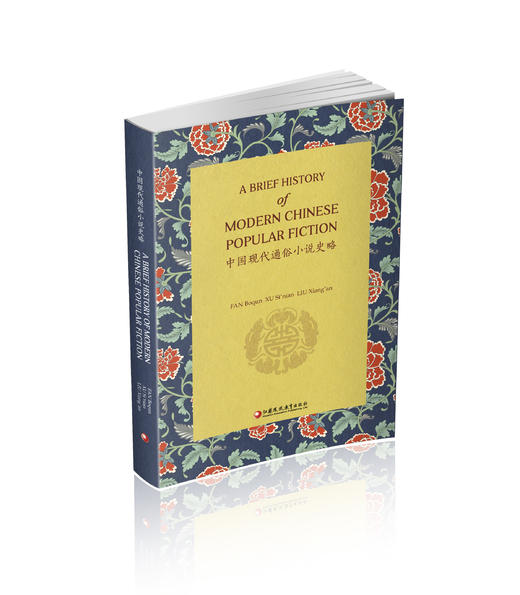
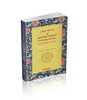
《中国现代通俗小说史略》是范伯群先生在生命的最后时光参与策划并撰写的封笔之作,它被列入“经典中国国际出版工程”外译项目、“十三五”国家重点出版物出版规划项目、国家出版基金资助项目,出版后被评为“苏版好书”,并获央视推介。
An Introduction to
A Brief History of Modern Chinese Popular Fiction
《中国现代通俗小说史略》简介
A Brief History of Modern Chinese Popular Fiction is written by Professor Fan Boqun, Xu Si’nian and Liu Xiang’an, and translated by Professor Shi yunlong. It was selected into China Classics International Project .
《中国现代通俗小说史略》由范伯群、徐斯年、刘祥安三位教授撰写,由石云龙教授翻译,该作品入选经典中国国际出版工程。
The great tree of modern Chinese literature is bifurcated into elegant literature and popular literature. The so-called elegant literature developed with the influence of foreign literature, while the so-called popular literature with the influence of innate national Chinese tradition. A history of modern Chinese literature is supposed to be a literary history of multiple symbiosis, which should not excluded the writings of popular literature. A “literature chain” of ancient and modern Chinese citizen literature has been unremittingly formed from the citizen literature of the ancient agrarian society represented by Feng Menglong, to the literature of “the Mandarin Duck-Butterfly School” at the age of commerce and industry, and then to the cybertype fiction of the present time of information civilization.
中国现代文学这棵大树分出“雅”“俗”两大支干。一支是受外国文学影响的所谓“雅”的支干,一支是继承中国固有民族传统的“俗”的支干。“中国现代文学史”应该是一部“多元共生”的文学史,它不应该将通俗文学作品排斥在外。从冯梦龙们的古代农耕时代的市民大众文学递进到现代工商机械时代的“鸳鸯蝴蝶派”,再发展到当今信息文明时代的网络类型小说,目前,已形成一个中国古今市民大众文学代代承传的“文学链”。
If you are interested in Historical Fiction of Palace Chambers or Detective Stories, you can refer to this book. If you want to know more about Eileen Chang’s works or the story of Yu Jiaolong, you can read the book.
如果你对历史宫闱小说抑或是对侦探小说感兴趣,你可以翻阅这本书;如果你想多了解些张爱玲的作品抑或想了解更多关于玉娇龙的故事,也不妨读读这本书。
Contents
目 录
Preface
绪论
Chapter 1 Ground-breaking Work
The Sing-song Girls of Shanghai by Han Bangqing
第一章 开山之作
韩邦庆的《海上花列传》
Chapter 2 Social Fiction
The Exposure of the Official World by Li Boyuan and Strange Events Seen in the Past Twenty Years by Wu Jianren
The Travels of Lao Ts’an by Liu E,
Annals of Shanghai by Bao Tianxiao
第二章 社会小说
李伯元的《官场现形记》和吴趼人的《二十年目睹之怪现状》
刘鹗的《老残游记》
包天笑的《上海春秋》
Chapter 3 Sentimental Fiction
Soul of Jade Pear by Xu Zhenya
第三章 哀情小说
徐枕亚的《玉梨魂》
Chapter 4 Social Loving Fiction
The Sea of Hatred by Wu Jianren
Tides of Guangling by Li Hanqiu
Unofficial History of Chunming, The Story of a Noble Family and Fate in Tears and Laughter by Zhang Henshui The Setting Sun in an Old Lane, An Unfaithful Wife and Spring Breeze Back to Dreams by Liu Yunruo
Begonia by Qin Shouou
第四章 社会言情小说
吴趼人的《恨海》
李涵秋的《广陵潮》
张恨水的《春明外史》《金粉世家》和《啼笑因缘》
刘云若的《旧巷斜阳》《红杏出墙记》和《春风回梦记》
秦瘦鸥的《秋海棠》
Chapter 5 Whorehouse Romances
Human Hell by Bi Yihong
Tears from Brothels by He Haiming
第五章 新狭邪小说
毕倚虹的《人间地狱》
何海鸣的《倡门红泪》
Chapter 6 Wuxia Fiction
A Life Story of the Knight-errant in Jianghu and A Life
Story of the Knight-errant Hero by Xiang Kairan
Dragons in the World and Head of Mount Nuomao by Yao
Min’ai
A life Story of Sword Immortals in Mount Shushan by Li
Shoumin
Treasured Sword and Gold Hairpin and Crouching Tiger and
Hidden Dragon by Wang Dulu
第六章 武侠小说
向恺然的《江湖奇侠传》和《侠义英雄传》
姚民哀的《四海群龙记》和《箬帽山王》
李寿民的《蜀山剑侠传》
王度庐的《宝剑金钗》和《卧虎藏龙》
Chapter 7 Historical Fiction of Palace Chambers
A Flower in the Evil Sea by Zeng Po
Popular Romance of the Past Chinese Dynasties by Cai
Dongfan
An Illusion of New China by Yang Chenyin
第七章 历史宫闱小说
曾朴的《孽海花》
蔡东藩的《历朝通俗演义》
扬尘因的《新华春梦记》
Chapter 8 Humorous Fiction
Reformation Conference of World Currency, etc. by Xu
Zhuodai
A History of Extramarital Sex of the Theatre by Wang
Zhongxian
Sober Alone and A Brief History of Tea House by Cheng
Zhanlu,
Clouded Mountain and Foggy Bog by Geng Xiaode
第八章 幽默滑稽小说
徐卓呆的《万国货币改造大会》等
汪仲贤的《歌场冶史》
程瞻庐的《众醉独醒》和《茶寮小史》
耿小的的《云山雾沼》
Chapter 9 Detective Stories
Detective Stories of Huo Sang by Cheng Xiaoqing
Blue Rattlesnake by Sun Liaohong
第九章 侦探小说
程小青的《霍桑探案》
孙了红的《蓝色响尾蛇》
Chapter 10 Science Fiction
New Mr. Munchausen by Xu Nianci
Propagation Bag by Zhi Ming
New Dream of Red Mansions by Wu Jianren
第十章 科学幻想小说
徐念慈的《新法螺先生谭》
支明的《生生袋》
吴趼人的《新石头记》
Chapter 11 New Citizen Fiction with Fusion of Elegance and Vulgarity
Legend by Eileen Chang
The Wind Is Rustling by Xu Xu
Romance in the Northern Country by the Anonymous
第十一章 雅俗融汇的新市民小说
张爱玲的《传奇》
徐訏的《风萧萧》
无名氏的《北极风情画》
Excerpt
In the novel New Mr. Munchausen, the narrator employs massive numbers interspersed with the literary narration, making the novel exhibit an appearance of accurate science. For example, “a speed of 100 times a second, …‘I’ had been in a swoon only for 24 hours before returning gradually into consciousness since ‘I’ entered the stream of gravity.” The novel demonstrates through concrete numbers the rationality of the plot of separating soul and body under centrifugal stress in high-speed revolution. For another example, “I” was falling, “at the speed of 14.23 feet the first second, 42.66 feet the second second, and 71.1 feet the third second, in accordance with the general rule of acceleration of falling objects, falling directly as a cannonball leaving the gun.” Here what is used is the principle of “acceleration”, a sense of speediness being demonstrated in numbers.
The novel paraded in the narrative the modern elements of science and technology such as light, sound, medicine, heat, and hypnotism, etc., displaying the worship of scientific strength mainly in an attempt to transform the rural dwellers and to save the country and its citizens by means of scientific strength. “I” “have forged an incredible motive power for light shining,” “which makes the whole world gloriously bright.” He hoped to illuminate all things with this light everywhere in the world. Hearing from Huang Zhong’s ancestor after falling into the Earth’s core that the countrymen were lethargic because of intoxication, he felt all the more “my duty to wake up the countrymen” and “would wish to forge a miraculous acoustical generator by my soul.” At Mercury where he watched the “technique of man-making”, he thought of establishing back in Shanghai a company to reform human brains, “to clean the mind for the stubborn old men infected with the evil habits in our country on the purpose of turning them into a new look.” On Venus, he saw the process of evolution and sighed with emotion that “what is right on Venus should also be right on Earth.” Evolution is thus introduced into the narrative. After feeling the heat of the Sun, “I suddenly come upon a strange notion: the heat of the sun light … reaching the Sun,” becomes the power of communication; and returning to the Earth, inventing “brain power” to replace other energies. It is evident that the narrator employs light, sound, heat, medicine, evolution, electricity, etc. as means of “waking up countrymen.”
精彩片段
在《新法螺先生谭》中叙事者使用了大量数字,掺杂在文学性叙事中,使小说呈现出一种精确的科学化面貌。比如“一秒时速至一百次,所以余身自入吸力中,仅晕绝二十四小时”,通过数字显示高速旋转中离心力作用下灵肉分离情节的合理性。再如“余”下落时,“按第一秒十四尺二三,第二秒四十二尺六六,第三秒七十一尺一,坠物渐加速率之公例,如炮弹之脱口,直往下落。”这里用的是“加速度”的原理,用数字演化出一种快速感。
小说将光、声、医、热、电以及催眠术等这些近代科技元素在叙事中大肆渲染,表达了对科学力量的崇拜的同时,主要是以此来进行国民改造,借科学之力来救国救民。“余”“炼成一种不可思议之发光原动力”,可以“使全世界大放光明”,他希望的是以此强光普照九州大地。坠入地心,听黄种祖说国人中毒而昏睡,愈加认定“唤醒国民,其余之责”,“将以求我灵魂之身,而炼成一不可思议之发声器”;在水星球上,观“造人术”,想回上海创一改良脑汁之公司,“即我国深染恶习之老顽固,亦将代为洗髓伐毛,一新其面目也”;在金星上看到进化之过程,而感慨“金星球然,即地球何莫不然”,将进化论引入叙事中;在感受到太阳的热力后,“余忽发奇思,因太阳光热……则至日球上”成为交通动力;回到地球则发明“脑电”,代替了其他能量。显然,叙事者借由光、声、热、医、进化论、电等来充当“醒民”的力量手段。
作者、译者简介
作者:范伯群、徐斯年、刘祥安。
范伯群,苏州大学文学院教授、博导,曾出版《鲁迅小说新论》(人民文学出版社1986年版)、《冰心评传》(人民文学出版社版1963年版)《郁达夫评传》(天津百花文艺出版社1983年版)等专著;于20世纪80年代初开始研究通俗文学,曾出版《中国现代通俗文学史(插图本)》(北京大学出版社2007年版)、《多元共生的中国文学的现代化历程》(复旦大学出版社2009年版)、《20世纪中国通俗文学史》(高教出版社版2006年版)等多部著作。范伯群在国内学界被视为“现代通俗文学研究的开拓者”,有较高的知名度。
译者:石云龙。
石云龙,为南京航天航空大学教授,上海外国语大学英语学院研究生,获文学博士学位。1999-2000英国Bristol大学访问学者;2010年参加武汉Coetzee国际研讨会,发言并主持Coetzee研究讨论;2011年 参加雅典文学语言学国际研讨会,大会发言;2013年 参加上海英美文学国际研讨会,主旨演讲;2015年参加湘潭外国文学国际研讨会,发言并主持讨论;任江苏省外国文学研究会理事、江苏省比较文学研究会理事、江苏省翻译学会理事;是国家社科基金项目评审专家、国家社科基金后期资助项目评审专家、国家社科基金项目鉴定专家。
- 江苏教育出版社图书旗舰店 (微信公众号认证)
- 江苏凤凰教育出版社1984年成立,1994年被评为首批“全国优秀出版单位”,2009年入选首批“全国百佳图书出版单位”。
- 扫描二维码,访问我们的微信店铺
- 随时随地的购物、客服咨询、查询订单和物流...