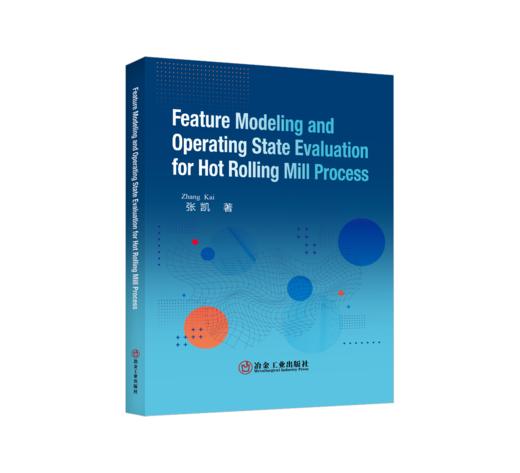
Feature Modeling and Operating State Evaluation for Hot Rolling Mill Process
| 运费: | ¥ 10.00-25.00 |
| 库存: | 30 件 |

商品详情
书名:Feature Modeling and Operating State Evaluation for Hot Rolling Mill Process
ISBN:978-7-5240-0188-1
出版社:冶金工业出版社有限公司
定价:88
作者:张凯
出版时间:2025-03-18
内容简介
带钢热连轧过程具有工序众多、工况频变、多系统耦合等特点,这给对其运行工况进行有效的监测和评估带来一定困难。常见的方法是从数据出发对生产过程数据进行特征提取,并利用提取的特征构建监测和评估模型,当该过程生产产品不断切换导致工况不断变化时,所提取的特征往往不足以反映该过程特性,进而导致工况评估错误。基于以上问题,本书创新性地设计了基于共性-个性特征建模的热连轧过程特征分析框架,并提出了多种特征建模方法。同时,基于所构建的特征模型,实现热连轧过程工况的评估,并进行应用验证。
本书所包含的主要内容有:(1)带钢热连轧过程简介,分析热连轧过程的特点,并以数据为基础,展示热连轧过程多工况运行特性;(2)带钢热连轧过程常见的故障及异常的工况,分析该过程运行工况特点、异常工况的特性及导致的原因;(3)热连轧过程故障注入系统,设计开发热连轧精轧过程故障注入系统,实现对不同异常工况的仿真分析;(4)提出热连轧过程特征建模框架及工况评估方法,构建基于共性-个性特征建模的特征分析框架,利用空间分析、三维张量建模、深度置信网络等多种分析方法实现基于共性-个性特征建模的分析方法,同时提出相应的异常工况评估方法;(5)原型系统方法验证,利用实际的热连轧数据验证方法的有效性,构建验证原型系统,利用实验室实时数据验证方法的实用性。
编辑推荐
本书在学术界首次构建了基于共性-个性建模的特征分析框架,为化工、能源、电力等多工况运行过程分析与建模提供了重要参考。同时,本书将理论与实践相结合,利用实际热连轧过程数据对算法进行验证,有利于加深读者对理论方法的理解。
与国内外相关领域其他书籍注重理论推导和仿真分析不同,本书将从实际应用中引出问题,通过理论分析与方法研究解决问题,进而通过实际应用检验所提出方法的有效性和实用性。
目录
1 Introduction
2 Brief Introduction to the Hot Strip Milling Process
2.1 Introduction
2.2 Description of the Hot Strip Milling Process
2.3 Data Characteristics of the Hot Strip Milling Process
2.4 Multi-scenario Hot Spots in the Hot Strip Milling Process
2.5 Analysis of Control and Operation Conditions in the Finishing Milling Process
3.5 Conclusion
3 Milling Process Fault Injection System
3.1 Common Faults in the Milling Process
3.2 Fault Injection Model for the Milling Process
3.3 Milling Process Fault Injection System and Implementation
3.4 Presentation of Several Types of Fault Data
3.5 Conclusion
4 Commonality-Individuality Feature Modeling Framework
4.1 Introduction
4.2 Common and Individual Features in the Hot Strip Milling Process
4.3 Commonality-Individuality Feature Modeling Framework
4.4 Feature Modeling and Condition Assessment
4.5 Conclusion
5 Feature Modeling Method Based on Commonality-Individuality PLS
5.1 Introduction
5.2 Brief Introduction to PCA and PLS Algorithms
5.3 Commonality-Individuality PCA Algorithm
5.4 Commonality-Individuality PLS Algorithm
5.5 Results of Commonality-Individuality Feature Modeling
5.6 Conclusion
6 Feature Modeling Method Based on Commonality-Individuality Subspace
6.1 Introduction
6.2 Description of Commonality-Individuality Subspace
6.3 Extraction of Commonality-Individuality Features
6.4 Migration of Common Subspace
6.5 Results of Commonality-Individuality Subspace Modeling
6.6 Conclusion
7 Feature Modeling Method Based on Tensor Decomposition
7.1 Introduction
7.2 Brief Introduction to Tensor Decomposition Methods
7.3 Extraction of Common Features by Tensor Decomposition
7.4 Modeling of Individual Features by Tensor Decomposition
7.5 Summary and Comparison of Tensor Decomposition Methods
7.6 Conclusion
8 Feature Modeling Method Based on Deep Belief Networks
8.1 Introduction
8.2 Description of Deep Belief Network Method
8.3 Feature Modeling Based on Deep Belief Networks
8.4 Network Construction and Parameter Learning
8.5 Conclusion
9 Condition Assessment Based on Linear Commonality-Individuality Feature Modeling
9.1 Introduction
9.2 Results of Condition Assessment Based on Commonality-Individuality PCA
9.3 Results of Condition Assessment Based on Commonality-Individuality Subspace
9.4 Results of Condition Assessment Based on Tensor Decomposition
9.5 Conclusion
10 Condition Assessment Based on Commonality-Individuality Deep Belief Networks
10.1 Introduction
10.2 Training of Abnormal Condition Models
10.3 Presentation of Abnormal Condition Assessment
10.4 Conclusion
11 Prototype System for Hot Strip Milling Process Condition Assessment
11.1 Introduction
11.2 Hardware Framework of the Prototype System
11.3 Software Framework of the Prototype System
11.4 Data Replay and Presentation of the Prototype System
11.5 Application of Condition Assessment in the Prototype System
11.6 Conclusion
References
- 冶金工业出版社图书旗舰店
- 冶金工业出版社,是国内历史最悠久的专业科技出版社之一。主要承担学术专著、技术著作、技术手册、专业辞书、大中专教材、职工培训教材、科普读物、人文社科、文集、史志、年鉴等图书的出版。
- 扫描二维码,访问我们的微信店铺