牛津英语写作指南 英文原版 英语写作The Oxford Essential Guide to Writing可搭On Writing Well单词的力量Word Power Made easy
| 运费: | ¥ 0.00-999.00 |
| 库存: | 313 件 |
商品详情
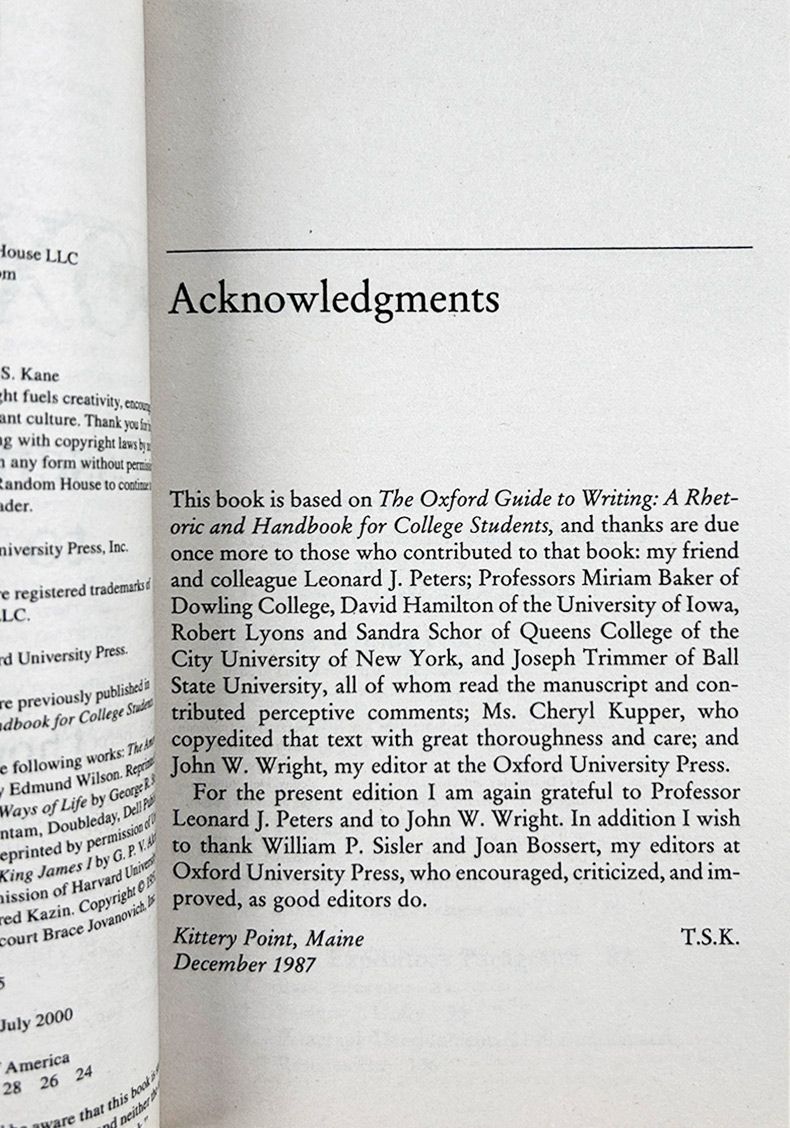
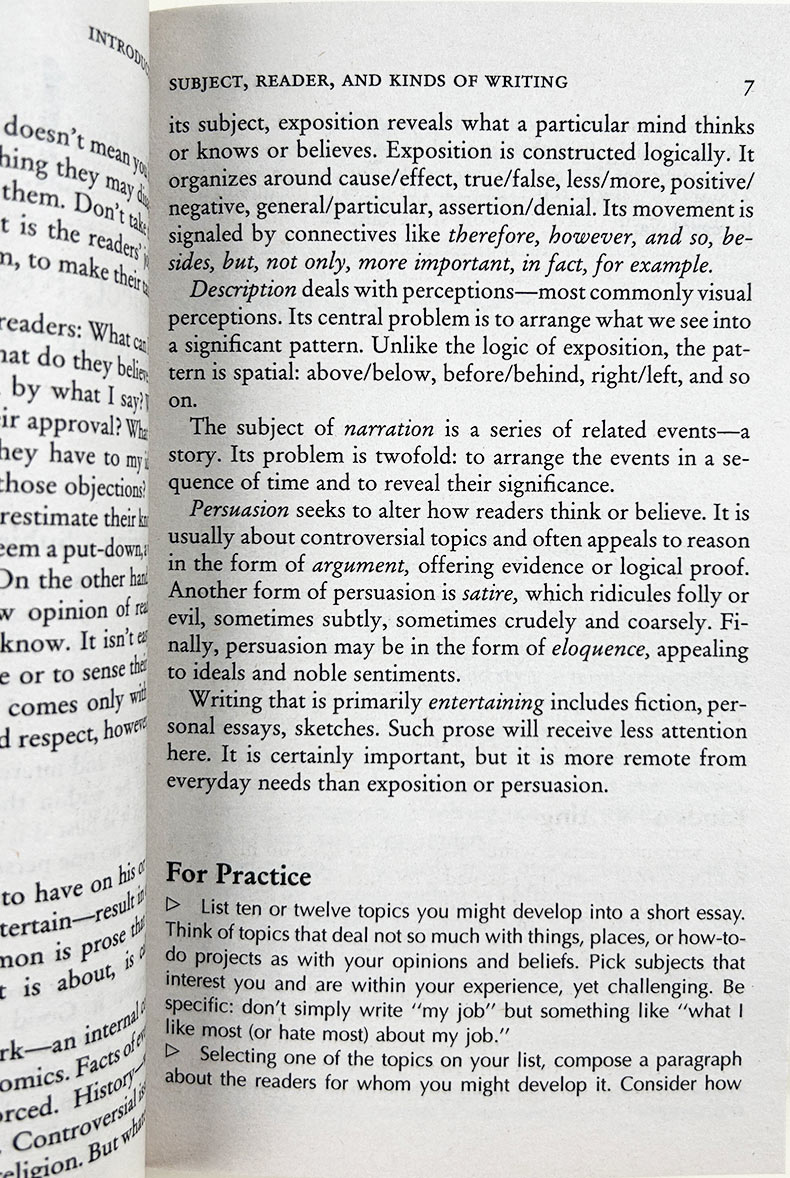
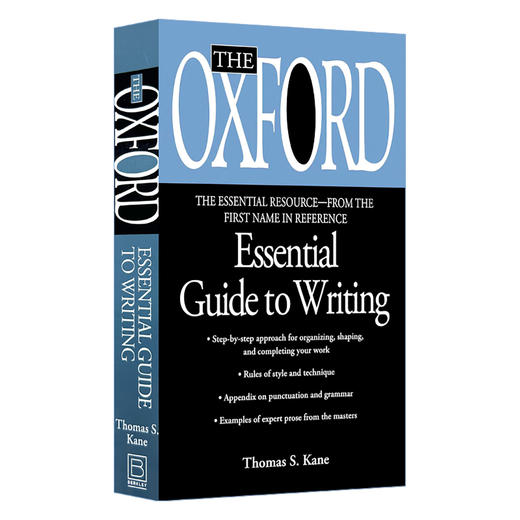
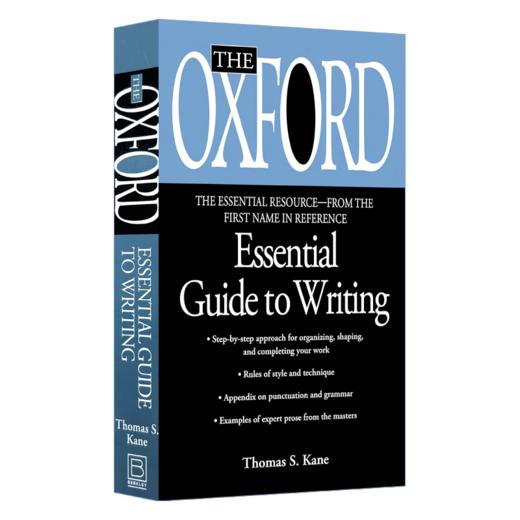
 书名:The Oxford Essential Guide to Writing牛津写作指南
作者:Thomas S. Kane
出版社名称:Berkley
出版时间:2000
语种:英文
ISBN:9780425176405
商品尺寸:10.6 x 2.5 x 17.6 cm
包装:简装
页数:464 The Oxford Essential Guide to Writing《牛津写作指南》涵盖了不同类型写作文体的教学,是一本简明写作指南。无论是写信件、论文,还是小说,都需要学习如何从无到有地进行构思,如何清晰得体地表达自己的想法,以写出令人信服的文字。本书将教会读者构思、修改、以及在规定时间内完成高质量的文章,从此不再惧怕写作!
A Concise Course in the Art of Writing
Whether you’re composing a letter, writing a school thesis, or starting a novel, this resource offers expert advice on how to think more creatively, how to conjure up ideas from scratch, and how to express those ideas clearly and elegantly. No matter where you find yourself in the writing process—from the daunting look of a blank page, to the rough draft that needs shaping, to the small but important questions of punctuation—you’ll find what you need in this one handy, all-inclusive volume. The Oxford Essential Guide to Writing《牛津写作指南》内容包括:
通过日记记录自己的想法,找到更多的写作话题;
学习马克·吐温、亨利·路易斯·门肯、E·B·怀特、安妮·狄勒德等知名作家的写作风格和技巧;
通过列提纲,扩充和完善自己的文章;
选择恰当的词语传达自己的想法和观点;
标点符号的准确运用。
Some features include:
•How to use journals to store ideas and explore potential topics
•Examples of style and technique from such masters of form as Mark Twain, H.L. Mencken, E.B. White, and Annie Dillard
•Advice on using outlines to shape your material—and drafts and revisions to refine them
•Selecting the proper words to convey both information and point of view
•A useful appendix on punctuation, ranging from commas to underlining and capitalization Thomas Kanewas formerly Professor of English at the University of Connecticut at Waterbury, where he taught writing for over twenty-five years. He co-edited The Short Story and the Reader and Writing Prose, Sixth Edition, both with Leonard J. Peters, and wrote The Oxford Guide to Writing.
 The Oxford Essential Guide to Writing
Introduction
1. Subject, Reader, and Kinds of Writing
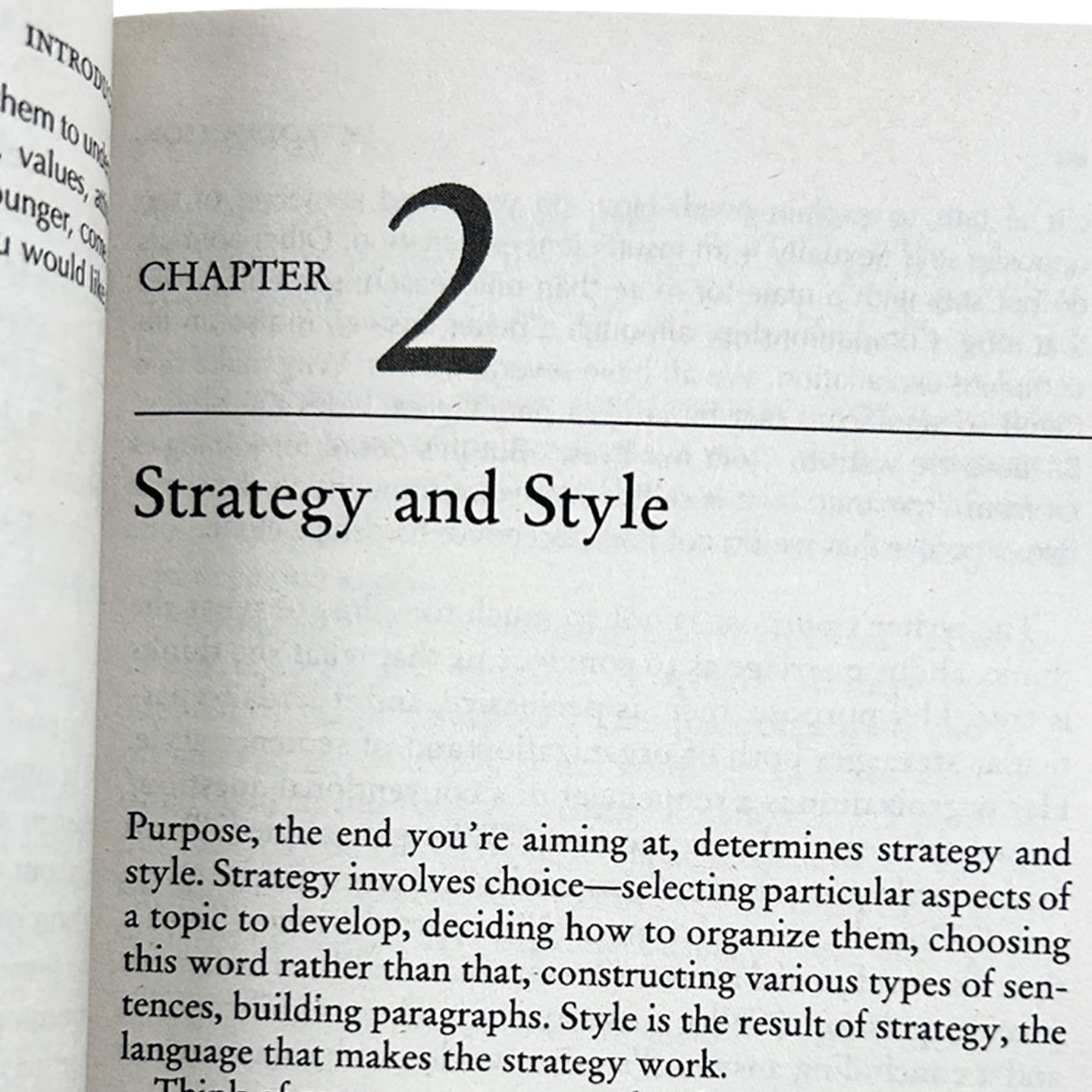
2. Strategy and Style
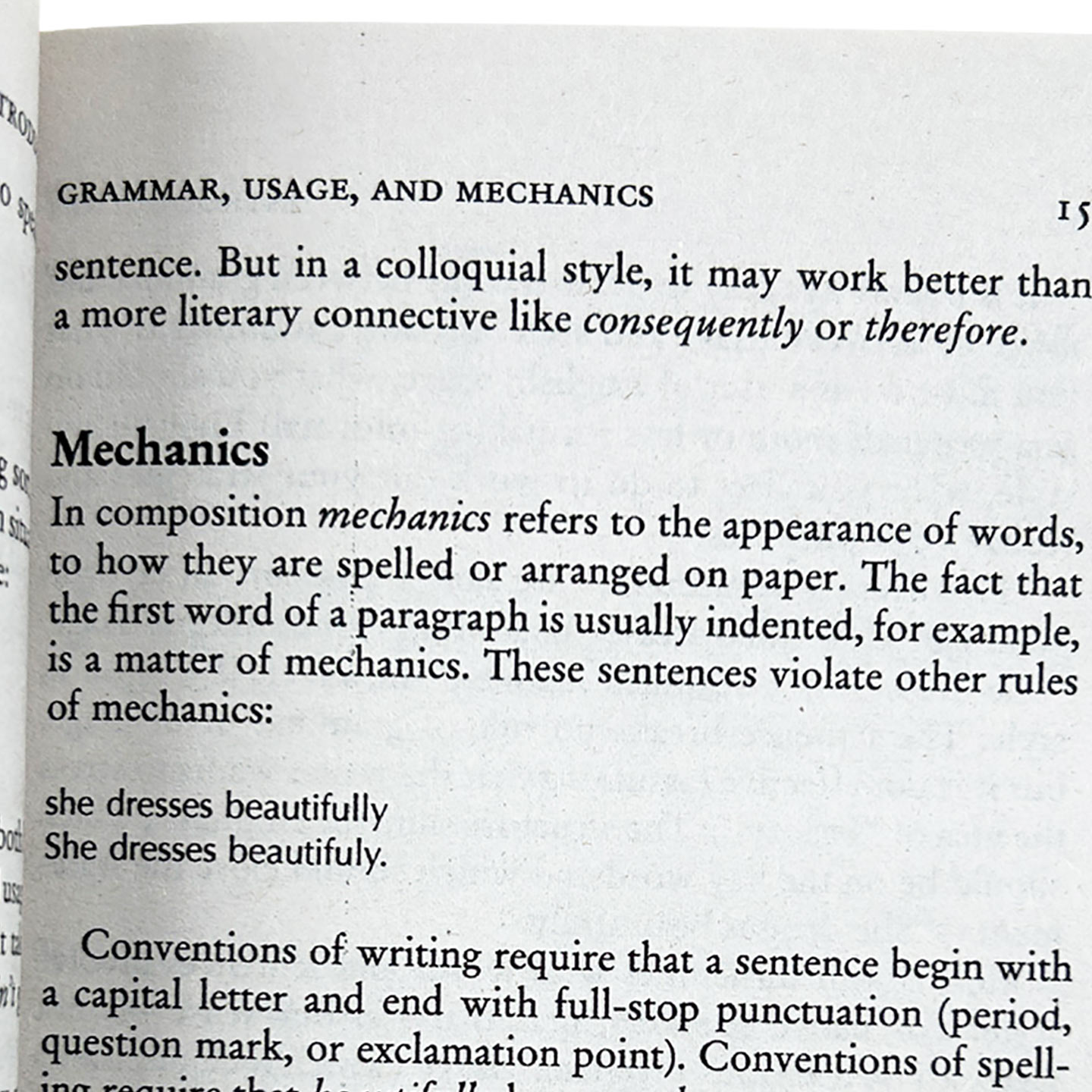
3. Grammar, Usage, and Mechanics
Part I: The Writing Process
4. Looking for Subjects
5. Exploring for Topics
6. Making a Plan
7. Drafts and Revisions
Part II: The Essay
8. Beginning
9. Closing
10. Organizing the Middle
11. Point of View, Persona, and Tone
Part III: The Expository Paragraph
12. Basic Structure
13. Paragraph Unity
14. Paragraph Development: (1)Illustration and Restatement
15. Paragraph Development: (2)Comparison, Contrast, and Analogy
16. Paragraph Development: (3)Cause and Effect
17. Paragraph Development: (4)Definition, Analysis, and Qualification
Part IV: The Sentence
18. The Sentence: A Definition
19. Sentence Styles
20. The Well-Written Sentence: (1)Concision
21. The Well-Written Sentence: (2)Emphasis
22. The Well-Written Sentence: (3)Rhythm
23. The Well-Written Sentence: (4)Variety
Part V: Diction
24. Meaning
25. Clarity and Simplicity
26. Concision
27. Figurative Language
28. Unusual Language
29. Improving Your Vocabulary: Dictionaries
Part VI: Description and Narration
30. Description
31. Narration
Part VII: Punctuation
Introduction
32. Stops
33. The Other Steps
Name Index
Subject Index Choosing a Subject
Often, of course, you are not free to choose at all. You must compose a report for a business meeting or write on an assigned topic for an English class. The problem then becomes not what to write about but how to attack it, a question we’ll discuss in Chapters 5 and 6.
When you can select a subject for yourself, it ought to interest you, and interest others as well, at least potentially. It should be within the range of your experience and skill, though it is best if it stretches you. It ought to be neither so vast that no one person can encompass it nor so narrow and trivial that no one cares.
Don’t be afraid to express your own opinions and feelings. You are a vital part of the subject. No matter what the topic, you are really writing about how OH understand it, how you feel about it. Good writing has personality. Readers enjoy sensing a mind at work, hearing a clear voice, responding to an unusual sensibility. If you have chosen a topic that is of general concern, and if genuine feeling and intelligence come through, you will be interesting. Interest lies not so much in a topic as in what a writer has made of it.
About Readers
You don’t want to repel readers. This doesn’t mean you have to flatter them or avoid saying something they may disagree with. It does mean you must respect them. Don’t take their interest for granted or suppose that it is the readers’ job to follow you. It’s your job to guide them, to make their task as easy as the subject allows.
Ask yourself questions about your readers: What can I expect them to know and not know? What do they believe and value? How do I want to affect them by what I say? What attitudes and claims will meet with their approval? What will offend them? What objections may they have to my ideas, and how can I anticipate and counter those objections?
Readers may be annoyed if you overestimate their knowledge. Tossing off unusual words may seem a put-down, a way of saying, “I know more than you.” On the other hand, laboring the obvious also implies a low opinion of readers: don’t tell them what a wheel is; they know. It isn’t easy to gauge your readers’ level of knowledge or to sense their beliefs and values. Sensitivity to readers comes only with experience, and then imperfectly. Tact and respect, however, go a long way. Readers have egos too.
- 华研外语 (微信公众号认证)
- 本店是“华研外语”品牌商自营店,全国所有“华研外语”、“华研教育”品牌图书都是我司出版发行的,本店为华研官方源头出货,所有图书均为正规正版,拥有实惠与正版的保障!!!
- 扫描二维码,访问我们的微信店铺
- 随时随地的购物、客服咨询、查询订单和物流...