大学潜规则 谁能优先进入美国大学 英文原版 The Price of Admission 美国高等大学招生录取 普利策奖得主 丹尼尔金 英文版进口书
| 运费: | ¥ 0.00-999.00 |
| 库存: | 26 件 |

商品详情
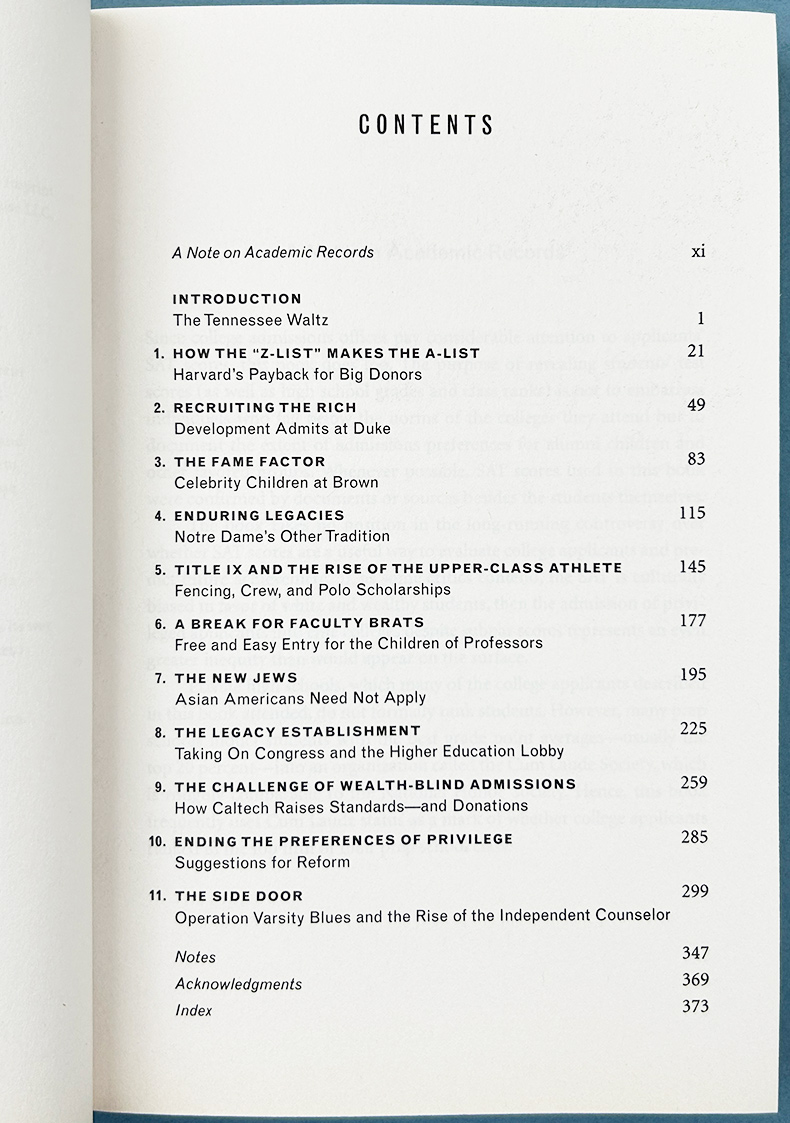
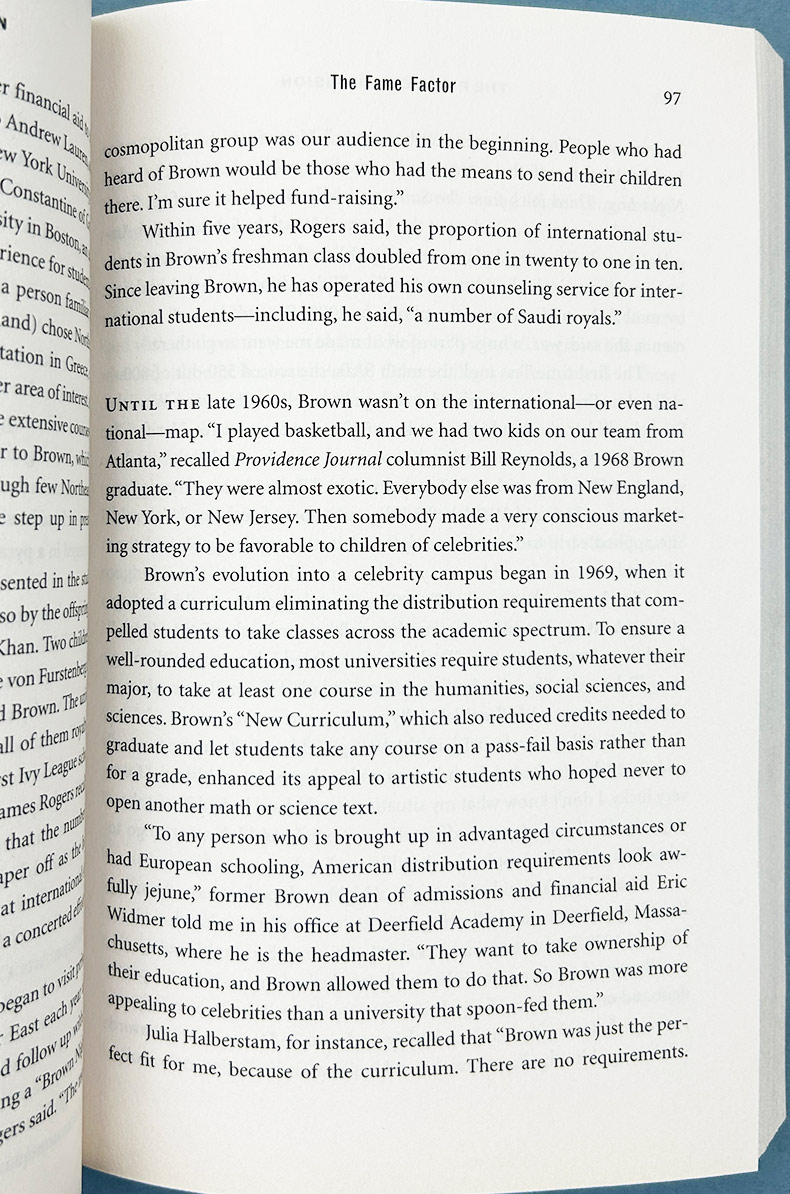
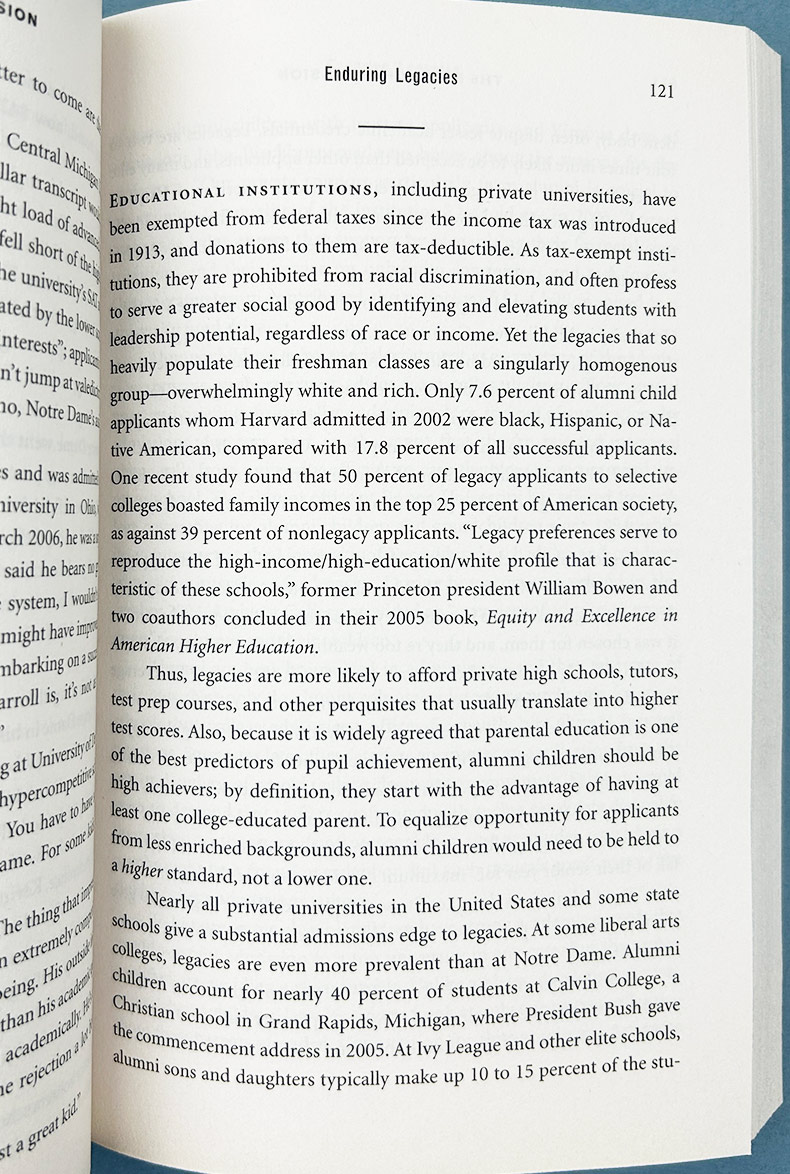
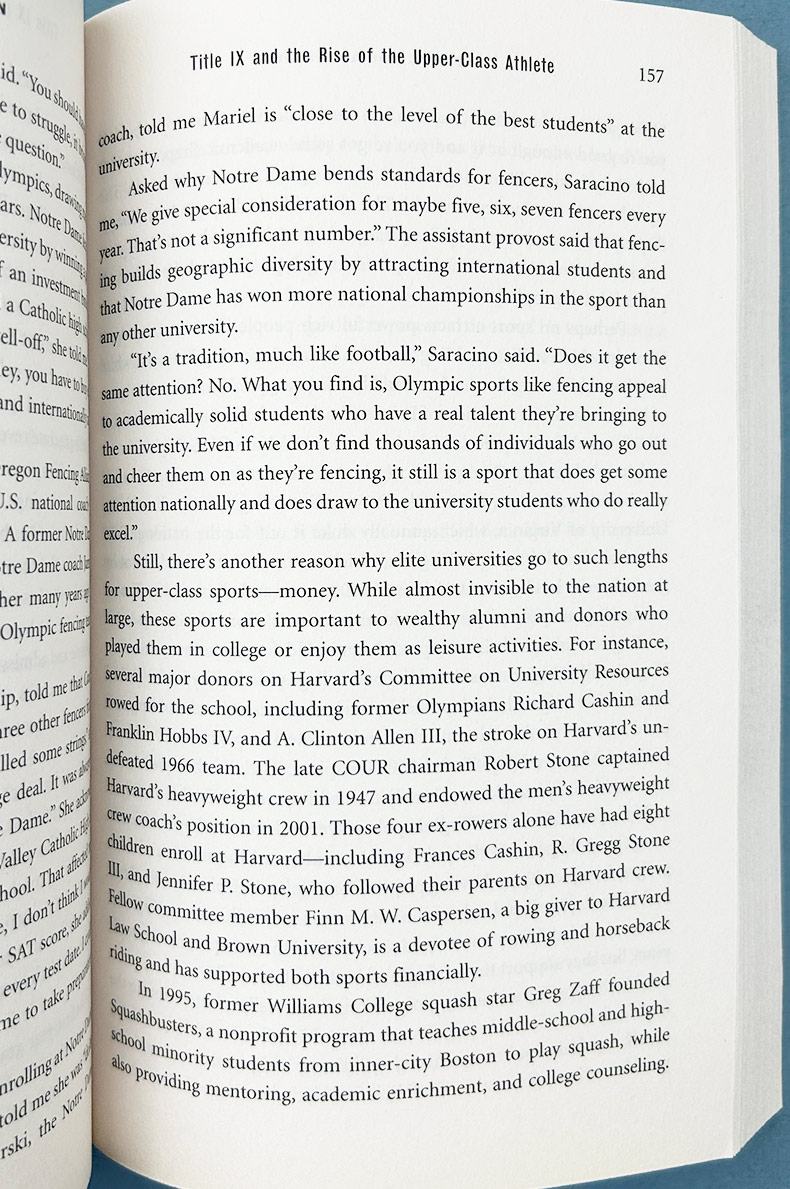
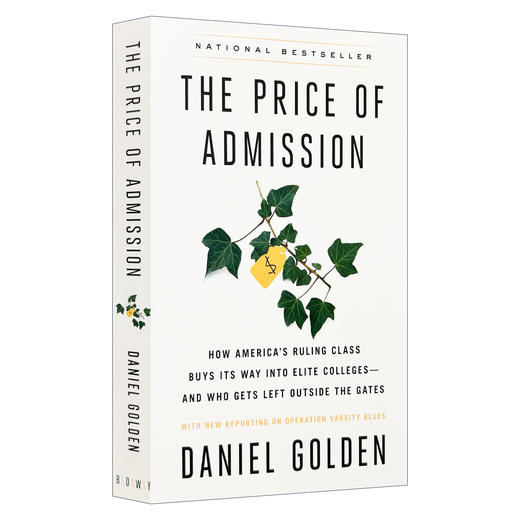
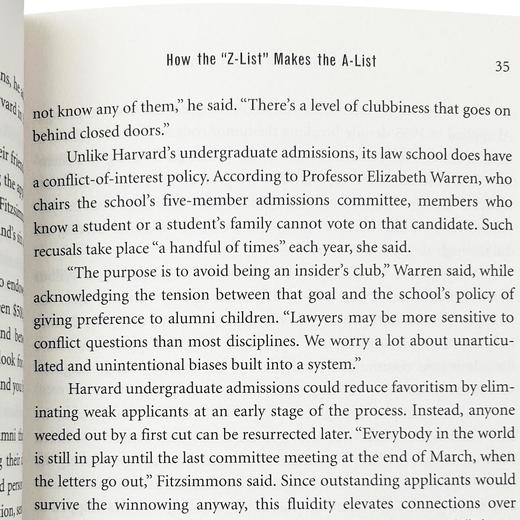
 书名:The Price of Admission大学潜规则:谁能优先进入美国顶尖大学
作者:Daniel Golden
出版社名称:Three Rivers Press
出版时间:2007
语种:英文
ISBN:9781400097975
商品尺寸:13 x 2.4 x 20.2 cm
包装:平装
页数:352
 ★美国高等教育的良知之书,申请美国高等大学的经典之书!
★申请哈佛、耶鲁、麻省理工、普林斯顿、康奈尔、斯坦福、哥伦比亚、宾西法尼亚、杜克、布朗等美国著名大学必须面对的潜规则。 ★直击真相,轰动全美,普利策奖者力作! ★一部影响美国大学招生政策的书; 一部揭示美国大学录取标准的书; 一部有助成功申请美国大学的书; 一部与托福、GRE、SAT同等重要的书!
本书The Price of Admission《大学潜规则:谁能优先进入美国顶尖大学》详细披露了美国高等大学招生录取的双重标准,以一个记者的良知揭露了美国大学招生录取中的种种不公正现象和潜规则,迫使哈佛等美国知名大学改正了有利于特权阶层的提前录取方法,成为美国高等教育的良知之书! 这是第1本详细披露美国高等大学招生录取的纪实报道,揭示了美国高等大学的招生潜规则,提醒了亚裔学生申请美国高等大学时必须面对的隐性标准,是一本促进教育公平并改变了美国高等大学招生录取规则的书!
媒体评论:
“本书淋漓尽致地揭露了大量存在的权贵邪恶。”——《纽约日报―书评》
“经典著作、当之无愧!”——《经济学家》
“如果今年你本人或你的子女打算申请高等大学,阅读这本书便是你必须做的功课……作者详尽地描写了高校是如何追寻权贵和名人子女的,一如娱记们跟踪帕丽斯×希尔顿一样。”——《达拉斯早新闻》
“本书揭露了金钱和权势依然操纵着全美高等大学录取过程的令人震惊的内幕!”——《华盛顿邮报》
In this explosive book, the Pulitzer Prize–winning reporter Daniel Golden exposes the corrupt admissions practices that favor the wealthy, the powerful, and the famous.
Every spring thousands of middle-class and lower-income high-school seniors learn that they have been rejected by America’s most exclusive colleges. What they may never learn is how many candidates like themselves have been passed over in favor of wealthy white students with lesser credentials—children of alumni, big donors, or celebrities. America, the so-called land of opportunity, is rapidly becoming an aristocracy in which America’s richest families receive special access to elite higher education—enabling them to give their children even more of a head start.
Based on two years of investigative reporting and hundreds of interviews with students, parents, school administrators, and admissions personnel—some of whom risked their jobs to speak to the author—in The Price of Admission, Golden names names, along with grades and test scores. He reveals how the sons of former vice president Al Gore, one-time Hollywood power broker Michael Ovitz, and Senate Majority Leader Bill Frist leapt ahead of more deserving applicants at Harvard, Brown, and Princeton. He explores favoritism at the Ivy Leagues, Duke, the University of Virginia, and Notre Dame, among other institutions. He reveals that colleges hold Asian American students to a higher standard than whites; comply with Title IX by giving scholarships to rich women in “patrician sports” like horseback riding, squash, and crew; and repay congressmen for favors by admitting their children. He also reveals that Harvard maintains a “Z-list” for well-connected but underqualified students, who are quietly admitted on the condition that they wait a year to enroll.
The Price of Admission explodes the myth of an American meritocracy—the belief that no matter what your background, if you are smart and diligent enough, you will have access to the nation’s most elite universities. It is must reading not only for parents and students with a personal stake in college admissions, but also for those disturbed by the growing divide between ordinary and privileged Americans.
Review
"A delicious account of gross inequities in high places. . . . [Golden] is the Ida Tarbell of college admissions… A fire-breathing, righteous attack on the culture of super-priviledge."--Michael Wolff, New York Times Book Review
"Deserves to become a classic… Why do Mr Golden's findings matter so much? The most important reason is that America is witnessing a potentially explosive combination of trends. Social inequality is rising at a time when the escalators of social mobility are slowing."--The Economist
"I was bowled over by The Price of Admission. Daniel Golden makes a frightening case for why the playing field in higher education is still not level, despite all the attempts during the past several decades to make it so. This book is essential reading for anyone connected with higher education." --Henry Louis Gates, Jr., W.E.B. Du Bois Professor of the Humanities, Harvard
"An important new book…With clarity and moral force,Golden shows that our greatest universities have been sacrificing their highest ideals on behalf of base pursuits unworthy of their names."--Education Sector
"Golden has fun making trouble in the best journalistic sense. . . . The Price of Admission is a powerful reminder that the public will increasingly require selective colleges to defend their preferences; that not all are prepared to make their complex case well; and that some of their practices, finally, seem indefensible today."--Harvard Magazine
 作者丹尼尔·金历时3年,对哈佛、耶鲁、普林斯顿、斯坦福、杜克、康奈尔等美国100多所高校进行深入调查和追踪报道,了解副总统戈尔、参议院多数党主席弗里斯特的儿子如何凭借显赫的家世,从排名倒数的申请者被哈佛、普林斯顿优先录取,以及杰出优秀的亚裔学生如何被哈佛、耶鲁、普林斯顿、哥伦比亚等常青藤名校逐一拒绝等不公平的现象。
丹尼尔从一个个招生录取中的真实故事和鲜为人知的录取细节,详细披露了美国高等大学如何想方设法对校友子弟、捐赠者、教师子弟等权贵富裕家庭子弟的特殊照顾和优先录取,以及对亚裔学生的特别挑剔和隐性门槛。该书一经出版,震动美国社会,畅销全美,使哈佛、耶鲁等美国著名大学受到社会舆论的巨大压力,迫使哈佛等著名大学取消了有利于权贵富裕家庭的提前录取政策,作者也因此荣获2004年普利策奖。
 丹尼尔·金(Daniel Golden),美国著名记者,现任《华尔街日报》波士顿分社副社长。自1999年以来一直负责教育方面的新闻报道,因对美国著名高校招生内幕的调查报道,荣获2004年普利策奖。
Daniel Goldenis a senior editor at ProPublica. He was previously the Deputy Bureau Chief at the Boston bureau of The Wall Street Journal, and a reporter at the Boston Globe. The recipient of numerous journalistic honors and awards, including the Pulitzer Prize and the George Polk Award, he holds a B.A. from Harvard College. He lives with his wife and son in Belmont, Massachusetts.
 HOW THE "Z-LIST" MAKES THE A-LIST: Harvard's Payback for Big Donors
On a mild evening in early spring, corporate executives, lawyers, oil barons, money managers, high-priced consultants, and heirs to Brahmin fortunes strolled unrecognized across Harvard Yard from their suites at the Charles Hotel or Harvard Inn. Hardly a black or Hispanic face could be seen as the gray-suited, gray-haired businessmen--some leaning on walkers, others spry and ruddy-faced, with athletic builds honed on Harvard crew or tennis teams--and women in silk scarves and slimming black pants made their way through an unmarked door into Annenberg Hall. There was no campus announcement of the gathering, and no press coverage allowed.
Bouquets of forsythia and tulips decked out the usually spartan freshman dining hall. The visitors enjoyed cocktails, wine, and appetizers--beef tenderloin, crab cakes, asparagus spears--as well as the attentions of Lawrence Summers, then Harvard's president. Several guests chatted about the latest show by the Hasty Pudding Club, the student theatrical society that puts on a musical burlesque every spring featuring Harvard men in drag.
Then the Harvard band, perched in a balcony overhead, struck up "Ten Thousand Men of Harvard," and the group sat down to a candlelit dinner. Wine refills put the crowd in an expansive mood, and they frequently interrupted Summers's after-dinner speech with applause. The sole exception was when he outlined his initiative to boost enrollment of students from families earning less than $40,000 a year by making their Harvard educations free. He appeared to wait for an ovation that never came. I interpreted the awkward silence to convey a message, perhaps even a threat: If you make room for more low-income students by rejecting our children, we'll stop giving our millions.
The April 8 dinner kicked off the 2005 annual meeting of what is likely the wealthiest advisory group in higher education: Harvard's Committee on University Resources. Little known and rarely mentioned in the media, COUR is not actually a committee in the usual sense--it doesn't formally make or advise on university policy--but Summers or any other Harvard president needs its support. It consists of Harvard's biggest donors, who form the financial backbone of an endowment that totaled $25.5 billion as of fiscal 2005, making it the nation's largest, more than $10 billion ahead of second-place Yale's.
Committee membership has tripled in the past fifteen years, propelled by the university's record-setting $2.6 billion fund-raising campaign, which lasted from 1994 to 1999 and relied heavily on multimillion-dollar gifts. "As a member of COUR, you will be asked to play a leading role in the proposed campaign," committee chairman Robert G. Stone Jr. told members in 1991 in the first issue of its newsletter. By 2004, COUR's 424 members, handpicked by university fund-raisers, included ten of Forbes magazine's four hundred richest Americans, led by Microsoft chief executive Steven Ballmer (2005 net worth: $14 billion), oil tycoon Robert Bass ($3 billion), and banker David Rockefeller ($2.5 billion). Most are alumni of Harvard's undergraduate college or its graduate programs, but not all; Bass, for instance, went to archrival Yale, followed by business school at Stanford.
1234567
- 华研外语 (微信公众号认证)
- 本店是“华研外语”品牌商自营店,全国所有“华研外语”、“华研教育”品牌图书都是我司出版发行的,本店为华研官方源头出货,所有图书均为正规正版,拥有实惠与正版的保障!!!
- 扫描二维码,访问我们的微信店铺
- 随时随地的购物、客服咨询、查询订单和物流...