嘉德通商城店铺主页二维码
嘉德通商城 微信认证
微信扫描二维码,访问我们的微信店铺
你可以使用微信联系我们,随时随地的购物、客服咨询、查询订单和物流...

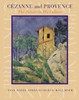
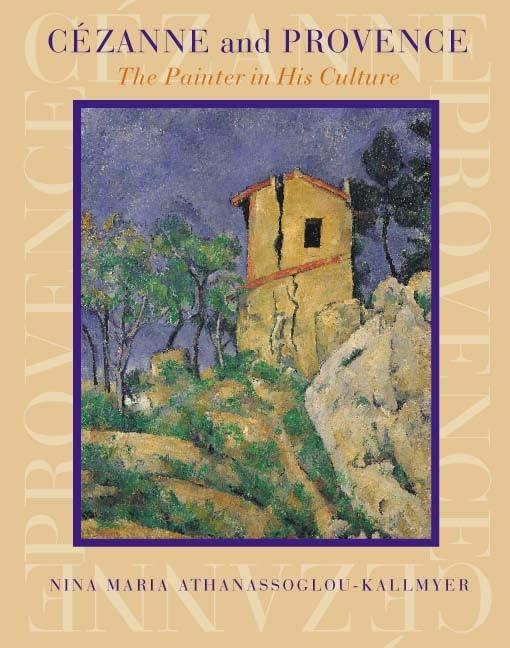
嘉德文库丨Cezanne and Provence: The Painter in His Culture

868.00
运费: ¥ 0.00-40.00
嘉德文库丨Cezanne and Provence: The Painter in His Culture 商品图0
嘉德文库丨Cezanne and Provence: The Painter in His Culture 商品缩略图0

商品详情

Editorial Reviews

From Publishers Weekly

While art historians have long treated Provence as merely "another 'motif' in Cezanne's visual repertory," Athanassoglou-Kallmyer (Eugène Delacroix: Prints, Politics, and Satire) smartly insists that the painter's regional alliance wholly affected both his stylistic innovation and his critical acclaim. In 1886, at age 47, the painter abandoned Paris for his native Aix-en-Provence. Contextualizing Cezanne's move within late 19th-century French nationalist efforts to preserve and exalt the regional cultures that modernization threatened to destroy, the author produces startlingly original, often convincing readings of his work. She invokes the commercialized revivals of once-Rabelaisian local festivals to illuminate Cezanne's wry burlesques of "disjointed and weightless" harlequins moving "within a flat, boxlike space." She considers the 1895 parliamentary ban on the manufacture of cards, which jeopardized a major regional industry and pastime, as a provocation for Cezanne's impassive Cardplayers. She brings contemporary advances in geology and archeology to bear upon the painter's densely striated, crudely forged icons of Mont Sainte-Victoire; by consciously aligning his work with the primitive artifacts discovered at the mountain's base, she contends, Cezanne aimed to tunnel down into the landscape's "essence" and back to a cultural purity. Finally, she shows how the painter's deliberate mythification of Provence anticipated his own critical reception. When his work was at last exhibited in 1895, Parisian critics, now keen to idealize the provinces as the destined site of national renewal, lauded Cezanne as the authentic "hard-toiling village artisan" whose coarse style rebuked the polished products of the elitist Salon. Athanassoglou-Kallmyer may overstate her case by marshaling every facet of Cezanne's oeuvre-pastoral scenes, subversive humor, pottery, pigeons, fabric and skulls-into a sphere of specifically Provençal concern. Still, her tirelessly researched and generously illustrated study (including 120 color plates, 102 halftones) freshly de-centers the academy's standard conflation of modernism and urbanism, and impressively grounds the elusive "father" of modern painting in a vivid place and propitious time.
Copyright 2003 Reed Business Information, Inc.

From Booklist

Paul Cezanne was a country boy in nineteenth-century Paris, and some people never let him forget it. Yet, for much of Cezanne's painting life, he asserted the character of his native south, lamented encroaching modernity, and, taking after his childhood friend, Zola, subtly lampooned both the "pernicious classicism" of forebears such as Ingres and the effete urbanism of contemporaries such as Manet. This smart and fascinating scholarly study traces the dynamics of place and cultural notions in Cezanne's work by looking closely at groups of his paintings--portraits of family, views of rustic villages, still-lifes--and mining the currents of literature, philosophy, and artistic debate. That Cezanne painted Provence's iconic Mont Sainte-Victoire at least 25 times suggests to this author that these paintings are more than mere scenic vistas: they contain Cezanne's search for the essence of nature expressed by color, for truth in the depths of geological science, for a spiritual touchstone in its symbolic link of earth and heaven. As artistic cycles go, by the year of his death, 1906, Cezanne's "primitivism" was all the rage. Steve Paul
Copyright © American Library Association. All rights reserved

From the Inside Flap

In 1886 Paul Cézanne left Paris permanently to settle in his native Aix-en-Provence. Nina M. Athanassoglou-Kallmyer argues that, far from an escapist venture like Gauguin's stay in Brittany or Monet's visits to Normandy, Cézanne's departure from Paris was a deliberate abandonment intimately connected with late-nineteenth-century French regionalist politics.

Like many of his childhood friends, Cézanne detested the homogenizing effects of modernism and bourgeois capitalism on the culture, people, and landscapes of his beloved Provence. Turning away from the mainstream modernist aesthetic of his impressionist years, Cézanne sought instead to develop a new artistic tradition more evocative of his Provençal heritage. Athanassoglou-Kallmyer shows that Provence served as a distinct and defining cultural force that shaped all aspects of Cézanne's approach to representation, including subject matter, style, and technical treatment. For instance, his self-portraits and portraits of family members reflect a specifically Provençal sense of identity. And Cézanne's Provençal landscapes express an increasingly traditionalist style firmly grounded in details of local history and even geology. These landscapes, together with images of bathers, cardplayers, and other figures, were key facets of Cézanne's imaginary reconstruction of Provence as primordial and idyllic&;a modern French Arcadia.

Highly original and lavishly illustrated, 
Cézanne and Provence gives us an entirely new Cézanne: no longer the quintessential icon of generic, depersonalized modernism, but instead a self-consciously provincial innovator of mainstream styles deeply influenced by Provençal culture, places, and politics.

From the Back Cover

In 1886 Paul Cézanne left Paris permanently to settle in his native Aix-en-Provence. Nina M. Athanassoglou-Kallmyer argues that, far from an escapist venture like Gauguin's stay in Brittany or Monet's visits to Normandy, Cézanne's departure from Paris was a deliberate abandonment intimately connected with late-nineteenth-century French regionalist politics.

Like many of his childhood friends, Cézanne detested the homogenizing effects of modernism and bourgeois capitalism on the culture, people, and landscapes of his beloved Provence. Turning away from the mainstream modernist aesthetic of his impressionist years, Cézanne sought instead to develop a new artistic tradition more evocative of his Provençal heritage. Athanassoglou-Kallmyer shows that Provence served as a distinct and defining cultural force that shaped all aspects of Cézanne's approach to representation, including subject matter, style, and technical treatment. For instance, his self-portraits and portraits of family members reflect a specifically Provençal sense of identity. And Cézanne's Provençal landscapes express an increasingly traditionalist style firmly grounded in details of local history and even geology. These landscapes, together with images of bathers, cardplayers, and other figures, were key facets of Cézanne's imaginary reconstruction of Provence as primordial and idyllic—a modern French Arcadia.

Highly original and lavishly illustrated, 
Cézanne and Provence gives us an entirely new Cézanne: no longer the quintessential icon of generic, depersonalized modernism, but instead a self-consciously provincial innovator of mainstream styles deeply influenced by Provençal culture, places, and politics.

About the Author

Nina M. Athanassoglou-Kallmyer is a professor of art history at the University of Delaware. She is the author of French Images from the Greek War of Independence (1821-1830): Art and Politics under the Restoration and Eugène Delacroix: Prints, Politics, and Satire, 1814-1822.

嘉德通商城店铺主页二维码
嘉德通商城 微信公众号认证
扫描二维码,访问我们的微信店铺
随时随地的购物、客服咨询、查询订单和物流...

嘉德文库丨Cezanne and Provence: The Painter in His Culture

手机启动微信
扫一扫购买

收藏到微信 or 发给朋友

1. 打开微信,扫一扫左侧二维码

2. 点击右上角图标

点击右上角分享图标

3. 发送给朋友、分享到朋友圈、收藏

发送给朋友、分享到朋友圈、收藏

微信支付

支付宝

扫一扫购买

打开微信,扫一扫

或搜索微信号:guardian_in_one
嘉德通官方微信公众号

收藏到微信 or 发给朋友

1. 打开微信,扫一扫左侧二维码

2. 点击右上角图标

点击右上角分享图标

3. 发送给朋友、分享到朋友圈、收藏

发送给朋友、分享到朋友圈、收藏