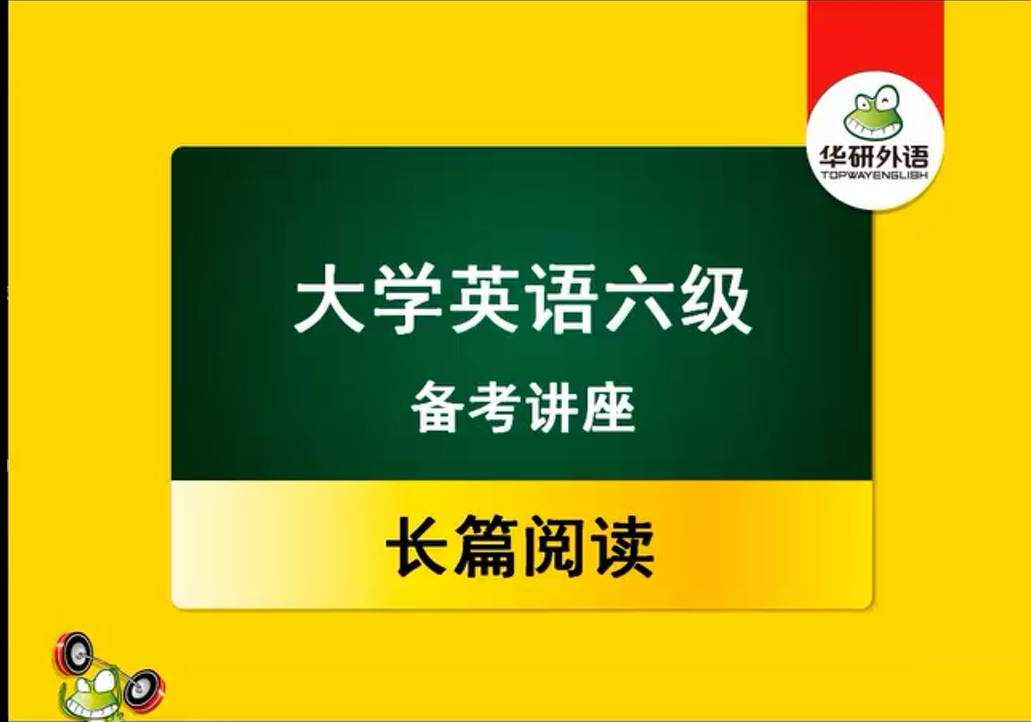
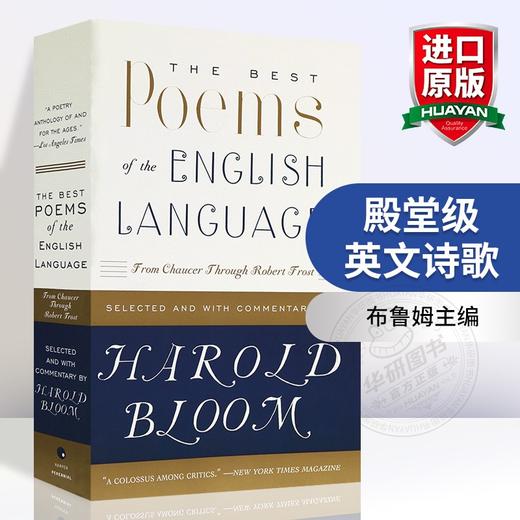
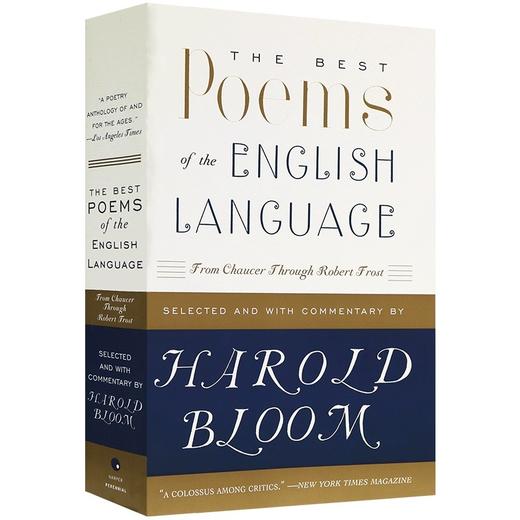
Collins 殿堂级英文诗歌 英文原版 The Best Po·ems of the English Language 从乔叟到弗罗斯特 全英文版诗歌集 进口英语书籍正版
| 运费: | ¥ 0.00-999.00 |
| 库存: | 57 件 |



商品详情

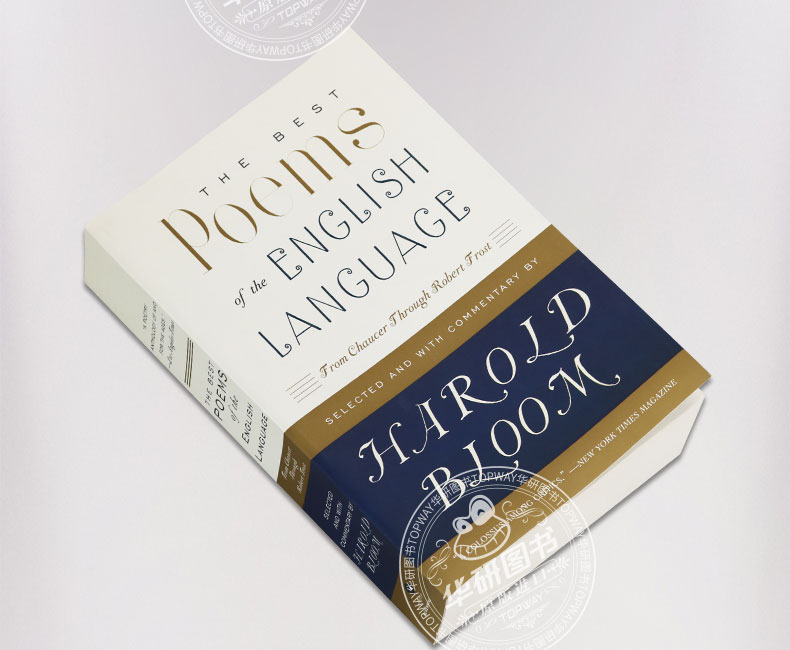

书名:The Best Poems of the English Language: From Chaucer Through Robert Frost英文诗歌:从乔叟到弗罗斯特
作者:Harold Bloom
出版社名称: Harper Perennial
出版时间:2007
语种:英文
ISBN:9780060540425
商品尺寸: 15.6 x 4.1 x 23.5 cm
包装:平装
页数:974

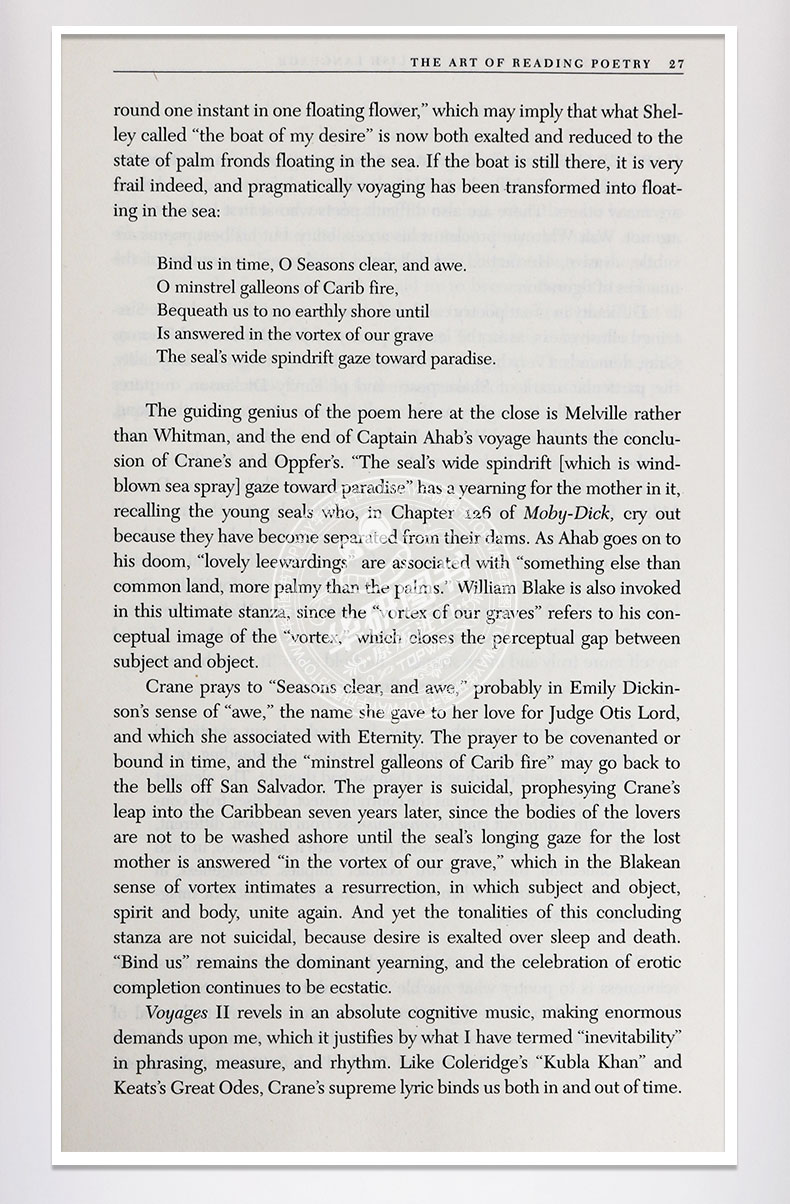
The Best Poems of the English Language: From Chaucer Through Robert Frost《英文诗歌:从乔叟到弗罗斯特》由哈罗德•布鲁姆主编。哈罗德•布鲁姆是美国耶鲁大学英语系的资深教授,也任过哈佛大学和纽约大学的英语系教授。他学识渊博,被人们称为文学百科全书式的当代美国批评家。在这部接近千页的大型选本中,布鲁姆与读者们分享他几十年阅读诗歌的经验,并且为这部书写了一篇总结性的导言——《读诗的艺术》。他认为:“诗本质上是比喻性的语言,集中凝练故其形式兼具表现力和启示性。”
《英语诗歌——从乔叟到弗罗斯特》这部选集对具体诗人和作品的选择多有别出心裁之处,有些诗歌是其他英语诗歌选本中没有的。对英语诗歌史上开宗立派的大诗人和有个人特色的次要诗人,布鲁姆也都提出了独到而透彻的看法。
本书开本大,用纸较好,版面舒适,有记笔记空间。适合英美文学研究者或英文诗歌爱好者赏析、品读。
“Poetry essentially is figurative language, concentrated so that its form is both expressive and evocative.” ——The Art of Reading Poetry
This comprehensive anthology attempts to give the common reader possession of six centuries of great British and American poetry. The book features a large introductory essay by Harold Bloom calledThe Art of Reading Poetry, which presents his critical reflections of more than half a century devoted to the reading, teaching, and writing about the literary achievement he loves most. In the case of all major poets in the language, this volume offers either the entire range of what is most valuable in their work, or vital selections that illuminate each figure’s contribution. There are also headnotes by Harold Bloom to every poet in the volume as well as to the most important individual poems. Much more than any other anthology ever gathered, this book provides readers who desire the pleasures of a sublime art with very nearly everything they need in a single volume. It also is regarded as his final meditation upon all those who have formed his mind.

哈罗德·布鲁姆(Harold Bloom),出生于1930年,当代美国著名文学教授、批评家,曾执教于耶鲁大学、纽约大学和哈佛大学等知名高校。主要研究领域包括诗歌批评、理论批评和宗教批评三大方面。他以其独特的理论建构和批评实践被誉为“西方传统中极有天赋、有原创性和煽动性的一位文学批评家”,代表作还有《误读之图》《西方正典》《解构与批评》等。
Harold Bloom is Sterling Professor of the Humanities at Yale University and a former Charles Eliot Norton Professor at Harvard. His more than twenty-five books includeGenius,How to Read and Why,Shakespeare: The Invention of the Human,The Western Canon,The Book of J, andThe Anxiety of Influence. He is a MacArthur Prize Fellow, a member of the American Academy of Arts and Letters, and the recipient of many awards and honorary degrees, including the Academy’s Gold Medalfor Belles Lettres and Criticism,the International Prize of Catalonia, and the Alfonso Reyes Prize of Mexico.

Introduction
THE ART OF READING POETRY
GEOFFREY CHAUCER
FROM THE CANTERBURY TALES
from The General Prologue
fromThe Wife of Bath’s Prologue
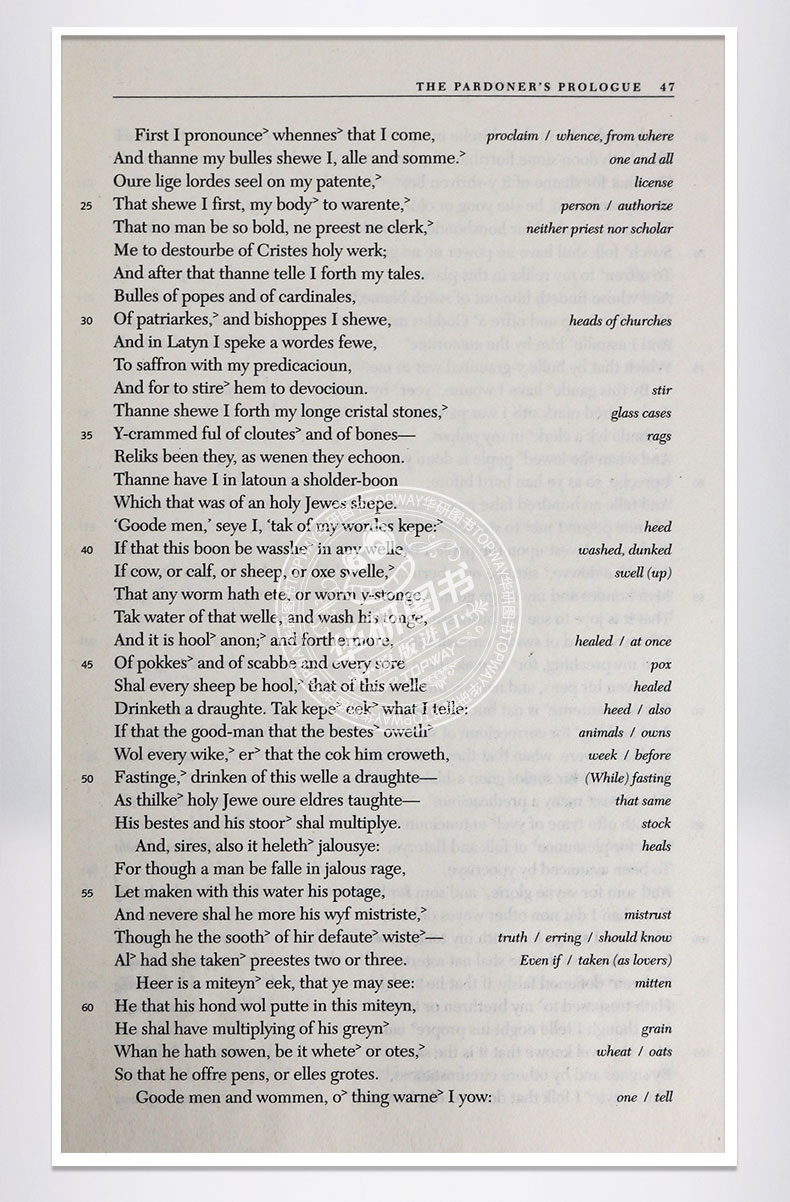
fromThe Pardoner’s Prologue
WILLIAM DUNBAR
Lament for the Makers
PETRARCHAN POETRY
SIR THOMAS WYATT
WhosoList to Hunt
They Flee from Me
SIR PHILIP SIDNEY
from Astrophel and Stella
EDMUND SPENSIIR
THE CAVE OF MAMMON
THEBOWER OFBLISS
THEMUTABILITIE CANTOS
AMORETTI
from The Faerie Queene: Tha Gardens of Adonis
EPITHALAMION
Epithalamion
PROTHALAMION
Prothalamion
SIR WALTER RALEGH
from The Ocean to Cynthia
Answer to Marlowe
CHIDIOCK TICHBORNE
Tichborne’s Elegy
ROBERT SOUTHWELL
The Burning Babe
CHRISTOPHER MARLOWE
from Tamburlaine
The Passionate Shepherd to His Love
MICHAEL DRAYTON
fromIdea
WILLIAM SHAKESPEARE
The Phoenix and Turtle
fromHamlet
from Troilus and Cressida
from Measure for Measure
from King Lear
from The Tempest
Sonnets
XIX: “Devouring Time, blunt thou thelion’s paws,”
XXX: “When to the sessions of sweet silent thought”
LIII: “What is your substance, whereof are you made,”
LV: “Not marble, nor the gilded monuments”
LXXIII: “That time of year thou mayst inme behold”
LXXXVI: “Was it the proud full sail of this great verse,”
LXXXVII: “Farewell—thou art too dear for my possessing,”
XCIV: “They that have power to hurt and will do none,”
CVII: “Not mine own fears, nor the prophetic sour”
CXVI: “Let me not to the marriage of true minds”
CXXI: “Two better to be vile than vile esteemed,”
CXXIX: “The expense of spirit in a waste of shame,”
CXXX: “My mistress’ eyes are nothing like the sun;”
CXLIV: “Two loves I have, of comfort and despair,”
Songs
Dirge
When That I Was and a Little Tiny Boy
Autolycus’ Song
Autolycus As Peddler
THOMAS NASHE
Litany in Time of Plague
THOMAS CAMPION
There Is a Garden in Her Face
When to Her Lute Corinna Sings
When Thou Must Home to Shades of Under Ground
JOHN DONNE
Song
A Noctumal upon S. Lucy’s Daly, Being the Shortest Day
The Ecstasy
Hymn to God My God, in My Sickness
A Hymn to God the Father
BEN JONSON
To the Memory of My Beloved, the Author.
Mr. William Shakespeare
Song: To Celia [1606]
Song: To Celia [1616]
Clerimont’s Song
TOM O’BEDLAM’S SONG
TomO’Bedlam’s Song
JOHN CLEVELAND
Mark Antony
JAMES SHIRLEY
Dirge
ROBERT HERRICK
To the Virgins, To Make Much of Time
Upon Julia’s Clothes
Delight in Disorder
THOMAS CAREW
RICHARD LOVELACE
SIR JOHN SUCKLING
EDMUND WALLER
ANDREW MARVELL
GEORGE HERBERT
RICHARD CRASHAW
HENRY VAUGHAN
THOMAS TRAHERNE
JOHN MILTON
JOHN DRYDEN
JOHN WILMOT, EARL OF ROCHESTER
…...

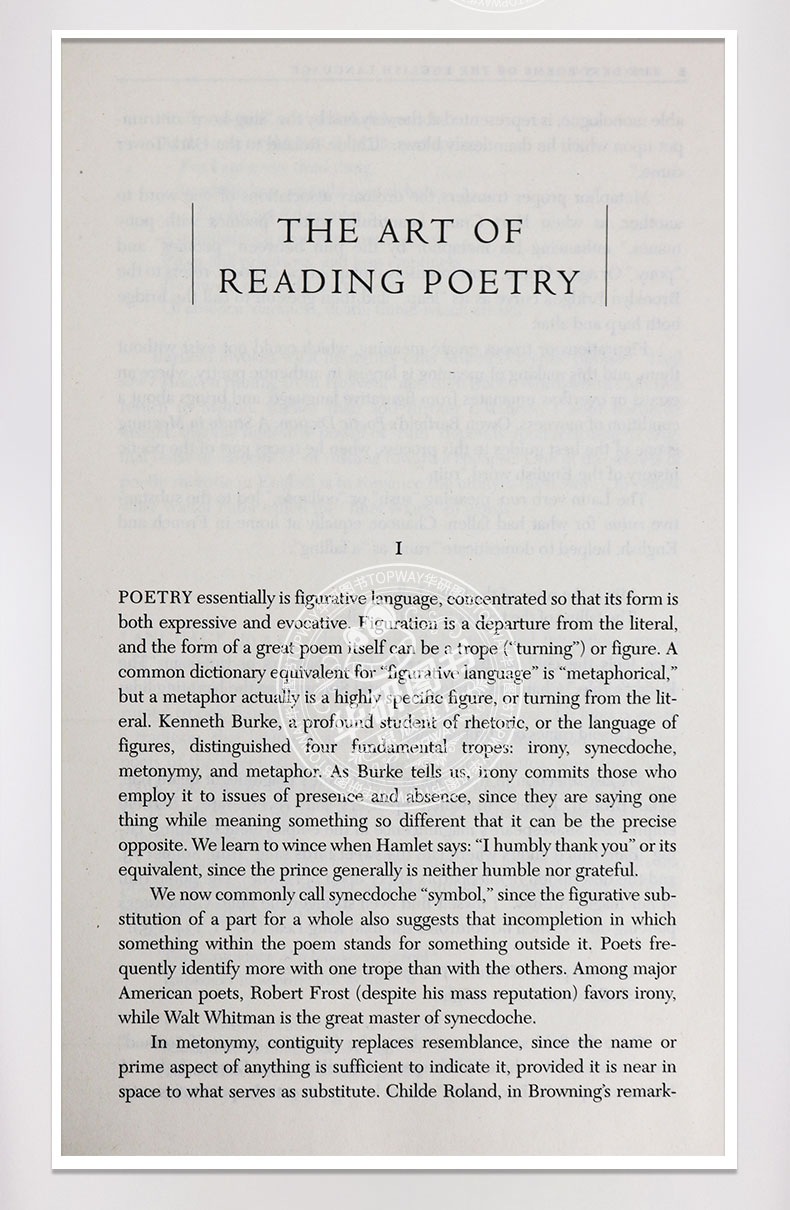
THE ART OF READING POETRY
I
POETRY essentially is figurative language, concentrated so that its form is both expressive and evocative. Figuration is a departure from the literal, and the form of a great poem itself can be a trope (“turning”) or figure. A common dictionary equivalent for “figurative language” is “metaphorical,” but a metaphor actually is a highly specific figure, or turning from the literal. Kenneth Burke, a profound student of rhetoric, orthe language of figures, distinguished four fundamental tropes: irony, synecdoche, metonymy, and metaphor. As Burke tells us, irony commits those who employ it to issues of presence and absence, since theyare saying one thing while meaning something so different that it can be the precise opposite. We learn to wince when Hamlet says: “I humbly thank you”or its equivalent,since the prince generally is neither humble nor grateful.
We now commonly callsynecdoche “symbol,” since the figurative substitution of a part for a whole also suggests that incompletion in which something within the poem stands for somethingoutside it. Poets frequently identify more with one trope than with the others. Among major American poets, Robert Frost (despite his mass reputation) favors irony, while Walt Whitman is the great master of synecdoche.
In metonymy, contiguityreplaces resemblance, since the name or prime aspect of anything is sufficient to indicate it, providedit is near in spaceto what serves as substitute. Childe Roland, in Browning’s remarkable monologue, isrepresentedat the very end by the “slug-horn” or trumpet upon which hedauntlessly blows: “ChildeRoland to the Dark Tower came.”
Metaphor proper transfers the ordinary associations of one word toanother,as when Hart Crane beautifully writes “peonies with pony manes,” enhancing his metaphor by the pun between “peonies” and “pony.” Or again Crane,most intensely metaphorical of poets, refers to the Brooklyn Bridge’s curve as its “leap,” and then goes on to call the bridge both hail) and altar.
Figurations or tropes create meaning, which could not exist without them, and this making of meaning is largest in authentic poetry, where an excess or overflow emanates from figurative language, and brings about a condition of newness. Owen Barfield’sPoetic Diction: A Study in Meaning is one of the best guides to this process, when he traces part of the poetic history of the English word “ruin.”
The Latin verbruo, meaning “rush” or “collapse,” led to the substantiveruina for what had fallen. Chaucer, equally at home in French and English, helped to domesticate “ruin” as “a falling”:
Min is the ruine of the highe halles,
The falling of the towers and of the walles.
One feels the chill of that, the voice being Saturn’s or time’s in “The Knight’s Tale.” Chaucer’s disciple Edmund Spenser has the haunting line:
The old ruines of a broken tower
- 华研外语 (微信公众号认证)
- 本店是“华研外语”品牌商自营店,全国所有“华研外语”、“华研教育”品牌图书都是我司出版发行的,本店为华研官方源头出货,所有图书均为正规正版,拥有实惠与正版的保障!!!
- 扫描二维码,访问我们的微信店铺
- 随时随地的购物、客服咨询、查询订单和物流...