

商品详情
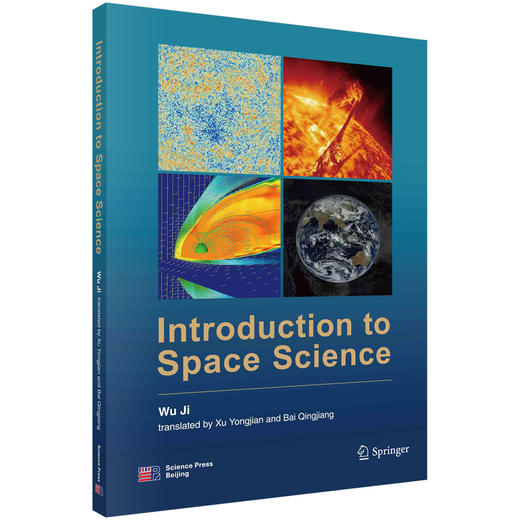
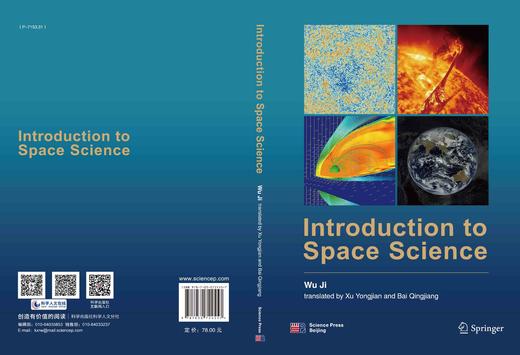
书名:空间科学概论= Introduction to Space Science:英文
定价:78.0
ISBN:9787030724557
作者:吴季
版次:1
出版时间:2022-07
内容提要:
空间科学是以航天器为主要工作平台,研究行星地球、日地空间、太阳系乃至整个宇宙,回答太阳系乃至整个宇宙的形成与演化、生命的起源与进化、物质结构等重大科学问题的交叉性、综合性新兴科学领域。本书从人类利用航天器探索和进入空间的历史开始,介绍空间科学各分支领域研究的重大科学前沿问题、开展空间科学研究必备的基础技术知识、航天器研制过程的基础管理知识,同时论述了空间科学领域国际合作的必要性,并对中国空间科学的未来发展规划进行了阐述。
目录:
Contents
Foreword i
Preface iii
Chapter 1 Reasons to Conduct Research in Space 1
1.1 Introduction 1
1.2 To Explore the Unknown Space Environment 2
1.3 To Break Free from the Barrier of Atmosphere to Electromagnetic Wave 3
1.4 To Utilize the Orbital Altitude Resources 3
1.5 To Unveil the Mystery of the Earth’s Gravitational Field 4
1.6 To Make Full Use of Other Aspects of Space Environments 5
1.7 Definition of Space Science 5
References 7
Chapter 2 History of Human Space Exploration 8
2.1 Introduction 8
2.2 History of Space Exploration 9
2.3 Technology Advancement of Ground-based Observations Since Galileo 12
2.4 A Brief History of Human’s Access to Space 16
2.5 Recent Technology Progress of Space Exploration 21
2.5.1 Rocketry 21
2.5.2 Satellite and Spacecraft 23
2.5.3 TT&C and Communication 24
2.5.4 Launch and Recovery 25
References 26
Chapter 3 Major Frontier Issues in Space Science (Ⅰ) 27
3.1 Introduction 27
3.2 Origin of the Universe and Its Evolution 28
3.2.1 Time Dimension 28 3.2.2 Spatial Dimension 30
3.2.3 Questions of Great Significance 31
3.3 Impact of Solar Activities on Human Beings 37
3.3.1 Solar Activity 37
3.3.2 Interplanetary Space Weather 37
3.3.3 Magnetosphere of the Earth 38
3.3.4 Earth’s Ionosphere 40
3.3.5 Middle and Upper Atmosphere 41
3.3.6 Questions of Great Significance 42
References 44
Chapter 4 Major Frontiers Issues in Space Science (Ⅱ) 45
4.1 Introduction 45
4.2 Earth System and Its Future Changes 45
4.2.1 Spheres and Cycles of the Earth 45
4.2.2 Questions of Great Significance 52
4.3 Microgravity Science and Space Life Sciences 53
4.3.1 How to Simulate Microgravity Environment 53
4.3.2 What Changes Under Microgravity? 57
4.3.3 Biological Radiation Effect 58
4.3.4 Fundamental Physics Experiment 58
4.3.5 Questions of Great Significance 59
References 60
Chapter 5 Space Systems Engineering and Its Systems 61
5.1 Introduction 61
5.2 Space Systems Engineering 61
5.2.1 Complexity 62
5.2.2 High Risk 63
5.2.3 High Cost 64
5.2.4 Sensitiveness to Political and Social Benefits 65
5.3 System Components of Space Systems Engineering 66
5.3.1 Satellite / Spacecraft System 67
5.3.2 Launch Vehicle System 67
5.3.3 Launch Site System 68
5.3.4 TT&C System 72
5.3.5 Ground Application System 73 Reference 74
Chapter 6 Technical Fundamentals (Ⅰ): Orbit, Attitude, and TT&C 75
6.1 Introduction 75
6.2 Basic Concepts About Space and Time 75
6.2.1 About Position 76
6.2.2 About Time 78
6.3 Fundamentals of Spacecraft Orbit Dynamics 79
6.3.1 Johannes Kepler’s Three Major Laws of Planetary Motion 79
6.3.2 Spacecraft Orbit Dynamics 80
6.3.3 Examples of Commonly-Used Orbits 82
6.3.4 Orbit Maneuver and Limited Thrust 85
6.4 Fundamentals of Satellite Altitude Dynamics 87
6.4.1 Commonly-Used Altitude Stabilization Methods 87
6.4.2 Satellite Attitudes Description 88
6.4.3 Satellite Attitude Control 89
6.5 TT&C 90
6.5.1 Responsibilities of the TT&C System 90
6.5.2 Technical Systems of the TT&C System 91
6.5.3 Chinese TT&C Network 91
6.5.4 Satellite Tracking and Methods of Orbit Measurement and Determination 92
References 93
Chapter 7 Technical Fundamentals (Ⅱ): Scientific Payloads and Its Application Environment 94
7.1 Introduction 94
7.2 Space Science and Science Payloads 95
7.2.1 Electrostatic Field, Magnetostatic Field, and Low-frequency Electromagnetic Wave Detectors 96
7.2.2 Low-frequency Radio Sensor 97
7.2.3 Microwave Remote Sensor 98
7.2.4 Millimeter-wave and Submillimeter-wave Remote Sensor 99
7.2.5 Terahertz Remote Sensor 99
7.2.6 Infrared Remote Sensor 100
7.2.7 Visible Light Remote Sensor 101
7.2.8 Ultraviolet Remote Sensor 102
7.2.9 X-ray Remote Sensor 102
7.2.10 Gamma-ray Detectors 103
7.2.11 Electron and Particle Detectors 104
7.2.12 Utility Equipment 104
7.3 Satellite’s Environmental Requirements for the Science Payloads 105
7.3.1 Mechanical Environment Requirements 105
7.3.2 Thermal Environment Requirements 107
7.3.3 Power Usage Requirements 108
7.3.4 Electromagnetic Compatibility Environment Requirements 108
7.3.5 Control and Information Usage Requirements 110
7.3.6 Radiation Environment Requirements 110
References 111
Chapter 8 Technical Fundamentals (Ⅲ): Mission Planning and Operations 112
8.1 Introduction 112
8.2 Application System of Space Science Missions 113
8.2.1 Six Systems of Space Science Missions 113
8.2.2 Science Application System 113
8.2.3 Ground Support System 114
8.2.4 System Development Procedure 114
8.3 Planning of Space Science Missions 115
8.3.1 Analysis of the Requirements for Detection and Experiment 115
8.3.2 Spacecraft Conditions and Resource Constraints 118
8.3.3 Compiling and Execution of Mission Plans 121
8.4 Science Data Reception 122
8.4.1 Ground Station for Science Data Reception 122
8.4.2 Spacecraft Pass Time and Downlink Rate 124
8.4.3 Scientific Data Pre-handling / processing 124
8.5 Science Data Classification and Distribution 124
8.5.1 Science Data Classification 124
8.5.2 Science Data Distribution 125
8.5.3 Data Policy 125
8.5.4 Science Data Archiving 126
References 126
Chapter 9 Management (Ⅰ): Call for Mission Proposals and Its Selection 127
9.1 Introduction 127
9.2 Identification of Science Questions 127
9.2.1 Strategic Planning 128
9.2.2 Space Science Planning in the United States 129
9.2.3 Space Science Planning in Europe 130
9.2.4 Space Science Planning in China 131
9.3 Study of Scientific Objectives 132
9.3.1 How to Propose Scientific Objectives 132
9.3.2 Realizability 132
9.3.3 Impact 133
9.3.4 Involvement 133
9.4 Selection of Payloads 133
9.5 Mission Profile 134
9.6 Payloads’ Requirement for Spacecraft 134
9.7 Selection of Mission Proposals 135
References 136
Chapter 10 Management (Ⅱ): Mission Development and the Duty of Scientists and Engineers 137
10.1 Introduction 137
10.2 Research Phase 137
10.2.1 Mission Concept Study 138
10.2.2 Advanced Research of Space Science Missions and Payloads 138
10.2.3 Intensive Study of Future Space Science Missions 139
10.3 Reviews Necessary for the Approval 140
10.3.1 Review of Scientific Objectives and Payload Complement 141
10.3.2 Payloads’ Preliminary Requirement for Spacecraft 141
10.3.3 Systems Compatibility Study 141
10.3.4 Estimation of Budget 142
10.4 Engineering Development Phase 142
10.4.1 Preliminary Design Phase 143
10.4.2 Engineering Qualification Phase 143
10.4.3 Flight Model Production Phase 144
10.4.4 Tests and Launch 145
10.4.5 In-orbit Tests and Commissioning 146
References 146
Chapter 11 Management (Ⅲ): Quality Management and Risk Control 147
11.1 Introduction 147
11.2 Quality Management 147
11.2.1 Quality Manual and Procedure Documentation 149
11.2.2 Documentation Control 149
11.2.3 Closed-loop Solution of Quality Problems 150
11.2.4 Technical Status Control 151
11.3 Risk Control 153
11.3.1 Risks Identification and Prediction 153
11.3.2 Risk Control and Management 154
References 156
Chapter 12 Management (Ⅳ): Full Mission Lifecycle Management and Output Evaluation 157
12.1 Introduction 157
12.2 Relationship of the Stakeholders of Space Science Missions 157
12.3 Output Evaluation 160
References 163
Chapter 13 International Cooperation 164
13.1 Introduction 164
13.2 Necessity for International Cooperation 165
13.3 Main Forms of International Cooperation 167
13.4 Challenges 168
References 169
Chapter 14 Strategic Planning of Space Science in China 170
14.1 Introduction 170
14.2 Scientific Questions 170
14.2.1 How Did the Universe and Life Originate, and How Do They Evolve? 171
14.2.2 What’s the Relationship Between the Solar System and Human Beings? 171
14.3 Mission Proposals 172
14.3.1 Black Hole Probe (BHP) Program 172
14.3.2 Diagnostics of Astro-oscillations (DAO) Program 172
14.3.3 Portraits of Astrophysical Objects (PAO) Program 172
14.3.4 Spectroscopy of Astrophysical Objects (SAO) Program 172
14.3.5 ExoPlanet Exploration (EPE) Program 173
14.3.6 Solar Microscope Program 173
14.3.7 Solar Panorama Program 173
14.3.8 Space Weather Chain Program 173
14.3.9 Micro-sats Program 173
14.4 Technologies 177
14.4.1 Ultra-high-resolution Imaging Technology 177
14.4.2 Ultra-high-precision Time Reference Technology 177
14.4.3 Distributed Satellite Constellation Technology 178
References 178
Chapter 15 Relations of Space Science, Space Technology, and Space Applications 179
15.1 Introduction 179
15.2 Definition of Space Technology 179
15.3 Definition of Space Science 180
15.4 Definition of Space Applications 181
15.5 Relations of Space Science, Space Technology, and Space Applications 182
References 183
定价:78.0
ISBN:9787030724557
作者:吴季
版次:1
出版时间:2022-07
内容提要:
空间科学是以航天器为主要工作平台,研究行星地球、日地空间、太阳系乃至整个宇宙,回答太阳系乃至整个宇宙的形成与演化、生命的起源与进化、物质结构等重大科学问题的交叉性、综合性新兴科学领域。本书从人类利用航天器探索和进入空间的历史开始,介绍空间科学各分支领域研究的重大科学前沿问题、开展空间科学研究必备的基础技术知识、航天器研制过程的基础管理知识,同时论述了空间科学领域国际合作的必要性,并对中国空间科学的未来发展规划进行了阐述。
目录:
Contents
Foreword i
Preface iii
Chapter 1 Reasons to Conduct Research in Space 1
1.1 Introduction 1
1.2 To Explore the Unknown Space Environment 2
1.3 To Break Free from the Barrier of Atmosphere to Electromagnetic Wave 3
1.4 To Utilize the Orbital Altitude Resources 3
1.5 To Unveil the Mystery of the Earth’s Gravitational Field 4
1.6 To Make Full Use of Other Aspects of Space Environments 5
1.7 Definition of Space Science 5
References 7
Chapter 2 History of Human Space Exploration 8
2.1 Introduction 8
2.2 History of Space Exploration 9
2.3 Technology Advancement of Ground-based Observations Since Galileo 12
2.4 A Brief History of Human’s Access to Space 16
2.5 Recent Technology Progress of Space Exploration 21
2.5.1 Rocketry 21
2.5.2 Satellite and Spacecraft 23
2.5.3 TT&C and Communication 24
2.5.4 Launch and Recovery 25
References 26
Chapter 3 Major Frontier Issues in Space Science (Ⅰ) 27
3.1 Introduction 27
3.2 Origin of the Universe and Its Evolution 28
3.2.1 Time Dimension 28 3.2.2 Spatial Dimension 30
3.2.3 Questions of Great Significance 31
3.3 Impact of Solar Activities on Human Beings 37
3.3.1 Solar Activity 37
3.3.2 Interplanetary Space Weather 37
3.3.3 Magnetosphere of the Earth 38
3.3.4 Earth’s Ionosphere 40
3.3.5 Middle and Upper Atmosphere 41
3.3.6 Questions of Great Significance 42
References 44
Chapter 4 Major Frontiers Issues in Space Science (Ⅱ) 45
4.1 Introduction 45
4.2 Earth System and Its Future Changes 45
4.2.1 Spheres and Cycles of the Earth 45
4.2.2 Questions of Great Significance 52
4.3 Microgravity Science and Space Life Sciences 53
4.3.1 How to Simulate Microgravity Environment 53
4.3.2 What Changes Under Microgravity? 57
4.3.3 Biological Radiation Effect 58
4.3.4 Fundamental Physics Experiment 58
4.3.5 Questions of Great Significance 59
References 60
Chapter 5 Space Systems Engineering and Its Systems 61
5.1 Introduction 61
5.2 Space Systems Engineering 61
5.2.1 Complexity 62
5.2.2 High Risk 63
5.2.3 High Cost 64
5.2.4 Sensitiveness to Political and Social Benefits 65
5.3 System Components of Space Systems Engineering 66
5.3.1 Satellite / Spacecraft System 67
5.3.2 Launch Vehicle System 67
5.3.3 Launch Site System 68
5.3.4 TT&C System 72
5.3.5 Ground Application System 73 Reference 74
Chapter 6 Technical Fundamentals (Ⅰ): Orbit, Attitude, and TT&C 75
6.1 Introduction 75
6.2 Basic Concepts About Space and Time 75
6.2.1 About Position 76
6.2.2 About Time 78
6.3 Fundamentals of Spacecraft Orbit Dynamics 79
6.3.1 Johannes Kepler’s Three Major Laws of Planetary Motion 79
6.3.2 Spacecraft Orbit Dynamics 80
6.3.3 Examples of Commonly-Used Orbits 82
6.3.4 Orbit Maneuver and Limited Thrust 85
6.4 Fundamentals of Satellite Altitude Dynamics 87
6.4.1 Commonly-Used Altitude Stabilization Methods 87
6.4.2 Satellite Attitudes Description 88
6.4.3 Satellite Attitude Control 89
6.5 TT&C 90
6.5.1 Responsibilities of the TT&C System 90
6.5.2 Technical Systems of the TT&C System 91
6.5.3 Chinese TT&C Network 91
6.5.4 Satellite Tracking and Methods of Orbit Measurement and Determination 92
References 93
Chapter 7 Technical Fundamentals (Ⅱ): Scientific Payloads and Its Application Environment 94
7.1 Introduction 94
7.2 Space Science and Science Payloads 95
7.2.1 Electrostatic Field, Magnetostatic Field, and Low-frequency Electromagnetic Wave Detectors 96
7.2.2 Low-frequency Radio Sensor 97
7.2.3 Microwave Remote Sensor 98
7.2.4 Millimeter-wave and Submillimeter-wave Remote Sensor 99
7.2.5 Terahertz Remote Sensor 99
7.2.6 Infrared Remote Sensor 100
7.2.7 Visible Light Remote Sensor 101
7.2.8 Ultraviolet Remote Sensor 102
7.2.9 X-ray Remote Sensor 102
7.2.10 Gamma-ray Detectors 103
7.2.11 Electron and Particle Detectors 104
7.2.12 Utility Equipment 104
7.3 Satellite’s Environmental Requirements for the Science Payloads 105
7.3.1 Mechanical Environment Requirements 105
7.3.2 Thermal Environment Requirements 107
7.3.3 Power Usage Requirements 108
7.3.4 Electromagnetic Compatibility Environment Requirements 108
7.3.5 Control and Information Usage Requirements 110
7.3.6 Radiation Environment Requirements 110
References 111
Chapter 8 Technical Fundamentals (Ⅲ): Mission Planning and Operations 112
8.1 Introduction 112
8.2 Application System of Space Science Missions 113
8.2.1 Six Systems of Space Science Missions 113
8.2.2 Science Application System 113
8.2.3 Ground Support System 114
8.2.4 System Development Procedure 114
8.3 Planning of Space Science Missions 115
8.3.1 Analysis of the Requirements for Detection and Experiment 115
8.3.2 Spacecraft Conditions and Resource Constraints 118
8.3.3 Compiling and Execution of Mission Plans 121
8.4 Science Data Reception 122
8.4.1 Ground Station for Science Data Reception 122
8.4.2 Spacecraft Pass Time and Downlink Rate 124
8.4.3 Scientific Data Pre-handling / processing 124
8.5 Science Data Classification and Distribution 124
8.5.1 Science Data Classification 124
8.5.2 Science Data Distribution 125
8.5.3 Data Policy 125
8.5.4 Science Data Archiving 126
References 126
Chapter 9 Management (Ⅰ): Call for Mission Proposals and Its Selection 127
9.1 Introduction 127
9.2 Identification of Science Questions 127
9.2.1 Strategic Planning 128
9.2.2 Space Science Planning in the United States 129
9.2.3 Space Science Planning in Europe 130
9.2.4 Space Science Planning in China 131
9.3 Study of Scientific Objectives 132
9.3.1 How to Propose Scientific Objectives 132
9.3.2 Realizability 132
9.3.3 Impact 133
9.3.4 Involvement 133
9.4 Selection of Payloads 133
9.5 Mission Profile 134
9.6 Payloads’ Requirement for Spacecraft 134
9.7 Selection of Mission Proposals 135
References 136
Chapter 10 Management (Ⅱ): Mission Development and the Duty of Scientists and Engineers 137
10.1 Introduction 137
10.2 Research Phase 137
10.2.1 Mission Concept Study 138
10.2.2 Advanced Research of Space Science Missions and Payloads 138
10.2.3 Intensive Study of Future Space Science Missions 139
10.3 Reviews Necessary for the Approval 140
10.3.1 Review of Scientific Objectives and Payload Complement 141
10.3.2 Payloads’ Preliminary Requirement for Spacecraft 141
10.3.3 Systems Compatibility Study 141
10.3.4 Estimation of Budget 142
10.4 Engineering Development Phase 142
10.4.1 Preliminary Design Phase 143
10.4.2 Engineering Qualification Phase 143
10.4.3 Flight Model Production Phase 144
10.4.4 Tests and Launch 145
10.4.5 In-orbit Tests and Commissioning 146
References 146
Chapter 11 Management (Ⅲ): Quality Management and Risk Control 147
11.1 Introduction 147
11.2 Quality Management 147
11.2.1 Quality Manual and Procedure Documentation 149
11.2.2 Documentation Control 149
11.2.3 Closed-loop Solution of Quality Problems 150
11.2.4 Technical Status Control 151
11.3 Risk Control 153
11.3.1 Risks Identification and Prediction 153
11.3.2 Risk Control and Management 154
References 156
Chapter 12 Management (Ⅳ): Full Mission Lifecycle Management and Output Evaluation 157
12.1 Introduction 157
12.2 Relationship of the Stakeholders of Space Science Missions 157
12.3 Output Evaluation 160
References 163
Chapter 13 International Cooperation 164
13.1 Introduction 164
13.2 Necessity for International Cooperation 165
13.3 Main Forms of International Cooperation 167
13.4 Challenges 168
References 169
Chapter 14 Strategic Planning of Space Science in China 170
14.1 Introduction 170
14.2 Scientific Questions 170
14.2.1 How Did the Universe and Life Originate, and How Do They Evolve? 171
14.2.2 What’s the Relationship Between the Solar System and Human Beings? 171
14.3 Mission Proposals 172
14.3.1 Black Hole Probe (BHP) Program 172
14.3.2 Diagnostics of Astro-oscillations (DAO) Program 172
14.3.3 Portraits of Astrophysical Objects (PAO) Program 172
14.3.4 Spectroscopy of Astrophysical Objects (SAO) Program 172
14.3.5 ExoPlanet Exploration (EPE) Program 173
14.3.6 Solar Microscope Program 173
14.3.7 Solar Panorama Program 173
14.3.8 Space Weather Chain Program 173
14.3.9 Micro-sats Program 173
14.4 Technologies 177
14.4.1 Ultra-high-resolution Imaging Technology 177
14.4.2 Ultra-high-precision Time Reference Technology 177
14.4.3 Distributed Satellite Constellation Technology 178
References 178
Chapter 15 Relations of Space Science, Space Technology, and Space Applications 179
15.1 Introduction 179
15.2 Definition of Space Technology 179
15.3 Definition of Space Science 180
15.4 Definition of Space Applications 181
15.5 Relations of Space Science, Space Technology, and Space Applications 182
References 183
- 科学出版社旗舰店 (微信公众号认证)
- 科学出版社秉承多年来形成的“高层次、高水平、高质量”和“严肃、严密、严格”的优良传统与作风,始终坚持为科技创新服务、为传播与普及科学知识服务、为科学家和广大读者服务的宗旨。
- 扫描二维码,访问我们的微信店铺
- 随时随地的购物、客服咨询、查询订单和物流...