
商品详情

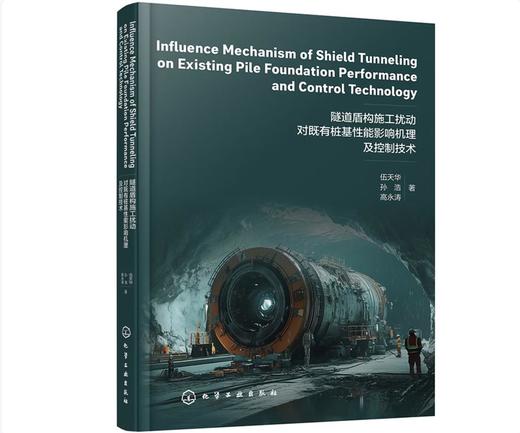
This book is organized into 6 chapters. Chapter 1 reviews the research significance and current state of development. Chapter 2 designs a centrifuge model testing system to elucidate the interaction mechanism among the shield tunneling, soil, and pile foundation. Chapter 3 investigates the influence of twinshield tunneling on single piles and pile groups under varying piletunnel spacing through numerical fluidsolid coupled simulations. Chapter 4 introduces a simplified theoretical analysis method for evaluating the lateral response of pile foundations while accounting for multiple influencing factors. In terms of control technology, Chapter 5 presents the development of an innovative binder derived from multisource solid wastes, designed for reinforcing the soil surrounding pile foundations. Chapter 6 introduces an integrated control strategy based on two key aspects: first, the development of lowcarbon, synchronous grouting materials and techniques that utilize excavated shield muck exclusively as aggregate; and second, the systematic optimization of pile layout density and formation parameters for MJS piles. This combined approach effectively eliminates the impact of shield tunneling on adjacent piles, ultimately leading to a successful engineering application.
This book integrates theoretical analysis, laboratory experimentation, material development, numerical simulation, and engineering practice to establish a comprehensive theoretical and technical framework. It serves as a valuable reference for graduate students and researchers in related fields such as civil engineering, tunneling, and underground construction, and also provides practical guidance for engineers, designers, and project managers engaged in similar engineering applications.
Chapter 1Introduction/1
1.1Construction features of subway shield tunneling adjacent to existing pile foundations/1
1.2Current status of the ground deformation caused by shield tunneling/4
1.2.1Empirical methods/5
1.2.2Analytical or semianalytical methods/6
1.2.3Numerical simulation methods/7
1.2.4Physical model test methods/8
1.2.5Onsite realtime monitoring/9
1.3Current status of the tunneling soilexisting pile interactions/10
1.3.1Numerical simulation/11
1.3.2Theoretical derivation/15
1.3.3Indoor physical model test/17
1.4Current status of deformation control of existing pile foundations induced by shield tunneling/18
1.5Current technical bottlenecks and breakthrough directions/20
References/21
Chapter 2Centrifugal model test on the disturbance mechanism of existing pile foundations induced by adjacent tunneling/29
2.1Introduction of shield tunneling on existing piles/29
2.2Overview of the development of geotechnical centrifuge testing/31
2.3Basic principles and similar principles of geotechnical centrifuge test/32
2.3.1Basic principles of centrifugation test/32
2.3.2Three similarity theorems/34
2.3.3Similarity laws of geotechnical centrifugal models/35
2.4Geotechnical centrifuge test equipment and experimental plan/36
2.4.1Experimental procedure and setup/36
2.4.2Model boxes and model piles/40
2.4.3Inflight simulation of tunnel excavation/41
2.4.4Monitoring programs and instrumentation/45
2.4.5Test materials and model preparation/47
2.4.6Centrifugal test process/50
2.5Determination of the axial working load of existing pile foundations/52
2.5.1Testing procedures/52
2.5.2Loadsettlement curves of existing pile foundations/52
2.6Analysis of mechanical behavior of existing pile foundations/54
2.6.1Surface settlement/54
2.6.2Pile settlement and apparent loss of pile capacity/56
2.6.3Tilting of pile group cap/58
2.6.4Axial force distribution along pile/59
2.6.5Skinfriction of pile shaft and load transfer mechanisms/61
2.6.6Bending moments in the pile/63
2.6.7Earth pressure and pore pressure around the pile/65
2.6.8Evolutions of displacement and stress fields around piles/66
2.7Discussion/68
2.8Conclusions/70
References/71
Chapter 3Numerical analysis of the influence of tunnelpile horizontal clearance Hc on the mechanical response of existing pile foundation under fluid-solid coupling/76
3.1Introduction/76
3.2Basic theory of fluidsolid coupling in FLAC3D/78
3.3Numerical simulation back analysis based on centrifuge test/79
3.3.1Construction of threedimensional back analysis numerical model/79
3.3.2Numerical parameter assignment/80
3.3.3Constitutive model selection and calibration/82
3.3.4Boundary condition settings and assumptions/85
3.3.5Modeling procedure for shield tunneling/86
3.3.6Numerical simulation back analysis results/88
3.4Effect of tunnelpile horizontal clearance Hc on the mechanical response of existing single pile/90
3.4.1Numerical simulation scenarios/90
3.4.2Construction of the numerical model of tunnelsoilsingle pile/91
3.4.3Stability analysis of tunnel excavation/92
3.4.4Mechanical response analysis of single pile/96
3.5Effect of tunnelpile horizontal clearance Hc on the mechanical response of existing pile group/102
3.5.1Numerical simulation scenarios/102
3.5.2Construction of the numerical model of tunnelsoilpile group/102
3.5.3Stability analysis of tunnel excavation/104
3.5.4Mechanical response analysis of pile group/108
3.6Relationship between the stratigraphic influence area and the existing pile foundations/118
3.6.1Relationship between the stratigraphic influence area and the single pile/118
3.6.2Relationship between the stratigraphic influence area and the pile group/119
3.7Discussion/120
3.8Conclusions/121
References/123
Chapter 4Theoretical analysis of horizontal mechanical response of existing pile foundation induced by tunneling under multiple factors/129
4.1Introduction/129
4.2Greenfield ground displacements induced by shield tunneling under multiple factors/132
4.2.1Horizontal displacement induced by unloading stress and face pressure/134
4.2.2Horizontal displacement induced by cutterhead and shell frictions/136
4.2.3Horizontal displacement induced by synchronous and secondary grouting pressures/138
4.2.4Horizontal displacement induced by ground losses and additional loads/141
4.2.5Total horizontal displacement induced by shield tunneling/144
4.3Horizontal mechanical responses of single pile based on TimoshenkoKerr model/145
4.3.1Tunnelsoilpile interaction model without considering lateral soil disturbance/146
4.3.2Mechanical response analysis of single pile without considering lateral soil disturbance/147
4.3.3Tunnelsoilpile interaction model with considering lateral soil disturbance/154
4.3.4Mechanical response analysis of single pile with considering lateral soil disturbance/155
4.4Horizontal mechanical responses of pile group based on TimoshenkoKerr model/162
4.4.1Mechanical response of the pile group without considering lateral soil disturbance/162
4.4.2Mechanical response of the pile group with considering lateral soil disturbance/164
4.5Result verification and parameter sensitivity analysis/164
4.5.1Determination of foundation model parameters/164
4.5.2Comprehensive verification and analysis of theoretical results of single pile/165
4.5.3Comprehensive verification and analysis of theoretical results of pile group/173
4.5.4Parameter sensitivity analysis of single pile/174
4.5.5Parameter sensitivity analysis of pile group/178
4.6Discussion/180
4.6.1Potential applications and significance/180
4.6.2Novelty,limitations,and prospects/182
4.7Conclusions/183
References/184
Chapter 5Development and performance analysis of new cementitious grouting materials for tunneling adjacent to existing pile foundations/188
5.1Introduction/188
5.2Raw materials/189
5.2.1Fresh cement(FC)/189
5.2.2Slag powder(SP)/190
5.2.3Desulfurized gypsum powder(DP)/192
5.2.4Selfdeveloped activator(SA)/194
5.3Preparation process and experimental design of the CSGSA/196
5.3.1Material preparation process/196
5.3.2Orthogonal experimental design/196
5.4Material performance testing methods/198
5.4.1Macroscopic testing methods/199
5.4.2Microscopic testing methods/201
5.5Macroscopic properties and formulation optimization of CSGSA/204
5.5.1Performance requirements/204
5.5.2Macroscopic properties/204
5.5.3Formulation optimization/207
5.6Microscopic hydration mechanism of new cementitious materials/214
5.6.1XRD analyses/214
5.6.2SEM analyses/216
5.7Analyses of economic and environmental benefits/217
5.7.1Economic benefit analysis/217
5.7.2Environmental benefit analysis/218
5.8Comparative performance analysis of CSGSA and OPC based grout/219
5.9Conclusions/220
References/221
Chapter 6Comprehensive control measures for existing pile foundations subjected to shield tunneling/223
6.1Introduction/223
6.2Production process of CSGSA/224
6.2.1SP grinding process/225
6.2.2DP production process/225
6.2.3Raw material mixing and homogenization process/227
6.3Project background/228
6.3.1Project overview/228
6.3.2Engineering geological conditions/229
6.3.3Hydrological conditions/231
6.3.4Description of the scenarios of tunneling adjacent to existing pile foundation/232
6.4Key factors affecting the performance of existing pile foundations during shield tunneling/235
6.4.1Shield synchronous grouting materials and processes/235
6.4.2Spatial position between shield tunnel and existing pile foundation/236
6.5Numerical analysis of responses of existing pile foundation before reinforcement treatment/237
6.5.1Numerical model construction/237
6.5.2Deformation standard control values of each indicator/240
6.5.3Numerical results analysis/241
6.6Comprehensive control plan for tunneling adjacent to existing pile foundations/244
6.6.1Shield synchronous grouting materials and process improvements/244
6.6.2Partition prereinforcement measures based on MJS piles and new cementitious materials/248
6.7Onsite monitoring plan and comprehensive control measures effectiveness verification/254
6.7.1Onsite monitoring plan for existing pile foundations adjacent to shield tunneling/254
6.7.2Onsite verification of the effect of new synchronous grouting material/256
6.7.3Verification of partition grouting reinforcement effect/256
6.7.4Numerical simulation verification after reinforcement treatment/261
6.8Conclusions/265
References/266
Appendix/269
A. Derivation of the governing differential equation[Eq.(421) in the Chapter 4]of the pile/269
B. Derivation of coefficients of difference equation {Eq.[424(a)]in the Chapter 4}/270
Reference/271
- 金粉商城 (微信公众号认证)
- 金粉商城由金属加工杂志社创办。《金属加工》(原名《机械工人》),创刊于1950年,距今已经有70年历史,是面向金属加工工艺及装备领域的专业期刊。金粉商城目前经营工业类专业图书。
- 扫描二维码,访问我们的微信店铺
- 随时随地的购物、客服咨询、查询订单和物流...