
商品详情

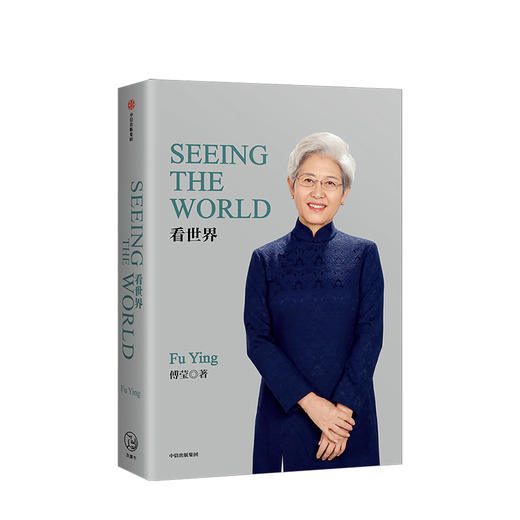
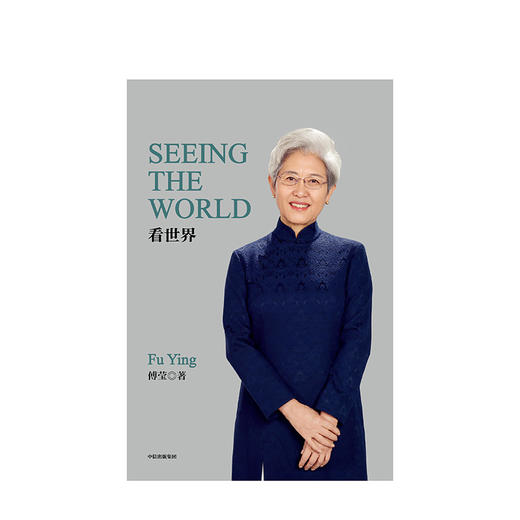
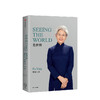
书名:SEEING THE WORLD
定价:98.00元
作者:傅莹
出版社:中信出版集团
出版日期:2019-08
页码:470
装帧:平装
开本:16开
ISBN:9787521705881

本书是傅莹过去数年公开发表的演讲、文章和国际场合对话实录的《看世界》一书的英文版。傅莹曾任中国驻外大使、外交部副部长、十二届全国人大新闻发言人。在国际形势发生复杂深刻变化之际,这本文集有助于国内外读者更好地认识世界以及中国与世界关系正在发生的变化,了解中国的一些政策和考虑。

这是作者公开出版的部文集,包含了作者对世界事务的看法和对一些关于中国的问题的回答。
全书共分9章,包括世界秩序、全球变化与中国角色、中美关系、中俄关系和亚洲问题等。鉴于当前国际形势的深刻变化,她希望这本书能让读者更多地了解中国人如何看待世界。
This is the second anthology by the author. It contains her views on world affairs, including her response to some of the questions raised about China.
The anthology is divided into nine chapters that include: world order, global changes and China’s role, ChinaUS relations, ChinaRussia relations and Asian issues. Given the profound changes in the current international situation, she hopes this book will give readers more insights about how people in China see the world.

Preface to English Version / I
Preface to Chinese Version / VII
World Order / 001
2014: A Turning Point in the World Order / 003
Debating 21st Century Order / 014
Under a Common Roof: China’s View of the Global Order / 025
Disorder or Reconstruction of Order? / 034
Global Changes and China’s Role / 043
For Peace and Development in the 21st Century / 045
A Century Later —A Retrospective on the Two World Wars / 049
Are China and the US Missing Opportunities? / 067
International Order and China’s Place in It / 076
Major Countries Need to Build Trust Among Them / 080
Economic Globalization in a World Full of Uncertainties / 086
Global Changes and China’s Role / 096
China’s Vision for the World: A Community with a Shared Future for Mankind / 111
ChinaUS Relations / 123
China and the US, Learning to Work Together / 125
The Way Forward for ChinaUS Relations / 133
How Chinese and Americans Are Reading Each Other and Why It Matters / 143
China and the US: Rebuilding Consensus? / 155
Three Aspects of ChinaUS Relations to Watch on the Eve of the G20 Summit in 2016 / 164
Dialogue with Dr. Henry Kissinger(I): Growing Anxieties: How Overestimation of China is Affecting the US Views / 181
Dialogue with Dr. Henry Kissinger(II): China’s Options and Impact on a New Order / 190
Dialogue with Dr.Henry Kissinger(III): The World Order and ChinaUS Relations / 200
Dialogue with Dr. Henry Kissinger(IV): A Discussion on World Order / 215
Dialogue with Professor Francis Fukuyama / 224
ChinaRussia Relations / 233
Are China and Russia Partnering to Create an Axis? / 235
Peace in Asia / 251
Northeast Asia Security Cooperation: The Role for China / 253
Harmony Is a Blessing for China and Its Neighbors / 266
Can East Asia Continue the Momentum of Regional Cooperation? / 271
The Korean Nuclear Issue: Past, Present, and Future / 277
Is There Hope for Peaceful Settlement of Korean Nuclear Issue? / 329
The South China Sea / 337
Why China Says No to the Arbitration on the South China Sea Issue / 339
South China Sea: How We Got to This Stage / 344
The Belt and Road Initiative / 389
China’s BRI: A Contribution to Fulfilling the Ageold Dream of Eurasian Connectivity / 391
Chinese Way / 401
Different Pictures of China / 403
Let’s Agree to Disagree in Harmony / 407
How Will China Influence the World? / 416
China’s Reform and Development Make Asia and the World Safer / 419
A View on China’s International Standing / 425
China’s Growth and the Debates on Orders / 433
China Needs to Better Communicate with the Outside World / 443
A Roadmap for Managing China’s Rise / 449
Other / 455
In Memory of Ambassador Wu Jianmin / 457
Afterword / 463
Abbreviations and Acronyms / 467
 傅莹于1978年加入中国外交部。先后任外交部政策规划司司长、亚洲司司长。她还曾担任中国驻菲律宾、澳大利亚和英国大使。2009—2013年,她先后被任命为负责欧洲和亚洲事务的外交部副部长。2013—2017年,她担任中国第十二届全国人民代表大会外事委员会主席、届至第五届全国人民代表大会发言人。
傅莹现任中国第十三届全国人民代表大会外事委员会副委员长。她还担任清华大学国际与战略(CISS)主任。
Fu Ying joined China's foreign service in 1978. She served successively as Director of Policy Planning and Director General of Asian Department of the Ministry of Foreign Affairs. She also served as China's Ambassador to the Philippines, Australia and the United Kingdom. From 2009 to 2013, she was appointed as Vice Minister of Foreign Affairs for European affairs and then Asian Affairs. From 2013 to 2017, she was Chairperson of the Foreign Affairs Committee and the spokesperson for the 1st to 5th sessions of China's 12th National People's Congress.
Fu Ying is now Vice Chairperson of the Foreign Affairs Committee of China's 13th National People's Congress. She is also chairingthe Center for International Security and Strategy (CISS), Tsinghua University.

The Chinese version of this book was released in June 2018 in Beijing, when tensions between the United States and China were already rising. A year later, as the English version of this book is completed now in June 2019, the relationship has grown more tense. It has become apparent that the US government is trying to change its policy on relations with China, which previous American administrations have followed over the past 40 years.
While the US, as a traditional superpower, has become less capable of managing the world affairs and less willing apparently, China, as an emerging power, is seen as rising with unstoppable momentum. These two developments are raising anxiety in the American strategic circle. Their concern is not only about the pace of China’s rise but also the way it is rising. The US’s worry is that China may turn into a rival, which will not merely surpass it but replace it as leader in the world and upend the centuryold American dominance. So, to avoid that prospect, the US believes it needs to shift its strategy and pull together all its resources to meet the perceived competition from China. The US government’s move to maximize pressure on China over trade and hightech issues that we have seen in the past months is a reflection of this wave of “American Frost.”
In my recent discussions with visiting American academics and former politicians, I sensed common pessimism. Most of them worried that the bilateral relations would deteriorate further. However, they also showed interest in finding a way out and explore a “New Paradigm.” Meanwhile, Chinese scholars are also seeing the changes in the US’s attitude and are concerned that the relationship would undergo fundamental shift should the two sides fail to act quickly to stop the downside fall.
What will the future hold for ChinaUS relations? As the US’s policy adjustments become more entrenched, the sentiments for competition and confrontation are rising.
Reflecting on the current trend, we can imagine three possible scenarios: The first is the most optimistic, in which the two countries enter into a new stage of relationship characterized by competition and cooperation, dubbed as “coopetition.” Here elements of
competition and cooperation form a dynamic and yet controllable equilibrium.
The scond scenario is an allround confrontation, where the fundamental goals and strategies of the two countries oppose each other. As the “decoupling” spills over from science and technology to trade and economy, and beyond, it will eventually escalate into a collision between the two different systems and orders.
The third scenario is “drifting.” This characterizes the current situation, where the US is trying to destroy the cornerstones of the relationship, and China is making efforts to maintain them. While the existing framework of the relationship is being dismantled, a new framework has not yet emerged, and neither side has demonstrated a clear and concrete path for the future of the relationship.
The pressing question for China is how to evaluate the US’s strategic change, and how to accelerate changes in thinking and policy direction, before mobilizing resources to respond. The future depends not only on America’s decision and behavior but also on how China respond and make its choice. Based on its fundamental foreign policy principles, China would want the relationship to become one of effective cooperation. Even if sometimes competition
is inevitable, it should be benign and kept under control. However, given the uncertainty, China must also prepare for the possibility of wider confrontation.
At this moment, as the international community is debating how to understand and engage with China, perhaps now is a good time to publish the English edition of Seeing the World.
China has made consistent efforts over the past 40 years and has tried hard to integrate itself into the global system, through reform and opening up, and has achieved remarkable progress. Nonetheless, the gap in understanding between China and the Western world has never disappeared. In this new environment, where building trust is even more important in order to form a new kind of relationship, this gap is posing a greater obstacle. Such a gap is, to a large extent, due to the hegemonic mentality of some people who have a deeprooted prejudice against China’s political and social system. It also illustrates the importance for the Chinese to gain the world’s understanding and acceptance, which will be next to impossible to achieve without our unremitting perseverance in engagement.
The fact that ChinaUS relations have become bumpy does not mean we should close the door again and abandon our efforts to deepen reform and continue opening up. As President Xi Jinping vividly described, “We have had our fair share of choking in the water and encountered whirlpools and choppy waves, but in the process we have learned how to swim.”
As China becomes more prominent on the world stage, it is also taking greater responsibilities; which inevitably results in encountering bigger waves and storms, so to speak. But we take these opportunities to learn and improve our understanding when engaging with the world.
The recent pressure from the US and many of its steps to “decouple” with China are alarming. However, our policy and determination to maintain peace and eventually build a community with a shared future for mankind should remain unchanged. For us, the “world power struggle” and “clashes of civilizations” are stories of the past and in contemporary international politics, the power of reason should prevail. As President Xi emphasized that, the goal of China's development is to benefit its more than 1.3 billion people; and that China has no intention to seek hegemony or challenge the existing international order and rules. We trust that in the face of reasoning and facts, irrational argument, even the most forceful,
would look weak. What is important is how we can consistently prove ourselves by providing timely and convincing information, although it may take time to make a difference.
The current “drifting” of the ChinaUS relationship is dangerous and should not be allowed to go on for too long. Generally, “drifting” in game theory entails open prospects, which allows the postponement of difficult choices about the future direction. But the risk is that it may also allow a faster breakdown of the relationship due to misunderstanding
and misjudgment. Visionaries from both countries should actively seek to communicate and explore the “New Paradigm”. At the moment, it is inevitable that we see a mixture of dialogue and debate, along with conflict and cooperation, but we also see the use of risk management, as essential. Hopefully, a relatively balanced ChinaUS relationship can be cultivated through a period of dedicated interactions. Meanwhile, the other countries are expecting China and the US to find the right way to solve their differences as this will have a major impact on the future of the world.
Given the progress of the world over the decades, there is reason for us to be optimistic about the future. In the meantime, we Chinese need to remain calm, be clear about why others have differing views. And we should try to understand the wide issues impacting the world. In the face of the great changes, we must withstand the pressures and seize the opportunities to improve China's relations with the rest of the world, while building our capabilities in world affairs. As far as the current difficulties are concerned, they may give us a hard time, yet they will also help us forge consensus at home, and the opportunities and challenges will work to turn China into a more mature and capable participant in world affairs.
With this book, I wish to share my hopes and beliefs with the readers. In the months and years to come, members of Chinese think tanks and academia need to continue keeping an open mind and persevere in communications with people both at home and abroad.
May mankind prosper in peace and in a community with a shared future.
- 中信书店 (微信公众号认证)
- 美好的思想和生活
- 扫描二维码,访问我们的微信店铺
- 随时随地的购物、客服咨询、查询订单和物流...