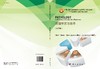
病理学实习指导(PATHOLOGY A Practical Guide for Students) 申丽娟,华海蓉 编
¥55.30
| 运费: | ¥ 0.00-18.00 |


商品详情
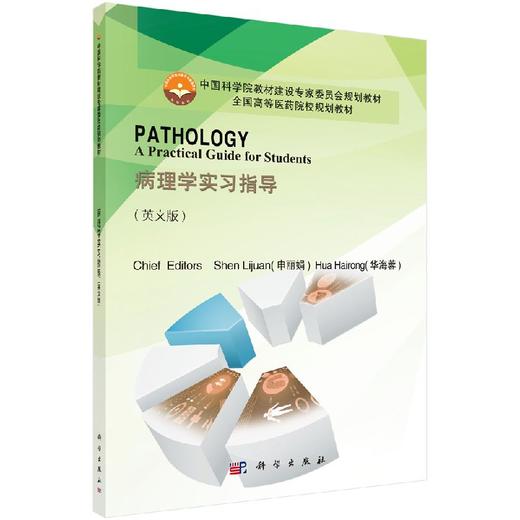
书名:病理学实习指导(PATHOLOGY A Practical Guide for Students
定价:70.0
ISBN:9787030471598
作者:申丽娟,华海蓉 编
版次:1
出版时间:2016-03
内容提要:
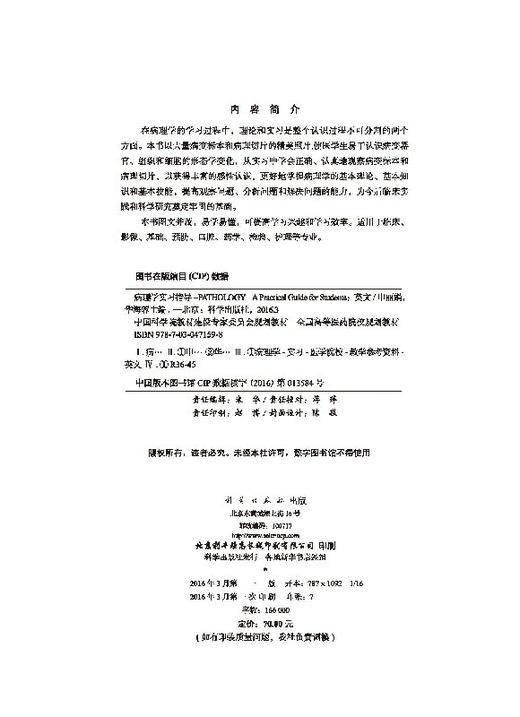
在病理学的学习过程中,理论和实习是整个认识过程不可分割的两个方面。本书以大量病变标本和病理切片的精美照片,使医学生易于认识病变器官、组织和细胞的形态学变化,从实习中学会正确、认真地观察病变标本和病理切片,以获得丰富的感性认识,更好地掌握病理学的基本理论、基本知识和基本技能,提高观察问题、分析问题和解决问题的能力,为今后临床实践和科学研究奠定牢固的基础。
目录:
Contents
Preface
Introduction
General Guidelines
Chapter1 CellularAdaptation,CellInjuryandTissueRepair1
Practice1 DegenerationandAdaptation1
Practice2 NecrosisandGranulationTissue3
Chapter2 HemodynamicDisorders7
Practice3 Hyperaemia,Congestion,Thrombus,EmbolismandInfarct7
Chapter3 Inflammation13
Practice4 BasicPathologicalFeaturesofInflammation13
Practice5 ClassificationandOutcomesofInflammation16
Chapter4 Neoplasia21
Practice6 MorphologicalCharacteristicsofTumours21
Practice7 Invasion,MetastasisandClassificationofTumours25
Chapter5 DiseasesofCardiovascularSystem34
Practice8 Atherosclerosis36
Practice9 EssentialHypertensionandRheumatism39
Practice10 SubacuteBacterialEndocarditisandKeshanDisease44
Chapter6 DiseasesofRespiratorySystem52
Practice11 Pneumonia,SilicosisandCarcinomaoftheLung52
Chapter7 DiseasesoftheDigestiveSystem57
Practice12 Gastritis,GastricUlcerandViralHepatitis57
Practice13 CirrhosisofLive,GastricCarcinomaandPrimaryCarcinomasofLiver62
Chapter8 DiseasesoftheUrinarySystem66
Practice14 DiffuseGlomerulonephritisandOtherInfectionsoftheUrinarySystem66
Chapter9 DiseasesofFemaleGenitalSystemandBreast71
Practise15 DiseasesofFemaleGenitalSystemandBreast72
Chapter10 DiseasesoftheNervousSystem81
Practice16(1) InfectionsoftheNervousSystem81
Chapter11 DiseasesoftheHematopoieticandLymphoidSystem85
Practice16(2 )TumoursoftheHematopoieticandLymphoidSystem85
Chapter12 InfectiousandParasiticDiseases89
Practice17 PrimaryPulmonaryTuberculosisandSecondaryPulmonaryTuberculosis90
Practice18 Schistosomiasis,TyphoidFever,BacillaryDysentery95
Chapter13 DiseasesofEndocrinesystem100
Practice19 ThyroidDiseases100
在线试读:
Chapter 1 Cellular Adaptation, Cell Injury and
Tissue Repair
Learning Objectives
1. To grasp concepts of atrophy, hypertrophy, hyperplasia, metaplasia and to be familiar with their morphological characteristics.
2. To appreciate the morphologic changes of common types of degeneration and their most commonly affected tissues or organs.
3. To understand pathological changes and types of necrosis and morphological characteristics of apoptosis.
Practice 1 Degeneration and Adaptation
Contents
KEY POINTS OF SPECIMEN OBSERVATION
Tissue section
Slide 10 Fatty degeneration (fatty change) of the liver (hepatic Steatosis) (Figure 1-1, Figure 1-2)
Key points
1. The lobular structure of liver has not changed. Most of the hepatocytes are enlarged and crowded together.
2. Majority of the hepatocytes appear as clear bubbles or vacuoles of various sizes. These vacuoles
contain an accumulation of lipids (triglycerides) due to abnormal biochemical reactions
within the cell. Some large vacuoles push the nucleus to the periphery of the cell, giving acharacteristic
signet ring appearance (signet ring cells or macrovesicular fatty change). They are well delineated and optically "empty" because the fats dissolve during tissue processing.
Question
What causes these pathological changes in the liver?
How are the fatty vacuoles formed? Are there any membranous structures formed?
Figure 1-1 Fatty degeneration of the liver Slide 10 (H&E, 100×)
Figure 1-2 Fatty degeneration of the liver Slide 10 (H&E, 400×)
Gross specimens
Figure 1-3 Fatty degeneration of the liver #8
The edge of the liver appears blunt and the capsule is in colour and presents with a soft and greasy appearance, known as fatty liver.
Figure 1-4 Fatty degeneration of the liver (Sudan-III stain) #9
The liver can be stained orange-red in colour by Sudan-III.
Figure 1-5 Atrophy of the myocardium (Heart) #90
The heart is smaller than normal in size. The coronary arteries are tortuous on the surface.
Figure 1-6 Hydronephrosis (Pressure atrophy of the kidney) #83
The kidney is enlarged and displays a scraggy and cystic surface. The shape is significantly different in comparison to a normal sample. There is major dilatation of the renal pelvis and the shrinkage of the renal cortex.
Figure 1-7 Concentric hypertrophy of left ventricle of heart #40
The size of the heart is bigger than normal due to the increase in weight. On the cut section, themusculature of the left ventricle and interventricular septum is thickened (arrowed), measuring 2 cm in thickness (normal 0.8-1.2 cm). The papillary muscles and trabeculae carneae are thickened without dilatation of the left ventricle (concentric hypertrophy).
Practice 2 Necrosis and Granulation Tissue
Contents
Continued
Tissue section
Slide 87 Hyaline degeneration of the central artery of the spleen (Figure 1-8, Figure 1-9)
Numerous homogenous pink materials accumulate under the intima of the artery, resulting in thickening of the central artery wall and narrowing of the lumen.
Figure 1-8 Hyaline degeneration of the central artery of the spleen Slide 89 (H&E, 100×)
Figure 1-9 Hyaline degeneration of the central rtery of the spleen Slide 89 (H&E, 400×)
Slide 71 Caseous pneumonia (Figure 1-10, Figure 1-11)
The necrotic pelvises appear as amorphous, eosinophilic granules and debris. The tissue architecture
is completely obliterated.
Figure 1-10 Caseous pneumonia Slide 71 (H&E, 100×)
Figure 1-11 Caseous pneumonia Slide 71 (H&E, 400×)
Slide 12 Granulation tissue (Figure 1-12 and Figure 1-13)
The granulation tissue consists of many newly formed small blood vessels embedded in edematous
and a loose extracellular matrix (ECM) containing fibroblasts and inflammatory cells. The vessels are arranged as a series of loops arching into the surface. The fibroblasts appear as spindles or irregular, with a large amount of cytoplasm and lightly stained oval nuclei.
Figure 1-12 Granulation tissue Slide 12 (H&E, 100×)
Figure 1-13 Granulation tissue Slide 12 (H&E, 100×)
Newly formed small blood vessels are marked as black arrows. Gross specimen
Figure 1-14 Coagulative necrosis of the spleen #5 There is an irregular greyish-white area on the surface and the cut section of the spleen. The infarct is roughly wedge-shaped and sharply demarcated, with the top toward the hilus of the organ and the base made up of the serosal surface. The texture is pale and firm with a red hyperemic rim.
Figure 1-15 Dry Gangrene of the foot #10
The skin of lesion is shrunken, dry, and brown-black in colour. The necrotic area is fairly well demarcated from the healthy tissue.
定价:70.0
ISBN:9787030471598
作者:申丽娟,华海蓉 编
版次:1
出版时间:2016-03
内容提要:
在病理学的学习过程中,理论和实习是整个认识过程不可分割的两个方面。本书以大量病变标本和病理切片的精美照片,使医学生易于认识病变器官、组织和细胞的形态学变化,从实习中学会正确、认真地观察病变标本和病理切片,以获得丰富的感性认识,更好地掌握病理学的基本理论、基本知识和基本技能,提高观察问题、分析问题和解决问题的能力,为今后临床实践和科学研究奠定牢固的基础。
目录:
Contents
Preface
Introduction
General Guidelines
Chapter1 CellularAdaptation,CellInjuryandTissueRepair1
Practice1 DegenerationandAdaptation1
Practice2 NecrosisandGranulationTissue3
Chapter2 HemodynamicDisorders7
Practice3 Hyperaemia,Congestion,Thrombus,EmbolismandInfarct7
Chapter3 Inflammation13
Practice4 BasicPathologicalFeaturesofInflammation13
Practice5 ClassificationandOutcomesofInflammation16
Chapter4 Neoplasia21
Practice6 MorphologicalCharacteristicsofTumours21
Practice7 Invasion,MetastasisandClassificationofTumours25
Chapter5 DiseasesofCardiovascularSystem34
Practice8 Atherosclerosis36
Practice9 EssentialHypertensionandRheumatism39
Practice10 SubacuteBacterialEndocarditisandKeshanDisease44
Chapter6 DiseasesofRespiratorySystem52
Practice11 Pneumonia,SilicosisandCarcinomaoftheLung52
Chapter7 DiseasesoftheDigestiveSystem57
Practice12 Gastritis,GastricUlcerandViralHepatitis57
Practice13 CirrhosisofLive,GastricCarcinomaandPrimaryCarcinomasofLiver62
Chapter8 DiseasesoftheUrinarySystem66
Practice14 DiffuseGlomerulonephritisandOtherInfectionsoftheUrinarySystem66
Chapter9 DiseasesofFemaleGenitalSystemandBreast71
Practise15 DiseasesofFemaleGenitalSystemandBreast72
Chapter10 DiseasesoftheNervousSystem81
Practice16(1) InfectionsoftheNervousSystem81
Chapter11 DiseasesoftheHematopoieticandLymphoidSystem85
Practice16(2 )TumoursoftheHematopoieticandLymphoidSystem85
Chapter12 InfectiousandParasiticDiseases89
Practice17 PrimaryPulmonaryTuberculosisandSecondaryPulmonaryTuberculosis90
Practice18 Schistosomiasis,TyphoidFever,BacillaryDysentery95
Chapter13 DiseasesofEndocrinesystem100
Practice19 ThyroidDiseases100
在线试读:
Chapter 1 Cellular Adaptation, Cell Injury and
Tissue Repair
Learning Objectives
1. To grasp concepts of atrophy, hypertrophy, hyperplasia, metaplasia and to be familiar with their morphological characteristics.
2. To appreciate the morphologic changes of common types of degeneration and their most commonly affected tissues or organs.
3. To understand pathological changes and types of necrosis and morphological characteristics of apoptosis.
Practice 1 Degeneration and Adaptation
Contents
KEY POINTS OF SPECIMEN OBSERVATION
Tissue section
Slide 10 Fatty degeneration (fatty change) of the liver (hepatic Steatosis) (Figure 1-1, Figure 1-2)
Key points
1. The lobular structure of liver has not changed. Most of the hepatocytes are enlarged and crowded together.
2. Majority of the hepatocytes appear as clear bubbles or vacuoles of various sizes. These vacuoles
contain an accumulation of lipids (triglycerides) due to abnormal biochemical reactions
within the cell. Some large vacuoles push the nucleus to the periphery of the cell, giving acharacteristic
signet ring appearance (signet ring cells or macrovesicular fatty change). They are well delineated and optically "empty" because the fats dissolve during tissue processing.
Question
What causes these pathological changes in the liver?
How are the fatty vacuoles formed? Are there any membranous structures formed?
Figure 1-1 Fatty degeneration of the liver Slide 10 (H&E, 100×)
Figure 1-2 Fatty degeneration of the liver Slide 10 (H&E, 400×)
Gross specimens
Figure 1-3 Fatty degeneration of the liver #8
The edge of the liver appears blunt and the capsule is in colour and presents with a soft and greasy appearance, known as fatty liver.
Figure 1-4 Fatty degeneration of the liver (Sudan-III stain) #9
The liver can be stained orange-red in colour by Sudan-III.
Figure 1-5 Atrophy of the myocardium (Heart) #90
The heart is smaller than normal in size. The coronary arteries are tortuous on the surface.
Figure 1-6 Hydronephrosis (Pressure atrophy of the kidney) #83
The kidney is enlarged and displays a scraggy and cystic surface. The shape is significantly different in comparison to a normal sample. There is major dilatation of the renal pelvis and the shrinkage of the renal cortex.
Figure 1-7 Concentric hypertrophy of left ventricle of heart #40
The size of the heart is bigger than normal due to the increase in weight. On the cut section, themusculature of the left ventricle and interventricular septum is thickened (arrowed), measuring 2 cm in thickness (normal 0.8-1.2 cm). The papillary muscles and trabeculae carneae are thickened without dilatation of the left ventricle (concentric hypertrophy).
Practice 2 Necrosis and Granulation Tissue
Contents
Continued
Tissue section
Slide 87 Hyaline degeneration of the central artery of the spleen (Figure 1-8, Figure 1-9)
Numerous homogenous pink materials accumulate under the intima of the artery, resulting in thickening of the central artery wall and narrowing of the lumen.
Figure 1-8 Hyaline degeneration of the central artery of the spleen Slide 89 (H&E, 100×)
Figure 1-9 Hyaline degeneration of the central rtery of the spleen Slide 89 (H&E, 400×)
Slide 71 Caseous pneumonia (Figure 1-10, Figure 1-11)
The necrotic pelvises appear as amorphous, eosinophilic granules and debris. The tissue architecture
is completely obliterated.
Figure 1-10 Caseous pneumonia Slide 71 (H&E, 100×)
Figure 1-11 Caseous pneumonia Slide 71 (H&E, 400×)
Slide 12 Granulation tissue (Figure 1-12 and Figure 1-13)
The granulation tissue consists of many newly formed small blood vessels embedded in edematous
and a loose extracellular matrix (ECM) containing fibroblasts and inflammatory cells. The vessels are arranged as a series of loops arching into the surface. The fibroblasts appear as spindles or irregular, with a large amount of cytoplasm and lightly stained oval nuclei.
Figure 1-12 Granulation tissue Slide 12 (H&E, 100×)
Figure 1-13 Granulation tissue Slide 12 (H&E, 100×)
Newly formed small blood vessels are marked as black arrows. Gross specimen
Figure 1-14 Coagulative necrosis of the spleen #5 There is an irregular greyish-white area on the surface and the cut section of the spleen. The infarct is roughly wedge-shaped and sharply demarcated, with the top toward the hilus of the organ and the base made up of the serosal surface. The texture is pale and firm with a red hyperemic rim.
Figure 1-15 Dry Gangrene of the foot #10
The skin of lesion is shrunken, dry, and brown-black in colour. The necrotic area is fairly well demarcated from the healthy tissue.