

商品详情
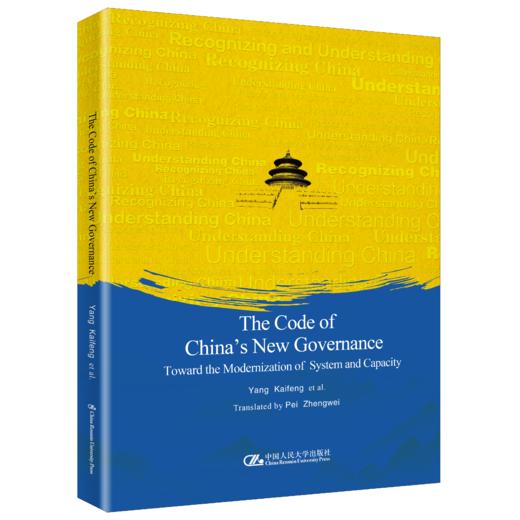
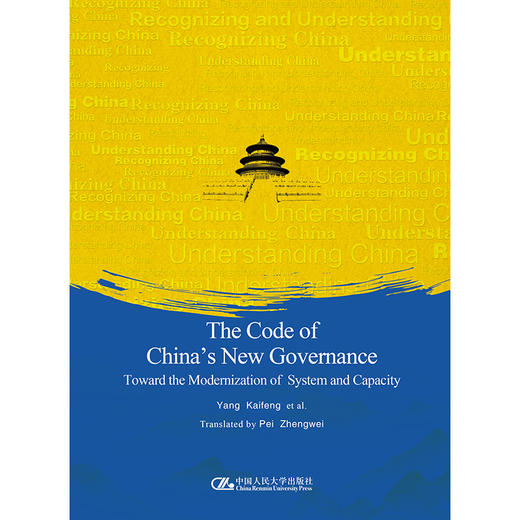
书名:中国之治——国家治理体系和治理能力现代化十五讲(英文版)
定价:228.0
ISBN:9787300294469
作者:杨开峰 等
版次:1
出版时间:2021-06
内容提要:
What are the features of China’s national governance in terms of its institutional design? How does China organically integrate the Party, government agencies and diverse stakeholders such as market entities and social organizations to form the governance pattern of “pluralism under one core” and consultative co-governance? How does it fulfill the people-centered idea in all fields and at all levels of national governance? Focusing on those issues, this book analyzes a number of important aspects of China’s national governance, including institutional building, administrative system, economic governance, social welfare, social governance, emergency management, ecological civilization, and governance tools. Adopting perspectives of public administration, political science, economics and other disciplines, this book puts forward many new ideas and concepts. It is a key to understanding the “governance of China”.
作者简介:
Yang Kaifeng is a professor and the executive dean of the School of Public Administration and Policy, Renmin University of China. He serves as the secretary general of the Public Administration Review Group under the Academic Degrees Committee of The State Council, as well as the secretary general of the National MPA (Masters of Public Administration) Education Steering Committee. He is also the editor-in-chief of Public Performance and Management Review and Public Administration and Policy Review. He has long been engaged in research and teaching on public administration, and has widely published in the areas of public governance, performance management, administrative reform, and public organizational theory, among others. He has published a number of books or monographs in Chinese or English, such as The Code of China's New Governance: Toward the Modernization of System and Capacity, Coordinated Implementation of Policies: Public Health Governance after the Epidemic, Handbook of Research Methods in Public Administration, and International Handbook for Practice-Based Performance Evaluation, etc.
目录:
CONTENTS
Chapter 1Putting Institutional Building in a More Prominent Position of National Governance
1.Institutional logic of national governance
2.Overall logic of institutional building
3.Development logic of institutional building
4.Organizational logic of institutional building
5.Evaluation logic of institutional building
6.Constitutional logic of institutional building
7.Operational logic of institutional building
8.Behavioral logic of institutional building
9.Reform logic of institutional building
Chapter 2Construction of the “Four in One” Administrative System with Chinese Characteristics
1.One integration:To build a serviceoriented government to satisfy the needs of the people
2.Integration of administrative organization
3.Simplification of administrative process
4.Efficiency of administrative methods
5.Decentralization of administrative relations
Chapter 3The Government Governance System of Ensuring Welldefined Responsibilities,Lawbased Administration and Satisfing the Needs of the People
1.Welldefined responsibilities are the premise of
governance
2.Administrative system and organizations are the subject of government governance
3.Lawbased administration is the inherent requirement of government governance
4.To satisfy the needs ofthe people is the aim of government governance
Chapter 4Some Issues on Modernization of Chinas Economic System and Capacity for Governance
1.Systematic discussions on the modernization of Chinas economic governance system and capacity
2.Strengthening the foundation of the national economic governance system
3.Improving the national capacity for economic governance
4.Participating in the construction of international economic governance system
5.Ensuring and improving the peoples wellbeing
Chapter 5The Financial System Reform under the Background of Chinas Governance
1.Financial system in the period of “standing up”
2.Financial system in the period of “growing rich”
3.Financial system in the period of “becoming strong”
Chapter 6Innovating the Governance of MegaCities and Promoting the Livelihood System for Protecting both Urban and Rural Residents
1.The livelihood system for protecting both urban and Rural Residents is the basic project of promoting peoplecentered new urbanization in China
2.Respecting the regulation law of megacity scale and innovating the governance model of megacities
3.Building the livelihood system for protecting nonhousehold residents in megacities with affordable housing supply as a breakthrough
Chapter 7Reform of Chinas Social Security Governance
1.Analysis of the governance implications of the principle of “fullcoverage insurance for the qualified”
2.Analysis of the challenges of the governance goal of “fullcoverage insurance for the qualified”
3.“Fullcoverage insurance for the qualified” and the key direction for the governance reform of basic medical insurance
Chapter 8Guiding the Healthy China Construction with the Spirit of the Fourth Plenary Session of the 19th CPC Central Committee
1.The important position of peoples livelihood system with Chinese characteristics and strategy of healthy China construction
2.The latest spirit on a healthy China in The Decision of the fourth plenary session of the 19th CPC Central Committee
3.Guiding health management with the spirit of the fourth plenary session of the 19th CPC Central Committee
Chapter 9Collaboration,Participation and Common Interests:The Chinese Approach to Social Governance in the New Era
1.Governance objective:The vision of Chinas social governance
2.Governance scenario:Response to the problems with Chinas social governance
3.Theoretical reflection:Beyond the concept of “binary opposition” in Chinas social governance
4.Integrated cogovernance:The trend and path of social governance theory and practice in China
Chapter 10Stimulating the Vitality of CommunityLevel Society and
Building a “Social Governance Community”
1.Definition of the connotation of the“social governance
community”
2.Analysis of the existing problems with communitylevel
governance in the construction of a “social governance
community”
3.Stimulating social vitality and the thread of building a “social governance community”
Chapter 11Institutional Demand and Action Path for Social Governance
Modernization
1.Challenges facing urban and rural social governance
2.The institutional demands of social governance modernization
3.The action path of social governance modernization
Chapter 12Methodological Exploration of Municipal Social Governance in China
1.Urban governance as the only way for the modernization of national governance
2.Basic methodology of municipal social governance in
China
3.Next step to good governance in municipal society
Chapter 13Building an Emergency Management System with Chinese Characteristics for the New Era
1.Reform of emergency management in the new era
2.Reasons for the change of emergency management
system
3.New system of emergency management with Chinese characteristics
Chapter 14Institutional Building of Ecological Civilization in the New Era
1.Institutionalization of ecological civilization
construction
2.Implementing the strictest system for ecological environment protection
3.Comprehensively establishing the system for efficient utilization of resources
4.Improving the system for ecological protection and restoration
5.Strictly enforcing the responsibility system for ecological environment protection
6.“Adhering to” and “improving” the institutional systems of ecological civilization
Chapter 15The Instrumental Basis of Chinas Governance
1.Governing instruments:The key of transforming institutional advantages into governance efficiency
2.Chinese governance:Instrumental characteristics of Chinas governance
3.Institutional advantages behind Chinese governance
在线试读:
Preface
By Yang Kaifeng
The Decision of the Central Committee of the Communist Party of China on Some Major Issues Concerning Upholding and Improving the System of Socialism with Chinese Characteristics and Advancing the Modernization of Chinas National Governance System and Capacity(referred to as The Decision)adopted at the fourth plenary session of the 19th Central Committee of the Communist Party of China is a continuation and deepening of the series of decisions and spirit of the Central Committee of the Communist Party of China(CPC)on deepening the reform since the Partys 18th and 19th National Congresses,which points out the direction for the further development of the worldclass national governance theory and practice with Chinese characteristics.The Decision further clarifies the connotation,extension and conceptual system of national governance.Dissimilar to the mainstream of the Western governance theory that presupposes a Western model,The Decision indicates that Chinas national governance is first and foremost great socialist practice as well as the result of history and peoples choice.It has distinct Chinese characteristics with highlighting the nationality,historicity,peoples nature and politics of national governance and emphasizing thirteen significant advantages of Chinas national governance.At the same time,The Decision regards Chinas system and capacity for governance as the representation of a countrys basic system and its implementation capacity.It also makes a comprehensive,scientific and systematic definition of national governance under the guidance of the Marxist methodology.The theoretical system embodied in The Decision is rigorous,comprehensive and systematic,reflecting the latest achievements in the development of philosophy and social sciences,drawing upon the advanced experience from the development of other countries,summarizing the successful practice of Chinas socialist construction as well as achieving a high degree of unity of universality and particularity.
The Decision is a text full of wisdom in governing the country; social scientists,especially public management scholars,need to study it hard,understand it deeply,interpret and transform it actively.After the fourth plenary session of the 19th CPC Central Committee,the School of Public Administration and Policy at Renmin University of China held three academic forums to organize faculty to interpret The Decision from their professional perspectives,which triggered extensive discussions among teachers and students.Most chapters of this book are the products of three forum speeches.
The policy text is inclusive,abundant and extensible.Just as there are a thousand Hamlets in a thousand peoples eyes,people understand the same text from their own angles,which is conducive to revealing the richness of meaning behind the text and discovering the wide possibility of application scenarios.This is exactly the contribution that social scientists can make.The authors of this book have diverse academic backgrounds,different research purports and distinct writing styles.Therefore,I do not make great changes to most chapters,not because of laziness,but in hopes that readers have access to the original works.I always believe that the interpretation of policy texts should not be rigid,but also needs to maintain its due diversity.Of course,in order to make this book available to the readers as soon as possible,we are in a bit of hurry.Besides,due to my limited knowledge,omissions are inevitable.We can only try to strike a balance between accuracy and timeliness.
I hereby extend my gratitude to my colleagues,who readily agreed to join this team despite their busy schedule.I also want to thank Ms.Zhu Haiyan from China Renmin University Press .Without her support and assistance,this book could not have been completed.Finally,I need to mention that this book is made possible by the key project of the National Natural Science Fund of China “Local System and Capacity for Governance:Influencing Factors,Reform Path and Governance Effect”(71633004).
定价:228.0
ISBN:9787300294469
作者:杨开峰 等
版次:1
出版时间:2021-06
内容提要:
What are the features of China’s national governance in terms of its institutional design? How does China organically integrate the Party, government agencies and diverse stakeholders such as market entities and social organizations to form the governance pattern of “pluralism under one core” and consultative co-governance? How does it fulfill the people-centered idea in all fields and at all levels of national governance? Focusing on those issues, this book analyzes a number of important aspects of China’s national governance, including institutional building, administrative system, economic governance, social welfare, social governance, emergency management, ecological civilization, and governance tools. Adopting perspectives of public administration, political science, economics and other disciplines, this book puts forward many new ideas and concepts. It is a key to understanding the “governance of China”.
作者简介:
Yang Kaifeng is a professor and the executive dean of the School of Public Administration and Policy, Renmin University of China. He serves as the secretary general of the Public Administration Review Group under the Academic Degrees Committee of The State Council, as well as the secretary general of the National MPA (Masters of Public Administration) Education Steering Committee. He is also the editor-in-chief of Public Performance and Management Review and Public Administration and Policy Review. He has long been engaged in research and teaching on public administration, and has widely published in the areas of public governance, performance management, administrative reform, and public organizational theory, among others. He has published a number of books or monographs in Chinese or English, such as The Code of China's New Governance: Toward the Modernization of System and Capacity, Coordinated Implementation of Policies: Public Health Governance after the Epidemic, Handbook of Research Methods in Public Administration, and International Handbook for Practice-Based Performance Evaluation, etc.
目录:
CONTENTS
Chapter 1Putting Institutional Building in a More Prominent Position of National Governance
1.Institutional logic of national governance
2.Overall logic of institutional building
3.Development logic of institutional building
4.Organizational logic of institutional building
5.Evaluation logic of institutional building
6.Constitutional logic of institutional building
7.Operational logic of institutional building
8.Behavioral logic of institutional building
9.Reform logic of institutional building
Chapter 2Construction of the “Four in One” Administrative System with Chinese Characteristics
1.One integration:To build a serviceoriented government to satisfy the needs of the people
2.Integration of administrative organization
3.Simplification of administrative process
4.Efficiency of administrative methods
5.Decentralization of administrative relations
Chapter 3The Government Governance System of Ensuring Welldefined Responsibilities,Lawbased Administration and Satisfing the Needs of the People
1.Welldefined responsibilities are the premise of
governance
2.Administrative system and organizations are the subject of government governance
3.Lawbased administration is the inherent requirement of government governance
4.To satisfy the needs ofthe people is the aim of government governance
Chapter 4Some Issues on Modernization of Chinas Economic System and Capacity for Governance
1.Systematic discussions on the modernization of Chinas economic governance system and capacity
2.Strengthening the foundation of the national economic governance system
3.Improving the national capacity for economic governance
4.Participating in the construction of international economic governance system
5.Ensuring and improving the peoples wellbeing
Chapter 5The Financial System Reform under the Background of Chinas Governance
1.Financial system in the period of “standing up”
2.Financial system in the period of “growing rich”
3.Financial system in the period of “becoming strong”
Chapter 6Innovating the Governance of MegaCities and Promoting the Livelihood System for Protecting both Urban and Rural Residents
1.The livelihood system for protecting both urban and Rural Residents is the basic project of promoting peoplecentered new urbanization in China
2.Respecting the regulation law of megacity scale and innovating the governance model of megacities
3.Building the livelihood system for protecting nonhousehold residents in megacities with affordable housing supply as a breakthrough
Chapter 7Reform of Chinas Social Security Governance
1.Analysis of the governance implications of the principle of “fullcoverage insurance for the qualified”
2.Analysis of the challenges of the governance goal of “fullcoverage insurance for the qualified”
3.“Fullcoverage insurance for the qualified” and the key direction for the governance reform of basic medical insurance
Chapter 8Guiding the Healthy China Construction with the Spirit of the Fourth Plenary Session of the 19th CPC Central Committee
1.The important position of peoples livelihood system with Chinese characteristics and strategy of healthy China construction
2.The latest spirit on a healthy China in The Decision of the fourth plenary session of the 19th CPC Central Committee
3.Guiding health management with the spirit of the fourth plenary session of the 19th CPC Central Committee
Chapter 9Collaboration,Participation and Common Interests:The Chinese Approach to Social Governance in the New Era
1.Governance objective:The vision of Chinas social governance
2.Governance scenario:Response to the problems with Chinas social governance
3.Theoretical reflection:Beyond the concept of “binary opposition” in Chinas social governance
4.Integrated cogovernance:The trend and path of social governance theory and practice in China
Chapter 10Stimulating the Vitality of CommunityLevel Society and
Building a “Social Governance Community”
1.Definition of the connotation of the“social governance
community”
2.Analysis of the existing problems with communitylevel
governance in the construction of a “social governance
community”
3.Stimulating social vitality and the thread of building a “social governance community”
Chapter 11Institutional Demand and Action Path for Social Governance
Modernization
1.Challenges facing urban and rural social governance
2.The institutional demands of social governance modernization
3.The action path of social governance modernization
Chapter 12Methodological Exploration of Municipal Social Governance in China
1.Urban governance as the only way for the modernization of national governance
2.Basic methodology of municipal social governance in
China
3.Next step to good governance in municipal society
Chapter 13Building an Emergency Management System with Chinese Characteristics for the New Era
1.Reform of emergency management in the new era
2.Reasons for the change of emergency management
system
3.New system of emergency management with Chinese characteristics
Chapter 14Institutional Building of Ecological Civilization in the New Era
1.Institutionalization of ecological civilization
construction
2.Implementing the strictest system for ecological environment protection
3.Comprehensively establishing the system for efficient utilization of resources
4.Improving the system for ecological protection and restoration
5.Strictly enforcing the responsibility system for ecological environment protection
6.“Adhering to” and “improving” the institutional systems of ecological civilization
Chapter 15The Instrumental Basis of Chinas Governance
1.Governing instruments:The key of transforming institutional advantages into governance efficiency
2.Chinese governance:Instrumental characteristics of Chinas governance
3.Institutional advantages behind Chinese governance
在线试读:
Preface
By Yang Kaifeng
The Decision of the Central Committee of the Communist Party of China on Some Major Issues Concerning Upholding and Improving the System of Socialism with Chinese Characteristics and Advancing the Modernization of Chinas National Governance System and Capacity(referred to as The Decision)adopted at the fourth plenary session of the 19th Central Committee of the Communist Party of China is a continuation and deepening of the series of decisions and spirit of the Central Committee of the Communist Party of China(CPC)on deepening the reform since the Partys 18th and 19th National Congresses,which points out the direction for the further development of the worldclass national governance theory and practice with Chinese characteristics.The Decision further clarifies the connotation,extension and conceptual system of national governance.Dissimilar to the mainstream of the Western governance theory that presupposes a Western model,The Decision indicates that Chinas national governance is first and foremost great socialist practice as well as the result of history and peoples choice.It has distinct Chinese characteristics with highlighting the nationality,historicity,peoples nature and politics of national governance and emphasizing thirteen significant advantages of Chinas national governance.At the same time,The Decision regards Chinas system and capacity for governance as the representation of a countrys basic system and its implementation capacity.It also makes a comprehensive,scientific and systematic definition of national governance under the guidance of the Marxist methodology.The theoretical system embodied in The Decision is rigorous,comprehensive and systematic,reflecting the latest achievements in the development of philosophy and social sciences,drawing upon the advanced experience from the development of other countries,summarizing the successful practice of Chinas socialist construction as well as achieving a high degree of unity of universality and particularity.
The Decision is a text full of wisdom in governing the country; social scientists,especially public management scholars,need to study it hard,understand it deeply,interpret and transform it actively.After the fourth plenary session of the 19th CPC Central Committee,the School of Public Administration and Policy at Renmin University of China held three academic forums to organize faculty to interpret The Decision from their professional perspectives,which triggered extensive discussions among teachers and students.Most chapters of this book are the products of three forum speeches.
The policy text is inclusive,abundant and extensible.Just as there are a thousand Hamlets in a thousand peoples eyes,people understand the same text from their own angles,which is conducive to revealing the richness of meaning behind the text and discovering the wide possibility of application scenarios.This is exactly the contribution that social scientists can make.The authors of this book have diverse academic backgrounds,different research purports and distinct writing styles.Therefore,I do not make great changes to most chapters,not because of laziness,but in hopes that readers have access to the original works.I always believe that the interpretation of policy texts should not be rigid,but also needs to maintain its due diversity.Of course,in order to make this book available to the readers as soon as possible,we are in a bit of hurry.Besides,due to my limited knowledge,omissions are inevitable.We can only try to strike a balance between accuracy and timeliness.
I hereby extend my gratitude to my colleagues,who readily agreed to join this team despite their busy schedule.I also want to thank Ms.Zhu Haiyan from China Renmin University Press .Without her support and assistance,this book could not have been completed.Finally,I need to mention that this book is made possible by the key project of the National Natural Science Fund of China “Local System and Capacity for Governance:Influencing Factors,Reform Path and Governance Effect”(71633004).