商品详情
"产品特色

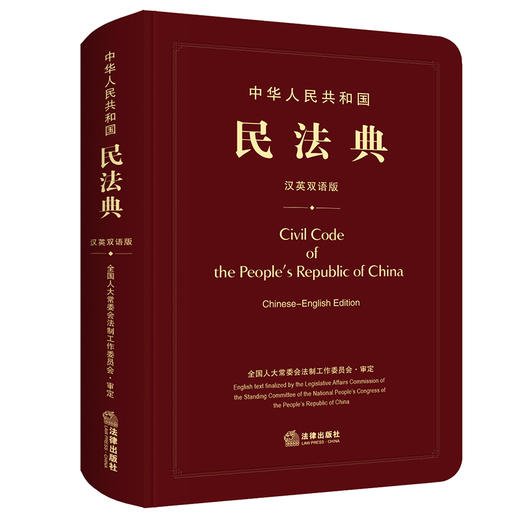
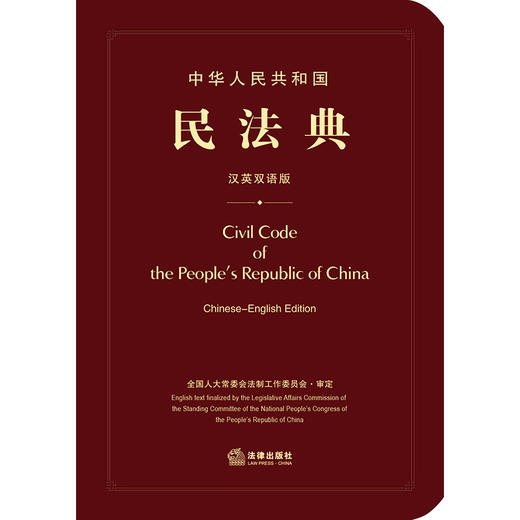
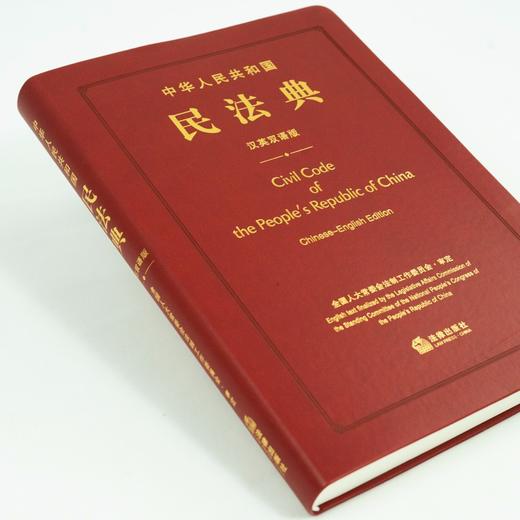
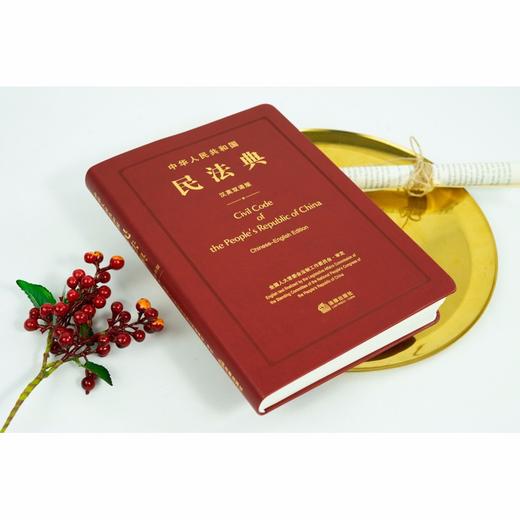
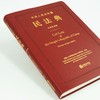
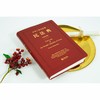
本书是《中华人民共和国民法典》的官方英文正式版本,由全国人*常委会法制工作委员会组建翻译专家组进行翻译和审定。
本书通过传统出版和数字出版两种载体,向世界诠释了新时代的中国民事方法,与世界分享中国法治建设新成果,向世界阐述中国法治方案,展现真实、立体、全面的中国法治形象,为世界贡献了中国法治智慧。
◎《中华人民共和国民法典》中英文朗读音频:
①音频课程和使用方式指引详见封二位置(翻开图书封面,封面背面即可见到)
②本书配套36元音频课优惠码,位置同上,刮开即得。
③按照提示,兑换相应优惠券,支付差额后兑换音频课程。 
《中华人民共和国民法典》(以下简称《民法典》)是新中国成立以来第*部以“法典”命名的法律,是新时代中国特色社会主义法治建设的重大成果,具有里程碑意义。民法典在中国特色社会主义法律体系中具有重要地位,是一部固根本、稳预期、利长远的基础性法律,对推进全面依法治国、加快建设社会主义法治国家、对发展社会主义市场经济、巩固社会主义基本经济制度,对坚持以人民为中心的发展思想、依法维护人民权益、推动我国人权事业发展,对推进国家治理体系和治理能力现代化,都具有重大意义。做好《民法典》的海外宣传介绍,是推进我国法律制度对外宣传和交流、讲好中国立法故事的一项重要举措。更好地将《民法典》介绍给世界,是增进中国和外国国家地区法律体系间交流的重要方式。因此,全国人*常委会和法工委领导高度重视《民法典》的对外宣介和翻译工作。本书是《民法典》的官方英译本,由全国人*常委会法制工作委员会组建翻译专家组进行翻译和审定。本书向世界诠释了新时代的中国民事方法,与世界分享中国法治建设新成果。
全国人*常委会法制工作委员会是我国立法机关的专门委员会,受全国人*常委会委员长会议委托,主要从事立法,修法,废止法律等方面研究工作和常委会安排的其他工作。
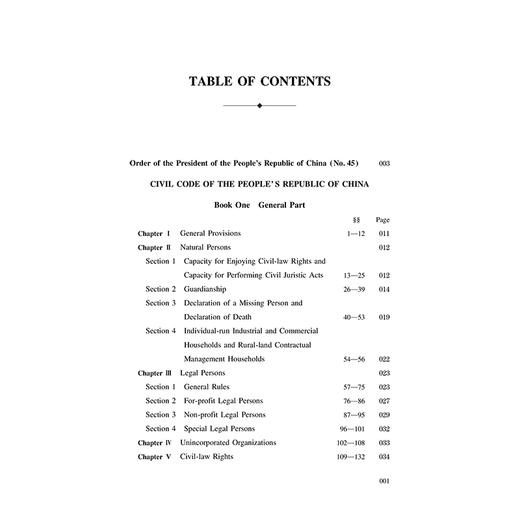
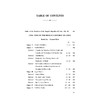
TABLE OF CONTENTS
Order of the President of the Peoples Republic of China (No.45)
CIVIL CODE OF THE PEOPLE’S REPUBLIC OF CHINABook One General Part
sect;sect;Page
Chapter Ⅰ General Provisions 1—12
Chapter Ⅱ Natural Persons
Section 1 Capacity for Enjoying Civillaw Rights and
Capacity for Performing Civil Juristic Acts 13—25
Section 2 Guardianship 26—39
Section 3 Declaration of a Missing Person and
Declaration of Death 40—53
Section 4 Individualrun Industrial and Commercial
Households and Ruralland Contractual
Management Households 54—56
Chapter Ⅲ Legal Persons
Section 1 General Rules 57—75
Section 2 Forprofit Legal Persons 76—86
Section 3 Nonprofit Legal Persons 87—95
Section 4 Special Legal Persons 96—101
Chapter Ⅳ Unincorporated Organizations 102—108
Chapter Ⅴ Civillaw Rights 109—132
Chapter Ⅵ Civil Juristic Acts
Section 1 General Rules 133—136
Section 2 Expression of Intent 137—142
Section 3 Effect of a Civil Juristic Act 143—157
Section 4 A Civil Juristic Act Subject to a Condition
or a Term 158—160
Chapter Ⅶ Agency
Section 1 General Rules 161—164
Section 2 Agency by Agreement 165—172
Section 3 Termination of Agency 173—175
Chapter Ⅷ Civil Liability 176—187
Chapter Ⅸ Limitation of Action 188—199
Chapter Ⅹ Counting of Periods of Time 200—204
Book Two Real Rights
Part One General Provisions
Chapter Ⅰ General Rules 205—208
Chapter Ⅱ Creation,Alteration,Transfer,and
Extinguishment of Real Rights
Section 1 Registration of Immovable Property 209—223
Section 2 Delivery of Movable Property 224—228
Section 3 Other Rules 229—232
Chapter Ⅲ Protection of Real Rights 233—239
Part Two Ownership
Chapter Ⅳ General Rules 240—245
Chapter Ⅴ State Ownership,Collective Ownership,
and Private Ownership 246—270
Chapter Ⅵ Ownership of a Buildings Units 271—287
Chapter Ⅶ Adjacent Relationships 288—296
Chapter Ⅷ Coownership 297—310
Chapter Ⅸ Special Provisions on the Acquisition
of Ownership 311—322
Part Three Rights to Usufruct
Chapter Ⅹ General Rules 323—329
Chapter Ⅺ Rights to Contractual Management of Land 330—343
Chapter Ⅻ Rights to Use Land for Construction Purposes 344—361
Chapter ⅩⅢ Rights to Use House Sites 362—365
Chapter ⅩⅣ Rights of Habitation 366—371
Chapter ⅩⅤ Easements 372—385
Part Four Security Interests
Chapter ⅩⅥ General Rules 386—393
Chapter ⅩⅦ Mortgage
Section 1 General Mortgage 394—419
Section 2 Maximum Mortgage for Floating Claims 420—424
Chapter ⅩⅧ Pledge
Section 1 Pledge in Movable Property 425—439
Section 2 Pledge on a Right 440—446
Chapter ⅩⅨ Lien 447—457
Part Five Possession
Chapter ⅩⅩ Possession 458—462
Book Three Contracts
Part One General Provisions
Chapter Ⅰ General Rules 463—468
Chapter Ⅱ Conclusion of Contracts 469—501
Chapter Ⅲ Effect of Contracts 502—508
Chapter Ⅳ Performance of Contracts 509—534
Chapter Ⅴ Preservation of Contracts 535—542
Chapter Ⅵ Modification and Assignment of Contracts 543—556
Chapter Ⅶ Termination of Rights and Obligations
under a Contract 557—576
Chapter Ⅷ Default Liability 577—594
Part Two Nominate Contracts
Chapter Ⅸ Sales Contracts 595—647
Chapter Ⅹ Contracts for the Supply and Consumption
of Electricity,Water,Gas,or Heat 648—656
Chapter Ⅺ Gift Contracts 657—666
Chapter Ⅻ Loan Contracts 667—680
Chapter ⅩⅢ Suretyship Contracts
Section 1 General Rules 681—690
Section 2 Suretyship Liability 691—702
Chapter ⅩⅣ Lease Contracts 703—734
Chapter ⅩⅤ Contracts for Financing Lease 735—760
Chapter ⅩⅥ Factoring Contracts 761—769
Chapter ⅩⅦ Work Contracts 770—787
Chapter ⅩⅧ Contracts for Construction Project 788—808
Chapter ⅩⅨ Transport Contracts
Section 1 General Rules 809—813
Section 2 Passenger Transport Contracts 814—824
Section 3 Freight Transport Contracts 825—837
Section 4 Multimodal Transport Contracts 838—842
Chapter ⅩⅩ Technology Contracts
Section 1 General Rules 843—850
Section 2 Technology Development Contracts 851—861
Section 3 Technology Transfer Contracts and
Technology Licensing Contracts 862—877
Section 4 Technology Consultation Contracts and
Technology Service Contracts 878—887
Chapter ⅩⅪ Contracts for Custody of Property 888—903
Chapter ⅩⅫ Warehousing Contracts 904—918
Chapter ⅩⅩⅢ Entrustment Contracts 919—936
Chapter ⅩⅪⅤ Contracts for Property Management Service 937—950
Chapter ⅩⅩⅤ Brokerage Contracts 951—960
Chapter ⅩⅩⅥ Intermediary Contracts 961—966
Chapter ⅩⅩⅦ Partnership Contracts 967—978
Part Three Quasicontracts
Chapter ⅩⅩⅧ Negotiorum Gestio 979—984
Chapter ⅩⅩⅨ Unjust Enrichment 985—988
Book Four Personality Rights
Chapter Ⅰ General Rules 989—1001
Chapter Ⅱ Rights to Life,Rights to Corporeal Integrity,
and Rights to Health 1002—1011
Chapter Ⅲ Rights to Name and Rights to Entity Name 1012—1017
Chapter Ⅳ Rights to Likeness 1018—1023
Chapter Ⅴ Rights to Reputation and Rights to Honor 1024—1031
Chapter Ⅵ Rights to Privacy and Protection of Personal
Information 1032—1039
Book Five Marriage and Family
Chapter Ⅰ General Rules 1040—1045
Chapter Ⅱ Entering into Marriage 1046—1054
Chapter Ⅲ Domestic Relations
Section 1 Spousal Relationship 1055—1066
Section 2 Relationship Between Parents and Children,
and Relationship Among Other Close
Relatives 1067—1075
Chapter Ⅳ Divorce 1076—1092
Chapter Ⅴ Adoption
Section 1 Establishment of an Adoptive Relationship 1093—1110
Section 2 Effect of Adoption 1111—1113
Section 3 Dissolution of an Adoptive Relationship 1114—1118
Book Six Succession
Chapter Ⅰ General Rules 1119—1125
Chapter Ⅱ Intestate Succession 1126—1132
Chapter Ⅲ Testate Succession and Testamentary Gift 1133—1144
Chapter Ⅳ Disposition of Estates 1145—1163
Book Seven Tort Liability
Chapter Ⅰ General Rules 1164—1178
Chapter Ⅱ Damages 1179—1187
Chapter Ⅲ Special Provisions on Assumption of
Liability 1188—1201
Chapter Ⅳ Product Liability 1202—1207
Chapter Ⅴ Liability for Motor Vehicle Traffic
Accidents 1208—1217
Chapter Ⅵ Liability for Medical Malpractice 1218—1228
Chapter Ⅶ Liability for Environmental Pollution and
Ecological Damage 1229—1235
Chapter Ⅷ Liability for Ultrahazardous Activities 1236—1244
Chapter Ⅸ Liability for Damage Caused by
Domesticated Animals 1245—1251
Chapter Ⅹ Liability for Damage Caused by Buildings
and Objects 1252—1258
Supplementary Provisions 1259—1260
目 录
中华人民共和国主席令(第四十五号)
中华人民共和国民法典第一编 总 则
条目页码
第一章 基 本 规 定 1—12
第二章 自 然 人
第一节 民事权利能力和民事行为能力 13—25
第二节 监 护 26—39
第三节 宣告失踪和宣告死亡 40—53
第四节 个体工商户和农村承包经营户 54—56
第三章 法 人
第一节 一 般 规 定 57—75
第二节 营 利 法 人 76—86
第三节 非营利法人 87—95
第四节 特 别 法 人 96—101
第四章 非法人组织 102—108
第五章 民 事 权 利 109—132
第六章 民事法律行为
第一节 一 般 规 定 133—136
第二节 意 思 表 示 137—142
第三节 民事法律行为的效力 143—157
第四节 民事法律行为的附条件和附期限 158—160
第七章 代 理
第一节 一 般 规 定 161—164
第二节 委 托 代 理 165—172
第三节 代 理 终 止 173—175
第八章 民 事 责 任 176—187
第九章 诉 讼 时 效 188—199
第十章 期 间 计 算 200—204
……前言/序言Preface
Civil Code of the Peoples Republic of China is a milestone legislation as it is the first law promulgated with the name of Code since the establishment of the Peoples Republic of China,and it is an important achievement of developing the socialist rule of law with Chinese characteristics for a new era.By improving the lawbased governance,it will help create an enabling environment for business and further unleash Chinas economic potential.In particular,with the highlight of a peoplecentered philosophy,the Code will play a pivotal role in protecting peoples rights and interests,developing Chinas human rights cause as well as modernizing the countrys governance capacity.
Letting the rest of the world know better about the Civil Code is a significant way to facilitate the communication of Chinas legal system with foreign countries and regions.Thus,the Standing Committee of the National Peoples Congress and its Legislative Affairs Commission (LAC) attach great importance to the translation of the Code to make it reach the rest of the world.
Acknowledgments.In the translation process,we were confronted with many challenges due to the difference of the two languages and some concepts that only exist in Chinas legal system.It is difficult,therefore,to complete the translation within a limited time period.It would be impossible to find a way out without the efforts by the Expert Team for the Translation of the Civil Code under LAC,including Gao Lingyun,Chen Weizuo,Jiang Junlu,Tong Xiaohua,Li Mingqian,Ma Jing,Zhang Falian,Xia Jihong,Da Ji,Mao Yu and Chengzhou Ludan.We are grateful for their contributions in the translation,especially for their efforts in offering constructive suggestions on legal terms and making the translation more idiomatic.We also wish to express our sincere thanks to all the persons and organizations that contributed to the publication of this book.
In spite of the great care taken by the translators and editors to produce an accurate translation,shortcomings and oversights are hardly avoidable,and criticism from readers will be appreciated.
Special Notes to Readers.This translation is for reference only.In case of discrepancy between the English translation and the original Chinese text,the Chinese edition of the Code shall prevail.Besides,to make the text concise,we decided to use the thirdperson singular male pronouns to include the corresponding female and neuter pronouns except where the context dearly requires otherwise.
Legislative Affairs Commission of the Standing Committee ofthe National Peoples CongressMarch 2021
序 言
《中华人民共和国民法典》(以下简称《民法典》)是中华人民共和国成立以来第*部以“法典”命名的法律,是新时代中国特色社会主义法治建设的重大成果,具有里程碑意义。《民法典》在中国特色社会主义法律体系中具有重要地位,是一部固根本、稳预期、利长远的基础性法律。《民法典》的颁布与实施对全面推进依法治国、加快建设社会主义法治国家,对发展社会主义市场经济、巩固社会主义基本经济制度具有重大意义;在坚持以人民为中心的发展思想、依法维护人民权益、推动我国人权事业发展以及推进国家治理体系和治理能力现代化方面发挥举足轻重的作用。
做好《民法典》的海外宣传介绍工作,是推进我国法律制度对外宣传和交流、讲好中国立法故事的一项重要举措。更好地将《民法典》介绍给世界,是增进中国同世界上其他国家和地区法律体系间交流的重要方式。因此,全国人*常委会及其法制工作委员会领导高度重视《民法典》的翻译和对外宣介工作。
致谢:由于汉英两种语言存在差异,中国法律体系中存在特有的法律概念,我们在翻译《民法典》时面临诸多挑战,在有限的时间内完成《民法典》的翻译工作是一项艰巨的任务。全国人*常委会法制工作委员会成立了《民法典》英文翻译工作组,成员包括高凌云、陈卫佐、姜俊禄、童孝华、李明倩、马静、张法连、夏继红、达吉、毛雨和程周鲁丹。在各位工作组成员的努力下,《民法典》的翻译工作才得以圆满完成。我们感谢各位工作组成员在《民法典》翻译过程中所作的贡献,特别是他们为《民法典》中法律术语的翻译提供了很多建设性建议,使《民法典》译文更加地道。我们也要向出版本书的出版社和编辑表示衷心的感谢。
尽管本书的译者和编辑尽其所能,审慎翻译,但错误和疏漏在所难免,敬请广大读者批评指正。
读者须知:本译文仅供参考。当《民法典》英文译文与中文原文表述不一致时,以《民法典》中文版为准。此外,除非上下文另有要求,译文中第三人称单数代词均使用“他”,代指“她”和“它”,以使译文简明扼要。
全国人民代表大会常务委员会法制工作委员会2021年3月……
- 新华一城书集 (微信公众号认证)
- 上海新华书店官方微信书店
- 扫描二维码,访问我们的微信店铺
- 随时随地的购物、客服咨询、查询订单和物流...

![牛津高阶英汉双解词典(第10版)商务印书馆英语字典词典英语双解大词典英语学习常备工具书([英]A.S.霍恩比 编)](https://img01.yzcdn.cn/upload_files/2023/06/09/FnL1_OOPjdSRVy1ykBEVNdmT2zwz.jpg?imageView2/2/w/260/h/260/q/75/format/jpg)