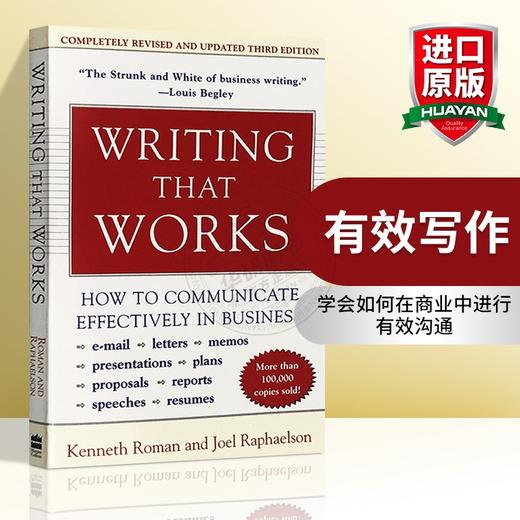
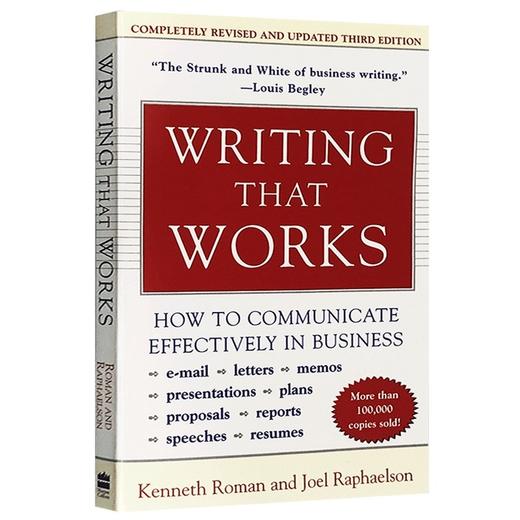
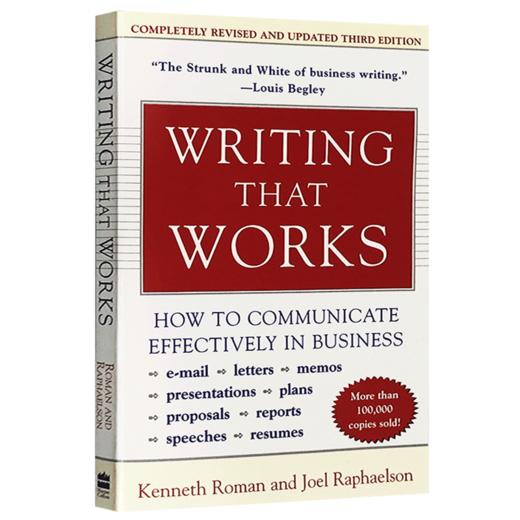
Collins有效写作 英文原版 Writing That Works 如何在商业中进行有效沟通 英文版商务写作指南工具书 Kenneth Roman 进口英语书籍
| 运费: | ¥ 0.00-999.00 |
| 库存: | 7 件 |
商品详情
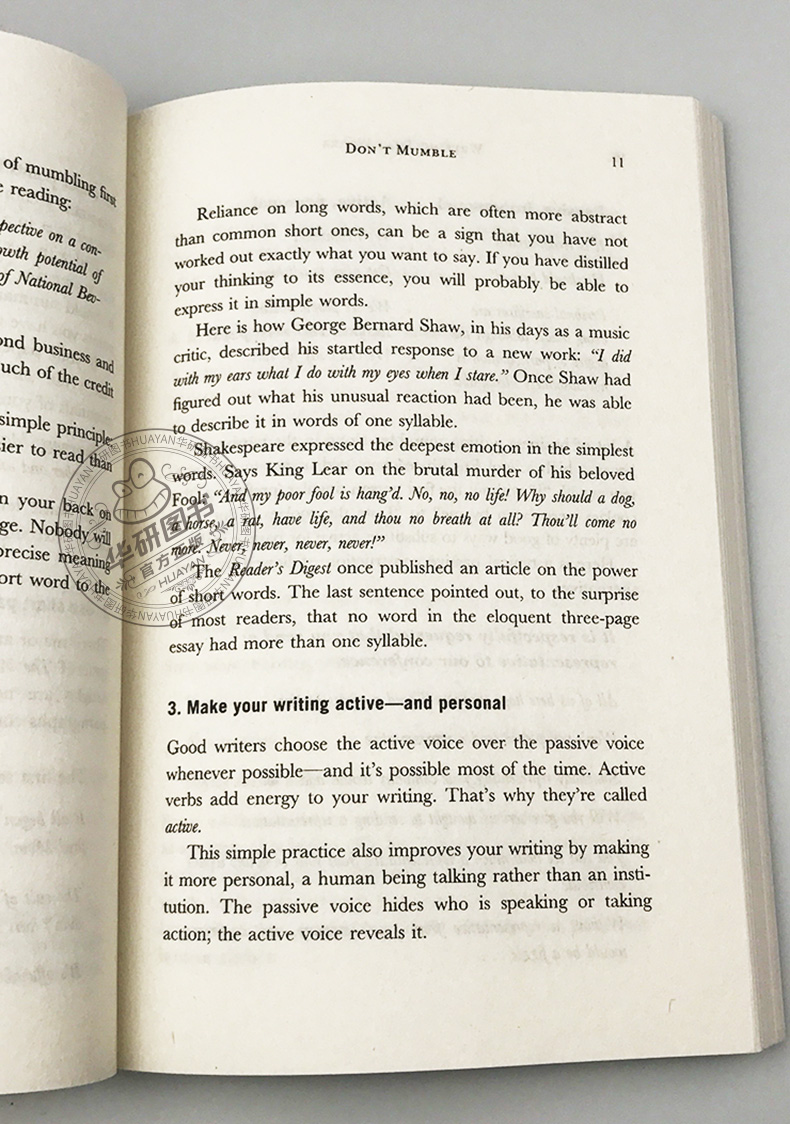
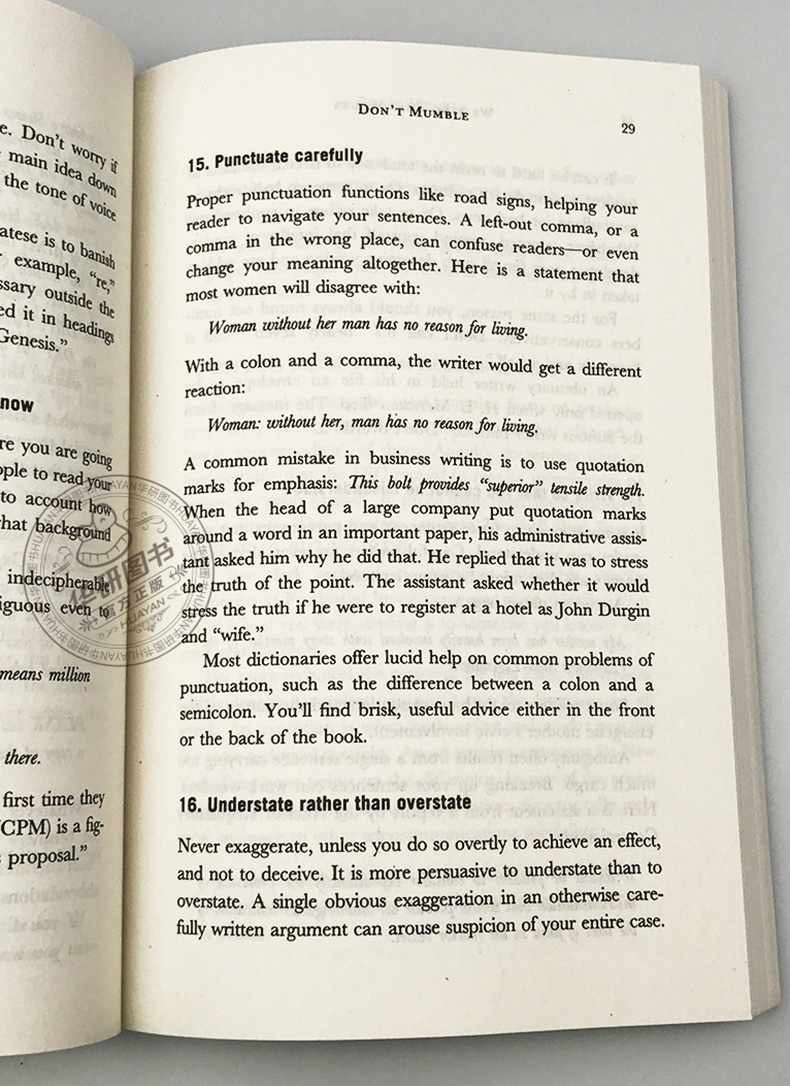
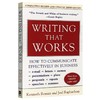
 书名:Writing That Works: How to Communicate Effectively in Business有效写作:如何在商业中进行有效沟通
作者:Kenneth Roman;Joel Raphaelson
出版社名称:Collins Reference
出版时间:2000
语种:英文
ISBN:9780060956431
商品尺寸:13.5 x 1.2 x 20.3 cm
包装:平装
页数:194 在商务场合,无论是刚入门的员工,还是管理层人员,都需要通过书面写作进行沟通交流。如何使用一定的语言技巧、正确得体地传达自己所要表述的信息,成为许多商务人士的重要课题。Writing That Works《有效写作》通过把简单易懂的语言与实例相结合,教会读者如何在备忘录、信件、报告、演讲、简历、电子邮件等商务文体上进行有效写作,从而达成商业上的有效沟通。
The classic guide that helps you communicate your thoughts clearly, concisely, and effectively. Essential for every professional, from entry level to the executive suite, Writing that Works includes advice on all aspects of written communication—including business memos, letters, reports, speeches and resumes, and e-mail—and offers insights into political correctness and tips for using non-biased language that won’t compromise your message. Concise and easy-to-use, Writing that Works features an accessible, at-a-glance style, full of bulleted “tips” and specific examples of good vs. bad writing.
 Writing That Works《有效写作》通过举实例和提出实用的建议,帮助读者提升写作水平:
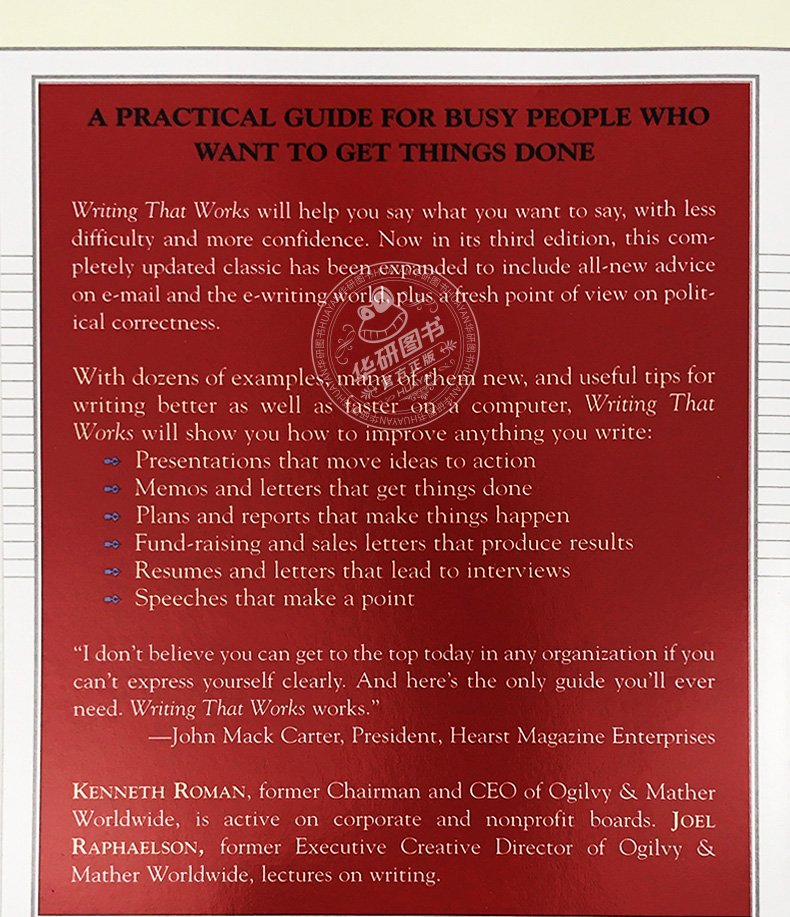
如何写好电子邮件、备忘录和信件; 如何在建议、提案、展示中突出自己的想法; 如何写好计划和报告以达成目标; 如何在资金筹集和推销的信件中打动对方; 如何通过简历和信件为自己赢得面试机会; 如何做出有意义的演讲…… Writing That Works will help you say what you want to say, with less difficulty and more confidence. Now in its third edition, this completely updated classic has been expanded to include all new advice on e-mail and the e-writing world, plus a fresh point of view on political correctness. With dozens of examples, many of them new, and useful tips for writing as well as faster on a computer, Writing That Works will show you how to improve anything you write: ·Presentations that move ideas and action ·Memos and letters that get things done ·Plans and reports that make things happen ·Fund-raising and sales letters that produce results ·Resumes and letters that lead to interviews ·Speeches that make a point
 Kenneth Roman(born September 6, 1930 in Boston, Massachusetts) is a former CEO of Ogilvy & Mather Worldwide, the advertising agency founded by David Ogilvy. He joined the firm in 1963 and served as Chairman from 1985 to 1989. After 26 years with the firm, he joined American Express in a senior communications role before becoming a consultant, board director and author. He graduated from Dartmouth College in 1952, where he was Editor-in-Chief of the undergraduate daily newspaper. He is the co-author of two successful business books—How to Advertiseand Writing That Works. He lives in New York City with his wife.
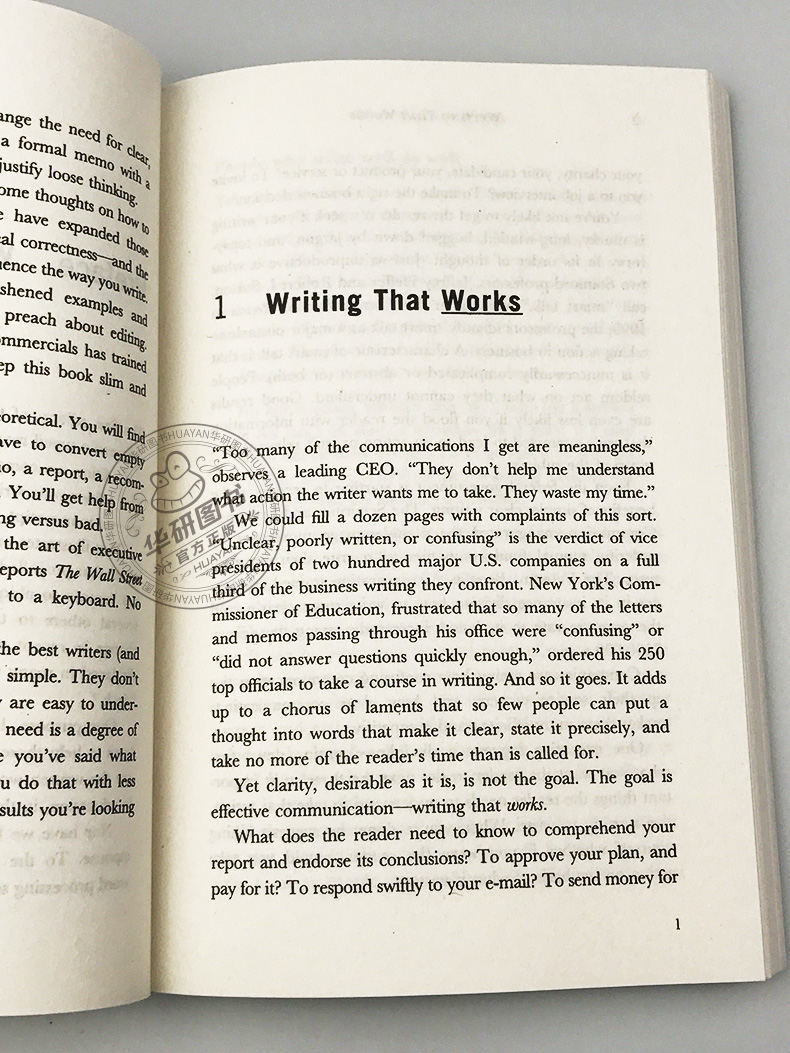
  “Too many of the communications I get are meaningless.” obscrvrs a leading CEO. “They don’t help me understand what action the writer wants me to take. They waste my time.” We could fill a dozen pages with complain of this sort. “Unclear, poorly written, or confusing” is the verdict of vice presidents of two hundred major U.S. companies on a full third of the business writing they confront. New York’s Commissioner of Education, frustrated that so many of the letters and memos passing through his office were “confusing” or “did not answer questions quickly enough,” ordered his 250 top officials to take a course in writing. And so it goes. It adds up to a chorus of laments that so few people can put a though into words that make it clear, state it precisely, and take no more of the reader’s time than is called for. Yet clarity, desirable as it is, is not the goal. The goal is effective communication writing that iwks. What does the reader need to know to comprehend your report and endorse its conclusions? To approve your plan, and pay for it? To respond switily to your e-mail? To send money for your charity,your candidate, your product or service? To invite you to a job interview? To make the right business decision? You’re not likely to get the results you seek if your writing is murky, long-winded, bogged down by jargon, and topsy-turvy in its order of thought. Just as unproductive is what two Stanford professors, Jeffrey Pfeffer and Robert I. Sutton, call “smart talk.’ Writing in the Harvard Business Revere in 1999. the professors identify smart talk as a major obstacle to taking action in business. A characteristic of smart talk is that it is unnecessarily conplicated or abstract (or both). People seldom act on what they cannot understand. Good results are even less likely if you flood the reader with information that isn’t organized to lead to an action or isn’t relevant to a grasp of the subject.
- 华研外语 (微信公众号认证)
- 本店是“华研外语”品牌商自营店,全国所有“华研外语”、“华研教育”品牌图书都是我司出版发行的,本店为华研官方源头出货,所有图书均为正规正版,拥有实惠与正版的保障!!!
- 扫描二维码,访问我们的微信店铺
- 随时随地的购物、客服咨询、查询订单和物流...