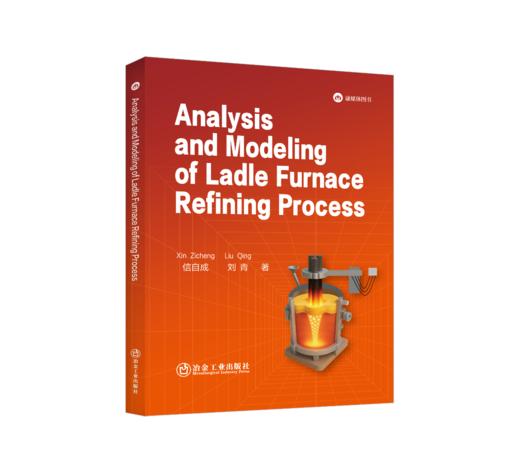
Analysis and Modeling of Ladle Furnace Refining Process
| 运费: | ¥ 10.00-25.00 |
| 库存: | 30 件 |
商品详情
书名:Analysis and Modeling of Ladle Furnace Refining Process
ISBN:978-7-5240-0184-3
出版社:冶金工业出版社有限公司
定价:88
作者:信自成,刘青
出版时间:2025-07-23
内容简介
随着工业自动化和智能化的发展,智能制造已成为钢铁行业转型升级的重要内容。本书以国内某钢厂150 t LF钢包精炼炉为研究对象,采用Python、C#计算机编程语言和SPSS、Minitab统计分析软件等手段,运用冶金机理与机器学习融合的定制化建模策略,从钢水升温、脱硫、合金化和底吹氩搅拌四个方面对LF精炼模型构建进行介绍。本书构建了LF精炼温度预测模型、脱硫模型、合金化模型和钢包底吹氩搅拌模型,两者的融合有效提高了模型的计算精度,对LF精炼智能化发展具有重要意义。
编辑推荐
本书采用冶金机理和机器学习相融合的方法,构建了LF精炼温度预测模型、脱硫模型、合金化模型和钢包底吹氩搅拌模型,两者的融合有效提高了模型的计算精度,对LF精炼智能化发展具有重要意义,具有较高的出版价值。
目录
1Overview of Research on the LF Refining Process
1.1Overview of LF Refining 6
1.1.1Development of LF refining technology
1.1.2Metallurgical functions of LF
1.1.3Operational workflow of LF refining process
1.2Machine learning algorithms and their application in the metallurgical industry
1.2.1Concept and development of machine learning
1.2.2Machine learning algorithm classification
1.2.3Application of machine learning in metallurgical industry
1.3Research on LF Refining Technology
1.3.1Prediction model of molten steel temperature
1.3.2Slag-making model
1.3.3Alloying model of molten steel
1.3.4Argon blowing model
References
2Research on Prediction Model of Molten Steel Temperature
2.1Analysis of LF Refining Process
2.1.1Description of LF Refining Process
2.1.2Analysis Conservation of Energy
2.1.3Analysis of Main Factors
2.2Establishment of prediction model for molten steel temperature
2.2.1Modelling with ML Models
2.2.2Data Processing Methods
2.2.3Optimization Algorithms
2.2.4 MLAlgorithms
2.2.5SHAP
2.2.6Model Evaluation
2.3Evaluation of prediction model for molten steel temperature
2.3.1High Dimensional Data Visualization and Processing
2.3.2Hyperparameter Optimization of XGBoost and LGBM
2.3.3Outcomes of XGBoost, LGBM, MLP, KNN, and MLR
2.4 ModelExplainability Analysis
2.4.1Tree structure visualization
2.4.2Global Explanation
2.4.3Local Explanation
2.5Conclusion
References
3.Research on slagmaking desulfurization model
3.1Desulphurization fundamental
3.1.1Thermodynamic fundamentals
3.1.2Kinetic fundamentals
3.2 CsCalculation Using RELM model
3.2.1Analyzing of database and data for Cs Calculation
3.2.2Modelling in RELM
3.2.3Model Evaluation
3.3Evaluation of Cs prediction models
3.3.1Effect of MgO and Activation Function on Cs
3.3.2Comparison of the RELM Model with Other Models
3.3Establishment of slag making model
3.4.1Analysis of factors for LS
3.4.2Refining process and modelling hypothesis
3.4.3Modeling based on metallurgical mechanism
3.4.4Mathematical modeling based on historical production data
3.5Evaluation of slag making model
3.5.1Testing of slag making model
3.5.2Software development of slag making model
3.5.3Plant trial
3.6Conclusions
References
4.Research on alloying model
4.1Analysis of the LF refining process
4.1.1Description of the LF refining process
4.1.2Data collection and normalization
4.2Predicting alloying element yield using the PCA–DNN model
4.2.1Theories and methods
4.2.2Modeling in the PCA–DNN model
4.2.3Model evaluation
4.3Evaluation of alloying element yield prediction model
4.3.1Correlation analysis
4.3.2 PCA
4.3.3Structure optimization of the PCA–DNN model
4.3.4Comparison of the PCA–DNN model with other models
4.4Calculation model for amount of alloy addition
4.4.1Alloy addition principle
4.4.2Evaluation of calculation model of alloy addition
4.5Conclusions
References
5.Research on argon bottom blowing model
5.1Experimental Principles and Methods
5.1.1Experimental Principles
5.1.2Experimental Method
5.2Experimental Schemes
5.2.1Single Factor Analysis Experiment Scheme of Argon Bottom Blowing of LF
5.2.2Experimental Scheme and Results of Argon Bottom Blowing of LF Based on RSM
5.3Experimental Results of Single Factor Analysis
5.3.1Effect of Porous Plug Radial Position on MT
5.3.2Effect of Porous Plug Separation Angle on MT
5.3.3Effects of Different Factors on MT and SEA
5.4Experimental Results of Argon Bottom Blowing Based on RSM
5.4.1Establishment of Prediction Models
5.4.2Analysis of Variance and Model Evaluation
5.4.3Visual Analysis of Response Surface
5.4.4Multiobjective Optimization and Experimental Verification
5.4.5Analysis of slag entrainment
5.5Conclusions
References
6Development of LF Refining model set and Prospects for Intelligent
6.1Architecture of LF refining model set
6.2Establishment of model set
6.3System structure design
6.4Technical framework of future for LF intelligent refining
References
- 冶金工业出版社图书旗舰店
- 冶金工业出版社,是国内历史最悠久的专业科技出版社之一。主要承担学术专著、技术著作、技术手册、专业辞书、大中专教材、职工培训教材、科普读物、人文社科、文集、史志、年鉴等图书的出版。
- 扫描二维码,访问我们的微信店铺