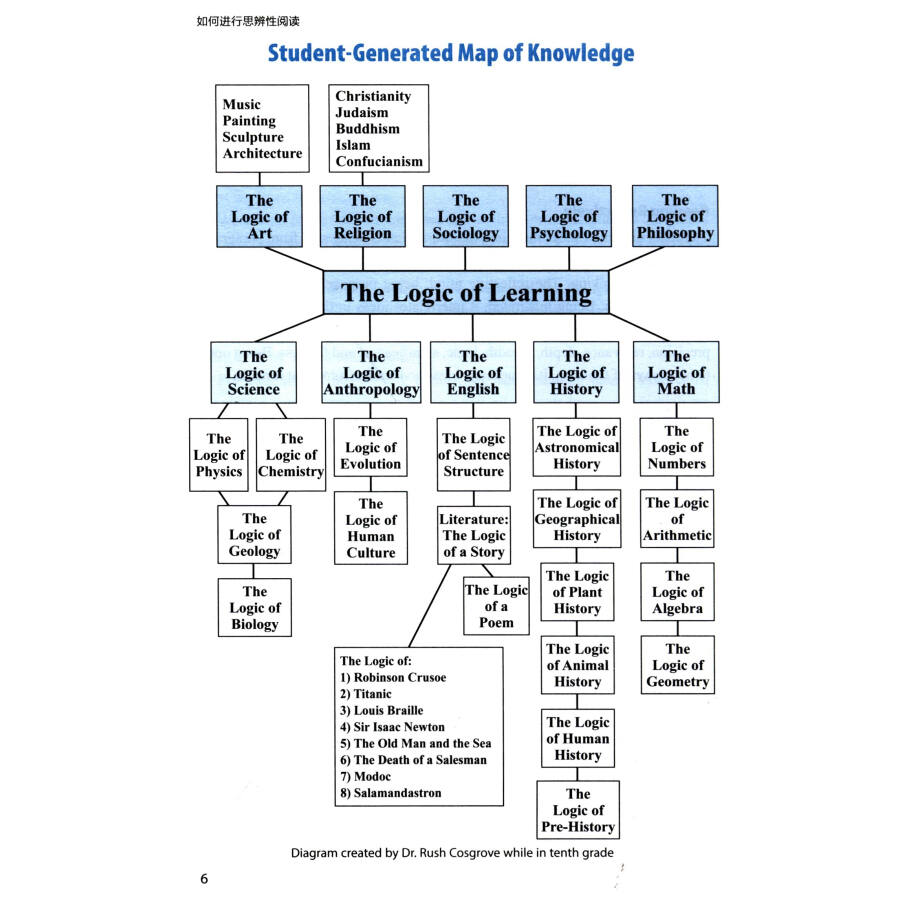
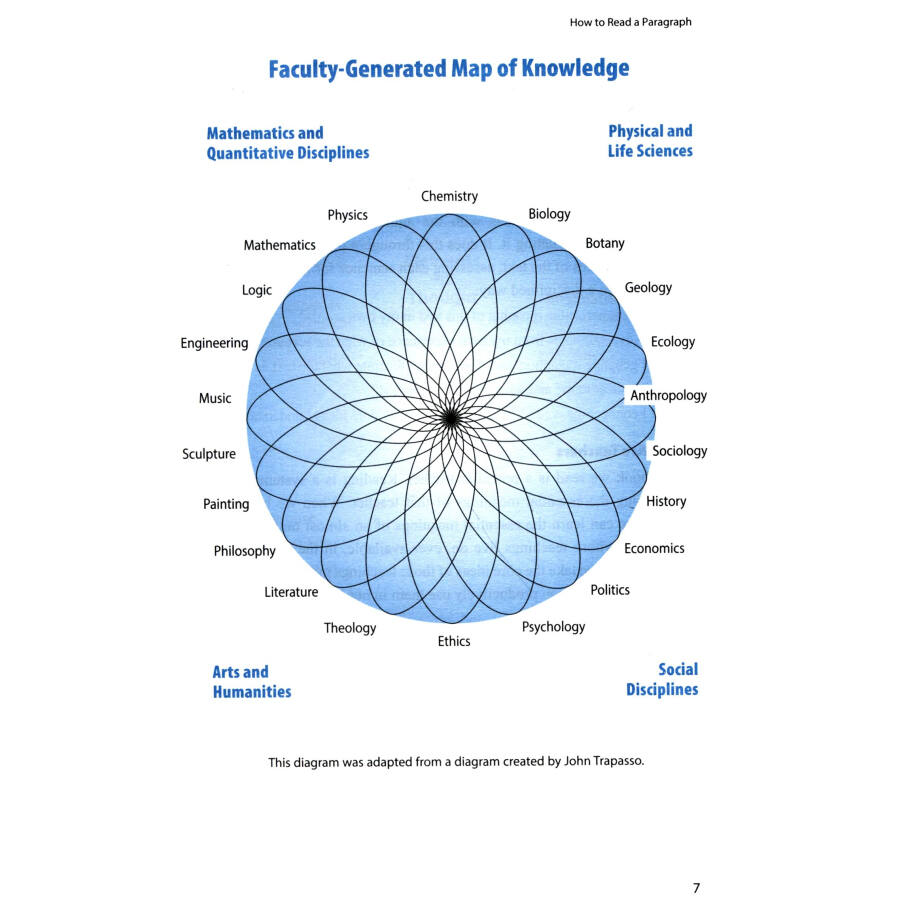
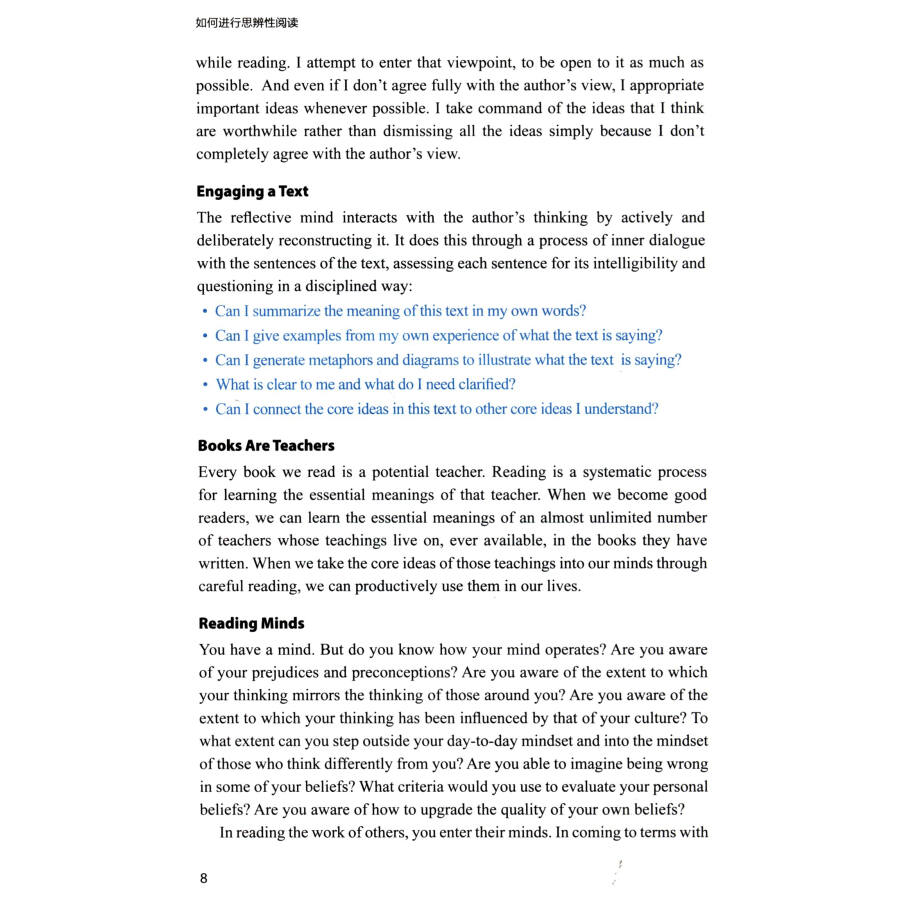
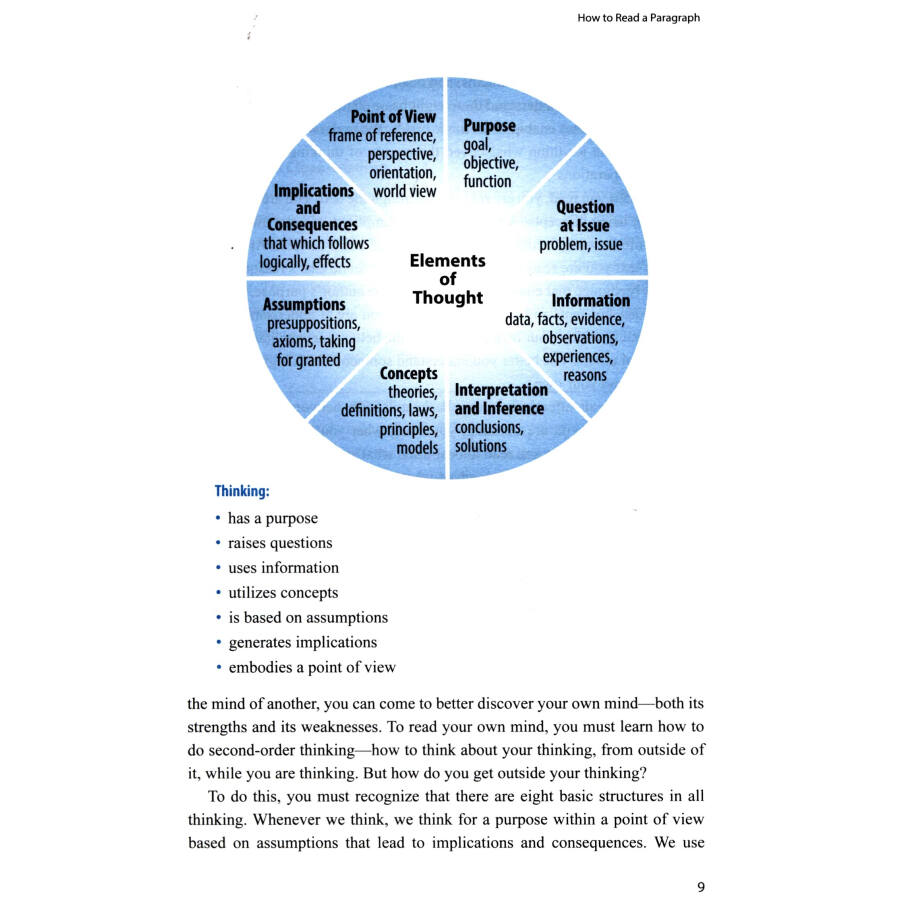
The Theory The Premise of This Guide Reading for a Purpose. Considering the Author's Purpose Developing a "Map" of Knowledge Avoiding Impressionistic Reading and Writing Reading Reflectively Thinking About Reading While Reading Student-Generated Map of Knowledge Faculty-Generated Map of Knowledge Engaging a Text Books Are Teachers Reading Minds The Work of Reading Five Levels of Close Reading Structural Reading How to Read a Sentence Howto Read a Paragraph How to Read a Textbook How to Read a Newspaper How to Read an Editorial Taking Ownership of What You Read: Mark It Up Reading to Learn Reading to Understand Systems of Thought Reading Within Disciplines The Art of Close Reading
The Practice: Exercises in Close Reading The Declaration of Independence Civil Disobedience The Nineteenth-Century American The Art of Loving Corn-Pone Opinions The Revolt of the Masses The Idea of Education
Appendices Appendix A: Sample Paraphrases Appendix B: Analyzing the Logic of an Artide, Essay, or Chapter Appendix C: Analyzing the Logic of a Textbook Appendix D: Marking Up a Text to Take Ownership of It: Example One Marking Up a Text to Take Ownership of It: Example Two Appendix E:The Logic of Ecology References