


商品详情
作者简介
李晖,外交学院英语系副教授。毕业于清华大学外文系,英语语言文学博士。
内容简介
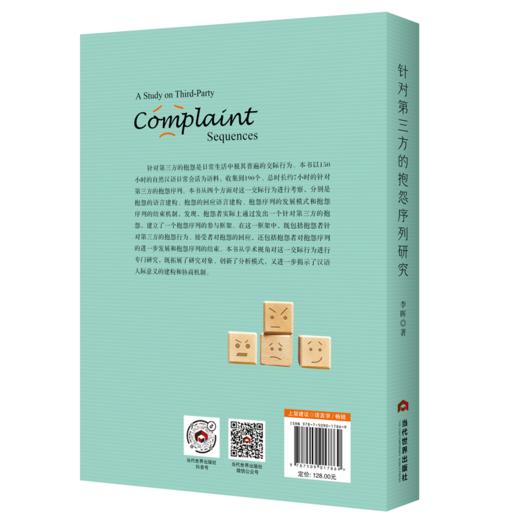
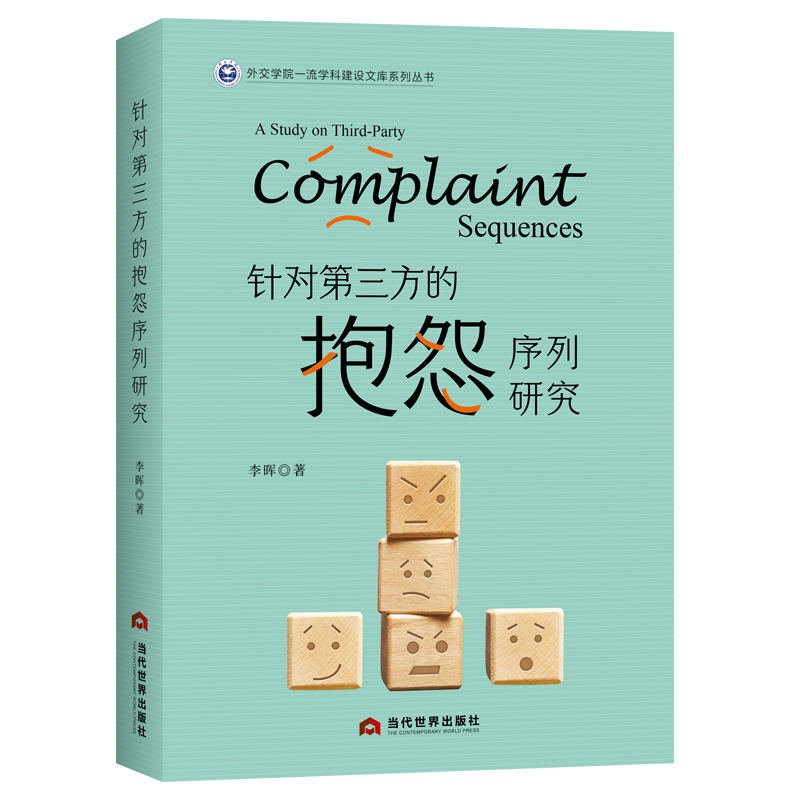
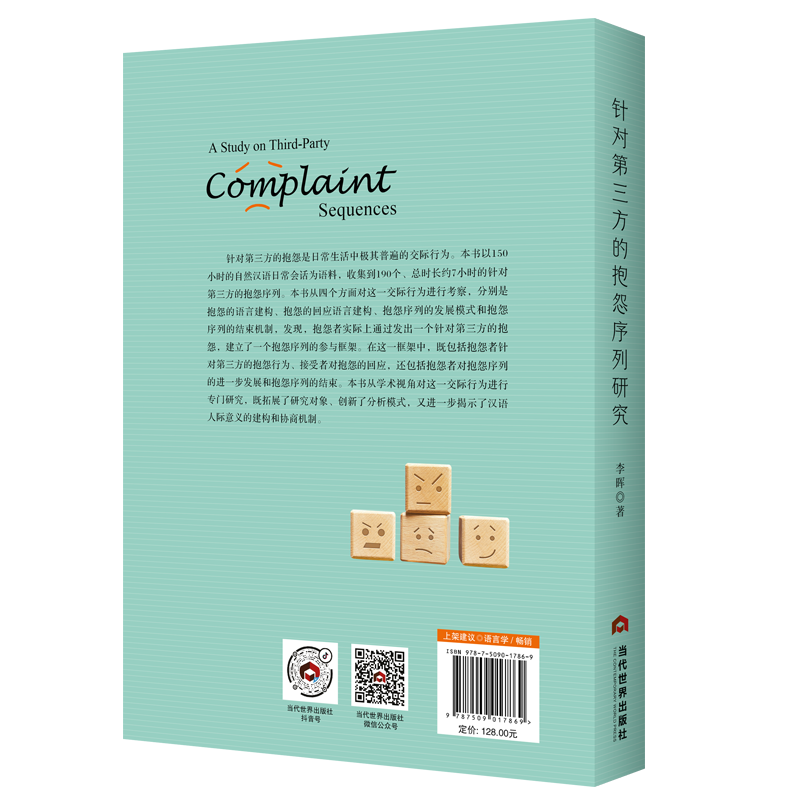
针对第三方的抱怨是日常生活中极其普遍的交际行为。本书以150小时的自然汉语日常会话为语料,收集到190个、总时长约7小时的针对第三方的抱怨序列。本书从四个方面对这一交际行为进行考察,发现,抱怨者实际上通过发出一个针对第三方的抱怨,建立了一个抱怨序列的参与框架。本书从学术视角对这一交际行为进行专门研究,既拓展了研究对象、创新了分析模式,又进一步揭示了汉语人际意义的建构和协商机制。
【书摘】
前言
针对第三方的抱怨序列指的是由说话人针对听话人之外的人、事物或情形的抱怨引起的交际序列。它包括抱怨者针对第三方的抱怨行为、接受者对抱怨的回应、抱怨者对抱怨序列的进一步发展和抱怨序列的结束。针对第三方的抱怨是日常生活中极其普遍的交际行为。但是,到目前为止,学界对这一交际行为尚缺乏深入研究。为进一步拓展和完善针对第三方的抱怨序列的研究,本书从四个方面对这一交际行为进行了考察:针对第三方的抱怨的语言建构;针对第三方的抱怨的回应语言建构;针对第三方的抱怨序列的序列发展模式;针对第三方的抱怨序列的结束机制。
本书以150小时的自然汉语日常会话为语料,共收集到190个针对第三方的抱怨序列,总时长约7小时。我们以会话分析理论为理论框架,结合了功能语篇分析中关于人际意义的理论,从抱怨者和接受者的互动入手,从参与和立场两个层面对汉语中针对第三方的抱怨序列进行了分析。
我们发现,抱怨者通过发出一个针对第三方的抱怨建立一个抱怨序列的参与框架。针对第三方的抱怨在结构上可以分为三个阶段:导言、事件和解释。这三个阶段的不同建构构成了汉语中针对第三方的抱怨的两个变体:抱怨对象导向型抱怨和抱怨者导向型抱怨。前者强调对抱怨对象的谴责,后者强调抱怨者自身的负面情绪。针对第三方抱怨的回应可以分为优先型和非优先型两种。优先型回应赞同抱怨者的立场,非优先型回应不赞同或回避抱怨者的立场。在接受者的回应后,针对第三方的抱怨序列主要以拓展和协商两种模式继续发展。拓展发生在优先型回应之后,通过拓展抱怨的部分内容和发出新的抱怨来完成。协商发生在非优先型回应之后,通过修改或重新叙述的方式再次说服接受者赞同自己的立场。抱怨者发起的序列结束话轮是优先行为,因此抱怨者可以单方面结束序列。接受者发起的结束话轮是非优先的,往往需要抱怨者的合作才可以结束序列。
本书的研究意义主要在于三个方面。第一,我们拓展了针对第三方的抱怨的研究对象,将回应后抱怨序列的发展和机制纳入研究范围,对针对第三方的抱怨序列作了更全面的探讨。第二,本书建立了以互动为基础的分析模式,摆脱了以往对抱怨话语和抱怨回应孤立考察的研究模式。第三,本书对汉语中针对第三方的抱怨序列的研究,有助于揭示汉语人际意义的建构和协商机制。
【目录】
Contents
Foreword
Transcription Conventions 001
Chapter 1 Introduction 001
1.1 Preamble 001
1.2 Rationale and significance 010
1.3 Objectives and research questions 015
1.4 Data and method 016
1.5 Structure of the dissertation 018
Chapter 2 Literature Review 020
2.1 Psychological studies on complaining 020
2.2 Sociological studies on complaining 029
2.3 Pragmatic studies on complaining 033
2.4 Ethnographic studies on TPC sequences 042
2.5 CA studies on TPC sequences 045
2.6 Summary and discussion 070
Chapter 3 Theoretical Framework 073
3.1 Basic assumptions of CA 073
3.2 Towards an interaction-based analytical model 079
Chapter 4 Constructing TPCs 085
4.1 Constructing orientations 088
4.2 Constructing incidents 102
4.3 Constructing interpretations 128
4.4 Summary 136
Chapter 5 Variations of TPCs 139
5.1 Towards an interaction-based typology 139
5.2 Different designs of orientation 144
5.3 Different constructions of incident 148
5.4 Different constructions of interpretation 169
5.5 Discussion: complainee-oriented TPCs as more face-threatening actions 183
5.6 Summary 189
Chapter 6 Responding to TPCs 192
6.1 Preferred responses to TPCs 193
6.2 Dispreferred responses to TPCs 216
6.3 Summary 236
Chapter 7 Expanding TPC Sequences
7.1 Sequential development following affiliative responses 239
7.2 Sequential development following disaffiliative responses 257
7.3 Sequential development following disattending responses 262
7.4 Discussion: preference organization and sequence expansion 272
7.5 Summary 275
Chapter 8 Closing TPC Sequences 277
8.1 Complainant-initiated closings 278
8.2 Recipient-initiated closings 309
8.3 Discussion: complainant-initiated closings as preferred action 342
8.4 Summary 345
Chapter 9 Conclusion 348
9.1 Summary of the major findings 348
9.2 Implications 353
9.3 Limitations and suggestions for further research 356
References 358
- 当代世界出版社
- 扫描二维码,访问我们的微信店铺