


商品详情
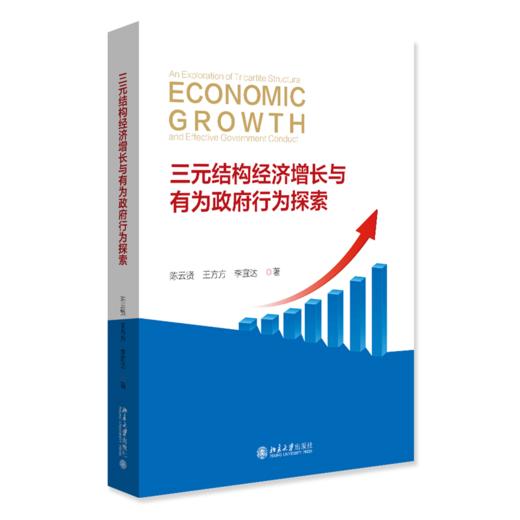
书名:三元结构经济增长与有为政府行为探索
定价:168.0
ISBN:9787301373095
作者:陈云贤,王方方,李宜达 著
版次:1
出版时间:2026-04
内容提要:
作者简介:
陈云贤 著。陈云贤,北京大学经济学博士,高级经济师,享受国务院特殊津贴,中山大学国际金融学院名誉院长,博士生导师。著有《国家金融学》《中观经济学》等经济学、金融学中英文著作23部。在《经济研究》《经济学家》等杂志发表学术论文百余篇。
王方方 著。王方方,教授,博士生导师。广东财经大学数字经济学院院长、中观经济学研究中心执行主任,广东省哲学社科重点实验室执行主任。主要研究数字经济、区域经济与产业经济,发表相关领域学术论文近五十篇。主持国家社会科学基金项目两项,省部级项目四项,出版专著四部。曾获第三届全国素质教育教研成果一等奖、中国产业研究青年学者百强。长期为政府和企事业单位提供政策咨询服务,数字经济和绿色经济相关决策咨询报告连续被中央有关部门采纳和省委主要领导批示。
李宜达 著。李宜达,厦门大学区域经济学博士,在《政治经济学季刊》等学术刊物上发表经济学研究论文二十余篇,出版著作《政府与市场关系前瞻:中观经济学的视角》,曾获全国财经类学生学术竞赛最高奖“中国平安励志计划论文奖”一等奖(独立作者)。研究领域为中观经济学、政府与市场经济学、开放宏观经济学。
目录:
Introduction Tripartite Structural Economic Growth / 002
I. Resource Scarcity Theory and the Dual Structure of Traditional Economics / 002
II. Connecting the Macro and Micro: The Operative Logic of
Mezzoeconomics / 006
III. New Ternary Theoretical Framework of “Macro, Mezzo and Micro”
and the Tripartite Structural Economic Growth in Countries
Around the World / 016
Chapter 1 The Government that Can Formulate Policies Related to Regional “Three
Types of Resources” / 024
Section 1 What Would Adam Smith’s Third Book Have Been About? / 024
I. Adam Smith’s First Book The Theory of Moral Sentiments / 024
II. Adam Smith’s Second Book The Wealth of Nations / 026
III. Adam Smith’s Unpublished Third Book / 026
IV. Enterprises as Microeconomic Market Entities / 028
Section 2 Definition of Regional Three Types of Resources / 030
I. Operative Resources / 030
II. Non-Operative Resources / 032
III. Quasi-Operative Resources / 033
Section 3 Resource Generation Theory: A General Mathematical Model / 034
I. The Economic Connotation of “Resource Generation” / 034
II. Influencing Factors of “Resource Generation” / 038
Section 4 Government as the Primary Investors in the Field of “Resource
Generation” / 046
Chapter 2 The Government that Can Define the Regulatory Boundaries of
Regional “Three Types of Resources” / 056
Section 1 Historical Research on Adam Smith’s Economic Thought / 056
Section 2 Regional Governments and the “Invisible Hand” of the Market Economy / 060
导言:三元结构经济增长 / 003
一、资源稀缺论与传统经济学的二元结构 / 003
二、宏观与微观之衔接:中观经济的运行逻辑 / 007
三、“宏观—中观—微观”三元新理论框架与世界各国三元结构经济增长 / 017
第一章 能够制定区域“三类资源”相关政策的政府 / 025
第一节 亚当·斯密第三本书的内容会是什么? / 025
一、亚当·斯密的第一本书《道德情操论》 / 025
二、亚当·斯密的第二本书《国富论》 / 027
三、亚当·斯密未能问世的第三本书 / 027
四、企业是微观经济市场主体 / 029
第二节 区域三类资源界定 / 031
一、可经营性资源 / 031
二、非经营性资源 / 033
三、准经营性资源 / 033
第三节 资源生成理论:一个总体数理模型 / 035
一、“资源生成”的经济内涵 / 035
二、“资源生成”的影响因素 / 039
第四节 政府是“资源生成”领域的第一投资人 / 047
第二章 能够界定区域“三类资源”调节边界的政府 / 057
第一节 亚当·斯密研究的经济思想史考证 / 057
第二节 区域政府与市场经济“看不见的手” / 061
I. The Economic Connotation of Regional Governments / 062
II. The Dual-Role Attributes of Regional Governments / 064
Section 3 The Dual-Role Attributes Model of Regional Governments / 070
I. Analytical Structure of the Dual-Role Attributes of Regional Governments / 070
II. The Objective Function and Indicator Function of Regional Government
Competition / 074
III. Regional Resource Policy Formulation and Tool Selection from the
Perspective of Government Dual-Role Attributes / 076
Section 4 Regional Empirical Study from the Perspective of Government Dual-Role
Attributes: Financial Agglomeration in the Bay Area / 082
I. Research Design on the Infrastructure Competitiveness of the Bay Area / 084
II. Econometric Testing and Empirical Analysis of Financial Agglomeration in
the Bay Area / 090
III. Experiences and Insights of Financial Agglomeration in the Bay Area from
the Perspective of the Government Dual-Role Attributes / 102
Chapter 3 The Government that Can Promote Regional “9-in-3” Competition
and Cooperation / 112
Section 1 The Nature and Characteristics of Regional Government Competition / 112
I. The Theoretical Origin of Regional Government Competition / 112
II. The Rational Assumption of Regional Governments / 116
III. The Basic Characteristics of Regional Government Competition / 121
IV. Regional Government Competition Policies / 122
V. The “80/20 Law” Phenomenon in Regional Government Competition / 128
Section 2 “9-in-3” Competition and Cooperation Among Regional Governments / 132
I. Competition Among Regional Governments in Terms of Economic
Development Levels / 134
II. Competition Among Regional Governments in Economic Policy Measures / 138
III. Competition Among Regional Governments in Economic Management
Efficiency / 140
IV. The Mechanism Determining Regional Government Competitiveness / 142
Section 3 Regional Government Competition Models / 148
I. Assumptions and Introduction to the Regional Government Competition
Models / 148
II. Six Models and Hypotheses of Regional Government Competition / 150
一、区域政府的经济学内涵 / 063
二、区域政府具有双重角色属性 / 065
第三节 区域政府双重角色属性模型 / 071
一、区域政府双重角色属性分析框架 / 071
二、区域政府竞争的目标函数与指标函数 / 075
三、政府双重角色属性视野下区域资源政策制定及工具选择 / 077
第四节 政府双重角色属性视角下的区域实证:湾区金融集聚 / 083
一、湾区基础设施竞争力研究设计 / 085
二、湾区金融集聚的计量检验与实证分析 / 091
三、政府双重角色属性视角下湾区金融集聚的经验与启示 / 103
第三章 能够推动区域“三类九要素”竞争与合作的政府 / 113
第一节 区域政府竞争的性质与特点 / 113
一、区域政府竞争的理论源起 / 113
二、区域政府的理性假设 / 117
三、区域政府竞争的基本特点 / 121
四、区域政府竞争政策 / 123
五、区域政府竞争的“二八定律”现象 / 129
第二节 区域政府“三类九要素”竞争与合作 / 133
一、区域政府在经济发展水平方面的竞争 / 135
二、区域政府在经济政策措施方面的竞争 / 139
三、区域政府在经济管理效率方面的竞争 / 141
四、区域政府竞争力决定机制 / 143
第三节 区域政府竞争模型 / 149
一、区域政府竞争模型假设前提及介绍 / 149
二、区域政府竞争六种模型及假说 / 151
Section 4 The Balance Sheet of Regional Government Competition / 168
I. Practices in Compiling Government Balance Sheets Domestically and
Internationally / 170
II. Problems and Challenges in Government Balance Sheets Research / 174
III. An Innovative Structure for Government Balance Sheets / 178
IV. Analysis of Government Balance Sheets from the Perspective of
Mezzoeconomics / 184
Chapter 4 The Government that Can Exert “Foresighted Leading” at the Regional
Level / 190
Section 1 The Connotation and Extension of Government “Foresighted Leading” / 190
I. The Economic Connotation of Government Foresighted Leading / 190
II. The Theoretical Significance of Government Foresighted Leading / 196
III. Defining the Types of Effective Governments from the Theory of
Government Foresighted Leading / 202
Section 2 First Application of Government Foresighted Leading: Target-Leading Growth / 208
I. The Development of Mainstream Economic Growth Theories / 210
II. Resource Generation and Target-Oriented Economic Growth / 212
Section 3 Target-Oriented Economic Growth Models / 218
I. AK-Type Growth Model / 218
II. R&D-Type Growth Model / 224
III. AI-Type Growth Model / 230
Section 4 Empirical Investigation of Target-Leading Growth / 236
I. Capital Market Resource Generation / 240
II. R&D Market Resource Generation / 250
III. Digital Market Resource Generation / 254
Chapter 5 The Government that Can Utilize the “Troika” on the Supply Side to
Boost Economic Growth / 264
Section 1 Three Levels of Resource Generation / 264
I. Primary Resources in “Resource Generation” / 264
II. Secondary Resources in “Resource Generation” / 268
III. Inverse Resources in “Resource Generation” / 276
IV. Data Resources—A New Focus in the Field of “Resource Generation” / 285
Section 2 Resource Generation and the Regional Government’s Supply-Side
“Troika” / 286第四节 区域政府竞争的资产负债表 / 169
一、国内外政府资产负债表编制实践 / 171
二、政府资产负债表研究存在的问题与挑战 / 175
三、政府资产负债表的创新框架 / 179
四、中观经济学视角下的政府资产负债表分析 / 185
第四章 能够发挥区域“超前引领”作用的政府 / 191
第一节 政府超前引领的内涵与外延 / 191
一、政府超前引领的经济学内涵 / 191
二、政府超前引领的理论意义 / 197
三、从政府超前引领理论界定有为政府类型 / 203
第二节 政府超前引领应用之一:目标引领增长 / 209
一、主流经济增长理论发展脉络 / 211
二、资源生成与目标导向的经济增长 / 213
第三节 目标导向的经济增长模型 / 219
一、AK 类型增长模型 / 219
二、R&D 类型增长模型 / 225
三、AI 类型增长模型 / 231
第四节 目标引领增长的实证考察 / 237
一、资本市场资源生成 / 241
二、研发市场资源生成 / 251
三、数字市场资源生成 / 255
第五章 能够运用供给侧“三驾马车”助推经济增长的政府 / 265
第一节 资源生成的三个层面 / 265
一、“资源生成”中的原生性资源 / 265
二、“资源生成”中的次生性资源 / 269
三、“资源生成”中的逆生性资源 / 277
四、数据资源——“资源生成”领域的新焦点 / 285
第二节 资源生成与区域政府供给侧“三驾马车” / 287I. Keynesian Demand-Side “Troika” / 288
II. “Resource Generation” Driving the Regional Government’s
Supply-Side “Troika” / 291
III. Theoretical Significance of the Regional Government’s Supply-Side
“Troika” / 296
Section 3 Empirical Study on Regional Economic Growth from the Perspective of the
Supply-Side “Troika”: Intelligent City Construction / 300
I. Research Design on Intelligent Cities from the Perspective of Resource
Generation / 302
II. Intelligent City Construction and Urban Digital Economy Development / 308
Chapter 6 The Government that Can Combine Regional Resource Allocation
Efficiency with Enterprise Resource Allocation Efficiency to Achieve
“Positive Effect Plus Positive Effect” / 332
Section 1 Division of Economic Growth Stages from the Perspective of Regional
Competition / 332
I. Resource Allocation in the Stage of Developing Industrial Economy / 334
II. Resource Allocation in the Stage of Developing Urban Economy / 338
III. Resource Allocation in the Stage of Developing Innovative Economy / 341
IV. Resource Allocation in the Stage of Developing Sharing Economy / 344
V. The Law of Gradient Change Transformation in Regional Economic
Competition / 346
Section 2 Resource Generation and New Engines of Economic Growth / 348
I. Global Public Goods Supply and Traditional Economic Growth Theories / 348
II. Building a New Engine for Economic Growth / 355
III. The Law of Coordination of Competition and Cooperation in Region
(Country) / 360
Section 3 The Combination Models of an Efficient Market and an Effective
Government / 362
I. Nine Combination Models of an Efficient Market and an Effective
Government / 362
II. The “Strong Effective Government and Strong Efficient Market” Mechanism
and Economic Growth Rate in Mature Market Economy / 366
Section 4 Empirical Study on Regional Economic Growth from the Perspective of “Positive
Effect Plus Positive Effect” in Resource Allocation Efficiency: The Formation
and Evolution of New Quality Productive Forces / 370
一、凯恩斯主义的需求侧“三驾马车” / 289
二、“资源生成”拉动区域政府供给侧“三驾马车” / 291
三、区域政府供给侧“三驾马车”的理论意义 / 297
第三节 供给侧“三驾马车”视角下的区域经济增长实证:智慧城市建设 / 301
一、资源生成视角下智慧城市研究设计 / 303
二、智慧城市建设与城市数字经济发展 / 309
第六章 能够组合区域资源配置效率与企业资源配置效率实现“正正叠加”的
政府 / 333
第一节 区域竞争视域下经济增长阶段划分 / 333
一、产业经济导向阶段的资源配置 / 335
二、城市经济导向阶段的资源配置 / 339
三、创新经济导向阶段的资源配置 / 341
四、共享经济导向阶段的资源配置 / 345
五、区域经济竞争梯度变格均衡律 / 347
第二节 资源生成与经济增长新引擎 / 349
一、全球公共产品供给与传统经济增长理论 / 349
二、构建经济增长新引擎 / 355
三、区域(国家)竞争合作协同律 / 361
第三节 有效市场与有为政府的组合模式 / 363
一、有效市场与有为政府的九种组合模式 / 363
二、成熟市场经济中的双强机制与经济增长率 / 367
第四节 资源配置效率“正正叠加”视角下的区域经济增长实证:新质生产力的
形成与演进 / 371I. The Economic Connotation of New Quality Productive Forces / 371
II. Research Design for New Quality Productive Forces / 374
III. The Spatiotemporal Characteristics and Evolutionary Trajectory of New Quality
Productive Forces Development / 382
Conclusion An Exploration of Tripartite Structural Economic Growth and Effective
Government Conduct · Six Major Research Breakthroughs / 404
I. Resource Scarcity and Resource Generation / 406
II. The Dual Structure and Tripartite Structure of Economic Growth / 410
III. Effective Government and Efficient Market / 412
IV. Single Entity of Enterprises and Dual Entities of the Market / 416
V. Market Boundary Government Behavior and Market Entity Government
Behavior / 417
VI. Demand-Side “Trade Engine” and Supply-Side “Investment, Innovation, and
Rules” New Engines / 420一、新质生产力的经济学内涵 / 371
二、新质生产力研究设计 / 375
三、新质生产力发展的时空特征及其演变轨迹 / 383
结语:三元结构经济增长与有为政府行为探索·六大研究突破点 / 405
一、资源稀缺与资源生成 / 407
二、经济增长二元结构与三元结构 / 411
三、有为政府与有效市场 / 413
四、企业单一主体与市场双重主体 / 417
五、市场边界政府行为与市场主体政府行为 / 417
六、需求侧“贸易引擎”与供给侧“投资、创新、规则”新引擎 / 421
参考文献/ 424
定价:168.0
ISBN:9787301373095
作者:陈云贤,王方方,李宜达 著
版次:1
出版时间:2026-04
内容提要:
本书从破解堪称经济学“哥德巴赫猜想”的政府与市场关系难题出发,提出在资源配置中不仅存在“资源稀缺”,还存在“资源生成”,而“资源生成”领域的发现将区域政府作为一类市场竞争主体引入到现代市场经济当中,与企业共同构成现代市场经济的双重竞争主体,由此对于经济增长的考察也突破了以往“宏观—微观”的二元结构视角,代之以全新的“宏观—中观—微观”三元结构视角。从这一角度出发,本书通过引入数理建模、计量实证等现代经济学分析工具,逐一讨论了能够界定区域“三类资源”调节边界的政府、能够推动区域“三类九要素”竞争与合作的政府、能够发挥区域“超前引领”作用的政府、能够运用供给侧“三驾马车”助推经济增长的政府、能够组合区域资源配置效率与企业资源配置效率“正正叠加”的政府。三元结构经济增长理论的合理内核,将有效破解世界经济增长中面临的政府与市场关系难题,实质性地推动世界各国经济实现高质量的可持续发展。
作者简介:
陈云贤 著。陈云贤,北京大学经济学博士,高级经济师,享受国务院特殊津贴,中山大学国际金融学院名誉院长,博士生导师。著有《国家金融学》《中观经济学》等经济学、金融学中英文著作23部。在《经济研究》《经济学家》等杂志发表学术论文百余篇。
王方方 著。王方方,教授,博士生导师。广东财经大学数字经济学院院长、中观经济学研究中心执行主任,广东省哲学社科重点实验室执行主任。主要研究数字经济、区域经济与产业经济,发表相关领域学术论文近五十篇。主持国家社会科学基金项目两项,省部级项目四项,出版专著四部。曾获第三届全国素质教育教研成果一等奖、中国产业研究青年学者百强。长期为政府和企事业单位提供政策咨询服务,数字经济和绿色经济相关决策咨询报告连续被中央有关部门采纳和省委主要领导批示。
李宜达 著。李宜达,厦门大学区域经济学博士,在《政治经济学季刊》等学术刊物上发表经济学研究论文二十余篇,出版著作《政府与市场关系前瞻:中观经济学的视角》,曾获全国财经类学生学术竞赛最高奖“中国平安励志计划论文奖”一等奖(独立作者)。研究领域为中观经济学、政府与市场经济学、开放宏观经济学。
目录:
Introduction Tripartite Structural Economic Growth / 002
I. Resource Scarcity Theory and the Dual Structure of Traditional Economics / 002
II. Connecting the Macro and Micro: The Operative Logic of
Mezzoeconomics / 006
III. New Ternary Theoretical Framework of “Macro, Mezzo and Micro”
and the Tripartite Structural Economic Growth in Countries
Around the World / 016
Chapter 1 The Government that Can Formulate Policies Related to Regional “Three
Types of Resources” / 024
Section 1 What Would Adam Smith’s Third Book Have Been About? / 024
I. Adam Smith’s First Book The Theory of Moral Sentiments / 024
II. Adam Smith’s Second Book The Wealth of Nations / 026
III. Adam Smith’s Unpublished Third Book / 026
IV. Enterprises as Microeconomic Market Entities / 028
Section 2 Definition of Regional Three Types of Resources / 030
I. Operative Resources / 030
II. Non-Operative Resources / 032
III. Quasi-Operative Resources / 033
Section 3 Resource Generation Theory: A General Mathematical Model / 034
I. The Economic Connotation of “Resource Generation” / 034
II. Influencing Factors of “Resource Generation” / 038
Section 4 Government as the Primary Investors in the Field of “Resource
Generation” / 046
Chapter 2 The Government that Can Define the Regulatory Boundaries of
Regional “Three Types of Resources” / 056
Section 1 Historical Research on Adam Smith’s Economic Thought / 056
Section 2 Regional Governments and the “Invisible Hand” of the Market Economy / 060
导言:三元结构经济增长 / 003
一、资源稀缺论与传统经济学的二元结构 / 003
二、宏观与微观之衔接:中观经济的运行逻辑 / 007
三、“宏观—中观—微观”三元新理论框架与世界各国三元结构经济增长 / 017
第一章 能够制定区域“三类资源”相关政策的政府 / 025
第一节 亚当·斯密第三本书的内容会是什么? / 025
一、亚当·斯密的第一本书《道德情操论》 / 025
二、亚当·斯密的第二本书《国富论》 / 027
三、亚当·斯密未能问世的第三本书 / 027
四、企业是微观经济市场主体 / 029
第二节 区域三类资源界定 / 031
一、可经营性资源 / 031
二、非经营性资源 / 033
三、准经营性资源 / 033
第三节 资源生成理论:一个总体数理模型 / 035
一、“资源生成”的经济内涵 / 035
二、“资源生成”的影响因素 / 039
第四节 政府是“资源生成”领域的第一投资人 / 047
第二章 能够界定区域“三类资源”调节边界的政府 / 057
第一节 亚当·斯密研究的经济思想史考证 / 057
第二节 区域政府与市场经济“看不见的手” / 061
I. The Economic Connotation of Regional Governments / 062
II. The Dual-Role Attributes of Regional Governments / 064
Section 3 The Dual-Role Attributes Model of Regional Governments / 070
I. Analytical Structure of the Dual-Role Attributes of Regional Governments / 070
II. The Objective Function and Indicator Function of Regional Government
Competition / 074
III. Regional Resource Policy Formulation and Tool Selection from the
Perspective of Government Dual-Role Attributes / 076
Section 4 Regional Empirical Study from the Perspective of Government Dual-Role
Attributes: Financial Agglomeration in the Bay Area / 082
I. Research Design on the Infrastructure Competitiveness of the Bay Area / 084
II. Econometric Testing and Empirical Analysis of Financial Agglomeration in
the Bay Area / 090
III. Experiences and Insights of Financial Agglomeration in the Bay Area from
the Perspective of the Government Dual-Role Attributes / 102
Chapter 3 The Government that Can Promote Regional “9-in-3” Competition
and Cooperation / 112
Section 1 The Nature and Characteristics of Regional Government Competition / 112
I. The Theoretical Origin of Regional Government Competition / 112
II. The Rational Assumption of Regional Governments / 116
III. The Basic Characteristics of Regional Government Competition / 121
IV. Regional Government Competition Policies / 122
V. The “80/20 Law” Phenomenon in Regional Government Competition / 128
Section 2 “9-in-3” Competition and Cooperation Among Regional Governments / 132
I. Competition Among Regional Governments in Terms of Economic
Development Levels / 134
II. Competition Among Regional Governments in Economic Policy Measures / 138
III. Competition Among Regional Governments in Economic Management
Efficiency / 140
IV. The Mechanism Determining Regional Government Competitiveness / 142
Section 3 Regional Government Competition Models / 148
I. Assumptions and Introduction to the Regional Government Competition
Models / 148
II. Six Models and Hypotheses of Regional Government Competition / 150
一、区域政府的经济学内涵 / 063
二、区域政府具有双重角色属性 / 065
第三节 区域政府双重角色属性模型 / 071
一、区域政府双重角色属性分析框架 / 071
二、区域政府竞争的目标函数与指标函数 / 075
三、政府双重角色属性视野下区域资源政策制定及工具选择 / 077
第四节 政府双重角色属性视角下的区域实证:湾区金融集聚 / 083
一、湾区基础设施竞争力研究设计 / 085
二、湾区金融集聚的计量检验与实证分析 / 091
三、政府双重角色属性视角下湾区金融集聚的经验与启示 / 103
第三章 能够推动区域“三类九要素”竞争与合作的政府 / 113
第一节 区域政府竞争的性质与特点 / 113
一、区域政府竞争的理论源起 / 113
二、区域政府的理性假设 / 117
三、区域政府竞争的基本特点 / 121
四、区域政府竞争政策 / 123
五、区域政府竞争的“二八定律”现象 / 129
第二节 区域政府“三类九要素”竞争与合作 / 133
一、区域政府在经济发展水平方面的竞争 / 135
二、区域政府在经济政策措施方面的竞争 / 139
三、区域政府在经济管理效率方面的竞争 / 141
四、区域政府竞争力决定机制 / 143
第三节 区域政府竞争模型 / 149
一、区域政府竞争模型假设前提及介绍 / 149
二、区域政府竞争六种模型及假说 / 151
Section 4 The Balance Sheet of Regional Government Competition / 168
I. Practices in Compiling Government Balance Sheets Domestically and
Internationally / 170
II. Problems and Challenges in Government Balance Sheets Research / 174
III. An Innovative Structure for Government Balance Sheets / 178
IV. Analysis of Government Balance Sheets from the Perspective of
Mezzoeconomics / 184
Chapter 4 The Government that Can Exert “Foresighted Leading” at the Regional
Level / 190
Section 1 The Connotation and Extension of Government “Foresighted Leading” / 190
I. The Economic Connotation of Government Foresighted Leading / 190
II. The Theoretical Significance of Government Foresighted Leading / 196
III. Defining the Types of Effective Governments from the Theory of
Government Foresighted Leading / 202
Section 2 First Application of Government Foresighted Leading: Target-Leading Growth / 208
I. The Development of Mainstream Economic Growth Theories / 210
II. Resource Generation and Target-Oriented Economic Growth / 212
Section 3 Target-Oriented Economic Growth Models / 218
I. AK-Type Growth Model / 218
II. R&D-Type Growth Model / 224
III. AI-Type Growth Model / 230
Section 4 Empirical Investigation of Target-Leading Growth / 236
I. Capital Market Resource Generation / 240
II. R&D Market Resource Generation / 250
III. Digital Market Resource Generation / 254
Chapter 5 The Government that Can Utilize the “Troika” on the Supply Side to
Boost Economic Growth / 264
Section 1 Three Levels of Resource Generation / 264
I. Primary Resources in “Resource Generation” / 264
II. Secondary Resources in “Resource Generation” / 268
III. Inverse Resources in “Resource Generation” / 276
IV. Data Resources—A New Focus in the Field of “Resource Generation” / 285
Section 2 Resource Generation and the Regional Government’s Supply-Side
“Troika” / 286第四节 区域政府竞争的资产负债表 / 169
一、国内外政府资产负债表编制实践 / 171
二、政府资产负债表研究存在的问题与挑战 / 175
三、政府资产负债表的创新框架 / 179
四、中观经济学视角下的政府资产负债表分析 / 185
第四章 能够发挥区域“超前引领”作用的政府 / 191
第一节 政府超前引领的内涵与外延 / 191
一、政府超前引领的经济学内涵 / 191
二、政府超前引领的理论意义 / 197
三、从政府超前引领理论界定有为政府类型 / 203
第二节 政府超前引领应用之一:目标引领增长 / 209
一、主流经济增长理论发展脉络 / 211
二、资源生成与目标导向的经济增长 / 213
第三节 目标导向的经济增长模型 / 219
一、AK 类型增长模型 / 219
二、R&D 类型增长模型 / 225
三、AI 类型增长模型 / 231
第四节 目标引领增长的实证考察 / 237
一、资本市场资源生成 / 241
二、研发市场资源生成 / 251
三、数字市场资源生成 / 255
第五章 能够运用供给侧“三驾马车”助推经济增长的政府 / 265
第一节 资源生成的三个层面 / 265
一、“资源生成”中的原生性资源 / 265
二、“资源生成”中的次生性资源 / 269
三、“资源生成”中的逆生性资源 / 277
四、数据资源——“资源生成”领域的新焦点 / 285
第二节 资源生成与区域政府供给侧“三驾马车” / 287I. Keynesian Demand-Side “Troika” / 288
II. “Resource Generation” Driving the Regional Government’s
Supply-Side “Troika” / 291
III. Theoretical Significance of the Regional Government’s Supply-Side
“Troika” / 296
Section 3 Empirical Study on Regional Economic Growth from the Perspective of the
Supply-Side “Troika”: Intelligent City Construction / 300
I. Research Design on Intelligent Cities from the Perspective of Resource
Generation / 302
II. Intelligent City Construction and Urban Digital Economy Development / 308
Chapter 6 The Government that Can Combine Regional Resource Allocation
Efficiency with Enterprise Resource Allocation Efficiency to Achieve
“Positive Effect Plus Positive Effect” / 332
Section 1 Division of Economic Growth Stages from the Perspective of Regional
Competition / 332
I. Resource Allocation in the Stage of Developing Industrial Economy / 334
II. Resource Allocation in the Stage of Developing Urban Economy / 338
III. Resource Allocation in the Stage of Developing Innovative Economy / 341
IV. Resource Allocation in the Stage of Developing Sharing Economy / 344
V. The Law of Gradient Change Transformation in Regional Economic
Competition / 346
Section 2 Resource Generation and New Engines of Economic Growth / 348
I. Global Public Goods Supply and Traditional Economic Growth Theories / 348
II. Building a New Engine for Economic Growth / 355
III. The Law of Coordination of Competition and Cooperation in Region
(Country) / 360
Section 3 The Combination Models of an Efficient Market and an Effective
Government / 362
I. Nine Combination Models of an Efficient Market and an Effective
Government / 362
II. The “Strong Effective Government and Strong Efficient Market” Mechanism
and Economic Growth Rate in Mature Market Economy / 366
Section 4 Empirical Study on Regional Economic Growth from the Perspective of “Positive
Effect Plus Positive Effect” in Resource Allocation Efficiency: The Formation
and Evolution of New Quality Productive Forces / 370
一、凯恩斯主义的需求侧“三驾马车” / 289
二、“资源生成”拉动区域政府供给侧“三驾马车” / 291
三、区域政府供给侧“三驾马车”的理论意义 / 297
第三节 供给侧“三驾马车”视角下的区域经济增长实证:智慧城市建设 / 301
一、资源生成视角下智慧城市研究设计 / 303
二、智慧城市建设与城市数字经济发展 / 309
第六章 能够组合区域资源配置效率与企业资源配置效率实现“正正叠加”的
政府 / 333
第一节 区域竞争视域下经济增长阶段划分 / 333
一、产业经济导向阶段的资源配置 / 335
二、城市经济导向阶段的资源配置 / 339
三、创新经济导向阶段的资源配置 / 341
四、共享经济导向阶段的资源配置 / 345
五、区域经济竞争梯度变格均衡律 / 347
第二节 资源生成与经济增长新引擎 / 349
一、全球公共产品供给与传统经济增长理论 / 349
二、构建经济增长新引擎 / 355
三、区域(国家)竞争合作协同律 / 361
第三节 有效市场与有为政府的组合模式 / 363
一、有效市场与有为政府的九种组合模式 / 363
二、成熟市场经济中的双强机制与经济增长率 / 367
第四节 资源配置效率“正正叠加”视角下的区域经济增长实证:新质生产力的
形成与演进 / 371I. The Economic Connotation of New Quality Productive Forces / 371
II. Research Design for New Quality Productive Forces / 374
III. The Spatiotemporal Characteristics and Evolutionary Trajectory of New Quality
Productive Forces Development / 382
Conclusion An Exploration of Tripartite Structural Economic Growth and Effective
Government Conduct · Six Major Research Breakthroughs / 404
I. Resource Scarcity and Resource Generation / 406
II. The Dual Structure and Tripartite Structure of Economic Growth / 410
III. Effective Government and Efficient Market / 412
IV. Single Entity of Enterprises and Dual Entities of the Market / 416
V. Market Boundary Government Behavior and Market Entity Government
Behavior / 417
VI. Demand-Side “Trade Engine” and Supply-Side “Investment, Innovation, and
Rules” New Engines / 420一、新质生产力的经济学内涵 / 371
二、新质生产力研究设计 / 375
三、新质生产力发展的时空特征及其演变轨迹 / 383
结语:三元结构经济增长与有为政府行为探索·六大研究突破点 / 405
一、资源稀缺与资源生成 / 407
二、经济增长二元结构与三元结构 / 411
三、有为政府与有效市场 / 413
四、企业单一主体与市场双重主体 / 417
五、市场边界政府行为与市场主体政府行为 / 417
六、需求侧“贸易引擎”与供给侧“投资、创新、规则”新引擎 / 421
参考文献/ 424
- 北京大学出版社旗舰店 (微信公众号认证)
- 【发票】在订单留言电子邮箱、发票抬头、税号、(统一开电子发票,缺一项都不能开票,自行下载打印)
- 扫描二维码,访问我们的微信店铺
- 随时随地的购物、客服咨询、查询订单和物流...