High Level Programming Language Python(高级语言程序设计Python)
| 运费: | ¥ 5.00-22.00 |
| 库存: | 197 件 |
商品详情
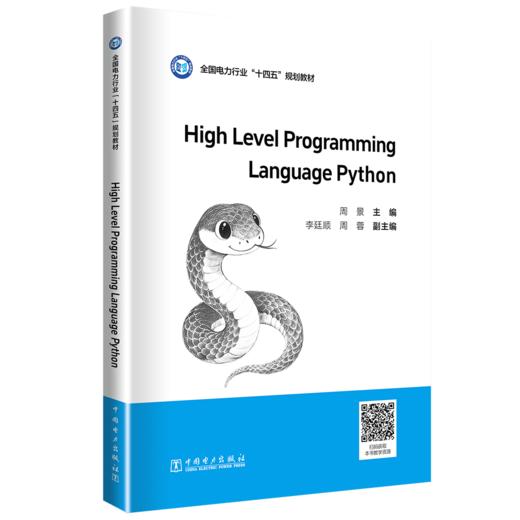
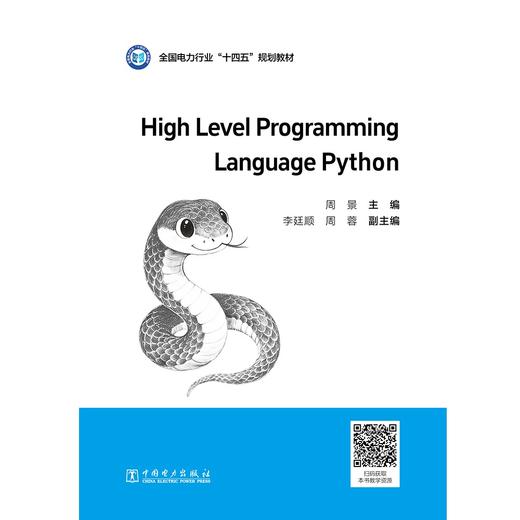
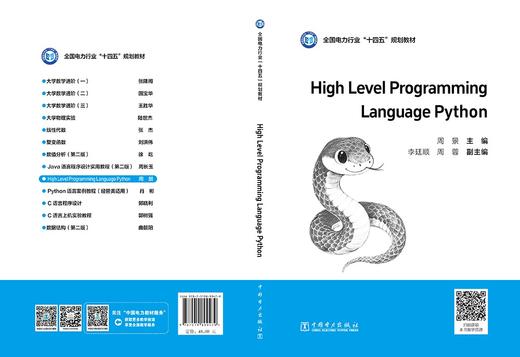
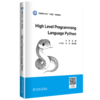
书名:High Level Programming Language Python(高级语言程序设计Python)
书号:978-7-5198-9947-9
定价:48元
作者:周景 主编 李廷顺 周蓉 副主编
出版时间:2025-05-26
出版社:中国电力出版社
页码: 180 字数(千字):277
开本:16开 版次:1 印次:1
品牌介绍
中国电力出版社成立于 1951 年,作为中国成立最早的中央科技出版社之一,曾隶属于水利电力部、能源部、电力工业部、国家电力公司,现为国家电网公司所属的科技出版社,在电气技术专业出版领域享有极高的声誉。该社作为以图书出版为主体,音像、电子出版物、期刊、网络出版共同发展的大型出版企业,以强大的出版资源和高素质的专业队伍,致力于向读者提供包括电力工程、电气工程、建筑工程、电子技术、信息技术、外语、大中专教材、家教等学科门类齐全的权威出版物,也竭力为广大师生提供精品教材,是教育部和北京市教委规划教材的出版基地之一。
编辑推荐
全英文Python语言程序设计,包括大量案例,提供教学PPT课件
产品特色
基于一带一路的国际视野:随着全球化的不断深入,国际间的学术交流日益频繁。编写一份英文版的Python语言教材,旨在满足留学生和国际合作办学项目学生的需求,促进知识的国际传播和文化交流。 循序渐进的组织结构:在结构组织上,秉承学以致用的原则,逐步渐进的方式组织内容,旨在激发读者的学习兴趣和热情。每一章都以案例和问题引入内容,并以解决问题为导向,重点介绍与程序设计相关的思想和方法。为了避免过多地罗列Python的语法规则,将难点分散到各个章节中,以便于学生更好地理解和掌握。每一章都以学习目标开始,让学生首先了解本章学习的关键内容。每一章都重点关注语言基础知识、算法基本概念和程序基本结构,并引入了大量的例题,侧重于例题分析。例题分析的重点也放在了程序设计的思想方法上,力求做到引人入胜,不断增加读者的编程兴趣。每一章的结尾都有一个小结,旨在对本章的内容进行系统的概括和总结。 基于知识图谱构建知识结构:构建了基于“概念-实例”双层知识图谱的网状知识结构,从知识的概念和实例化两个层面为主要切入点,对课程的知识点及其关系进行建模,能够更为精确、细致的组织和呈现课程知识及其相关性。通过整体且有序的知识结构构建以及智能导学,培养学生解决复杂工程问题所必备的非线性系统性思维和深度学习能力。 实例驱动教学:教材通过“数据科学分析”这一具体实例,引导读者从零开始学习变量、常量和对象,程序设计的三种结构,逐步深入到列表、元组、字典、文件等复杂数据结构,以及函数、模块等面向对象编程的思想和方法,最终学习数据科学的常用数据包和实现技巧。这种实例驱动的教学方法使得读者能够通过实际操作来学习和理解知识点,提高了学习效率。 贴近实际应用:书中的实例和练习围绕实际应用场景设计的,如电力数据分析、排序等,这些内容与日常工作和学习中的数据处理需求紧密相关,使得读者能够学以致用。 实验和习题:教材每章都包含了来自实际问题的编程案例分析、设计与实现。丰富的课后习题,这些案例和习题旨在帮助读者巩固理论知识,通过动手实践来加深对Python理解和应用能力。 符合等级考试要求:教材的内容和结构是根据《全国计算机等级考试二级 Python 语言考试大纲》设计的,这意味着读者在学习的过程中,也在为相关的计算机等级考试做准备,实现了学习与应用的双重目的。
作者介绍
周景,博士,副教授,硕士生导师,加拿大达尔豪斯大学访问学者,入选北京市高等学校青年英才计划项目。主要从事深度学习、计算机视觉以及人工智能在智能电网中应用等方面的研究工作,先后主持完成北京市高等学校青年英才计划项目、教育部产学合作协同育人项目,中央高校面上项目等,参与国家自然科学基金项目3项,主持和参与20多项电力企业科技项目。发表SCI、EI学术论文20余篇,出版学术专著1部、教材2部,授权专利8项,软件著作权20余项。曾获山西省科学技术三等奖,全国计算机类课程实验教学案例设计竞赛(人工智能类)一等奖,全国高校程序设计教育大会程序设计类实训案例二等奖等。
内容介绍
本书为全国电力行业“十四五”规划教材。
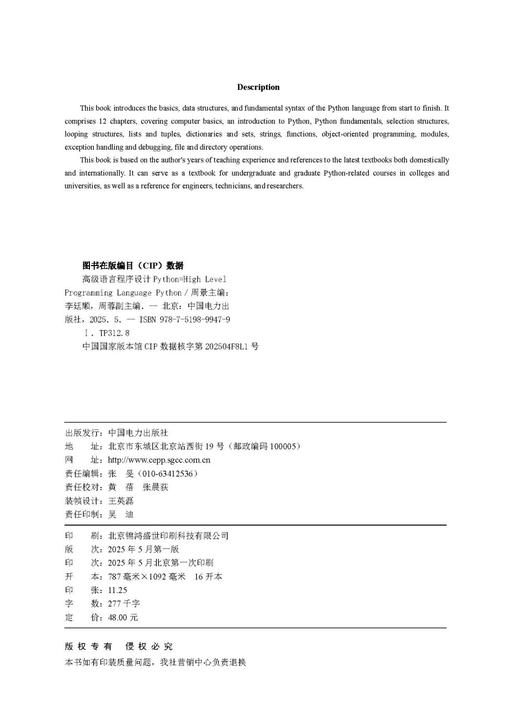
本书由浅入深地介绍了Python语言相关的基本知识、数据结构和基础语法。
本书凝聚了作者多年来的教学经验和对Python语言的深刻理解。我们秉持“学以致用”的原则,将理论知识与实际应用紧密结合,每章内容设计围绕着培养程序设计能力这一核心展开,重点讲解Python的基础知识、算法概念和程序结构,帮助学生建立起坚实的知识框架。通过一系列精心设计的案例和问题导向的学习活动,激发学生的探索精神和创新意识,使他们在实践中不断进步。全书共分为12章,具体包括计算机基础知识、初识Python、Python语言基础、选择结构、循环结构、列表和元组、字典和集合、字符串、函数、面向对象程序设计、模块、异常处理及程序调试、文件与目录操作等内容。
本书适用于本书可作为高等院校计算机相关专业本科生、研究生Python课程的教学用书,也可作为工程技术人员、科研人员及技术开发人员的参考用书。
前言
Foreword In this era of rapid digital development, programming skills have become indispensable for science and engineering students. As a core course in China's science and engineering colleges and universities, Advanced Language Programming (Python) aims not only to help students master Python, a powerful programming language, but also to cultivate their mindset and skills for solving practical problems. With the continuous evolution of information technology, this course is undergoing reform, striving to emphasize the application of basic theories and practical skills to meet the demand for versatile talents in the new era. To better achieve this teaching goal, we have meticulously compiled High-Level Language Programming (Python) to enhance students' programming literacy and provide solid theoretical support and practical guidance for their learning journey. Python, as a high-level programming language featuring interpretive, interactive, and object-oriented capabilities, is well known for its clear and concise syntax, powerful standard library, and active community. However, its extensive features and flexible syntax rules can pose challenges to students with limited foundational computer knowledge. Many existing textbooks focus on a systematic introduction to the language itself, which often bogs students down in syntactic memorization, thereby hindering their learning experience and interest. This book reflects the authors' extensive teaching experience and deep understanding of the Python language. We adhere to the principle of ‘learning by doing,’ closely integrating theoretical knowledge with practical applications. Each chapter is designed to develop programming skills, emphasizing Python basics, algorithmic concepts, and program structures to help students build a solid knowledge framework. Through a series of well-designed case studies and problem-based learning activities, students are encouraged to explore and innovate, fostering continuous progress through practice. The textbook's features include: Step-by-step and easy to understand: chapters are organized to progress from the simplest to the most complex concepts, ensuring that every point is fully comprehended. From an introduction to the Python language and runtime environment (Chapter 1), to basic syntax, data types, operators, and expressions (Chapter 2), and selective and recursive structures (Chapters 3 and 4), students are guided step by step through the fundamentals of programming. Case-driven and problem-solving: Each chapter begins with a real-world problem, guiding students to think critically and apply what they have learned to find a solution. For example, when introducing lists and tuples (Chapter 5), dictionaries and sets (Chapter 6), and string manipulation (Chapter 7), specific cases are used to demonstrate how these data structures are applied in real programming. Break down difficult concepts and go deeper step by step: Complex concepts and rules are divided across chapters to avoid overwhelming students with excessive learning pressure. For example, the creation and invocation of functions (Chapter 8), object-oriented programming (Chapter 10), and the use of standard and third-party libraries (Chapter 9) help students gradually acquire more advanced programming skills. Focus on practice, strengthen skills: The book contains numerous example problem analyses, particularly code demonstrations in the Jupyter Notebook environment, which help improve students' hands-on ability and programming confidence. Summarize and reinforce memory: Each chapter ends with a brief summary, providing a systematic overview of the chapter's content and helping students consolidate what they have learned. For commonly used grammar rules and common programming errors, tips are provided in clear and concise language, aiming to help students consolidate their learning and avoid forgetting. Up-to-date and resourceful: It covers the latest Python features, including the use of standard and third-party libraries, enabling students to keep up with technological trends. This book could not have been completed without the support and help of many peers, and we would like to express our sincere gratitude to all the teachers who have given us valuable advice and selfless assistance. At the same time, due to the limitations of the author's knowledge, it is inevitable that there are shortcomings in the book, and we sincerely hope that readers will provide us with valuable feedback and suggestions to help us improve our work in the future.
目录
Catalogs
Foreword
Chapter 1 Overview of Python 1
11 Python overview 1
12 Development environment3
13 Summary of this chapter 5
Chapter 2 Python language basics7
21 Python program composition7
22 Packages, modules, and functions8
23 Identifier and its naming rules 11
24 Common data types13
25 Operators and expressions 18
26 Objects and references 23
27 Inputs and outputs27
28 Summary of this chapter 31
Chapter 3 Branch structure 33
31 Flow charts and three structures33
32 Operators and precedence 37
33 Branch structure (single, double, multibranch and nested)41
34 Summary of this chapter 47
Chapter 4 Loop structure49
41 The while loop and the sentinel loop 49
42 For statements and nested loops52
43 Iterable objects 56
44 Builtin function range56
45 The break statement, continue statement and else clause 58
46 Getting started with data science 63
47 Summary of this chapter 64
Chapter 5 Lists and Tuples66
51 Sequences66
52 Lists67
53 Tuples86
54 Unpacking and packing89
55 Summary of this chapter 91
Chapter 6 Dictionaries and Collections92
61 Dictionaries 92
62 Assemblies 99
63 Summary of this chapter 103
Chapter 7 String 104
71 Definition of the string 104
72 Escape characters and original strings 104
73 String formatting 105
74 Common operations on strings 108
75 Regular expressions112
76 Summary of this chapter116
Chapter 8 Functions 117
81 Define and call the function117
82 Passing arguments 119
83 Variable scopes 122
84 Recursive functions 124
85 Builtin functions and the Python standard library 126
86 Summary of this chapter 129
Chapter 9 Modules 131
91 Module Overview 131
92 Importing modules 132
93 Packages in Python 134
94 Referencing other modules 135
95 Summary of this chapter 138
Chapter 10 ObjectOriented Programming 139
101 Overview of objectoriented programming 139
102 Class definition and instantiation 141
103 Attributes and methods 143
104 Inheritance 150
105 Summary of this chapter 154
Chapter 11 Exception Handling and Program Debugging 155
111 Overview of Exceptions 155
112 Exception handling statements 156
113 Program debugging 159
114 Summary of this chapter 162
Chapter 12 File and Directory Operations 163
121 Definition of file 163
122 Directory Operations 164
123 File Op
- 有电书房
- 扫描二维码,访问我们的微信店铺