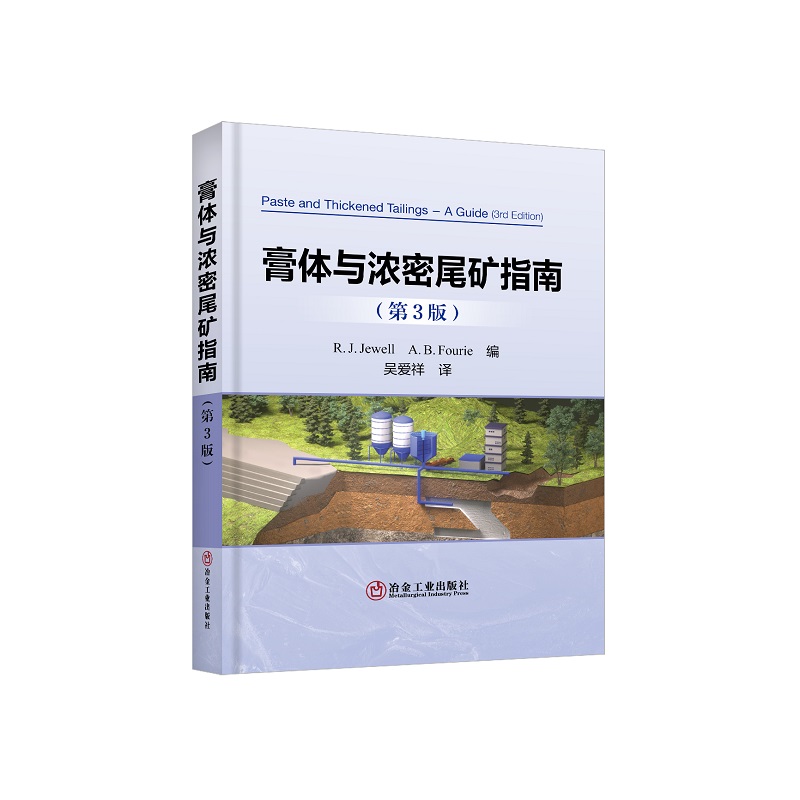
基于微流控技术的细菌抗生素耐药性研究= Application of Microfluidics in Antibiotic Resistance Research:英文/李冰,邱勇著
| 运费: | ¥ 10.00-25.00 |
| 库存: | 30 件 |
商品详情
基于微流控技术的细菌抗生素耐药性研究= Application of Microfluidics in Antibiotic Resistance Research:英文/李冰,邱勇著
定价:88.00元
出版时间:2023.9
ISBN 978-7-5024-9630-2
9787502496302
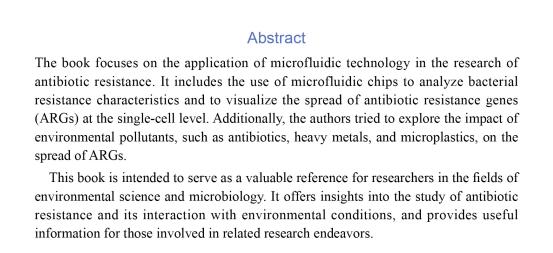
Contents
Chapter 1 Microfluidics for rapid antibiotic susceptibility testing 1
1.1 Microfluidic platform design 2
1.1.1 System design of microfluidic platform 2
1.1.2 Construction of microfluidic platform 3
1.1.3 Preparation of microfluidic agarose chip 4
1.1.4 Characterization of concentration gradient on the chip 8
1.2 Observation and data processing 9
1.2.1 Image processing and characterization for bacterial quantification 9
1.2.2 Microbial counting and growth model 10
1.2.3 Calculation of bacterial growth rate 11
1.2.4 Microbe inhibition dynamic model 11
1.3 Comparison of bacterial culture by chips and traditional methods 11
1.3.1 Growth of Escherichia coli in the chip and well plate 11
1.3.2 Growth of ammonia-oxidizing bacteria in the chips and shaking flasks 14
1.4 Amoxicillin susceptibility testing of different bacterial strains 16
1.4.1 Escherichia coli 16
1.4.2 Nitrosomonas europaea 22
1.4.3 Comamonas denitrifican 25
References 29
Chapter 2 Bacterial persistence to antibiotics revealed by single cell tracking 31
2.1Discovery of opportunistic antibiotic resistance bacteria 32
2.1.1Bacterial growth process based on single-cell tracking 32
2.1.2Opportunistic antibiotic resistance in Escherichia coli 34
2.1.3Opportunistic antibiotic resistance in Comamonas denitrifican 40
2.2Development of bacterial resistance under long-term antibiotic pressure 42
2.2.1In situ recovery growth of Nitrosomonas europaea after inhibition 43
2.2.2Metabolites during in situ recovery of Nitrosomonas europaea 44
2.3Effect of lag phase on bacterial resistance to antibiotics 45
2.3.1Pure strains 45
2.3.2Activated sludge bacterial community 51
2.3.3Predicting bacterial antibiotic resistance based on IC50 and lag time 56
2.3.4Extended lag time promotes bacteria regrowth after removal of antibiotics 58
References 59
Chapter 3 Transfer characteristics of antibiotic resistance genes in biofilms
based on microfluidics 63
3.1Mating assays based on microfluidics method 63
3.1.1Bacterial strains and amplification 63
3.1.2Single-channel microfluidic experiments 64
3.1.3Plasmid transfer frequency anaysis by cell sorting 67
3.1.4Cell sequencing and conjugative potential analysis 71
3.1.5Advantages of microfluidics over filter mating 73
3.2Transfer characteristics of ARGs in pure strains 73
3.2.1Cascading plasmid transfer in Escherichia coli biofilm 73
3.2.2The impact of recipient bacterial species on the gene transfer 78
3.3Transfer characteristics of ARGs in bacterial community 82
3.3.1Gene transfer in environmental community biofilms 82
3.3.2The effect of donor bacterial species on ARG transfer in bacterial
community 82
3.3.3Transfer frequency in recipients from different activated sludge
communities 87
3.3.4Community structure analysis of recipients and transconjugants 90
3.3.5Plasmid-host susceptible genera in recipients 93
3.3.6Conjugative potential of plasmid-host susceptible genera 95
References 98
Chapter 4 Direct observation and dissection of horizontal and vertical
gene transfer in bacterial community 102
4.1Single-cell tracking microfluidic chip 103
4.2Dissecting of horizontal and vertical transfer of ARGs in the
bacterial community 104
4.2.1Methods for tracking HGT and VGT 104
4.2.2Characteristics of HGT and VGT 107
4.3The effect of antibiotics on HGT and VGT in bacterial
communit y111
4.3.1The effect of antibiotics on ARG transmission processes 112
4.3.2The dynamics of ARG spread under different antibiotics 116
References 118
Chapter 5 The influence of typical environmental factors on antibiotic
resistance gene transfer 121
5.1Porous PDMS-agarose chip 122
5.2The influence of heavy metals on the transfer process of ARGs in
bacterial community 123
5.2.1Effects of six heavy metals on the growth of donor and recipient
bacteria 123
5.2.2Screening of heavy metals promoting ARG transfer bacterial
communities 126
5.2.3ARG transfer dynamics under different heavy metal stress 130
5.2.4ARG transfer frequencies under selected concentrations of Pb,
As and Hg 134
5.2.5Mechanisms of selected heavy metals promoting ARG transfer 136
5.3The dissemination potential of ARGs by DRB after chlorination
disinfection 138
5.3.1The growth characteristics of DRB by re-culture 138
5.3.2ARG transfer in DRB after different chlorination disinfections 140
5.3.3Visual analysis of ARG transfer in DRB based on microfluidic chip 145
References 146
Chapter 6 Microplastics-associated biofilm formation and antibiotic
resistance gene spread 149
6.1Microplastic interceptor chip 150
6.2Small-sized microplastics 151
6.2.1Bacterial growth exposed to microplastics 151
6.2.2Effects of microplastics on ARG transfer 165
6.2.3Effects of microplastics on biochemical indices of bacteria 171
6.3Large-sized microplastics 181
6.3.1Bacterial growth and biofilm formation 181
6.3.2ARG transfer in the biofilm on microplastics 182
References 183
- 冶金工业出版社图书旗舰店
- 冶金工业出版社,是国内历史最悠久的专业科技出版社之一。主要承担学术专著、技术著作、技术手册、专业辞书、大中专教材、职工培训教材、科普读物、人文社科、文集、史志、年鉴等图书的出版。
- 扫描二维码,访问我们的微信店铺