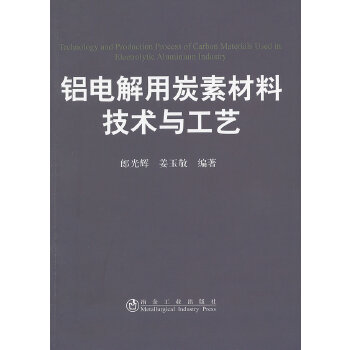
Scientific English Writing for Metallurgical Engineering
| 运费: | ¥ 10.00-25.00 |
| 库存: | 50 件 |
商品详情
书名:Scientific English Writing for Metallurgical Engineering
丛书名:普通高等教育“十四五”规划教材
ISBN:978-7-5240-0193-5
出版社:冶金工业出版社有限公司
定价:49
作者:张增起,刘晓明
出版时间:2025-04-18
内容简介
作者及团队成员在多年指导研究生(尤其是一年级研究生新生)科技英语写作的经验基础上,从科技英语写作最基本的词汇、句子结构和段落结构出发,强调准确性、连贯性和逻辑性;进而重点介绍科技英语写作的文章结构和写作方法,尤其以冶金工程相关的科技英语论文为案例展开分析,明确冶金等传统工科科技英语文章的特征和写作技巧;最后,本教材将从期刊选择、投稿资料准备、投稿审稿过程以及审稿后的文章处理等,简要介绍科技英语论文发表的基本流程和处置方法;此外,本教材也将针对国内外相关科技交流越来越频繁的现状,从科研简历、邀请信、口头汇报等角度阐明相关科技英语的表达方法。
目录
Contents
Chapter 1 Word choice 1
1.1 Scientific words 1
1.2 British or American 4
1.3 Commonly confused words 5
1.4 Words for connecting ideas 6
1.5 Avoid uninformative words and avoid redundancy 8
1.6 Avoid emotive terms 15
1.7 Label consistently 15
1.8 Words matter 16
1.9 Adjectives and Adverbs 16
1.9.1 Strings of Adjectives 17
1.9.2 Adjectives in distinct Sets 17
1.9.3 Adjectives in the Same Set 18
1.9.4 Hyphenated Adjectives and Adverbs 19
1.9.5 Adverb Placement 19
1.9.6 Interruption of compound Verbs by Adverbs 21
1.9.7 Placement of Adverbs With Respect to Infinitives 22
1.10 Precision in Word Usage 23
1.10.1 Articles 23
1.10.2 Reference Words and their Antecedents 26
1.10.3 Unnecessary Words 29
Chapter 2 Sentence structure 33
2.1 Basic sentence patterns for EST 33
2.1.1 Simple sentence 33
2.1.2 Complex sentence 34
2.1.3 Compound sentence 35
2.1.4 Common problems relating to sentence structure 35
2.2 Qualifiers Used in Sentences 36
2.2.1 Cores and qualifiers 38
2.2.2 Three Factors to Consider When Adding a Qualifiers 39
2.3 Subordinate Clauses Used as Qualifiers 41
2.3.1 That and Which 41
2.3.2 Adverb and adjective clauses 44
2.4 Explanatory Phrases, Participle Phrases, Prepositional Phrases and Infinitive Phrases 47
2.4.1 Explanatory Phrases 47
2.4.2 Participle Phrases 48
2.4.3 Major Prepositional Phrases 50
2.4.4 Infinitive Phrase 52
2.5 Sentence with two qualifiers 53
2.5.1 Sentence form 4: qualifiers before and after the core
2.5.2 Sentence form 5: qualifiers before and within the core
2.5.3 Sentence form 6: qualifiers within and after the core
2.5.4 Sentence form 7: both qualifiers within the core
2.5.5 Sentence form 8: both qualifiers before the core
2.5.6 Sentence form 9: both qualifiers after the core
2.5.7 Sentence form 10: both qualifiers within the core
2.5.8 Nested qualifiers
2.6 Syntax characteristics of EST 56
2.6.1 No personal tendency 56
2.6.2 Long sentence 59
2.6.3 Useful sentence patterns 61
2.7 Reading Materials and cases of Metallurgical Science 64
2.8 Reference 64
Chapter 3 Paragraph structure 69
3.1 Basic paragraph patterns for EST 69
3.1.1 Basic paragraph structure 69
3.1.2 Transition words 70
3.1.3 Topic sentence 72
3.1.4 Criteria for Dividing Long Paragraphs 73
3.2 Basic guidelines for paragraph design 76
3.3 Combining paragraphs to argue for a premise 77
3.3.1 Sample Premises for Research Proposals, Journal Submissions and Business Plans
3.3.2 Premise in a Research Proposal: The Problem Being Addressed Is Significant
3.3.3 Premise in a Journal Submission: The Experimental Methods Are Appropriate
3.4 Practice Questions 81
Chapter 4 Framework of a research paper 83
4.1 Why publish a paper 83
4.2 Structure arrangement of a paper 84
Chapter 5 The introduction: reasons to publish 85
5.1 The purpose of introduction section 85
5.2 Structure of introduction section 86
5.3 Basic sentence in introduction section 87
5.3.1 Establishing the importance of the topic 87
5.3.2 Referring to previous work to establish what is already known 88
5.3.3 Identifying a controversy within the field of study 89
5.3.4 Explaining the inadequacies of previous studies 90
5.3.5 Identifying the paucity or lack of previous research 91
5.3.6 Identifying a knowledge gap in the field of study 91
5.3.7 Stating the focus, aim, or argument of a paper 93
5.3.8 Describing the research design and the methods used 94
5.3.9 Explaining the significance of the current study 95
5.3.10 Outlining the structure of the paper or dissertation 96
5.4 Referring to literature 97
5.4.1 General comments on the relevant literature 97
5.4.2 Previous research: a historical perspective 98
5.4.3 Previous research: methodological approaches taken 99
5.4.4 Previous research: what has been established or proposed 100
5.4.5 Stating what is currently known about the topic 102
5.4.6 Reference to a previous investigation: researcher, time, investigation and topic prominent 102
5.4.7 Synthesizing material: supporting evidence or ideas, contrasting evidence or ideas 104
5.5 Reading Materials and cases of Metallurgical Science 105
5.5.1 Department of Steel Metallurgy 105
5.5.2 Department of Nonferrous Metallurgy 107
5.5.3 Department of Metallurgical Physics and Chemistry 109
5.5.4 Department of Ecological Science and Engineering 110
5.6 References 112
Chapter 6 The materials and methods 121
6.1 The purpose of materials and methods section 121
6.2 Structure of materials and methods section 121
6.3 Basic sentence in materials and methods section 122
6.3.1 Describing previously used research methods 122
6.3.2 Indicating the methodology for the current research 123
6.3.3 Giving reasons why a method was adopted 124
6.3.4 Giving reasons why a method was rejected 125
6.3.5 Indicating the use of an established method 126
6.3.6 Describing the characteristics of the sample 126
6.3.7 Indicating criteria for selection or inclusion 127
6.3.8 Describing the process: infinitive of purpose, expressing purpose with \'for\', verbs used in the passive, sequence words, adverbs of manner, \'using\' + instrument, statistical procedures 128
6.3.9 Indicating methodological problems or limitations 132
6.4 Reading Materials and cases of Metallurgical Science 132
6.4.1 Case 1
6.4.2 Case 2
6.4.3 Case 3
6.4.4 Case 4
6.5 References 138
Chapter 7 The results: presenting the findings 146
7.1 The purpose of results section 146
7.2 Structure of results section 146
7.3 Basic sentence in results section 146
7.3.1 Referring back to the research aims or procedures 146
7.3.2 Referring to data in a table or chart 147
7.3.3 Highlighting significant data in a table or chart 148
7.3.4 Stating a positive result 149
7.3.5 Stating a negative result 149
7.3.6 Reporting positive and negative reactions 150
7.3.7 Highlighting interesting or surprising results 151
7.3.8 Transition: moving to the next result 152
7.3.9 Summarizing the results section 152
7.4 Reading Materials and Case s of Metallurgical Science 153
7.5 References 154
Chapter 8 The discussion: discussing the findings 160
8.1 The purpose of discussion section 160
8.2 Structure of discussion section 160
8.2.1 Summarize conclusions and achievements
8.2.2 Compare and contrast the existing literature and describe the different
8.2.3 Possible limitations of surface research
8.2.4 Propose solutions to problems
8.2.5 Propose new suggestions for the future outlook
8.3 Basic sentence in discussion section 161
8.3.1 Providing background information: reference to the literature or question 161
8.3.2 Restating the result or one of several results 162
8.3.3 Pointing out interesting or important findings 163
8.3.4 Indicating an unexpected outcome 163
8.3.5 Comparing the result: supporting or contradicting previous findings Comparing the result: supporting previous findings 165
8.3.6 Offering an explanation for the findings 167
8.3.7 Advising cautious interpretation of the findings 168
8.3.8 Suggesting general hypotheses 169
8.3.9 Noting implications of the findings 170
8.3.10 Commenting on the findings 171
8.3.11 Giving suggestions for future work 171
8.4 Reading Materials and cases of Metallurgical Science 173
8.4.1 Case 1
8.4.2 Case 2
8.4.3 Case 3
8.4.4 Case 4
8.5 References 176
Chapter 9 The conclusions and abstract 183
9.1 The purpose of conclusions and abstract section 183
9.1.1 The purpose of abstract section 183
9.1.2 The purpose of conclusions section 183
9.2 Structure of conclusions and abstract section 183
9.2.1 Structure of abstract section 183
9.2.2 Structure of conclusions section 184
9.2.3 The differences and connections between abstract and conclusion 184
9.3 Basic sentence in conclusions and abstract section 185
9.3.1 Basic sentence in abstract section 185
9.3.2 Basic sentence in conclusions section 192
9.4 Reading Materials and cases of Metallurgical Science 199
9.4.1 Case 1
9.4.2 Case 2
9.4.3 Case 3
9.4.4 Case 4
9.5 References 202
Chapter 10 Submission of Manuscript 210
10.1 Choosing a journal 210
10.2 The Checklist (manuscript, cover letter, highlights) 210
10.3 Submitting your Manuscript 211
Chapter 11 Peer Review 213
Chapter 12 Decisions, revisions, and final proofing 214
12.1 Editorial decisions 214
12.2 Revising papers and replying 214
12.3 Handling rejection 215
Chapter 13 Oral presentation at a scientific seminar 218
13.1 Introducing the presentation 218
13.2 Defining and organizing the topic 219
13.3 Indicating sequence 220
13.4 Conclusion of the presentation 221
13.5 Notes 221
Chapter 14 ResumeCV 223
14.1 The differences between CV and Resume 223
14.2 Occasions for use 223
14.3 Outline for a CV or Resume 223
14.3.1 Outline for a CV 223
14.3.2 Outline for a resume 224
14.4 examples 225
Chapter 15 Academic letters 234
15.1 Academic Letter 234
15.2 Types of Academic Letters 234
15.3 Elements of an Academic Letter 235
15.4 Elements of an Academic Letter 235
15.5 Dos of Academic Letters 236
Chapter 16 The review paper 237
16.1 Purpose of review papers 237
16.2 Review paper editorial initiative 237
16.3 Process and structure for review papers 239
16.3.1 Systematic literature review process 239
16.3.2 Structure of systematic review papers 241
- 冶金工业出版社图书旗舰店
- 冶金工业出版社,是国内历史最悠久的专业科技出版社之一。主要承担学术专著、技术著作、技术手册、专业辞书、大中专教材、职工培训教材、科普读物、人文社科、文集、史志、年鉴等图书的出版。
- 扫描二维码,访问我们的微信店铺