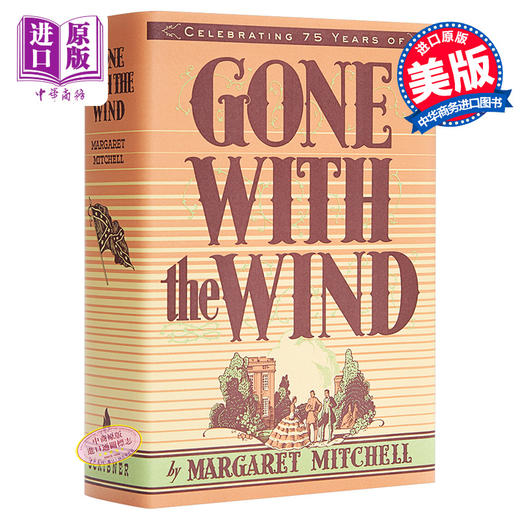
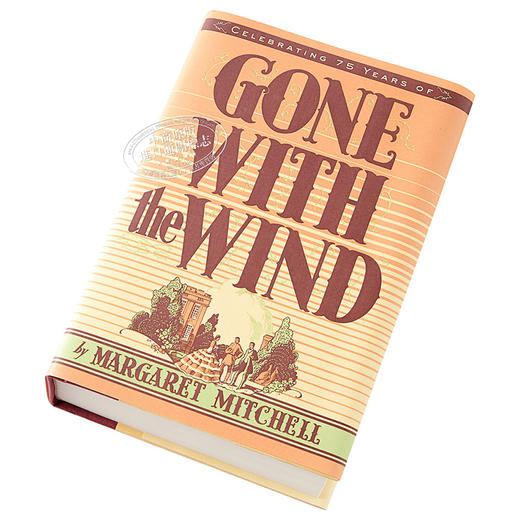
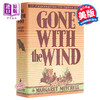
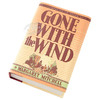
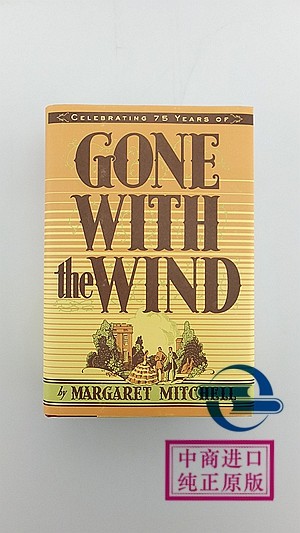
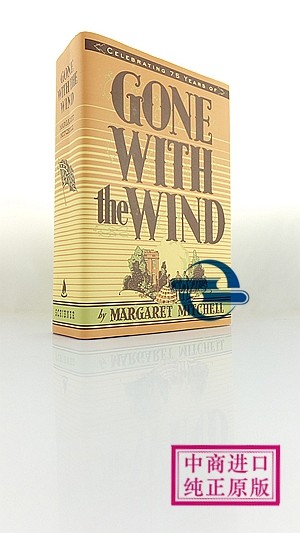
【中商原版】飘 乱世佳人 精装 英文原版 Gone With the Wind
¥206.00
| 运费: | ¥ 5.00-30.00 |
| 库存: | 9 件 |
商品详情
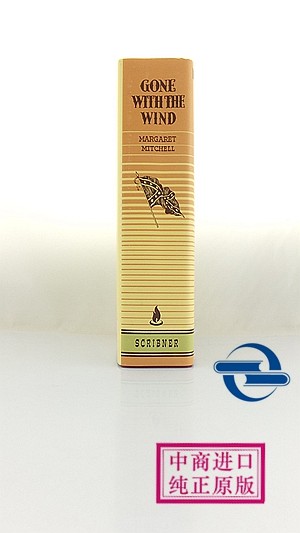
Gone With the Wind
世界经典名著精装 – 1936年
Margaret Mitchell (作者)
基本信息
Hardcover: 1037 pages
Publisher: Simon & Schuster; Reprint edition (1 Sept. 1936)
Language: English
ISBN-10: 068483068X
ISBN-13: 978-0684830681
Product Dimensions: 14 x 5.1 x 21 cm
本书被推为21世纪现代女性必读的“人生四书”之一。乱世佳人郝思嘉将告诉你如何与残酷的现实抗争、学会在困境中生存,不轻言放谍,成功就在你手中。
《飘》是美国著名女作家玛格丽特.米歇尔创作的一部具有浪漫主义色彩、反映美国南北战争的小说。这部经久不息的小说感动了无数的读者。多次被翻拍成电影。电影又名《乱世佳人》。作品通过一幕幕气势恢宏的战争场面以及细腻逼真的人物形象,用诗一般的语言演绎了一个感人至深的爱情故事。
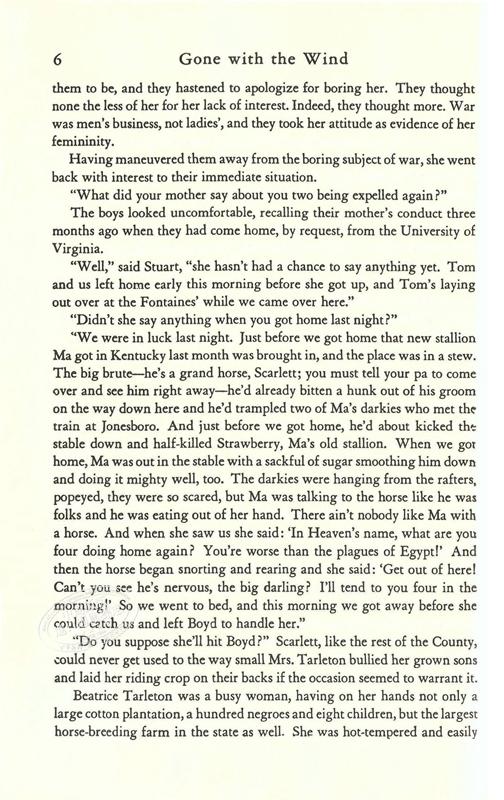
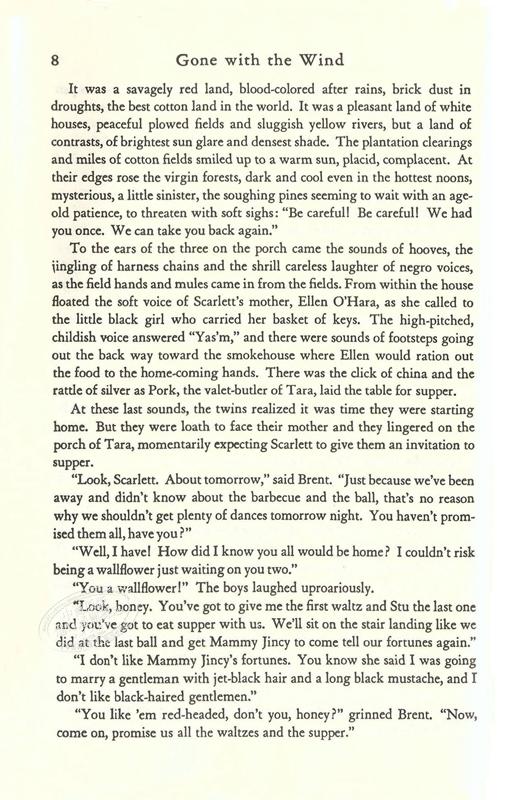
Set against the dramatic backdrop of the American Civil War, Margaret Mitchell's magnificent historical epic is an unforgettable tale of love and loss, of a nation mortally divided and a people forever changed. Above all, it is the story of beautiful, ruthless Scarlett O'Hara and the dashing soldier of fortune, Rhett Butler. Since its first publication in 1936, Gone With The Wind has endured as a story for all our times.
1937年小说获得普利策奖和美国出版商协会奖。
1940年《飘》被译成中文在中国出版。
1979年12月至1980年4月,由浙江人民出版社分上、中、下3册重新出版。
小说问世当年,好莱坞以5万美元的代价购得将《飘》改编成电影的权利。
1939年由《飘》改编的电影《乱世佳人》问世。导演维克多·弗莱明,主演克拉克·盖博,费雯·丽。
影片获得第十二届奥斯卡金像奖最佳影片、最佳导演、最佳女主角等八项大奖。
影片获得一九七七年美国电影学会评选的“美国十大佳片”之一。
影片成为美国百部经典名片之一。
内容简介
Since its original publication in 1936, "Gone With the Wind" winner of the Pulitzer Prize and one of the bestselling novels of all time has been heralded by readers everywhere as The Great American Novel. Widely considered The Great American Novel, and often remembered for its epic film version, "Gone With the Wind" explores the depth of human passions with an intensity as bold as its setting in the red hills of Georgia. A superb piece of storytelling, it vividly depicts the drama of the Civil War and Reconstruction. This is the tale of Scarlett O Hara, the spoiled, manipulative daughter of a wealthy plantation owner, who arrives at young womanhood just in time to see the Civil War forever change her way of life. A sweeping story of tangled passion and courage, in the pages of "Gone With the Wind," Margaret Mitchell brings to life the unforgettable characters that have captured readers for over seventy years."
作者介绍
玛格丽特·米切尔(Margaret Mitchell),美国现代著名女作家,曾获文学博士学位,担任过《亚特兰大新闻报》的记者。1937年她获得普利策奖。1939年获纽约南方协会金质奖章。1949年,她在车祸中罹难。她短暂的一生并未留下太多的作品,但只一部《飘》足以奠定她在世界文学史中不可动摇的地位。
Margaret Mitchell Marsh
1900 - 1949
Born in Atlanta in 1900, Margaret Mitchell grew up surrounded by relatives who told endless tales of the Civil War and Reconstruction. She knew those who were relics of a de-stroyed culture, and those who had put aside gentility for survival. Her mother instilled in her that education was her only security. She attended Smith College but had to come home when her mother fell ill. After her mother's death, Margaret resolved that she had to make a home for her father and brother, so she left college and returned to Atlanta.
In 1923, she became a feature writer for the Atlanta Journal, and in 1925, she married John Marsh, a public relations officer for Georgia Power. She found most of her assignments unfulfilling, and she soon left to try writing fiction more to her own taste. Her own harshest critic, she would not try to get her work published. She began to write Gone with the Wind in 1926, while recovering from an automobile accident. Over the next eight years she painstakingly researched for historical accuracy.
She accumulated thousands of pages of manuscript. Here is how she later described her life's labor: "When I look back on these last years of struggling to find time to write between deaths in the family, illness in the family and among friends which lasted months and even years, childbirths (not my own), divorces and neuroses among friends, my own ill health and four fine auto accidents ... it all seems like a nightmare. I wouldn't tackle it again for anything. Just as soon as I sat down to write, somebody I loved would decide to have their gall-bladder removed. ... "
In 1934, an editor from Macmillan's Publishers came to Atlanta seeking new authors. He was referred to John and Margaret Marsh as people who knew Atlanta's literary scene. She steered him to several prospects, but didn't mention her own work. A friend told him that she was writing a novel, but she denied it. On the night before he was to leave Atlanta, she appeared at his hotel-room door with her still imperfect, mountainous manuscript and left it with him for better or for worse.
The rest of the story is well-known --This text refers to an out of print or unavailable edition of this title.
编辑评语
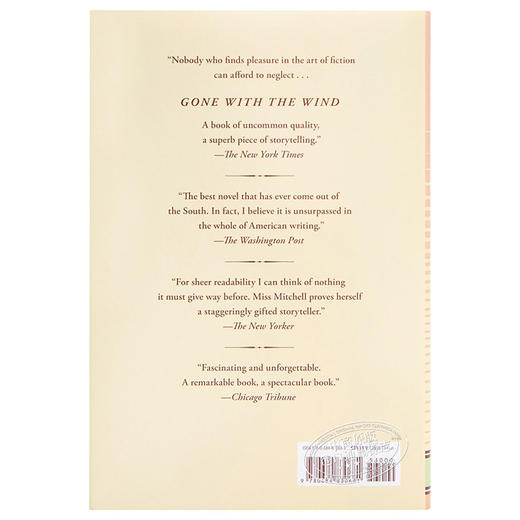
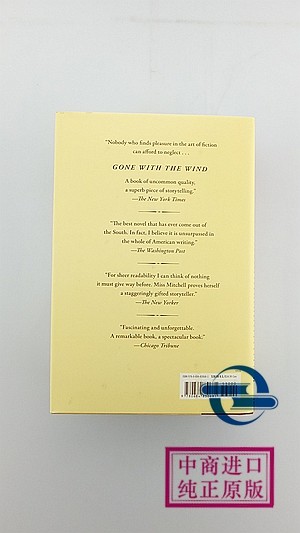
"Beyond a doubt one of the most remarkable first novels produced by an American writer. It is also one of the best." -- The New York Times
"The best novel to have ever come out of the South...it is unsurpassed in the whole of American writing." -- The Washington Post
"Fascinating and unforgettable! A remarkable book, a spectacular book, a book that will not be forgotten!" -- Chicago Tribune
"Gone with the Wind is one of those rare books that we never forget. We read it when we're young and fall in love with the characters, then we watch the film and read the book again and watch the film again and never get tired of revisiting an era that is the most important in our history. Rhett and Scarlet and Melanie and Ashley and Big Sam and Mammy and Archie the convict are characters who always remain with us, in the same way that Twain's characters do. No one ever forgets the scene when Scarlet wanders among the wounded in the Atlanta train yard; no one ever forgets the moment Melanie and Scarlet drag the body of the dead Federal soldier down the staircase, a step at a time. Gone with the Wind is an epic story. Anyone who has not read it has missed one of the greatest literary experiences a reader can have." -- James Lee Burke, bestselling author of The Tin Roof Blowdown
"I first read Gone with the Wind in grade school--a boy of the upper South who'd seen the great movie and felt compelled to learn what lay behind it, all thousand-plus pages worth. No page disappointed me. What other American novel surpasses its eagerness to tell a great story of love and war; what characters equal the cantankerous passions of Scarlett and Rhett? Even Scott Fitzgerald spoke well of it. What more could I ask, even seven decades later?" -- Reynolds Price
"In my own personal life, I find many similarities to Scarlett's: The whole 17-inch waist thing notwithstanding, I do love a barbecue, both for the food and the men--I have been known to "eat like a field hand and gobble like a hawg"--I admit that at least on one occasion I may have feigned interest in some guy to further my own interests--I have fought tooth, toenail and tirelessly for my family--I learn slow but I learn good--and even so, I still adore the prospect of dealing with most things...Tomorrow." -- Jill Conner Browne, The Sweet Potato Queen, bestselling author of The Sweet Potato Queens' First Big-Ass Novel
"In 1936 I was in E.M. Daggett Junior High in Ft. Worth, Texas. By some chance I was able to read Gone with the Wind early on. Then and now, I found it one of the great experiences of a young life. I still list it as one of my 10 favorite books." -- Liz Smith, nationally syndicated columnist
"Not just a great love story, Gone with the Wind is one of the most powerful anti-war novels ever written. Told from the standpoint of the women left behind, author Margaret Mitchell brilliantly illustrates the heartbreaking and devastating effects of war on the land and its people." -- Fannie Flagg, Academy Award nominated-author
"Let's say you've read Gone with the Wind at least twice, and seen the movie over and again. So, here's a thought. Buy this handsome paperback edition, just for Pat Conroy's preface. This passionate, nearly breathless love letter is a Song of Solomon to Margaret Mitchell, Scarlett O'Hara, and Conroy's beautiful, GTW-obsessed mother. Indeed, his luminous preface packs a durable wallop, just like the epic Pulitzer prize-winning work that inspires it." -- Jan Karon, author of The Mitford Years series
- 中商进口商城 (微信公众号认证)
- 中商进口商城中华商务贸易有限公司所运营的英美日韩港台原版图书销售平台,旨在向内地读者介绍、普及、引进最新最有价值的国外和港台图书和资讯。
- 扫描二维码,访问我们的微信店铺
- 随时随地的购物、客服咨询、查询订单和物流...