

商品详情


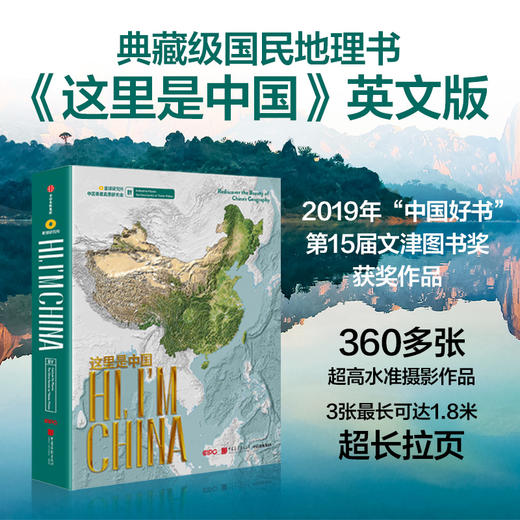
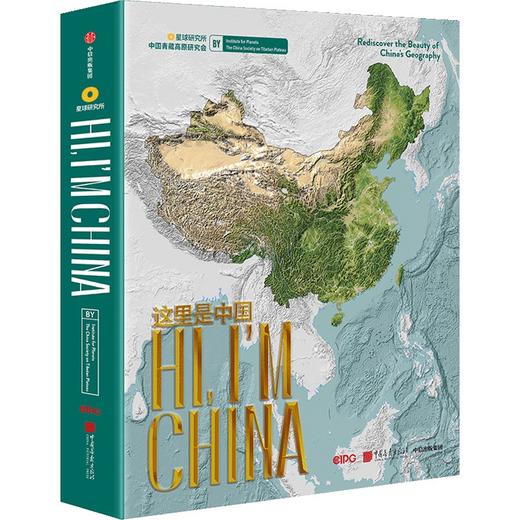
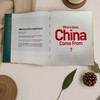
书名: 这里是中国(英文版)
定价: 298.00
作者: 星球研究所,中国青藏高原研究会
出版社: 中信出版集团
出版日期: 2025-09-10
页码: 600
装帧: 裸脊平装
开本: 16
ISBN: 9787514621266
 ※大格局、大创意、大手笔,一部全视野中国地理科普著作,重新发现中国之美
宏大的地理尺度+深邃的时间维度,见证中国从蛮荒到文明的史诗级地理演变,一本为你重新定义“祖国”的认知指南。阅尽中国,每一寸都是挚爱。
※致视觉体验,360多张超高水准摄影作品,足不出户,把“美中国”搬回家
每一张都由尖摄影师倾力打造,每一页都是一场视觉远征。堪比收藏级的艺术画册,让你足不出户,坐拥神州盛景。
※中文版单本发行超150万册,全系列发行近300万册的象国民地理书
叫好又叫座,不仅是书店的C位,更是无数家庭书架上的镇架之宝。
※横扫“中国好书”“文津图书奖”“中华优秀科普图书”等图书大奖
被威奖项反复认证的卓越品质,业界与读者的双重肯定,让它成为毋庸置疑的标杆之作。
※尖科普团队×家科研机构,硬核知识保障
知名地理科普团队“星球研究所”主笔,中国青藏高原研究会威审定。确保每一处细节都经得起推敲,科学性与可读性美兼顾。
※历时6点打磨文本,威专家翻译审核。送给孩子好的英语学习读本,在宏大的地理格局下认识中国,点燃对祖国的好奇与热爱
北京语言大学、复旦大学、英国布里斯托大学、伦敦大学、中国外文出版发行事业局等一众专家学者翻译审核,为文本质量保驾护航。比课本生动,比游戏智。激发新一代探索欲和民族自豪感,让知识在壮美的山河故事中自然流淌。
※典藏设计,浮雕工艺、烫金、3张超长拉页,本身就是一件艺术品
从浮雕工艺、烫金的封面到可完全平摊的锁线装订,再到长可达1.8米的超长拉页,匠心打磨每一处细节。这不仅是一本书,更是一件值得世代珍藏的艺术品。
 本书为2019年出版的典藏级国民地理书《这里是中国》的英文版,由星球研究所近6年积累创作而成,是国内全视野中国地理科普典著作,一部书架上的中国纪录片。本书中文版于2019年9月,发行量已突破150万册,并获得第十五届“文津图书奖”、2019年“中国好书”“中华优秀科普图书”等奖项。
英文版延续中文原版“地理为纲,文明为魂”的核心理念,以中国地势三大阶梯为框架,构建全景式中国叙事。同时,强化国际视角,补充跨文化注释,帮助读者理解中国阶梯地势在全球地理格局中的独特性与普适性。以地理为锚点,却终超越地理本身:它既是科学严谨的“中国自然百科”,也是一部流动的“东方简史”,更成为全球读者重新发现中国、理解中国式现代化的密钥。在“文明互鉴”的背景下,这本书的国际化表达,正悄然塑造着一个既有厚重历史、又有未来担当的中国形象。
英文版图书保留了中文版的有优质内容,同时重新绘制了数十张专业地图。英文翻译团队组织了国际化团队为文字质量把关。英文版的出版将进一步向海外读者、专家介绍中国的人文地理,填补国际上如此全面、威且精致的中国科普读物的空白。同时,国内读者也可以在获取地理知识、领域大美中国风光的同时,更好地学习英文。
 Foreword: China Needs the Popularization ofQuality Geographical Sciences
Foreword: An Achievable Ideal
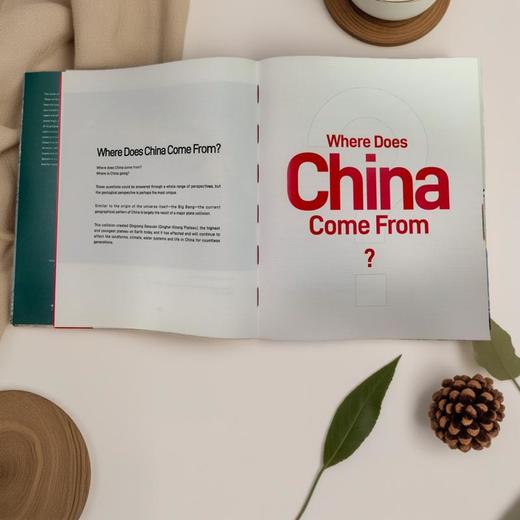
Where Does China Come From?
The First Terrain Ladder
1.1 Hoh Xil: China’s Greatest Wilderness
1.2 Ngari: The Civilization of the Wilderness
1.3 Hengduan Shan: A Mountain Range with the Most Breathtaking Scenery in China
1.4 Jiuzhaigou: Destruction and Creation
1.5 Siguniang Shan: A Song of Ice and Rock
The Second Terrain Ladder
2.1 Ili: A Corner of the Far West of China
2.2 Lop Nur: The Rise and Fall of Loulan during Five Thousand Years
2.3 Gansu: The More Diverse, the More Beautiful
2.4 Xi’an: Rich and Affluent for a Thousand Years
2.5 Chengdu: Three Thousand Years of Vibrant Traditional Lifestyles
2.6 Fanjing Shan: A Paradise in the Secular World
The Third Terrain Ladder
3.1 Henan: Mountains, Water, and Contributions to China
3.2 Zhejiang: A Province of Invincible Productivity
3.3 Fujian: The Legend of Pioneers
3.4 Qingdao: A History of Urban Aesthetics
3.5 Jiangnan: A Great Feast of Rivers, Lakes, and Seas
What Is China?
References
Glossary in Pinyin and English
 星球研究所成立于2016 年,是一家专业的科普内容创作与传播机构,专注于探索致世界,解构世间万物,用地理的视角来认知世界和人类文明。2018 年,星球研究所被人民日报社和中国科学技术协会评为“中国十大科普自媒体”之一。2019—2024 年陆续推出典藏级国民地理书《这里是中国》《这里是中国2》《这里是中国3》,图书获得“中国好书”“文津图书奖”“中华优秀科普图书”等荣誉。
中国青藏高原研究会 (CSTP) 是中国科学技术协会的下属机构,成立于1990年3月,由全国从事青藏高原科学研究的科技人员和其他工作者组成,是我国发展青藏高原科学研究事业的重要力量。中国青藏高原研究会成立以来,积极开展青藏科考的科研交流、搭建科研平台和科普宣传,为青藏高原地区的科学技术发展和经济社会进步做出了巨大贡献。
—Liu Jiaqi, academician of the Chinese Academy of Sciences and honorary chairman of China Science Writers Association
This is more than just a popular science book featuring capti-vating images and informative texts; it also provides a unique way of thinking, inspiring readers to observe the integration between natural laws and human civilization from the tempo-ral and spatial perspectives. It enables readers to enjoy a walk in the "natural art gallery"of China, ponder over the truth of Chinese culture, and imagine the beautiful harmony between human and nature. It is an attractive work.
—Cui Peng, academician of the Chinese Academy of Sciences
The images captured by remote-sensing satellites as well as the pictures taken by photographers in the book are both astonish-ingly beautiful. More noticeably, Hi, I'm China is a monumental work that combines history and geography. Leveraging multiple techniques and methods, it perfectly showcases how the land where we Chinese live originated, how living creatures evolved, and how Chinese civilization was born and matured in the long river of history. The book inspires us to ponder over the ques-tions: how should our civilization coexist in harmony with nature and where will it go?
—Jia Haifeng, professor at the School of Environment, Tsinghua University
 Foreword
China Needs the Popularization of Quality Geographical Sciences
As a geographical researcher, I eagerly anticipate works that seek to popularize the geographical sciences, but at the same time I hold these works to very exacting standards. In this context, the release of the book Hi, I’m China is unquestionably gratifying.
Hi, I’m China was co-authored by the Institute for Planets, an organization that promotes the popularization of geographical sciences, and the research team who took part in China’s second scientific expedition to Qingzang Gaoyuan (Qinghai-Xizang Plateau). This is the first popular science book jointly produced by both organizations. The first chapter of the book, “Where Does China Come From?” is a direct outcome of this collaboration.
Since 1949, the Chinese Academy of Sciences (CAS) has been committed to the exploration and research on Qingzang Gaoyuan. Back in the 1970s, the CAS established a scientific expedition team to Qingzang Gaoyuan, initiating the first comprehensive scientific survey of the plateau. In fact, I was lucky enough to participate in this program as a student. The first scientific expedition lasted for over 20 years. Through the efforts of this program, we established a systematic understanding of Qingzang Gaoyuan. On August 19, 2017, the second scientific expedition to Qingzang Gaoyuan was launched as a national strategic mission.
In 2018, on the first anniversary of the launch of the second scientific expedition, a report was prepared to highlight the achievements of the first phase of this second scientific expedition. The cooperation with the Institute for Planets led to the publication of the article entitled Where Does China Come From? which was an effort to popularize the field of geographical science. The article not only summarizes how the emergence of Qingzang Gaoyuan, due to continental plate collisions, influenced on China’s geography, but also expands on the chain reaction that resulted from the Qingzang Gaoyuan uplift. As soon as the article was published online, it went viral on various social media platforms including WeChat Moments. After reading the article, many people began to realize the importance of the Qingzang Gaoyuan in Chinese geography.
It is fascinating to explore China from a geographical perspective. The vast land of China is dotted with a great diversity of landscapes with many types of landforms including glaciers, lakes, rivers, oceans, loess, and karst. In addition, an extensive range of human activity has helped to form China’s landscape and soil. Different groups of people have lived and procreated on this land over a multitude of historical periods, leading to the eventual emergence of the Chinese civilization. All of these elements are part of today’s China. Excellent work to popularize geographical sciences helps to strengthen and put in perspective the Chinese people’s love and pride for the physical land of their country—its beautiful rivers, mountains and terrain. Furthermore, such work helps more people to understand the interaction between the environment and mankind and it arouses their sense of responsibility for contemporary and future generations. This is a meaningful and valuable undertaking.
As a popular science work, this book is based on theoretical scientific knowledge and empirical facts. Authors of such a work are required to read scientific research publications extensively. They then draw upon their own experience and incorporate relevant evidence from a wealth of academic sources, which they then condense and simplify to facilitate the general reader’s understanding. Such a work can only pass the test of time and become valuable if the underlying work is solid.
Moreover, the popularization of scientific knowledge is not simply a matter of enumerating or transferring scientific knowledge. It needs to be in touch with the daily life of the people, and it requires creativity to impart this knowledge in an interesting manner. Otherwise, the popularization of scientific knowledge will devolve into science news or merely old-fashioned lecturing, making the scientific knowledge inaccessible to a general readership.
The Institute for Planets has an excellent popularization of scientific knowledge team. Each article they write takes from about twenty days to one or two months to finish, ensuring each article is thoroughly prepared and well-polished. It is commendable that the works of popular science are prepared to the same rigorous standards as academic writings. Therefore, the Research Team of China’s Second Scientific Expedition on Qingzang Gaoyuan began collaborating with the Institute for Planets right from its inception.
The popularization of geographical science is both a science and an art. Here, the meaning of art is twofold:
Firstly, geography has an intrinsic aesthetic nature. The beauty of the environment and the surrounding landscapes call for careful and close observation. General readers are often first attracted by beautiful images and photos. They then become eager to visit the places captured in the photos or even develop a desire to learn about the formation of the beautiful scenery they see in the pictures. The Institute for Planets has unquestionably excelled in this regard, producing articles accompanied by a wealth of beautiful photos and maps. This effectively captures the reader’s attention, and they then follow the team’s work and develop an interest in reading the scientific articles produced.
Secondly, there is an imaginative perspective. “Science is not a heartless pursuit of objective information,” said American paleontologist Stephen Jay Gould. “It... is a creative human activity, its geniuses acting more as artists than as information processors….” Whether it be science or popular science, both endeavors require a rich imagination equal to that of an artist. This requires making connections between old and new ideas, as well as integrating different disciplines. Only in this way can we brainstorm ideas and produce works that are interesting and eventually attractive for a large readership. In this regard, the Institute for Planets is undoubtedly a leading light in terms of popularizing geographical science in China. Its articles generally feature information from multiple disciplines, and they are coherently linked, a task which obviously requires some imagination. Furthermore, effective use is made of devices like metaphors or schematic diagrams to make clear esoteric ideas or theories for a general readership.
Of course, there are certain requirements for effective writing of a book about geographical science for a general audience. This is especially true when it comes to the scientific understanding of China’s geography. Because China was relatively late to the field of science popularization, it lacks truly effective vehicles to spread science to the general public. We need authors of popular science who have a professional background and knowledge of the humanities and mass media. We must keep up our creative efforts. All sorts of problems are bound to appear in the pursuit of this process, but ideals are what drive and motivate us to continue on our quest.
The efforts to popularize science and scientific research require collaboration that can produce wonderful work, especially in the field of geographical science. Hi, I’m China is a good example of that endeavour. It is my sincere hope that more and better works that can effectively popularize the worlds of science and geography will be created so that more people can learn about and become even more fascinated by China and its geography.
Yao Tandong
Member of the Chinese Academy of Sciences
Chairman of the China Society on Tibetan Plateau
Chief Scientist of the Second Tibetan Plateau Scientific Expedition and Research
August 7, 2019
- 成都布克购书中心 (微信公众号认证)
- 扫描二维码,访问我们的微信店铺
- 随时随地的购物、客服咨询、查询订单和物流...