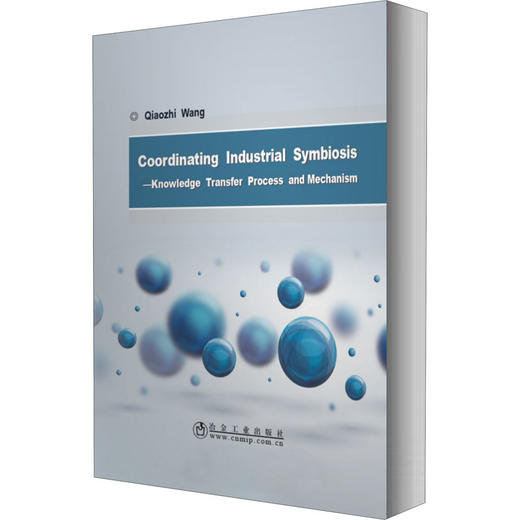
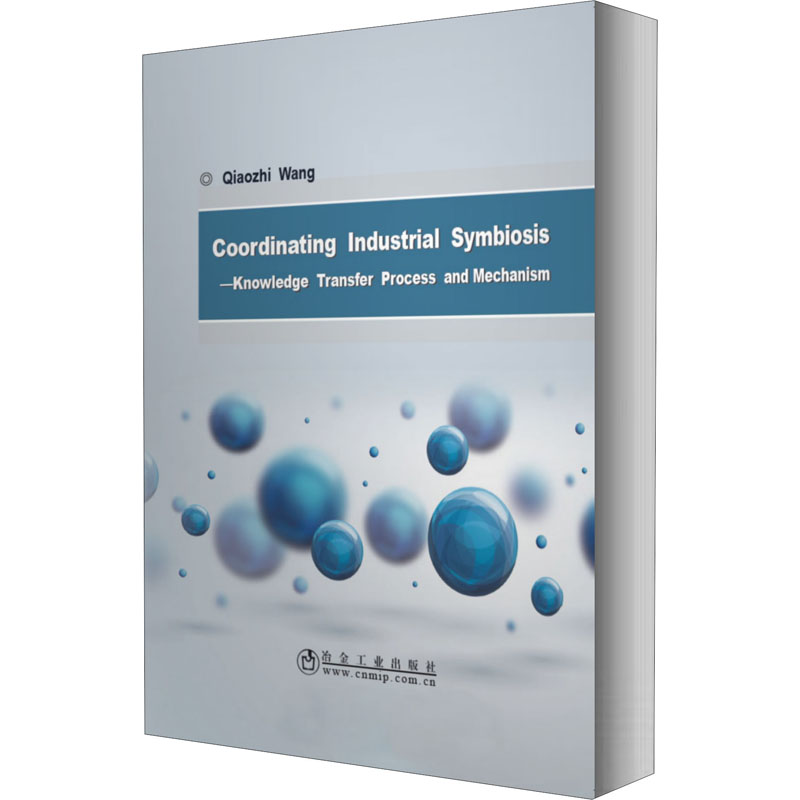
Coordinating Industrial Symbiosis --- Knowledge Transfer Process and Mechanism/王巧稚
¥56.58
| 运费: | ¥ 10.00-25.00 |
| 库存: | 30 件 |

商品详情
This book provides a greater understanding of KT and IS theories from the following perspectives: Presenting the role of changing national policy contexts in the process of transnational KT and proposing a knowledge-based approach to study KT based on the finding; Proposing a model conceptualising transnational knowledge management and KT processes; Summarising major ISD policy tools utilised by c......Chapter 1 Introduction
Chapter 2 Research on IS
2.1 Introduction
2.2 Research on characterising IS activities
2.2.1 Locating the IS theory in a broader theoretical framework
2.2.2 Understanding IS activities
2.3 Exploring the significance of the transferred knowledge
2.3.1 NISP's IS network facilitation approach: a good practice or not?
2.3.2 The Chinese ISD status: Is there potential for the facilitated IS network approach?
2.4 Summary
References
Chapter 3 Knowledge Management and Knowledge Transfer
3.1 Introduction
3.2 Organisational knowledge: definitions and taxonomies
3.2.1 Understanding the concept of organisational knowledge
3.2.2 Organisational knowledge taxonomies
3.3 KM in KIBS organisations
3.3.1 Knowledge creation
3.3.2 Strategies to process organisational knowledge for dissemination
3.4 Constructing alliances: foundation for KT
3.5 Initiation of KT processes
3.5.1 Knowledge dissemination processes in a knowledge provider's system
3.5.2 Knowledge learning processes in a knowledge recipient's system
3.6 Determinants of KT processes
3.6.1 Provider's internal factors affecting its knowledge dissemination process
3.6.2 Recipient's internal factors affecting its knowledge learning process
3.6.3 Context factors affecting KT processes
3.7 Qualitative case study approaches for KT research
3.8 Summary
References
Chapter 4 Methodology
4.1 Introduction
4.2 Philosophical paradigm and research methodology
4.2.1 Underlying philosophical assumptions
4.2.2 Qualitative-interpretive research methodology
4.3 Research design and fieldwork
4.3.1 Research design/approach
4.3.2 Field-work
4.4 Data analysis
4.4.1 Principles of data analysis
4.4.2 Data analysis strategy
4.5 Research validity
4.5.1 Criteria exploration
4.5.2 Consideration of the validity
4.6 Ethical considerations
4.7 Summary
References
Chapter 5 Policy Contexts Affecting ISD in the UK and China
5.1 Introduction
5.2 Chinese policy context targeting resource efficiency and pollutants reduction: status and problems
5.2.1 Policy instruments
5.2.2 Targets delivery landscape
5.2.3 Achievements and problems
5.3 The UK's performance-based devolution model for ISD
5.3.l Policy instruments
5.3.2 Targets delivery landscape
5.3.3 Characteristics of the UK's model for ISD
5.4 Summary
References
Chapter 6 The Development of NISP & its Organisational Knowledge
6.1 Introduction
6.2 The creation of NISP's IS network facilitation model: understanding the mechanism and the model
6.2.1 Pre-initiation stage
6.2.2 Expanding regional pilot programmes
6.2.3 Understanding the relationship between the BPS and NISP model
6.3 Non-profit franchising: a foundation for KM and KT within NISP
6.4 KM within NISP
6.4.1 The development of ICT
6.4.2 Collecting and codifying IS programme delivery knowledge
6.5 KT within NISP
6.5.1 Formal KT between NISP headquarters and regional teams
6.5.2 Informal KT between members of the franchising
6.6 Summary
References
Chapter 7 KT between NISP Headquarters and TEDA Eeo-centre
7.1 Introduction
7.2 The knowledge provider's previous KT experience in China
7.3 The knowledge recipient's profile
7.3.1 Organisational structure of the knowledge recipient
7.3.2 Knowledge recipient's geographical advantages for implementing internationally collaborative projects
7.3.3 ISD in TEDA and the surrounding industrial area
7.4 The structure of the NISP-TEDA collaboration
7.5 KT initiatives
7.5.1 Transferring knowledge on how to build a programme delivery team
7.5.2 Transferring the programme development strategy
7.5.3 Transferring programme operational methods
7.5.4 Transferring software
7.5.5 Learning by doing
7.5.6 UK policy tour to learn knowledge of policy and practice
7.6 The progress of KT So far so good?
7.7 Summary
References
Chapter 8 Discussion
8.1 Introduction
8.2 KM and K-I" within NISP's franchising system
8.2.1 A KM and KT model primarily driven by a franchisor
8.2.2 Verifying the SECI model
8.3 KT between NISP headquarters and TEDA eco-centre
8.4 Factors affecting transnational KT for ISD
8.4.1 Disseminative capacity
8.4.2 Absorptive capacity
8.4.3 Alliance structure and teaching/learning intent
8.4.4 KTMedia
8.4.5 Language difference
8.4.6 Policy gap
8.4.7 Cultural gap
8.5 KT within NISP vs.KT in NISP-TEDA alliance
References
Chapter 9 Conclusions
9.1 Findings for research questions
9.1.1 Findings for research question one
9.1.2 Findings for research question two
9.1.3 Findings for research question three
9.1.4 Reflections on research question four
9.2 Limitations and future research direction
References
- 冶金工业出版社图书旗舰店
- 冶金工业出版社,是国内历史最悠久的专业科技出版社之一。主要承担学术专著、技术著作、技术手册、专业辞书、大中专教材、职工培训教材、科普读物、人文社科、文集、史志、年鉴等图书的出版。
- 扫描二维码,访问我们的微信店铺