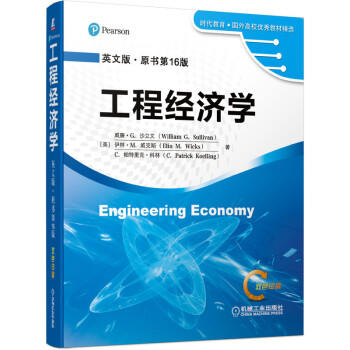
About Engineering Economy
A succinct job description for an engineer consists of two words:problem sofoerBroadly speaking,engineers use knowledge to find new ways of doing thingseconomicallyEngineering design solutions do not exist in a vacuum but within thecontext of a business opportunityGiven that every problem has multiple solutions,the issue is,How does one rationally select the design with the most favorableeconomic result?The answer to this question can also be put forth in two words:engineering economyEngineering economy provides a systematic framework forevaluating the economic aspects of competing design solutionsJust as engineersmodel the stress on a support column,or the thermodynamic response of a steamturbine,they must also model the economic impact of their recommendations
Engineering economy-what is it,and why iit important?The initial reactionof many engineering students to these questions is,"Money matters will be handledby someone elseThey are not something I need to worry about"In reality,anyengineering project must be not only physically realizable but also economicallyaffordable
Understanding and applving economic principles to engineering have neverbeen more importantEngineering is more than a problem-solving activity focusingon the development of products,svstems,and processes to satisty a needor demandBevond function and pertormance,solutions must also be viableeconomicallvDesign decisions atfect limited resources such as time,materiallabor,capital,and natural resources,not only initially (during conceptual design)but also through the remaining phases of the life cvcle fegdetailed design,manutacture and distribution,service,retinement and disposalA great solution can die a certain death if it is not profitable
What's New to This Edition?
The basic intent behind this revision of the text is to integrate computer technologyand realistic examples to facilitate learning engineering economyHere are thehighlights of changes to the sixteenth edition:
Many new spreadsheet models have been added to the sixteenth edition
(several contributed by James AAlloway)
This edition contains over 900 examples,solved problems and end-of-chapter
problems,These include 70"Try Your Skills"problems in selected chapters,
with full solutions given in Appendix G
Over 160"green"examples and problems populate this edition as a subset
of 750 problems at the conclusion of the 14 chapters in this book,
Many ofthese problems incorporate energy conservation in commonly experienced
situations with which students can identify
PowerPoint visual aids for instructors have been expanded and enhanced
Chapter 2,dealing with choice among alternatives when the time value of
money can be ignored,has been revised for improved readability,
Strategies of This Book
This book has two primary objectives:(1)to provide students with a soundunderstanding of the principles,basic concepts,and methodology of engineeringeconomy;and(2)to help students develop proficiency with these methods and withthe process for making rational decisions they are likely to encounter in professionalpracticeInterestingly,an engineering economy course may be a student's only collegeexposure to the systematic evaluation of alternatie investment opportunitiesIn thisregard,Engineering Economy is intended to serve as a text for classroom instructionand as a basic reference for use by practicing engineers in all specialty areas(eg,chemical,civil,computer,electrical,industrial,and mechanical engineering)The book is also useful to persons engaged in the management of technicalactivities
As a textbook,the sixteenth edition is written principally for the first formalcourse in engineering economyA three-credit-hour semester course should beable to cover the majority of topics in this edition,and there is sufficient depthand breadth to enable an instructor to arrange course content to suit individualneedsRepresentative syllabi for a three-credit and a two-credit semester coursein engineering economy are provided in Table