正版 不会发生在这里 英文原版书 It Cant Happen Here 全英文版进口反乌托邦小说 辛克莱刘易斯作品 进口英语书籍
| 运费: | ¥ 0.00-999.00 |
| 库存: | 34 件 |




商品详情
依据《出版管理条例》,本书个别内容与中国实际情况不符,已做适当处理(如涂抹),但不影响整体正常阅读(介意者慎拍)。此属正常情况,请事先知悉,以免给您带来不便。特此说明。
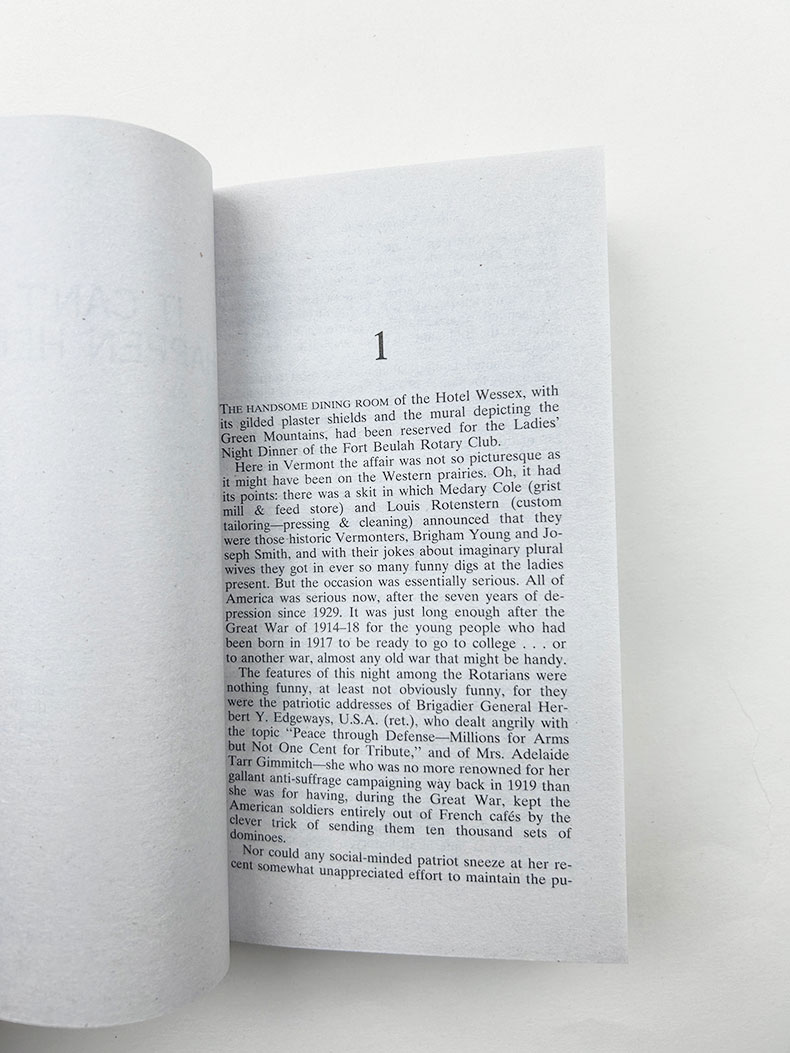
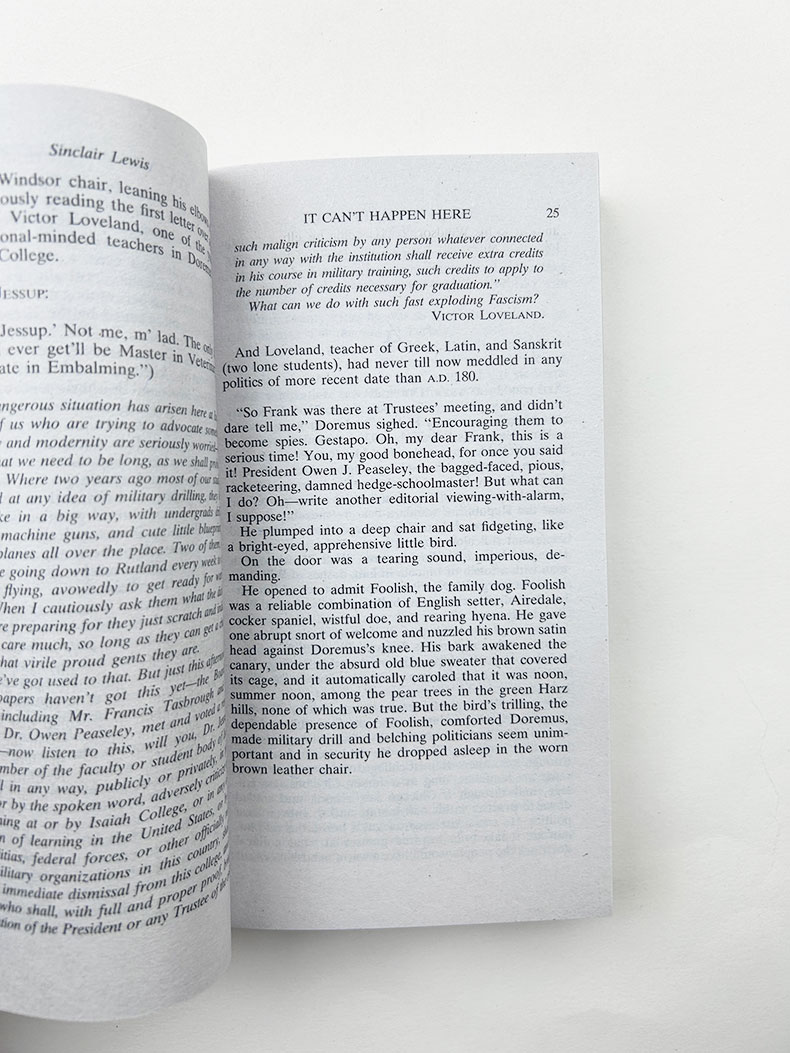
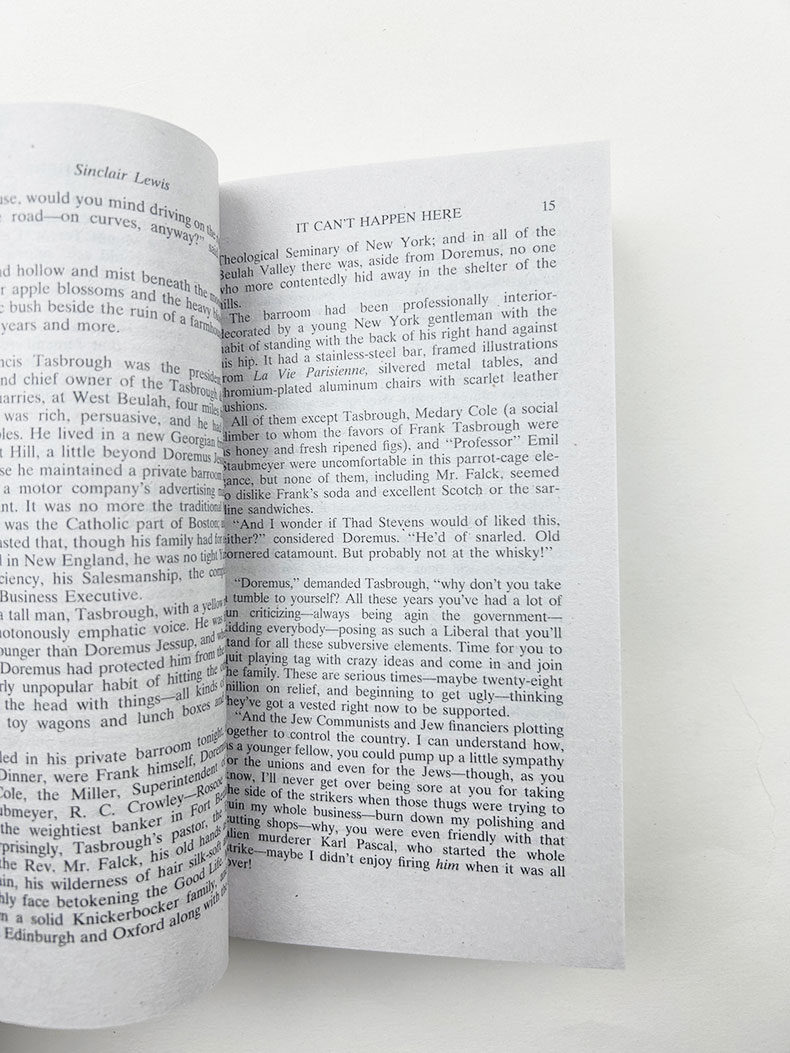

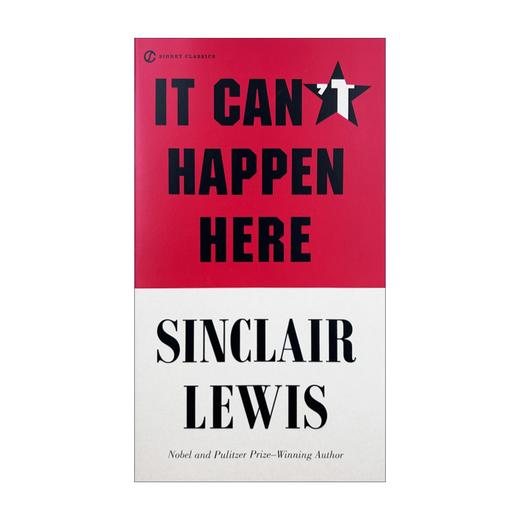
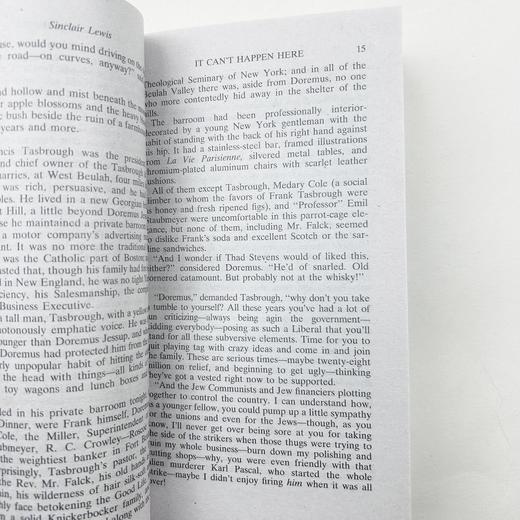
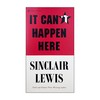
书名: It Can't Happen Here 不会发生在这里
作者:Sinclair Lewis辛克莱·刘易斯
出版社名称:Signet Classics
出版时间:2014
语种:英文
ISBN:9780451465641
商品尺寸:10.8 x 2.2 x 19 cm
包装:简装
页数:416 (以实物为准)

It Can't Happen Here《不会发生在这里》是诺贝尔文学奖得主辛克莱·刘易斯的作品,出版于1935年。企鹅图书称之为一个讲述民主之脆弱性的故事:“这本小说写于大萧条期间,当时美国人基本上对希特勒的侵略尚无动于衷,小说用政治讽喻的手法书写描绘毛骨悚然的现实,一位总统变成一位独裁者,拯救国家免于福利诈骗、性、犯罪和自由媒体。”
特朗普当选总统后,《不会发生在这里》销量骤增,仅一个月就升至美国文学经典类书第1名,在所有畅销书里也名列前茅。
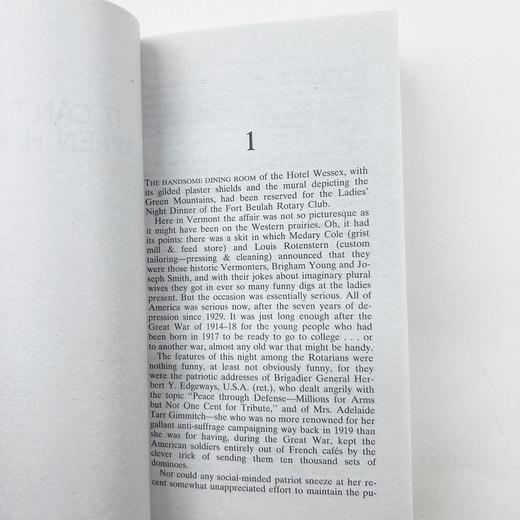
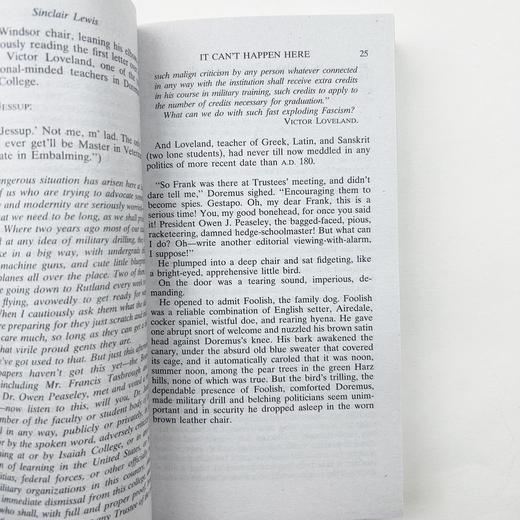
本书为Signet Classics推出的英文原版,由美国作家Michael Meyer作序,Gary Scharnhorst做后记,内容完整无删减,书本小巧便携。
“The novel that foreshadowed Donald Trump’s authoritarian appeal.”—Salon
It Can’t Happen Here is the only one of Sinclair Lewis’s later novels to match the power ofMain Street,Babbitt, andArrowsmith. A cautionary tale about the fragility of democracy, it is an alarming, eerily timeless look at how fascism could take hold in America.
Written during the Great Depression, when the country was largely oblivious to Hitler’s aggression, it juxtaposes sharp political satire with the chillingly realistic rise of a president who becomes a dictator to save the nation from welfare cheats, sex, crime, and a liberal press.
Called “a message to thinking Americans” by the Springfield Republican when it was published in 1935,It Can’t Happen Here is a shockingly prescient novel that remains as fresh and contemporary as today’s news.
With an Introduction by Michael Meyer and an Afterword by Gary Scharnhorst

辛克莱·路易斯(Sinclair Lewis,1885~1951),美国作家、剧作家,1885年出生于明尼苏达州的索克中心镇,1951年病逝于意大利首都罗马。路易斯一生创作20多部作品。1920年他以《大街》一举成名后,又推出《巴比特》(1922)和《阿罗史密斯》(1925)。这三部作品被认为是他的优秀之作,其中《阿罗史密斯》曾获1926年普利策文学奖,《巴比特》获1930年诺贝尔文学奖。
Sinclair Lewis was born in 1885 in Sauk Centre, Minnesota, and graduated from Yale University in 1908. His college career was interrupted by various part-time occupations, including a period working at the Helicon Home Colony, Upton Sinclair’s socialist experiment in New Jersey. He worked for some years as a free lance editor and journalist, during which time he published several minor novels. But with the publication of Main Street (1920), which sold half a million copies, he achieved wide recognition. This was followed by the two novels considered by many to be his finest, Babbitt (1922) and Arrowsmith (1925), which was awarded the Pulitzer Prize in 1926, but declined by Lewis. In 1930, following Elmer Gantry (1927) and Dodsworth (1929), Sinclair Lewis became the first American author to be awarded the Nobel Prize for distinction in world literature. This was the apogee of his literary career, and in the period from Ann Vickers (1933) to the posthumously published World So Wide (1951) Lewis wrote ten novels that reveal the progressive decline of his creative powers. From Main Street to Stockholm, a collection of his letters, was published in 1952, and The Man from Main Street, a collection of essays, in 1953. During his last years Sinclair Lewis wandered extensively in Europe, and after his death in Rome in 1951 his ashes were returned to his birthplace.

Introduction
Sinclair Lewis enjoyed a brilliant career in the 1920s portraying and satirizing what he regarded as the mediocrity, materialism, corruption, and hypocrisy of middle-class life in the United States. His five major novels of the twenties—Main Street(1920),Babbitt (1922),Arrowsmith (1925),Elmer Gantry (1927), andDodsworth (1929)—were all bestsellers that served to hold a mirror up to the parochialism and provincialism of that decade. A good many Americans winced at their own reflections in those novels, but they eagerly bought Lewis’s iconoclastic books, because, however much they flinched at his representations of their middle-class lives, they were finally snugly, if not smugly, comfortable in the economic security that produced their prosperous confidence.
After the stock market crash of 1929, however, there wasn’t much left of the middle class of the early 1930s. Many who were previously solid, respectable breadwinners found themselves on bread lines, soup lines, and relief rolls. “Normalcy,” a twenties password synonymous with security, gave way to the “jitters” as profitless corporations laid off millions of workers who drifted across the country like Oklahoma farm dust. The popular song and exuberant theme of the twenties “Ain’t We Got Fun” changed its tune to “Brother Can You Spare a Dime” during the Great Depression. Although Franklin Delano Roosevelt’s first inaugural address in 1933 promised a New Deal, he also let his countrymen know what the score was in grim tones:
Values have shrunken to fantastic levels; taxes have risen; our ability to pay has fallen; government of all kinds is faced by serious curtailment of income; the means of exchange are frozen in the currents of trade; the withered leaves of industrial enterprise lie on every side; farmers find no markets for their produce; the savings of many years in thousands of families are gone.
Not surprisingly, the middle class was no longer interested in being discounted by bankers or by satirists. Lewis had to find new material.
Given the stormy economic and social climate of the early 1930s, Lewis had plenty of other topics to consider that were more relevant than middle-class predispositions to be foolish and venal. He found a ready-made plot in the nervous undercurrent that accompanied the volatile politics of the period. With the rise of Adolf Hitler and Benito Mussolini in Europe and the alarming popularity of a variety of demagogues from both the left and right in the United States, there was widespread concern that the country could be taken over by a fascist dictatorship. Lewis placed these fears at the center ofIt Can’t Happen Here.
Published in October of 1935, the novel gave shape to the free-floating anxieties that had consumed worried citizens for several years as the country stumbled through economic turmoil desperately seeking solutions. Lewis was intimately familiar with these concerns because Dorothy Thompson, his second wife, had interviewed Hitler as a foreign correspondent in Berlin and had written a series of articles between 1931 and 1935 warning Americans about the Nazi propaganda machine that masked the vicious persecution of Jews and the growing number of concentration camps designed to annihilate them. In addition to what he heard at his breakfast table, Lewis was very much aware of the many debates swirling around him in newspapers, journals, and books. In September of 1934, for example, The Modern Monthly featured a symposium titled “Will Fascism Come to America?” that featured a number of leading intellectuals such as Theodore Dreiser, Norman Thomas, Charles A. Beard, and Waldo Frank debating the question, and in early 1935, the Nation ran a series of articles on “forerunners of American Fascism.” Although Lewis is often credited with coining the phrase “it can’t happen here,” Herschel Brickell points out in his review of the novel in North American Review (December 1935) that the book actually “takes its title from the typical American remark concerning the possibility of a dictatorship in this country” (a quick search of the Internet demonstrates that the phrase continues to be used by a wide range of political perspectives to evoke the various tyrannies Lewis describes). Echoing Brickell, another contemporary reviewer, Benjamin Stolberg, aptly notes that the novel “has successfully plagiarized our social atmosphere” (Books, October 1935). Lewis’s take, however, is that it can happen here.
The threat of fascism in America captured his readers’ attention.It Can’t Happen Here quickly became a national bestseller (more than 320,000 copies were sold), and it has become by now part of the same thirties’ social and political fabric that Lewis wove into the novel. While Lewis’s contemporaries were thirsty for the “successfully plagiarized” details about the 1930s that saturate the novel, twenty-first-century readers may sometimes feel as if they’re in over their head owing to the book’s deep topical nature. The novel is a kind of Sears, Roebuck catalogue of early 1930s American political figures, events, and movements both central and peripheral to the decade’s issues. Scores of historical figures populate the book, such as Huey Long, Father Charles Coughlin, William Randolph Hearst, Upton Sinclair, William Allen White, Mike Gold, and for a remarkable example, thirteen actual working journalists whose names appear on page 219. Although lots of these names are perhaps unfamiliar to many readers today, Lewis’s plot and characterizations are not wholly dependent upon historical knowledge for readers to understand and appreciate the novel’s conflicts. The names, as well as political events and movements, certainly form the major portion of the book’s highly detailed political scenery, but there’s little, if any, doubt about how Lewis wants us to think about them.
- 华研外语 (微信公众号认证)
- 本店是“华研外语”品牌商自营店,全国所有“华研外语”、“华研教育”品牌图书都是我司出版发行的,本店为华研官方源头出货,所有图书均为正规正版,拥有实惠与正版的保障!!!
- 扫描二维码,访问我们的微信店铺
- 随时随地的购物、客服咨询、查询订单和物流...