商品详情
编辑推荐
“高中英语教材配套悦读”丛书倡导整本书阅读理念,配套高中英语教材,紧扣教材主干语篇以及核心阅读推荐,是教材的有益补充和有机拓展,是学生深度阅读、自主阅读的“教材伴侣”。本丛书兼顾经典与现代,文学性强,语言亲和力强,让同学们轻松上手,进而手不释卷,潜移默化中积蓄后劲,从容面对高考,自信拥抱未来。每册附有名师导读,扫码可获得丰富增值资源:1. 全文音频,纯正发音,轻松跟读;2. 佳句赏析,名师点拨,精要讲解;3. 评价手册,紧扣高考,拓展训练;4. 教师手册,教学详案,便捷易教。
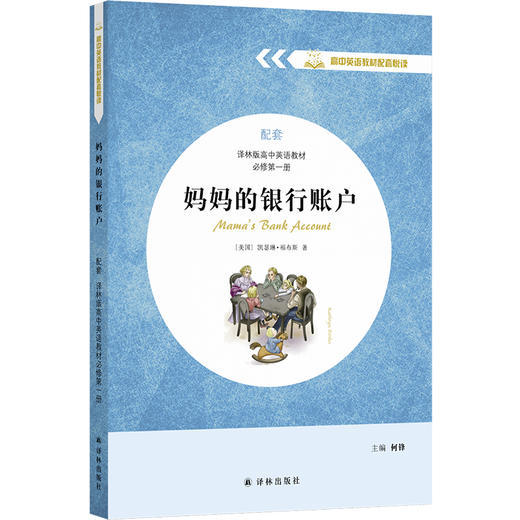
《妈妈的银行账户》细细描绘了和谐的亲子关系和温暖的家庭环境,不仅可以给我们想象和体会的空间,更可以唤醒我们心灵深处关乎家人、朋友的温情回忆。那些平淡却闪耀的生活琐事、单纯又美好的人际往来,会让孩子在成长道路上,走得稳当、坚定又从容。
内容介绍
卡特琳的父母由挪威移民到美国。卡特琳有一个哥哥和两个妹妹,后来家里又添了一个小姑娘。这样一个人口众多的移民家庭,在经济大萧条的时代,日子可不容易过。妈妈作为全家的主心骨,借子虚乌有的银行账户给儿女以安定与宽慰,竭尽全力维持生计,营造温馨的家庭氛围。她重视教育、看重品性,从物质生活到精神世界,都为孩子考虑周详。在小说结尾,妈妈带领全家,熬过经济萧条,觅得他乡归属,维护了家庭的稳定和家族的完整,让每个孩子都长成了可以独立掌控自己人生的大人。
作者介绍
凯瑟琳•福布斯(1909—1966),原名凯瑟琳•麦克莱恩•安德森。1909年出生于美国旧金山。她是移民后裔,祖母在19世纪从挪威到达美国。她曾是广播电台的文字编辑,1942年偶然在《读者文摘》上发表了两个小故事,居然大受好评。于是她一鼓作气,写了一系列风格类似的小故事,并在1943年将之集结成书,命名为《妈妈的银行账户》。这本书登上当年《纽约时报》的畅销书榜,并且多次被改编为影视作品、舞台剧等艺术形式,持续受到读者的欢迎。由于慢性疾病的侵扰,福布斯在20世纪40年代后期逐渐停止了创作。她于1966年去世。
目录(目录删去页码)
CHAPTER 1 Mama and Her Bank Account
CHAPTER 2 Mama and the Idle Roomer
CHAPTER 3 Mama and the Hospital
CHAPTER 4 Mama’s Uncle Chris
CHAPTER 5 Mama and the Big City
CHAPTER 6 Mama and Her Little Ladies
CHAPTER 7 Mama and the Higher Culture
CHAPTER 8 Mama and the Occasion
CHAPTER 9 Mama and the Doctor’s Wife
CHAPTER 10 Mama and the Graduation Present
CHAPTER 11 Mama and Big Business
CHAPTER 12 Mama’s Aunt Elna
CHAPTER 13 Mama and Uncle Elizabeth
CHAPTER 14 Mama and Christine
CHAPTER 15 Mama and Papa
CHAPTER 16 Mama and Nels
CHAPTER 17 Mama and the Grandchild
New Words
导读
凯瑟琳·福布斯(Kathryn Forbes,1908—1966),美国作家,原名凯瑟琳·安德森·麦克莱恩(Kathryn Anderson McLean),出生于美国旧金山。19世纪晚期,她的祖母从挪威移民至美国加利福尼亚州,她的父母都是美国人。福布斯原本是一家广播电台的编剧,平时也创作一些小故事。1942年,她以笔名凯瑟琳·福布斯在《读者文摘》(Readers’ Digest)上发表了《妈妈的银行账户》《妈妈的房客》两个短篇故事,均受到了读者们的喜爱。这给了福布斯极大的鼓舞,她以自己的家庭经历为背景,又写了十几个类似的小故事。这些故事于1943年结集成书,便有了这本备受欢迎的《妈妈的银行账户》。
此后,福布斯出版了自传体小说《转折点》。但由于健康原因,她在20世纪40年代末完全停止了创作。1966年,她在旧金山去世。
福布斯的作品虽然不多,但时至今日仍然是畅销读物。《妈妈的银行账户》不断再版、重印,一个个真情的故事打动了一代又一代的读者。《纽约时报》评论道:这个故事“让人完全没有抵抗力”。《哈泼斯杂志》评论道:无法用言语描述这本小书带给人的温馨感。中国作家黄蓓佳在给这本书的中文版所作的序言中这样写道:“这些平凡又平凡的亲人之间的龃龉、磕碰、相争相让、搀扶和取暖,构成一泓文字的深潭,清澈平静的潭水之下,你能看到生命勃发的力量。”
《妈妈的银行账户》全书共有17章,每章为一个独立的小故事。这些故事都以孩子的视角,记录了这个移民家庭里一个个或有趣、或紧张、或诙谐、或感人的画面,这些画面也勾勒出一个勤劳勇敢、朴实能干、充满智慧和爱心的妈妈的形象。爸爸需要动手术时,聪明的妈妈知道如何和贪婪的医生太太打交道;女儿在学校遇到困难时,体贴的妈妈知道如何化解孩子的尴尬;性格古怪的姨婆面临孤独终老时,善良的妈妈知道如何帮助她安享晚年;小女儿做手术不能探望时,焦急万分的妈妈用自己的方式安慰着孩子……每当家里遇到困境时,妈妈都用一个“秘密账户”来安慰全家人,让孩子们在无忧无虑中快乐地长大成人。
美国是一个移民国家,而这本书可以打开一扇小小的窗户,让读者们更加了解移民生活,也让读者们更加深刻地理解美国的移民文化。并非所有的移民生活都如想象般美好,如何维持生计、如何融入新的社会、如何定义自己的身份,这些都是移民家庭所面临的难题,需要读者们去思考和领悟。书中所传递的乐观、坚强、无畏的精神和美国式的幽默也值得读者们仔细地品味和感受。
为了更好地解读这本书,学生可以分三个阶段展开阅读:第一阶段:故事情节阅读。该书包含17个故事,可以安排8个星期读完。在阅读过程中,学生需要读懂故事、画出关键词句并摘录,写一篇读书心得。第二阶段:分小组读书交流。在学生细读作品后,开展一次读书交流会,互相分享读书心得体会。第三阶段:话剧表演。学生可以分组,每组选择一个故事,稍作改编,然后分角色表演,这样可以更好地体现学生对本书的理解,同时也锻炼了学生的语言运用能力。
精彩书摘
For as long as I could remember, the small cottage on Castro Street had been home. The familiar background was there; Mama, Papa, my only brother, Nels. There was my sister Christine, closest to me in age, yet ever secret and withdrawn—and the littlest sister, Dagmar.
There, too, came the Aunts, Mama’s four sisters. Aunt Jenny, who was the oldest and the bossiest; Aunt Sigrid; Aunt Marta; and our maiden Aunt, Trina.
The Aunts’ old bachelor uncle, my Great-uncle Chris— the “black Norwegian”—came with his great impatience, his shouting and stamping. And brought mystery and excitement to our humdrum days.
But the first awareness was of Mama.
I remember that every Saturday night Mama would sit down by the scrubbed kitchen table and with much wrinkling of usually placid brows count out the money Papa had brought home in the little envelope.
There would be various stacks. “For the landlord,” Mama would say, piling up the big silver pieces.
“For the grocer.” Another group of coins.
“For Katrin’s shoes to be half-soled.” And Mama would count out the little silver.
“Teacher says this week I’ll need a notebook.” That would be Christine or Nels or I.
Mama would solemnly detach a nickel or a dime and set it aside.
We would watch the diminishing pile with breathless interest.
At last, Papa would ask, “Is all?”
And when Mama nodded, we could relax a little and reach for schoolbooks and homework. For Mama would look up then and smile. “Is good,” she’d murmur. “We do not have to go to the Bank.”
It was a wonderful thing, that Bank Account of Mama’s. We were all so proud of it. It gave us such a warm, secure feeling. No one else we knew had money in a big bank downtown.
I remember when the Jensens down the street were put out because they couldn’t pay their rent. We children watched the big strange men carry out the furniture, took furtive notice of poor Mrs. Jensen’s shamed tears, and I was choked with sudden fear. This, then, happened to people who did not have the stack of coins marked “Landlord.” Might this, could this, violence happen to us?
I clutched Christine’s hands. “We have a Bank Account,” she reassured me calmly, and suddenly I could breathe again.
When Nels graduated from grammar school he wanted to go on to High. “Is good,” Mama said, and Papa nodded approvingly.
“It will cost a little money,” Nels said.
Eagerly we brought up chairs and gathered around the table. I took down the gaily painted box that Aunt Sigrid had sent us from Norway one Christmas and laid it carefully in front of Mama.
This was the “Little Bank.” Not to be confused, you understand, with the big Bank downtown. The “Little Bank” was used for sudden emergencies, such as the time Christine broke her arm and had to be taken to a doctor, or when Dagmar got croup and Papa had to go to the drugstore for medicine to put into the steam kettle.
Nels had it all written out neatly. So much for carfare, for clothes, for notebooks and supplies. Mama looked at the figures for a long time. Then she counted out the money in the Little Bank. There was not enough.
She pursed her lips. “We do not,” she reminded us gently, “want to have to go to the Bank.”
We all shook our heads.
“I will work in Dillon’s grocery after school,” Nels volunteered.
Mama gave him a bright smile and laboriously wrote down a sum and added and subtracted. Papa did it in his head. He was very quick on arithmetic. “Is not enough,” he said. Then he took his pipe out of his mouth and looked at it for a long time. “I give up tobacco,” he said suddenly.
Mama reached across the table and touched Papa’s sleeve, but she didn’t say anything. Just wrote down another figure.
“I will mind the Elvington children every Friday night,” I said. “Christine can help me.”
“Is good,” Mama said.
We all felt very good. We had passed another milestone without having to go downtown and draw money out of Mama’s Bank Account. The Little Bank was sufficient for the present.
So many things, I remember, came out of the Little Bank that year. Christine’s costume for the school play, Dagmar’s tonsil operation, my Girl Scout uniform. And always, in the background, was the comforting knowledge that should our efforts fail, we still had the Bank to depend upon.
Even when the Strike came, Mama would not let us worry unduly. We all worked together so that the momentous trip downtown could be postponed. It was almost like a game.
- 译林出版社旗舰店
- 本店铺为译林出版社自营店铺,正品保障
- 扫描二维码,访问我们的微信店铺