本版本为英文译本,根据完整法文版翻译,译者为翻译名家Eleanor Hochman。
“The NameAlexandre Dumas is more than French-it is universal.”—VICTOR HUGO
In this swashbuckling epic, d’Artagnan, not yet twenty, sets off for Paris in hopes of joining the Musketeers, that legion of heroes highly favored by King Louis XIII and feared by evil Cardinal Richelieu. By fighting alongside Athos, Porthos, and Aramis as they battle their enemies, d’Artagnan proves he has the heart of a Musketeer and earns himself a place in their ranks. Soon d’Artagnan and the gallant trio must use all their wits and sword skills to preserve the queen’s honor and thwart the wicked schemes of Cardinal Richelieu. With this classic tale, Dumas embroiders upon history a colorful world of swordplay, intrigue, and romance, earningThe Three Musketeers its reputation as one of the most thrilling adventure novels ever written.
An Unabridged Translation, Revised and Updated by Eleanor Hochman
With an Introduction by Thomas Flanagan and anAfterword byMarcelleClements

The Three Musketeers (Les Trois Mousquetaires) is a novel by Alexandre Dumas, père. It recounts the adventures of a young man named d'Artagnan after he leaves home to become a musketeer. D'Artagnan is not one of the musketeers of the title; those are his friends Athos, Porthos, and Aramis—inseparable friends who live by the motto, "One for all, and all for one". The story of d'Artagnan is continued in Twenty Years After and The Vicomte de Bragelonne. Those three novels by Dumas are together known as the D'Artagnan Romances. The Three Musketeers was first published in serial form in the magazine Le Siècle between March and July 1844.

Alexandre Dumas(1802-1870)was the author of more than one hundred plays and novels including the famous ThreeMusketeers trilogy(1844-1847), The Count of Monte Cristo(1844-1845), and The Man in the Iron Mask(1848-1850).
A scholar, critic, and novelist,Thomas Flanagan(1923-2002) was the author of The Irish Novelist,1800-1850(1595), The Year of the French(1979), which won the National Book Critics Award, The Tenants of Time(1988), and The End of the Hunt(1994).
Marcelle Clements is a novelist and journalist who has contributed articles on culture, the arts, and politics to many national publications. She is the author of two books of non-fiction, The Dog is us and The Improvised Woman, and the novels Rock Me and Midsummer.

On the first Monday of April,1625, the market town of Meung, in which the author of the Romance of the Rose was born, seemed to be in asmuch of a state of revolution as if the Huguenots had justturned it into second La Rochelle. Many of the men, seeing the women rushing toward the main street and hearing the children crying at their doorways, hurriedly put on their breastplates, added further support to their uncertain courage by picking up a musket or a partisan, and headed for the Franc Menunier inn, in front of which was gathering an ever-growing, noisy, and curious crowd.
In those times panics were common, and few days passed without some city or other recording such an event in itsarchives. Noblemen made war against each other; the king made war against the cardinal; Spain made war against the king. Then, in addition to these concealed or public wars, there were robbers, beggars, Huguenots, wolves, and scoundrels, who made war on everybody.
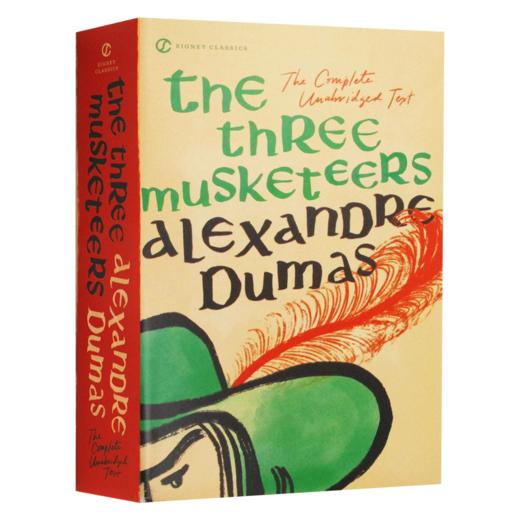
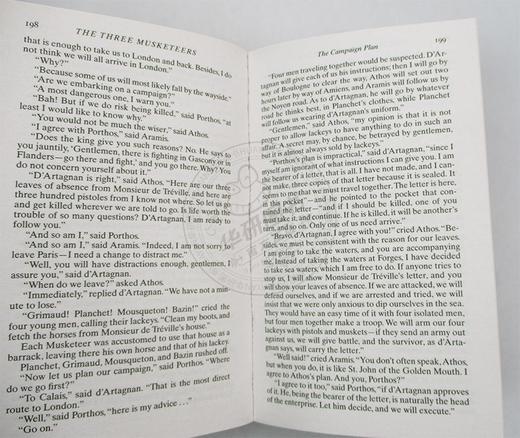

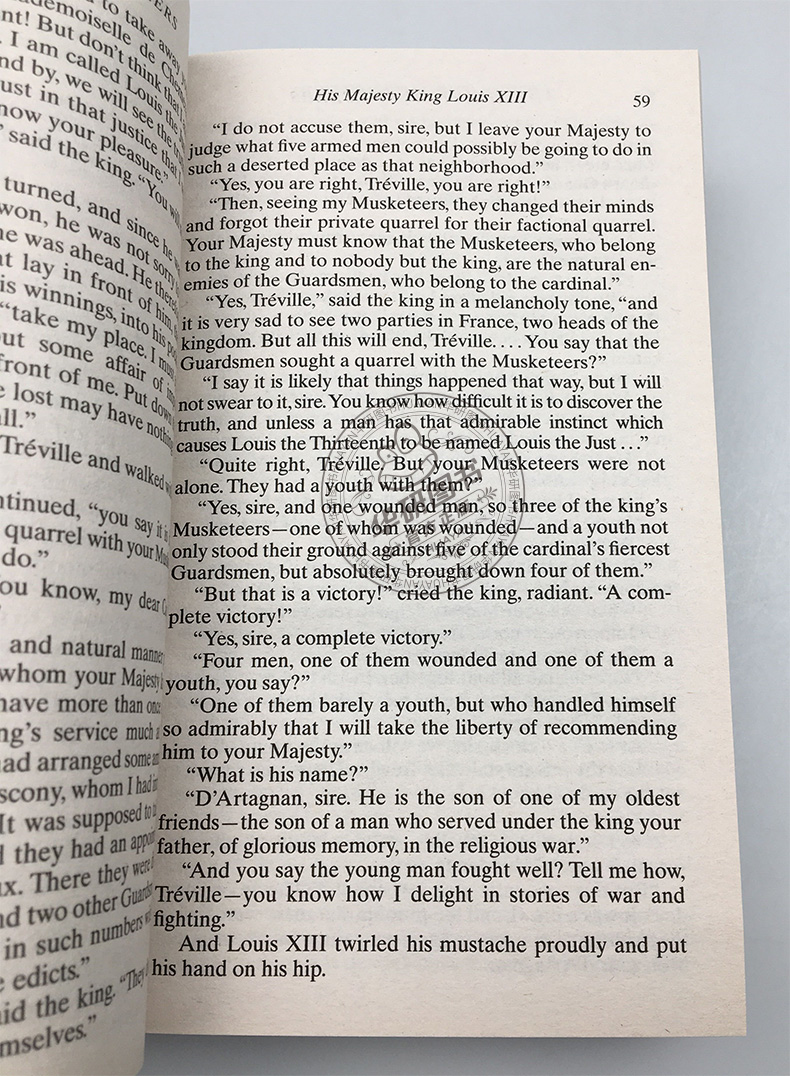
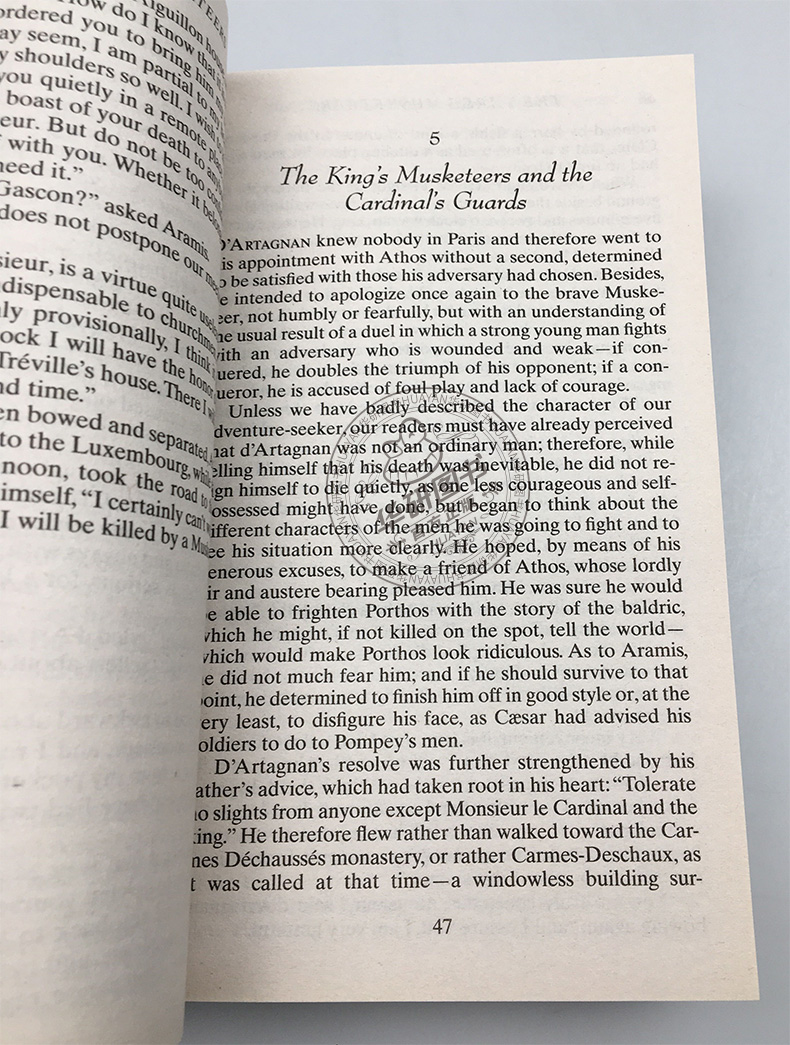
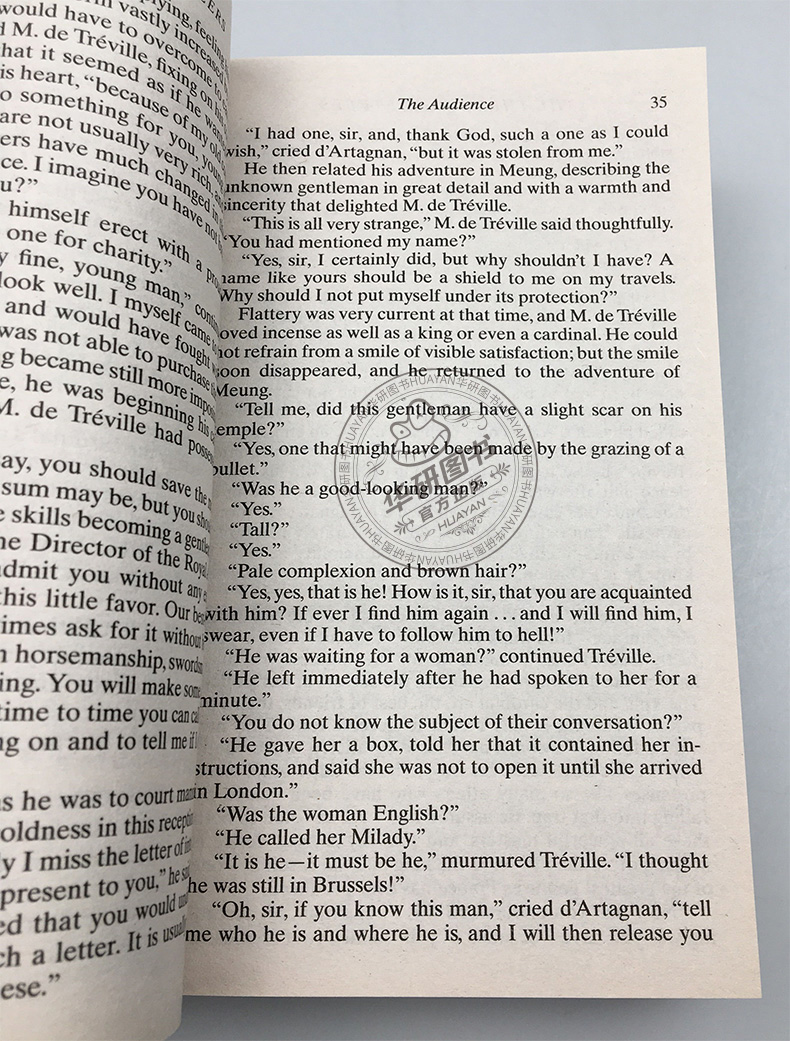

 The Three Musketeers《三个火枪手》是法国浪漫主义作家大仲马于1844年出版的长篇小说,又译作《三剑客》或《侠隐记》,其以法国国王路易十三和手握重兵权倾朝野的首相黎塞留红衣主教的矛盾为背景,穿插群臣派系的明争暗斗,围绕宫廷里的秘史轶闻,展开了极饶趣味的故事。书中的主人公为达达尼昂(d'Artagnan),三个火枪手分别是阿多斯(Athos),波尔多斯(Porthos),和阿拉密斯(Aramis)。小说中的情节曲折惊险,对话有趣,并设置众多悬念,故事紧扣,通俗易懂,是大仲马的特色代表作之一,非常值得外国文学爱好者阅读。