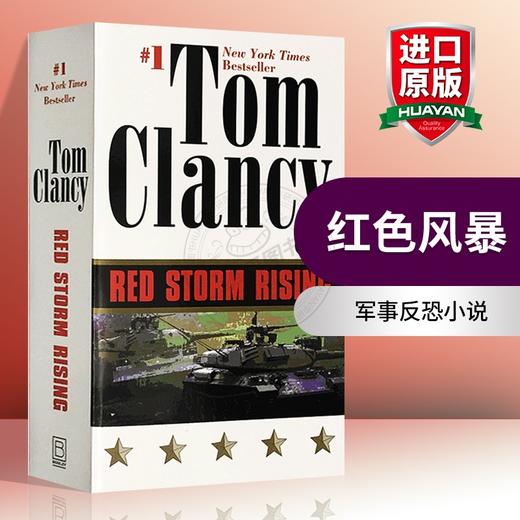
红色风暴 英文原版书 长篇小说 军事反恐小说 Red Storm Rising Tom Clancy 汤姆克兰西 战争题材 英文版进口书 正版
| 运费: | ¥ 0.00-999.00 |
| 库存: | 13 件 |
商品详情

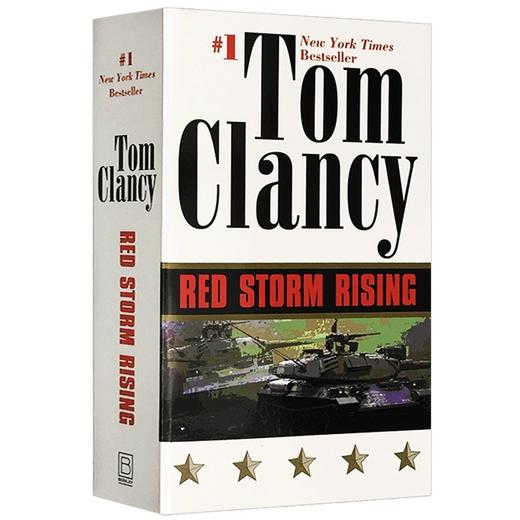
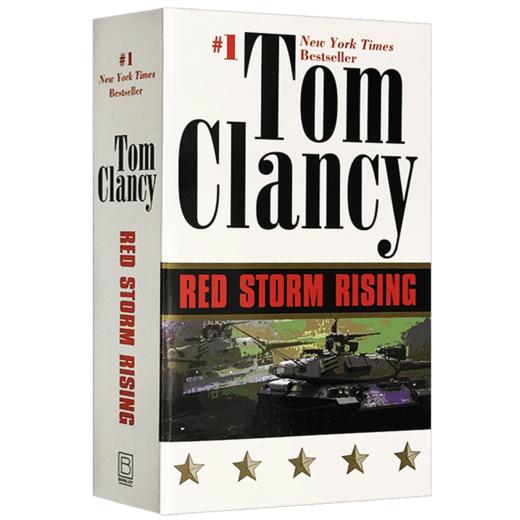
 书名:Red Storm Rising红色风暴
作者:Tom Clancy汤姆·克兰西
出版社名称:Berkley
出版时间:1987
语种:英文
ISBN:9780425101070
商品尺寸:10.8 x 4 x 17.5 cm
包装:简装
页数:736
 Red Storm Rising《红色风暴》是汤姆·克兰西所著描写冷战期间东西方欧洲大战规模宏大的虚构长篇小说。冷战突然转变为热战,作者详细描述了发生在几周之间的北约与苏联之间的战事,包含动员、装甲突破、破交战、反潜战,以及两栖作战等。 在一般谍报小说里,不乏玩世不恭、醇酒美女的情节描述,但克兰西的书中却从不见这类东西。他的每部小说的主题都与当前的政治形势密切相关。他笔下的人物,无论是医生、工程师、战士或情报员,个个都立场坚定、爱家爱国、正派之至,他从不在书中穿插绘声绘影的色情场面,“我的书里一定坚守一个原则:绝不写叫人脸红的东西。”这位军事小说大师虽无实际的军旅生活经验,但却靠着其对于科技、政治及军事的丰富涵养及深刻认识,铺陈了一个个栩栩如生、紧张刺激的冒险故事。其中涉及军事、国防情报作业及恐怖组织活动等逼真而详实的描述,甚至一度引起相关单位密切的注意。克兰西对军事技术的熟悉、对政治时局的洞察力和预见性确实令人吃惊,更令人惊讶的是,他在书中所记述的那些详实的技术数据和内幕资料竟然全部取材于报纸、电视和互联网等公开的资源媒体,而非像外界传闻的那样来自于美国的某秘密情报机构。 克兰西的作品,不但每部布局广大、深入多方层面,而且结构严谨、气势磅礴。故事中的主角,往往深深地结合了其本人的道德及价值观,正与克兰西向来率直、坦诚的个性不谋而合。尽管在成名后,每部作品皆为畅销书,并为他带来可观的财富,但这位大师级的小说家却仍秉持其一贯的生活态度及原则,只专注于其创作的小说领域中;将他对世界的热情及敏锐的观察力,透过一个个复杂人性的及情刻画节描述,严谨而完整地传达给每位读者,期待他们与作者共同进入一连串的冒险故事中,探索军事科技及谍报领域的种种奥秘。 Tom Clancy, the #1 New York Times bestselling author of the Jack Ryan novels—including his latest blockbusters Command Authority and Threat Vector—delivers an electrifying tale of international conflict. Using the latest advancements in military technology, the world’s superpowers battle it out on land, sea, and air for the ultimate global control. A chillingly authentic vision of modern war, Red Storm Rising is as powerful as it is ambitious. It’s a story you will never forget. Hard hitting. Suspenseful. And frighteningly real.
  伊斯兰恐怖分子摧毁了苏联的大石油化工厂,他们以为自己正为“自由”打出一条出路,却不知已为第三次世界大战揭开序幕。为了解决石油短缺,克里姆林宫的决策者们决定攫取波斯湾的石油,为达目的,得先摧毁北大西洋公约组织,他们设计了《红色风暴》,利用烟幕行动来掩护备战行动。一场令人毛骨悚然的现代战争开始了,世界超级强国运用先进的军事科技,在陆海空三面彼此缠斗,紧张刺激。
 汤姆·克兰西,美国军事历史和间谍小说作家,1947年出生于美国马里兰州。1969年毕业于罗耀拉学院英文文学专业后,他参加了陆军后备役军官培训,但因视力原因未能进入陆军服役,之后成为了一名保险公司职员。1973年汤姆·克兰西跳槽到了她妻子的祖父创建的保险公司,并于1980年买下了这间公司,也是在这一年,他开始利用业余时间创作小说。 1984年,汤姆·克兰西的处女作《猎杀红色十月号》出版,首印时他希望能出版5000本,实际上却印刷了45000本,并获得了时任美国总统里根的称赞。后来这本小说在全美发行超过两百三十万本,而小说中准确的描述甚至让汤姆·克兰西获得了与美军高级军官会面的机会。 随后汤姆·克兰西又出版了许多作品,基本上都成为了畅销小说。二十多年间,汤姆·克兰西共出版了79部作品(包含合著)。 1996年,汤姆·克兰西创作了部名为《总统命令》的小说,小说中描述了恐怖分子劫持波音747客机撞击美国国会山制造恐怖袭击的情节,与2001年发生的9-11恐怖袭击事件如出一辙,民间一直传言本拉登即是参考了这部小说设计的袭击方案。作家写的作品中的恐怖袭击方式被真实的恐怖分子使用,这一桥段也被《图书馆战争》的作者借鉴写入了自己的作品中。 2008年,法国游戏公司育碧娱乐软件公司购买了汤姆·克兰西的冠名权,将以其多部作品为背景打造系列游戏。 2013年10月1日,汤姆·克兰西于马里兰州一间医院去世,死因未向公众公开。 A little more than thirty years ago Tom Clancy was a Maryland insurance broker with a passion for naval history. Years before, he had been an English major at Baltimore’s Loyola College and had always dreamed of writing a novel. His first effort, The Hunt for Red October—the first of the phenomenally successful Jack Ryan novels—sold briskly as a result of rave reviews, then catapulted onto the New York Times bestseller list after President Reagan pronounced it “the perfect yarn.” From that day forward, Clancy established himself as an undisputed master at blending exceptional realism and authenticity, intricate plotting, and razor-sharp suspense. He passed away in October 2013.
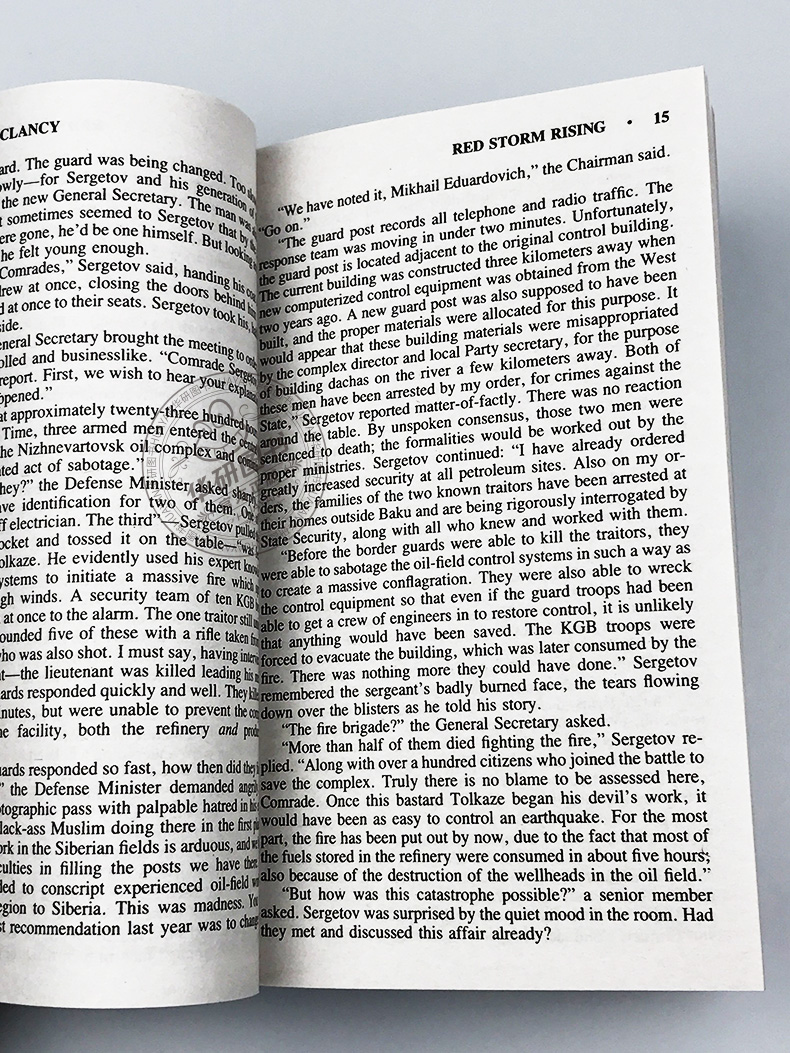
  The Slow FuseNIZHNEVARTOVSK, R.S.F.S.R. They moved swiftly, silently, with purpose, under a crystalline, star-filled night in western Siberia. They were Muslims, though one could scarcely have known it from their speech, which was Russian, though inflected with the singsong Azerbaijani accent that wrongly struck the senior members of the engineering staff as entertaining. The three of them had just completed a complex task in the truck and train yards, the opening of hundreds of loading valves. Ibrahim Tolkaze was their leader, though he was not in front. Rasul was in front, the massive former sergeant in the MVD who had already killed six men this cold night—three with a pistol hidden under his coat and three with his hands alone. No one had heard them. An oil refinery is a noisy place. The bodies were left in shadows, and the three men entered Tolkaze’s car for the next part of their task. Central Control was a modern three-story building fittingly in the center of the complex. For at least five kilometers in all directions stretched the cracking towers, storage tanks, catalytic chambers, and above all the thousands of kilometers of large-diameter pipe which made Nizhnevartovsk one of the world’s largest refining complexes. The sky was lit at uneven intervals by waste-gas fires, and the air was foul with the stink of petroleum distillates: aviation kerosene, gasoline, diesel fuel, benzine, nitrogen tetroxide for intercontinental missiles, lubricating oils of various grades, and complex petrochemicals identified only by their alphanumeric prefixes. They approached the brick-walled, windowless building in Tolkaze’s personal Zhiguli, and the engineer pulled into his reserved parking place, then walked alone to the door as his comrades crouched in the back seat. Inside the glass door, Ibrahim greeted the security guard, who smiled back, his hand outstretched for Tolkaze’s security pass. The need for security here was quite real, but since it dated back over forty years, no one took it more seriously than any of the pro forma bureaucratic complexities in the Soviet Union. The guard had been drinking, the only form of solace in this harsh, cold land. His eyes were not focusing and his smile was too fixed. Tolkaze fumbled handing over his pass, and the guard lurched down to retrieve it. He never came back up. Tolkaze’s pistol was the last thing the man felt, a cold circle at the base of his skull, and he died without knowing why—or even how. Ibrahim went behind the guard’s desk to get the weapon the man had been only too happy to display for the engineers he’d protected. He lifted the body and moved it awkwardly to leave it slumped at the desk—just another swingshift worker asleep at his post—then waved his comrades into the building. Rasul and Mohammet raced to the door. “It is time, my brothers.” Tolkaze handed the AK-47 rifle and ammo belt to his taller friend. Rasul hefted the weapon briefly, checking to see that a round was chambered and the safety off. Then he slung the ammunition belt over his shoulder and snapped the bayonet in place before speaking for the first time that night: “Paradise awaits.” Tolkaze composed himself, smoothed his hair, straightened his tie, and clipped the security pass to his white laboratory coat before leading his comrades up the six flights of stairs. Ordinary procedure dictated that to enter the master control room, one first had to be recognized by one of the operations staffers. And so it happened. Nikolay Barsov seemed surprised when he saw Tolkaze through the door’s tiny window. “You’re not on duty tonight, Isha.” “One of my valves went bad this afternoon and I forgot to check the repair status before I went off duty. You know the one—the auxiliary feed valve on kerosene number eight. If it’s still down tomorrow we’ll have to reroute, and you know what that means.” Barsov grunted agreement. “True enough, Isha.” The middle-aged engineer thought Tolkaze liked the semi-Russian diminutive. He was badly mistaken. “Stand back while I open this damned hatch.” The heavy steel door swung outward. Barsov hadn’t been able to see Rasul and Mohammet before, and scarcely had time now. Three 7.62mm rounds from the Kalashnikov exploded into his chest. The master control room contained a duty watch crew of twenty, and looked much like the control center for a railroad or power plant. The high walls were crosshatched with pipeline schematics dotted with hundreds of lights to indicate which control valve was doing what. That was only the main display. Individual segments of the system were broken off onto separate status boards, mainly controlled by computer but constantly monitored by half the duty engineers. The staff could not fail to note the sound of the three shots. But none of them were armed.
- 华研外语 (微信公众号认证)
- 本店是“华研外语”品牌商自营店,全国所有“华研外语”、“华研教育”品牌图书都是我司出版发行的,本店为华研官方源头出货,所有图书均为正规正版,拥有实惠与正版的保障!!!
- 扫描二维码,访问我们的微信店铺
- 随时随地的购物、客服咨询、查询订单和物流...