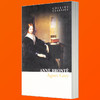
正版 阿格尼丝格雷 英文原版小说书 Agnes Grey 安妮勃朗特 全英文版现实主义进口英语小说书籍
| 运费: | ¥ 0.00-999.00 |
| 库存: | 6 件 |
商品详情

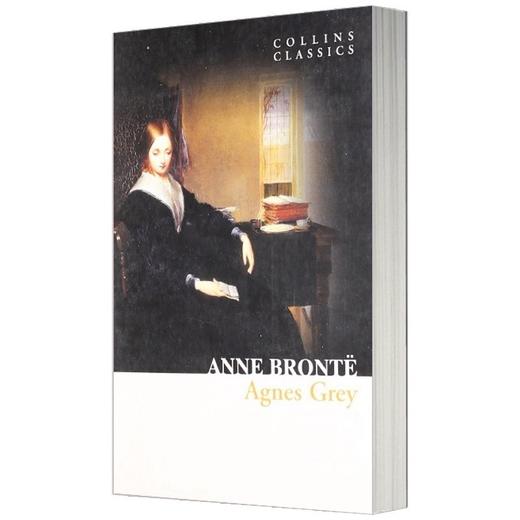
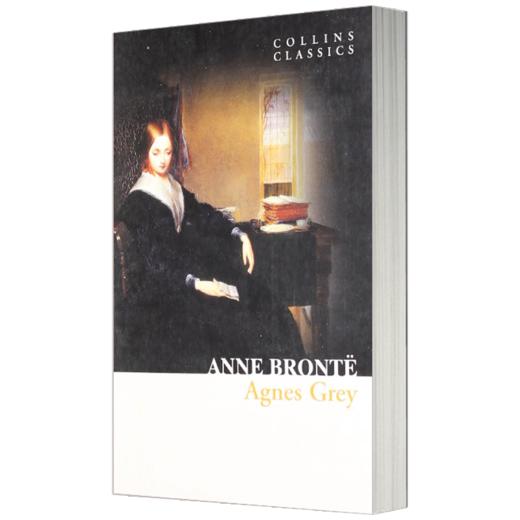
书名:Agnes Grey 阿格尼丝•格雷
难度:Lexile蓝思阅读指数1110L
作者:Anne Brontë
出版社名称:HarperCollins
出版时间:2012
语种:英文
ISBN:9780007449453
商品尺寸:11.1 x 1.7 x 17.8 cm
包装:简装
页数:256
Agnes Grey《阿格尼丝•格雷》是勃朗特三姐妹中小妹安妮•勃朗特的代表作,是一部现实主义的小说,写的是家教的故事,可以说是安妮本人的一部自传。小说讲述了一位女家庭教师的生活,通过女主人公的心理变化,以图如实地反映社会对女家庭教师这个群体的漠视和不公,获得人们的关注和支持。安妮•勃朗特以细腻的文笔,在《阿格尼丝•格雷》中为我们展现出一副对比鲜明的社会生态图。
本书为柯林斯经典系列的全英文版,原版进口,小巧轻便,含历史背景及作者介绍(Life & Times),后附英语词汇注释(Glossary of Classic Literature),生词表采用《柯林斯英语词典》的解释,有助于读者学习理解。
HarperCollins is proud to present its range of best-loved, essential classics.
“It is foolish to wish for beauty. Sensible people never either desire it for themselves or care about it in others. If the mind be but well cultivated, and the heart well disposed, no one ever cares for the exterior.”
Anne Bronte’s debut novel tells the story of Agnes Grey, a young woman who is determined to seek work as a governess after her family becomes impoverished. Drawing upon her own experiences as a governess, Anne describes the isolation, insensitivity and occasional harsh treatment bestowed on women in her position by their employers and through Agnes, demonstrates the resilience, integrity and survival of one woman in the face of upper class snobbery and changing social values.
Features:
·Life & Times— a fascinating insight into the author, their work and the time ofpublication
·Glossary of Classic Literature—useful words and phrases at your fingertips, taken fromCollins English Dictionary
阿格尼丝·格雷是一个自幼受人宠爱的娇弱英国少女,因家道中落被迫外出,担任富商布罗姆菲尔德的家庭教师,自私的主人和调皮的学生使她尝尽人间辛酸。后来因言词的冲突被解雇。她后来到富绅默里去担任家教,教导大小姐罗莎莉。罗莎莉一心只想当爵士夫人。结婚后,丈夫赌博、酗酒,一点都不幸福……
安妮•勃朗特1820年出生于英格兰北部约克郡的一个教区牧师家庭,是勃朗特姐妹中的小妹妹,她比夏洛蒂·勃朗特小四岁,比艾米莉·勃朗特小两岁。两位姐姐夏洛特和艾米莉分别以《简•爱》和《呼啸山庄》享有盛誉。安妮•勃朗特十九岁时到米尔菲尔德的英汉姆家任了八个月的家庭教师,1840至1845年间又在梭普格林的罗宾逊家任家庭教师。两次的家庭教师生涯使她积累了丰富的生活素材,成为她日后文学创作的基础。1847年艾米莉的《呼啸山庄》和安妮的第一部带有自传色彩的长篇小说《阿格尼丝•格雷》同时出版。1848年,安妮又出版了她的第二部长篇小说《怀尔德菲尔府的房客》。正当安妮的小说艺术日趋成熟时,不幸因结核病恶化而去世,年仅二十九岁。安妮•勃朗特的小说风格与她的两位姐姐不同,文风与奥斯汀颇为相似。
Anne Brontë (17 January 1820 – 28 May 1849) was a British novelist and poet, the youngest member of the Brontë literary family. The daughter of a poor Irish clergyman in the Church of England, Anne Brontë lived most of her life with her family at the remote village of Haworth on the Yorkshire moors. For a couple of years she went to a boarding school. At the age of nineteen, she left Haworth working as a governess between 1839 and 1845. Anne Brontë is often overshadowed by her more famous sisters, Charlotte, author of four novels includingJane Eyre, and Emily, author ofWuthering Heights. Anne’s two novels, written in a sharp and ironic style, are completely different from the romanticism followed by her sisters. She wrote in a realistic, rather than a romantic style. Her novels, like those of her sisters, have become classics of English literature.
From Fred Schwarzbach’s Introduction to Agnes Grey
It is impossible for any of us to approach the Brontës without calling up the Brontë myth. We are all familiar with its outlines. The isolated family house on the edge of a bleak Yorkshire moor. The four young children, Charlotte, Branwell, Emily, and Anne, their mother and elder sisters all dead, now in the care of a stern Calvinist aunt. The Reverend Patrick Brontë, a failed writer himself, reclusive, brooding, and subject to periods of dark rage. Then, through the agency of a present of toy soldiers, the children begin writing sagas in which the soldiers come to life. All four are gifted, though Branwell drinks himself to an early death, while the three young women precociously develop writing careers—Emily dying young of the family curse of tuberculosis, and Charlotte living longer, only to die shortly after her marriage. Anne, the youngest, is also the quietest and least talented; modest, religious, and industrious, she too dies of TB at an early age.
The narrative, like any myth, partakes of some truths but embodies a great deal of fantasy—and a great deal of that linked to the famous Wyler-Olivier-Oberon film ofWuthering Heights (1939). To begin: The parsonage was at the edge of a large, bustling mill town; the aunt appears to have been loving and kind and an evangelical Methodist, a far cry from Calvinism; Patrick Brontë was actively engaged in the affairs of the parish and the community, and clearly much concerned with the education and welfare of his children; and so on. But the myth is probably most unfair in its relegation of Anne Brontë to a bit player in the family drama—in fact, she was, though the youngest, probably the most precocious of them all as a writer, producing two novels and a substantial body of poems by the time she died at twenty-nine.
Anne’s relegation to a minor role within the family happened not long after her death. Her second novel, The Tenant of Wildfell Hall—the story of a wife who abandons her husband to live under an assumed name and who commits the even greater moral crime of falling in love with another man while her husband lives—was nothing short of scandalous in its subject matter. By contemporary standards, no young woman could write about immoral acts without either knowing of them firsthand or by being tainted by having imagined them—in either case, her reputation was tarnished beyond repair. After Anne died, Charlotte tried to defend her sister against charges of moral impropriety by controlling the public representation of Anne’s character (and, similarly, that of Emily, whose reputation suffered from her authorship of Wuthering Heights), and it was she who began constructing the image of a quiet, passive, deeply religious (and by implication not as talented) Anne. Deeply religious she was, but far from quiet and passive—and she was very talented.
A useful starting point will be the facts of her life, which shed some considerable light on her character and her interests. The circumstances of the family are somewhat exceptional: Anne’s father was very much a self-made man, even making of his humble Irish surname (Prunty or Brunty) the rather more impressive, aristocratic, and vaguely French-sounding Brontë. The son of a farmer, and at first a blacksmith’s assistant, he was by age seventeen a village schoolmaster, but in 1802 his prospects changed dramatically when he managed to secure a scholarship to St. Johns College, Cambridge, where he prepared for a clerical career. He rose through the ranks of the church, acquiring along the way, in 1812, a respectable and mature wife, Maria Branwell. By 1820 they were settled in Haworth, where Reverend Brontë was perpetual curate (that is, he held the office for life) of a large, populous parish. Anne, the sixth and last child, was born on January 17, 1820, three months before the move to Haworth.
Not long after, in 1821, Mrs. Brontë died. Her sister Elizabeth joined the family to superintend the children and the household. But further tragedy was in store, when the two eldest girls, Maria and Elizabeth, returned from school ill in 1825 and soon died. (Charlotte and Emily had followed their sisters to the same school but now were brought home.) This may have been due to the arrival of what would, sadly, be their only lasting legacy to the family—tuberculosis, which many years later would carry off Emily and Anne, and possibly Branwell, too. One effect of this was Patrick’s determination that he would educate the remaining children at home, at least for the major part of their schooling; another effect was that the remaining children became extremely close emotionally, tied to each other, to their aunt, to their father, and to Haworth itself.
Still, though none of us can choose our parents, it was a great stroke of luck for any girl at this time to be the daughter of a clergyman. Young women of the lower ranks of the professional and middle classes rarely were allowed any education beyond music, drawing, and the smattering of general knowledge deemed sufficient to entertain prospective husbands by the distaff side of the hearth. But a clergyman’s daughter had access to both a learned father and his library, and the Brontë girls were luckier still in that Patrick seemed ready to teach them fully much as he did Branwell. Certainly it was also fortuitous that Patrick was an author himself, a writer not only (necessarily) of weekly sermons, but a published poet and essayist of some genuine local repute. They read widely in the standard works of English literature; they subscribed to leading periodicals; and they had access to a lending library an easy walk away in the next town, Keighley. Anne could not have known this at first, but she was receiving excellent training to be a governess, learning music, drawing, and even Latin along with more general studies in literature, history, and geography.
- 华研外语 (微信公众号认证)
- 本店是“华研外语”品牌商自营店,全国所有“华研外语”、“华研教育”品牌图书都是我司出版发行的,本店为华研官方源头出货,所有图书均为正规正版,拥有实惠与正版的保障!!!
- 扫描二维码,访问我们的微信店铺
- 随时随地的购物、客服咨询、查询订单和物流...