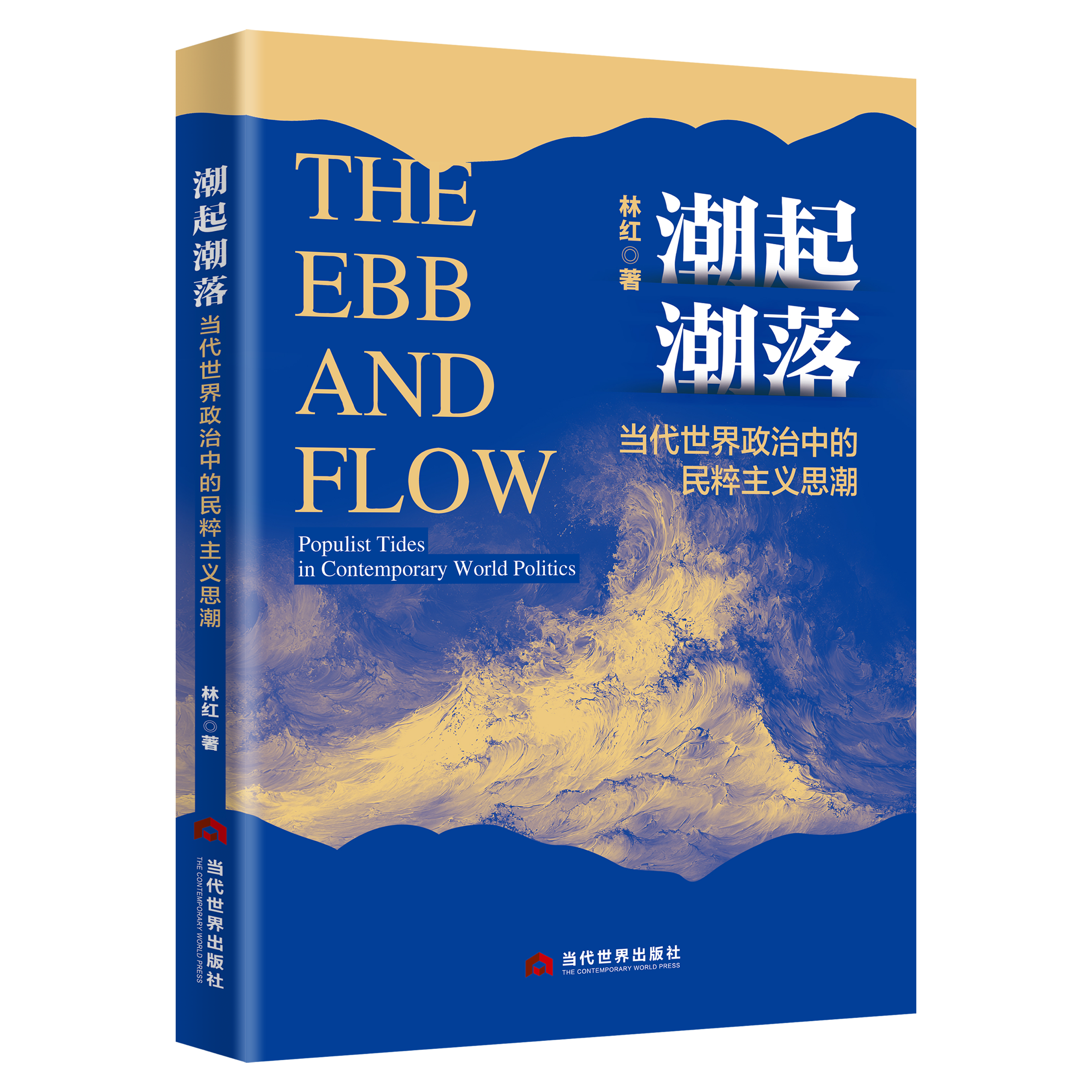
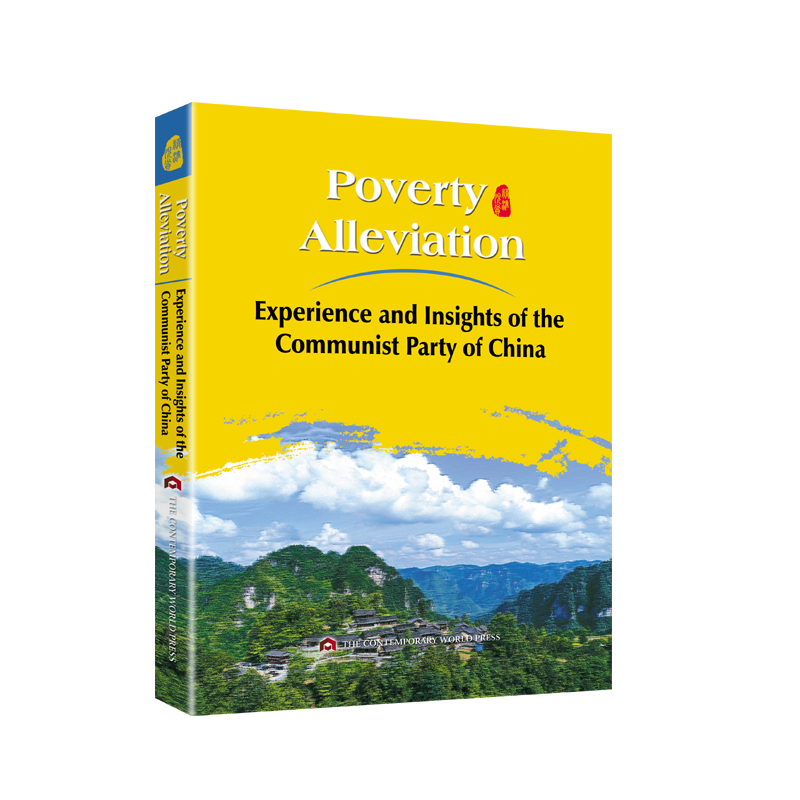
中国共产党领导脱贫攻坚的经验与启示(英文版)Poverty Alleviation:Experience and Insights of the Communist Party of China
| 运费: | 免运费 |





商品详情

内容简介
本书旨在与国内外读者分享中国共产党领导脱贫攻坚的基本理念、主要做法、核心经验及有关思考等。全书共六章,全面系统地介绍了中国脱贫攻坚的时代色调、主要路径、精准要义、几点经验、注意事项、意义启示,书后还附有一些典型案例。摆脱贫困是人类社会的共同事业,希望本书的出版能为促进国际减贫经验交流、启迪人类治理贫困智慧等发挥积极作用。
目录
Contents
China Makes Active Contribution to World Poverty Reduction
(Preface One) 1
Chinese Wisdom for Ending Poverty
(Preface Two) 5
Introduction
China Has Successfully Embarked on a Distinctive Path
of Development-Oriented Poverty Alleviation
It Is the Unremitting Pursuit of the CPC to Lead the People out
of Poverty and Achieve Prosperity 3
Decisive Progress Has Been Made in Battles Against Poverty
Alleviation Since the 18th CPC National Congress 6
It Is of Great Significance to Fight Poverty with Targeted Poverty
Alleviation Measures 10
Chapter I
Characteristics of Poverty Alleviation in China for the New Era
1. Guidelines for Poverty Alleviation 17
2. The Evolution of Major Contradictions in the Society and the
Fight against Poverty 22
3. Build a Moderately Prosperous Society in All Respects and
Poverty Alleviation 25
4. New Development Concepts and Poverty Alleviation 31
5. Basic Blueprint for Poverty Alleviation 38
Chapter II
Main Paths for Poverty Alleviation in China
1. Strengthening Infrastructure Development of Poverty-Stricken
Areas 47
2. Strengthening Environmental Protection in Poverty-Stricken
Areas 54
3. Promoting the Development of Feature Industries in Poverty-
Stricken Areas 68
4. Prioritizing Support to the Development of Special Poor Areas 81
5. Improving Poor People’s Sense of Gains 88
Chapter III
Precision Holding the Key of Poverty Alleviation
1. Solving the Problem of “Who Are the Targets of Poverty
Alleviation” 105
2. Answering the Question of “Who Are in Charge of Poverty
Alleviation” 108
3. How to Alleviate Poverty 118
4. How to Make Sure the Poor People Are Truly out of Poverty 126
Chapter IV
Five Experiences in China’s Poverty Alleviation
1. Strengthening Leadership Is Fundamental 133
2. Grasping Precision Is Essence 138
3. Increasing Investment Is Guarantee 147
4. Participation of All Parties Is Synergy 153
5. Mass Participation Is the Foundation 159
Chapter V
China’s Poverty Eradication Campaign Aims to Avoid a
Number of Problems
1. Prevention of Falling Back into Poverty 171
2. Prevention of Formalism and Bureaucracy in Poverty Alleviation 179
3. Overcoming the Problem of Poverty Alleviation without
Fostering Aspirations 185
4. The Significance of Party Branch Building 190
Chapter VI
Significance and Insights of China’s Poverty Alleviation
1. Important Significance of China’s Poverty Alleviation 197
2. Insights of China’s Experience in Poverty Reduction to the
World 204
3. International Cooperation on Addressing Poverty
Reduction 215
Appendix
Typical Cases of Poverty Alleviation in China
Case 1 Staying True to the Mission and Taking the Lead in
Poverty Alleviation:
Poverty Alleviation in Lankao County, Henan Province 227
Case 2 Actively Innovating Poverty Alleviation Model:
“A Slow Sparrow Making an Early Start” for Chixi Village,
Ningde City, Fujian Province 232
Case 3 Improvement of the Targeted Poverty Alleviation Mechanism:
“First Livelihood Project” of Guizhou Province 237
Case 4 Exploration of New Ideas for Poverty Alleviation:
“E-Commerce Poverty Alleviation” in Qishui Township,
Zhanjiang City, Guangdong Province 241
Case 5 Poverty Alleviation and Development through
Combination of Agriculture and Tourism:
“Green Rise” of Maochangwu Village, Yao Autonomous County,
Guangxi Zhuang Autonomous Region 245
Case 6 Technology Empowering Poverty Alleviation:
“Technology Advancing into the Dabie Mountains” in Yingshan
County, Hubei Province 249
Case 7 Counterpart Support in poverty alleviation between Rich
and Poor Areas:
“Poverty Alleviation through East-West Cooperation” between
Shanghai and Yunnan 252
Case 8 Synchronous Relocation and Poverty Alleviation:
“Moving into a New World” in Xiushui County, Jiangxi Province 256
Case 9 Dedication to Practical Poverty Alleviation:
The Path to Poverty Alleviation and Innovation in the Ethnic
Minority Communities in Leshan City, Sichuan Province 261
Appendix: Reference Table of US Dollar Exchange Rate
against RMB (1949-2019) 269
Epilogue 271
推荐语
本书推荐人
The book gives a full account of how China fights poverty. It discusses achievements and problems, as well as positive experience and misunderstandings. Upon summarizing the issues discovered during this campaign and analyzing their underlying reasons, it lays out the “five experiences” and “four misunderstandings”, with a view to addressing the root causes. It’s a useful reference for countries and regions committed to ending poverty.
—Zhang Shujun, Member of the National Committee of the Chinese People’s Political Consultative Conference, former Deputy Director General and researcher of Party History Research Center of the CPC Central Committee
As a student and researcher of Marxism, I hope the book will reach a wider audience so that readers can be informed of Chinese stores, practices and wisdom in poverty alleviation - latest accomplishments in adapting Marxist anti-poverty theory to the Chinese context. More importantly, I hope that countries and regions committed to eradicating poverty could benefit from it.
—Liu Haitao, Dean and Professor of the Department of Scientific Socialism, Party School of the CPC Central Committee (National Academy of Governance)
Since reform and opening up to the outside world, China made achievements in poverty reduction unparalleled in scale in human history, which is widely recognized by the international community. Large-scale poverty reduction in China is closely linked to the governing philosophy, development objectives and action plans of the Communist Party of China. Focusing on practices in targeted poverty alleviation since the 18th CPC National Congress, this book paints a full picture of how the CPC and the Chinese government lead the people to end extreme poverty by ensuring the impoverished population’s access to food, clothing, housing, compulsory education and basic medical services. It’s a great read for those interested in China’s journey and experience in reducing poverty.
—Wang Sangui, adviser to the State Council Leading Group on Poverty Alleviation and Development, and Director of Institute of Chinese Poverty Alleviation, Renmin University of China
The theory and practices of poverty alleviation elaborated in the book point to China’s inevitable path in ending poverty: clear-cut objectives, well-conceived strategies, strong determination, targeted policies, relying on domestic capabilities and continued efforts.
—Yan Shuhan, Lead Researcher of the Marxism Studies and Development Project, and Deputy Director of Center for World Socialism Research, Chinese Academy of Social Sciences
书摘
序言一
China Makes Active Contribution to
World Poverty Reduction
(Preface One)
Zhang Shujun
Member of the National Committee of the Chinese People’s Political Consultative
Conference, former De put y Director General and researcher of Part y Histor y
Research Center of the CPC Central Committee
Reducing poverty is a global challenge. Lifting the world’s largest
developing country out of poverty would be a feat unprecedented in
human history. In order to introduce China’s experience in poverty
reduction to the rest of the world, Poverty Alleviation: Experience
and Insights o f the C ommunist Party o f C hina is published by
the Contemporary World Press. The book is commissioned by the
International Department of the CPC Central Committee and compiled
by Professor Zhang Zhanbin of the Party School of the CPC Central
Committee. With a focus on poverty alleviation, it describes how the CPC
leads the Chinese people in fighting poverty. In particular, it discusses the
main achievements, practices, experiences and learnings from the massive,
targeted poverty alleviation efforts made since the 18th National Congress
of the CPC. The book is a refreshing and inspiring read.
Over the years, China has been battling poverty and moving towards
a moderately prosperous society. Since the founding of the People’s
Republic of China 70 years ago, the Communist Party of China has
united the Chinese people and led them in declaring war on poverty.
Through the explorations of the CPC and the Chinese people, a path of
poverty alleviation and development with Chinese characteristics has been
identified. As a result, more than 700 million people have been lifted out
of poverty and the Chinese people live a largely well-off life. China has
brought more people out of poverty than any other country in the world.
It was also one of the first countries that had achieved the United Nations
Millennium Development Goals. During the 18th National Congress of
the CPC, the goal of completing the building of a moderately prosperous
society in all respects was announced. This means that by 2020, by current
Chinese standards, all the rural poor and poverty-stricken counties will
be lifted out of poverty, thus ending poverty in entire regions. Poverty
alleviation is the most critical indicator for building a moderately
prosperous society in all respects. The CPC has pledged to deliver a
moderately prosperous society for the Chinese people, a pledge that
highlights the Party’s approach — rely on the people, drive development
for the people, and share the fruits of development with them. It also
shows the confidence and determination of the CPC Central Committee
with Comrade Xi Jinping at the core in winning the battle against poverty
in the new era and securing a decisive victory in building a moderately
prosperous society in all respects. Poverty Alleviation: Experience and
Insights of the Communist Party of China centers on poverty alleviation,
an important topic, and showcases the commitment of the Communist
Party of China. It touches upon the topic in terms of the features of
the day, main tasks and the development path in the new era. It’s highly
relevant in our time and is a valuable reference.
Looking ahead, we see both signs of hope and heavy responsibilities.
At present, most of the poor people in China are concentrated in deep
poverty-stricken areas. These areas are the poorest of the poor and face
the biggest challenges in alleviating poverty. The problems in the final
stage of poverty eradication are more complicated, and the tasks more
arduous. Thus, more efforts are needed. This book offers a full review
of China’s efforts in poverty reduction. It discusses the achievements
and problems, as well as positive experience and misunderstandings.
Moreover, it summarizes the problems that have occurred during
China’s poverty eradication campaign, and analyzes reasons behind these
problems and phenomena. It then lays out the “five experiences” and“four
misunderstandings” in this regard with a view to offering solutions to
address the root causes. It is therefore a very useful book for countries and
regions committed to ending poverty.
Eliminating poverty is a common mission of mankind. China aims
to win the battle against poverty and build a moderately prosperous
society in all respects — an aspiration of the Chinese nation for thousands
of years and a mission of the Communist Party of China. In order to
promote world peace and development and strengthen global governance,
China made its own proposal of joining hands to eradicate poverty and
building a global community with a shared future. Over the years, while
working to eliminate poverty at home, China has been actively helping
other developing nations, especially the least developed countries, to
eradicate poverty. At present, poverty reduction in the world remains an
arduous task. In line with the needs of the world anti-poverty cause, this
book gives a full account of China’s practices in poverty reduction, and
makes Chinese experience and wisdom available to other countries. It is
yet another positive contribution China has made to the rest of world.
I admire the mission and content of Poverty Alleviation: Experience
and Insights of the Communist Party of China. I have written these words
from the bottom of my heart as a preface to the book.
序言二
Chinese Wisdom for Ending Poverty
(Preface Two)
Liu Haitao
Dean and Professor of the De partment of Scienti fic Socialism, Part y School
of the CPC Central Committee (National Academy of Governance)
Poverty eradication has been a dream of mankind ever since ancient
times. It is a basic right of people of all countries in their pursuit of
happiness. Developed countries, which have already eliminated abject
poverty, are still looking for ways to eradicate poverty in relative
terms and narrow the gap between the rich and the poor. Developing
nations, on the other hand, need to find effective approaches to poverty
reduction that are suited to their circumstances. Peoples of all countries
long for a world of lasting peace, universal security and common
prosperity, one that is open, inclusive, clean and beautiful. This would
be a world free of poverty, where no one struggles under the poverty
line, and no individual is desperate because he or she has lost the right to
development.
Throughout the history of global poverty reduction, international
organizations like the United Nations and the World Bank and
developed countries such as the UK, the United States and Japan have
been fighting poverty across the world. The Millennium Development
Goals were set and then the Sustainable Development Goals 2030
were developed. However, the international community has yet to find
effective and replicable ways to end poverty and achieve sustainable
development. There are now more poverty-stricken population in sub-
Saharan Africa, and the global wealth gap has been widening by the day.
But China has been exploring and developing its theory and practices
in poverty alleviation. The Chinese people now have adequate access
to food and clothing. As China continues to reduce poverty, it is now
striving to end extreme poverty. China has found a path of poverty
alleviation and development with its own characteristics.
A fine tradition in the Chinese culture has been helping the poor
and the needy. Even before the Qin dynasty, the concept of “ he who
helps the poor is benevolent ” was put forward. The aspiration of
the Communist Party of China is to serve the people wholeheartedly.
Since it was founded, it has been committed to the mission of seeking
happiness for the Chinese people and rejuvenation for the Chinese
nation. When the People’s Republic of China (CPRC) was founded, it
was one of the poorest countries in the world. The Chinese people didn’t
even have enough food and clothing. Over the past 70 years, the Chinese
people have made remarkable achievements in poverty reduction
through self-reliance and hard work. In particular, over the past 40
years of reform and opening up, China’s practices in poverty alleviation
and development have been further enriched. They embody distinctly
Chinese wisdom and represent a Chinese model in poverty reduction.
Since 1986, the Chinese government has begun to plan and carry
out large-scale poverty alleviation and development programs in rural
areas across the country. In 1994, poverty alleviation and development
became a national strategy, and efforts in this regard were ramped up.
Since the 18th National Congress of the CPC, socialism with Chinese
characteristics has entered a new era. The new historical context has
also created new conditions for and posed new challenges to poverty
alleviation. The Party Central Committee with Comrade Xi Jinping at
the core has placed poverty alleviation and development high on the
national governance agenda. It has broken new ground by making the
strategic decision of securing a decisive victory in the fight against
poverty. It has put forward the idea of targeted poverty alleviation and
eradication, giving new meaning to the endeavor.
Poverty Alleviation: Experience and Insights of the Communist
Party of China expounds on the methods and approaches of poverty
alleviation in China, the meaning of targeted poverty alleviation and
eradication, and its global significance. It includes not only Chinese
experience, but also things that should be avoided in poverty alleviation.
It contains deep yet readily understandable explanations about theories,
as well as practical case studies. The book paints a magnificent and
inspiring picture of poverty reduction in P. R. China, and tells the stories
of poverty reduction in the country. It explains how the CPC lead the
Chinese people to fight poverty and achieve common prosperity. As
a learner and researcher of Marxism, it is my wish that the book will
reach a wider audience so that readers can learn about Chinese stories,
practices and wisdom in poverty alleviation — latest accomplishments
in adapting Marxist anti-poverty theory to the Chinese context. More
importantly, I hope that countries and regions committed to eradicating
poverty could benefit from this book.
- 当代世界出版社
- 扫描二维码,访问我们的微信店铺