
商品详情
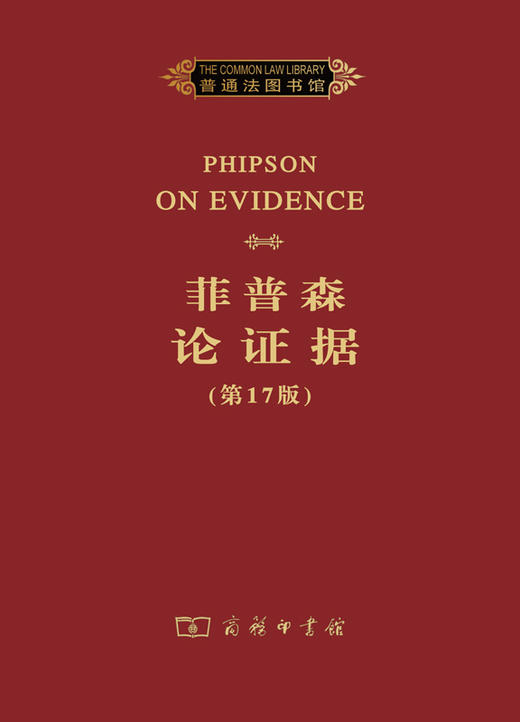
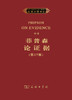
该书是刑事和民事证据方面的著作,涵盖了由民事诉讼规则和刑事诉讼规则以及像《2008刑事证据规则》这样的新立法所带来的变化和持续性影响,并分析了大量重要的民事和刑事方面的新判例。
目录
Foreword
Preface
Table of Cases
Table of Statutes
Table of Civil Procedure Rules
Table of Legislation
Table of Statutory Instruments
1. INTRODUCTION
1. Introductory
2. Definitions and classification
3. Inspection, view and production
4. Lex fo
5. Functions of judge and jury
6. Law and fact
7. Impact of the Human Rights Act
2. THE DEFINING OF THE ISSUES
1. Introduction
2. Statements of case and pleadings
3. Variance and amendment
3. JUDICIAL NOTICE
1. Judicial Notice: Introduction
2. Scope of the rule
3. Law, procedure and custom
4. Constitutional, political and administrative matters
5. Territorial and geographical divisions
6. Official gazettes, seals and signatures
7. Matters notified, and companies incorporated by statute
8. Notorious facts
9. Refreshing memory of judge
4. ADMISSIONS
1. Admissions generally
2. Formal admissions for purposes of trial
3. Principles common to admissions in civil cases and to confessions in criminal cases
4. Informal admissions-client, solicitor, counsel and witnesses
5. ESTOPPELS
1. Introductory
2. Legal estoppels
3. Equitable estoppel
6. BURDEN AND STANDARD OF PROOF
1. Concepts
2. Burden of proof in civil cases
3. Burden of proof in criminal cases
4. Presumptions
5.1mpact of the Human Rights Act on reverse burdens and presumptions
6. Standard of proof: criminal cases
7. Standard of proof: civil cases
7. RELEVANCE, ADMISSIBILTY AND WEIGHT: PREVIOUS AND SUBSEQUENT EXISTENCE OF FACTS: THE BEST EVIDENCE RULE
1. Facts in issue
2. Facts relevant to the issue
3. Facts which affect the legal reception or weight of the evidence tendered
4. Relevance and admissibility
5. Weight of evidence
6. Previous and subsequence existence of facts; course of business
7. Custom and usage
8. Standards of comparison
9. Treatment
10. The best evidence rule
8. ATTENDANCE OF WITNESSES
1. Scope of this chapter
2. Attendance of witnesses in civil cases
3. Attendance of witnesses in criminal cases
4. Witnesses within the United Kingdom
5. Witnesses out of the jurisdiction
6. Evidence in the jurisdiction for foreign civil proceedings
7. Obtaining evidence out of the jurisdiction or for proceedings abroad: criminal cases
9. COMPETENCE AND COMPELLABILITY, OATH AND AFFIRMATION Stephen Whale
1. Competence
2. Compellability
3. Competence and compellability in criminal proceedings of defen- dants and their spouses
4. Oath and affirmation
……
精彩书摘
Further, it has been stated by way of dictum in the House of Lords,32 in the course of a speech with which three of the other law lords agreed, that the then view of the law lord in question was that "proprietary estoppel cannot be prayed in aid in order to render enforceable an agreement that statute has declared to be void". The only other law lord to give a reasoned speech33 did not think it necessary or appropriate to consider this issue, perhaps unsurprisingly in light of the fact that he had given the principal judgment in the original decision of the Court of Appeal that the Law of Property (Miscellaneous Provisions) Act 1989 s.2 could be "outfianked" in this way. It may, however, be relevant that the latter law lord had akeady by then, in a decision which did not directly concern equitable proprietary estoppels,34 said that, despite his earlier judgment, he was "now rather less enthusiastic about the notion that proprietary estoppel and 'common interest' constructive trusts can or should be completely assimilated" because the former is a claim to a mere equity while the latter identifies the existence and size of beneficial interests.
Quite where all this leaves the original decision of the Court of Appeal that the Law of Property (Miscellaneous Provisions) Act 1989 s.2 could be "outfianked" in this way and, for that matter, the law remains to be seen. However, it seems to follow from the remaining remarks of the law lord with whose speech the three other law lords agreed that at least he thought (and possibly the other three law lords also thought) that, while the existence of a constructive trust can render enforceable a contract which is prima facie void for failure to comply with Law of Property (Miscellaneous Provisions) Act 1989 s.2 (because of the existence of the specific exemption for constructive trusts in s.2(5)), the existence of an equitable proprietary estoppel will not, on its own and without more, any longer be capable of giving rise to the imposition of a constructive trust; if this proves to be the case, the statutory exemption willin future only be capable of applying where a constructive trust has been imposed for some other reason. This would not necessarily render incorrect the outcome, as distinct from the reasoning, of the original decision of the Court of Appeal that the Law of Property (Miscellaneous Provisions) Act 1989 s.2 could be "outfianked" since in that case a constructive trust could conceivably have been held to have arisen on the different basis that the parties had entered into what was to all intents and purposes a joint venture.35
More generally the original and specific disapproval by the Court of Appeal of the notion that there are any "no go areas" for estoppels was anyway qualified by a subsequent comment in that case that the operation of equitable proprietary estoppels could nevertheless be restricted in the face of such statutory enact- ments. Whether it was to be restricted in a particular case depended upon an analysis of the "general social policy" behind the enactment; this was not simply a question of wording but also of statutory intent.
……
- 商务印书馆读者服务部 (微信公众号认证)
- 商务印书馆读者服务部
- 扫描二维码,访问我们的微信店铺
- 随时随地的购物、客服咨询、查询订单和物流...